section name header

Basic Information ⬇

AUTHORS: Tara C. Bouton, MD, MPH, TM and Philip A. Chan, MD, MS and Glenn G. Fort, MD, MPH

Definition

Toxoplasmosis is an infection caused by the protozoal parasite Toxoplasma gondii transmitted through ingestion of undercooked meat, undercooked shellfish, or cat feces.

ICD-10CM CODES
B58.9Toxoplasmosis, unspecified
B58.3Pulmonary toxoplasmosis
B58.89Toxoplasmosis with other organ involvement
P37.1Congenital toxoplasmosis
Epidemiology & Demographics
Incidence (In U.S.)

  • Seroprevalence varies widely across different geographic locations, increasing with age, prevalence of cats in the area, and certain activities such as working in slaughterhouses or owning cats.
  • Seroprevalence among women of childbearing age was 9.1% between 2009 and 2010.
  • 0.23 cases of congenital toxoplasmosis per 10,000 live births between 2006 and 2014.
  • Among patients with HIV, seroprevalence is approximately 11% in the U.S.
Predominant Sex

Equal gender distribution.

Predominant Age

  • Infancy (congenital infection).
  • Prevalence increases with age. Primary infection is usually asymptomatic, but latent infection can reactivate later in life.
Peak Incidence

Seroprevalence is higher in Latin America, Africa, and other temperate climates than in the U.S.

Genetics

Congenital infection:

  • Incidence and severity vary with the trimester of gestation during which the mother acquired infection.
    1. 10% to 25% (first trimester)
    2. 30% to 54% (second trimester)
    3. 60% to 65% (third trimester)
  • Congenital infection occurring in the first trimester is the most severe.
  • 89% to 100% of infections in the third trimester are asymptomatic.
  • Risk to the fetus is not correlated with symptoms in the mother.
Physical Findings & Clinical Presentation

  • Acquired (immunocompetent host): Usually subclinical, though may develop adenopathy, fatigue, and other constitutional symptoms that, although generally mild, can take weeks to resolve.
  • Acquired (in patients with AIDS, especially with CD4 count <100, hematopoietic stem cell transplant recipients): Most common presentation is encephalitis with headache, confusion, and fever. May have motor weakness or other focal neurologic abnormalities and seizures. Can also present as pneumonitis, chorioretinitis, or other end-organ involvement.
  • Acquired (immunocompromised patients):
    1. Encephalitis
    2. Myocarditis (especially in heart transplant patients)
    3. Pneumonitis
  • Ocular infection in the immunocompetent host: If not congenital, then presents in second or third decade of life as a focal necrotizing retinitis with photophobia, blurred vision, pain, and potentially loss of central vision if the macula is involved.
  • Congenital: Results from acute infection acquired by the mother within 6 to 8 wk before conception or during gestation and is usually asymptomatic in the mother. In the infant, symptomatic disease is estimated at 40%. Ocular disease can include chorioretinitis and blindness, while central nervous system (CNS) manifestations can include intracranial calcifications resulting in epilepsy, hydrocephalus, microcephaly, psychomotor or developmental delay, and encephalitis.
Etiology

  • T. gondii:
    1. Ubiquitous intracellular protozoan
    2. Present worldwide
    3. Cat is the definitive host (Fig. E1)
    4. Oocysts can remain viable up to a year in moist soil, despite freezing temperatures
  • Human infection:
    1. Ingestion of oocysts shed by cats in soil, litter boxes, vegetables
    2. Ingestion of inadequately cooked meat or shellfish containing tissue cysts
    3. Vertical transmission

Figure E1 Life cycle of Toxoplasma gondii.
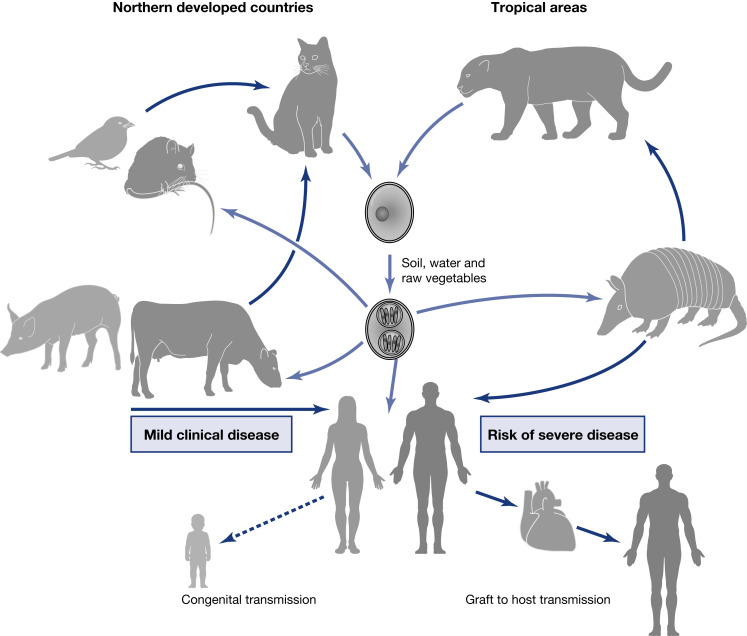
Dashed arrow indicates transmission by tachyzoites; dark blue arrows indicate transmission by cysts (bradyzoites); light blue arrows indicate transmission by oocysts.

From Ryan ET al: Hunter’s tropical medicine and emerging infectious diseases, ed 10, Philadelphia, 2019, Elsevier.

Diagnosis ⬆ ⬇

Differential Diagnosis

  • Lymphadenopathy:
    1. Infectious mononucleosis
    2. Cytomegalovirus (CMV) mononucleosis
    3. Cat-scratch disease
    4. Sarcoidosis
    5. Tuberculosis
    6. Lymphoma
    7. Metastatic cancer
  • Cerebral mass lesions in immunocompromised host:
    1. Lymphoma
    2. Tuberculosis
    3. Bacterial abscess
  • Pneumonitis in immunocompromised host:
    1. Pneumocystis jiroveci (carinii) pneumonia
    2. Tuberculosis
    3. Fungal infection
  • Chorioretinitis:
    1. Syphilis
    2. Tuberculosis
    3. Histoplasmosis (competent host)
    4. CMV
    5. Herpes simplex
    6. Fungal infection
    7. Tuberculosis
  • Myocarditis:
    1. Organ rejection in heart transplant recipients
  • Congenital infection:
    1. Rubella
    2. CMV
    3. Herpes simplex
    4. Syphilis
    5. Listeriosis
    6. Erythroblastosis fetalis
    7. Sepsis
Workup

  • Acute infection, immunocompetent host:
    1. CBC
    2. Toxoplasma serology (immunoglobulin [Ig]G, IgM) in serial blood specimens 3 wk apart
    3. Lymph node biopsy if diagnosis uncertain
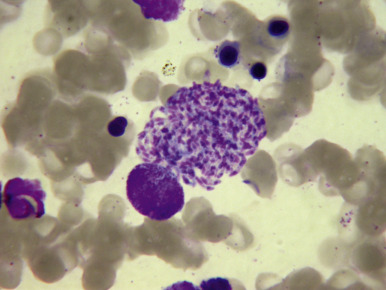
    4. Bone marrow exam (Fig. E2) in suspected bone marrow involvement
  • Immunocompromised host:
    1. CNS symptoms:
      1. Cerebral computed tomography (CT) scan or MRI if CNS symptoms present
      2. Spinal tap, if safe
      3. Brain biopsy (Fig. E3) if no response to empiric therapy
    2. Ocular symptoms:
      1. Funduscopic examination (Fig. E4)
      2. Serologic studies
      3. Rarely, vitreous tap
    3. Pulmonary symptoms:
      1. Chest x-ray examination
      2. Bronchoalveolar lavage
      3. Transbronchial or open-lung biopsy
    4. Myocarditis:
      1. Cardiac enzymes
      2. Electrocardiogram
      3. Endomyocardial biopsy for definitive diagnosis
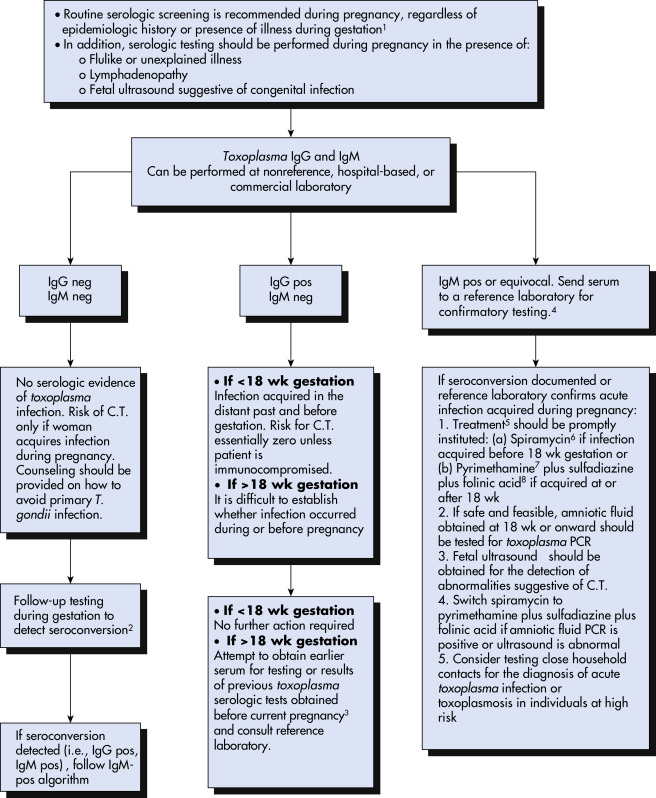
  • Toxoplasmosis in pregnancy (Fig. E5):
    1. Initial maternal screening with IgM and IgG
      1. If negative, mother at risk of acute infection and should be retested monthly
      2. If both IgG and IgM positive, obtain IgA and IgE enzyme-linked immunoassay (ELISA), differential agglutination (AC/HS) test
      3. IgA and IgE ELISA, AC/HS test elevated in acute infection
      4. Ig high for 1 yr or more
      5. IgG repeated 3 to 4 wk later to determine if titer is stable
    2. Acute maternal infection not excluded or documented:
      1. Fetal blood sampling (for culture, Ig, IgA, IgE)
      2. Amniotic fluid polymerase chain reaction (PCR)
    3. Fetal ultrasound every other week if maternal infection documented to look for ventriculomegaly, calcifications in the brain, and enlarged liver and spleen
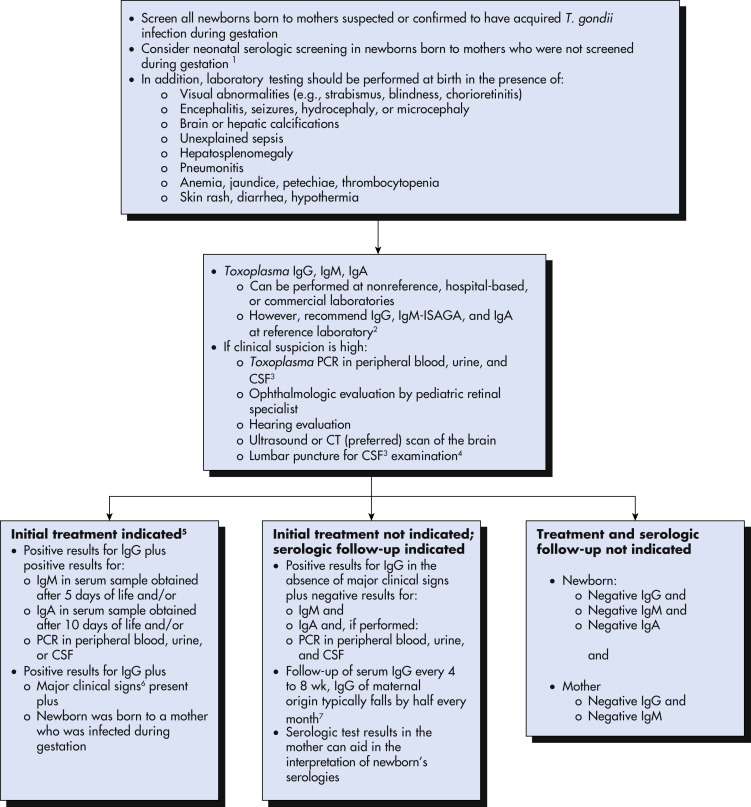
  • Congenital toxoplasmosis (Fig. E6):
    1. Placental histology
    2. Specific IgM or IgA in infant’s blood

Figure E2 Numerous intracellular Toxoplasma gondii in bone marrow.

Stained with RAL555 ×1000.

From personal collection, Luc Paris, Laboratoire de Parasitologie-Mycologie, Groupe Hospitalier Pitié-Salpêtriére, Paris, France; and Ryan ET al: Hunter’s tropical medicine and emerging infectious diseases, ed 10, Philadelphia, 2019, Elsevier.
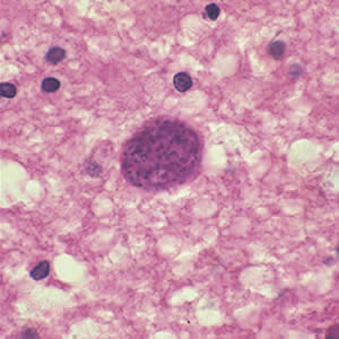
Figure E3 Toxoplasma cysts in brain tissue.

From Ryan ET al: Hunter’s tropical medicine and emerging infectious diseases, ed 10, Philadelphia, 2019, Elsevier.
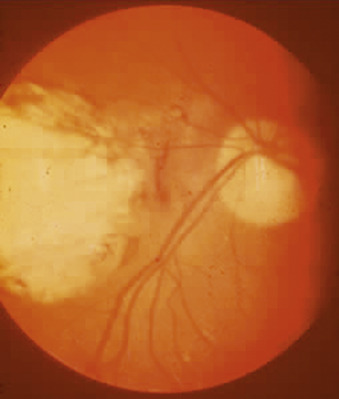
Figure E4 Active ocular toxoplasmosis.

From Ryan ET al: Hunter’s tropical medicine and emerging infectious diseases, ed 10, Philadelphia, 2019, Elsevier.

Figure E5 Diagnostic approach and management algorithm of toxoplasmosis during pregnancy.

!!flowchart!!

Most of the initial serologic screening can be accomplished by nonreference or commercial laboratories. Only positive immunoglobulin M results should be considered for additional testing and consultation with medical experts at a reference laboratory. CT, Congenital toxoplasmosis; IgG, immunoglobulin G; IgM, immunoglobulin M; neg, negative test result; pos, positive test result. 1Up to 50% of women who acquire Toxoplasma infection during gestation do not have a known risk factor for acute infection or an illness suggestive of toxoplasmosis. Thus, to identify all women at risk, serologic screening should be performed in all pregnant women, along with other routine screening tests. 2In a recent study from Lyon, France, monthly screening of seronegative pregnant women was reported to significantly decrease the risk of vertical transmission and of clinical signs at 3 yr of age. Consider consultation with a physician expert in management of toxoplasmosis during pregnancy (e.g., in the U.S., Palo Alto Medical Foundation-Toxoplasma Serology Laboratory [PAMF-TSL], http://www.pamf.org/serology/; 650-853-4828; e-mail, [email protected]; or U.S. [Chicago] National Collaborative Treatment Trial Study [NCCTS]). 4Consider sending serum sample to a reference laboratory (e.g., PAMF-TSL). 5Treatment regimens vary by country. The pyrimethamine-sulfadiazine-folinic acid regimen should not be offered to any pregnant woman before 12 wk of gestation because of potential teratogenicity. In some centers in Europe, this regimen is offered at 14 wk of gestation or later; in the U.S., it is recommended at 18 wk or later. 6Spiramycin is not commercially available in the U.S. It can be obtained at no cost and after consultation (with PAMF-TSL or the NCCTS through the U.S. Food and Drug Administration). 7When using pyrimethamine, folic acid should be discontinued from the prenatal multivitamins. Folic acid can potentially counteract the antiparasitic effect of the drug. 8Folic acid should not be erroneously used instead of folinic acid.

From Bennett JE et al: Mandell, Douglas, and Bennett’s principles and practice of infectious diseases, ed 8, Philadelphia, 2015, Saunders.

Figure E6 Diagnostic Approach and Management Algorithm of the Newborn Whose Mother Has Been Suspected or Confirmed to have Acquired Toxoplasmosis During Gestation

CSF, Cerebrospinal fluid; CT, computed tomography; IgG, IgM, and IgA, immunoglobulins G, M, and A, respectively; ISAGA, immunosorbent agglutination assay; PCR, polymerase chain reaction. 1Consider consultation with a physician expert in management of toxoplasmosis during pregnancy (e.g., in the U.S., Palo Alto Medical Foundation-Toxoplasma Serology Laboratory [PAMF-TSL], http://www.pamf.org/serology/; 650-853-4828; e-mail, [email protected]; or U.S. [Chicago] National Collaborative Treatment Trial Study, 773-834-4152). 2Consider sending serum sample to a reference laboratory (e.g., PAMF-TSL). 3If lumbar puncture is clinically indicated, deemed safe, and feasible. 4In an attempt to confirm the diagnosis of congenital toxoplasmosis, CSF should be sent for cell count and differential (congenital toxoplasmosis is one of the few causes of eosinophilic meningitis), protein (congenital toxoplasmosis is one of the few causes of extreme elevation of CSF protein), glucose, and T. gondii polymerase chain reaction. 5The recommended regimen is pyrimethamine plus sulfadiazine plus folinic acid (see text). 6Major clinical signs are referred here: Chorioretinitis, brain calcifications, and hydrocephalus. 7Maternally transferred IgG antibodies usually decline and disappear within 6 to 12 mo of life.

From Bennett JE et al: Mandell, Douglas, and Bennett’s principles and practice of infectious diseases, ed 8, Philadelphia, 2015, Saunders.

Laboratory Tests

  • Antibody studies:
    1. More than one test necessary to establish diagnosis of acute toxoplasmosis (look for seroconversion or 4× increase)
    2. IgM antibody:
      1. Appears 5 days into infection
      2. Peaks at 2 wk
      3. Falls to low level or disappears within 2 mo
      4. May persist at low levels for 1 yr or more
    3. Antibody not measurable:
      1. Ocular toxoplasmosis
      2. Reactivation
      3. Immunocompromised hosts
    4. IgG antibody:
      1. Appears 1 to 2 wk after infection
      2. Peaks at 6 to 8 wk
      3. Gradually declines over months to years
    5. Guidelines for interpretation of serologic tests for toxoplasmosis are summarized in Table 1

TABLE 1 Guidelines for Interpretation of Serologic Tests for Toxoplasmosis

IgGIgMIgG AvidityInterpretation
PositiveNegative-Remote infection, immune. IgG avidity testing is best used when both IgG and IgM are positive and timing of infection is crucial, as in pregnancy (see below).
False-negative IgM results occur in approximately 25% of cases when evaluating infection in the newborn. If infection is suspected in this setting, further testing (dye test, IgM EIA, IgA EIA, IgE EIA/ISAGA, PCRs, ideally with paired maternal serology tests-see text) is necessary in a reference laboratory (Toxoplasma Serology Laboratory, PAMF Research Institute, 795 El Camino Real, Ames Building Palo Alto, CA, 94301; 650-853-4828).
PositivePositive or equivocalHighInfection within the past 18 mo but likely >12 wk ago. If pregnant and beyond first trimester, consider sending specimen to reference laboratory for dye test, repeat IgG avidity and IgM EIA, IgA EIA, IgE EIA/ISAGA, and AC/HS testing (see above).
PositivePositive or equivocalLowInfection within the past 12 wk. Consider sending specimen to a reference laboratory (see above) to time infection more accurately (dye test, repeat IgG avidity and IgM EIA, IgA EIA, IgE EIA/ISAGA, and AC/HS) in the setting of pregnancy.
EquivocalNegative-Indeterminate. Test a new specimen or consider a different assay (IFA or ELISA).
EquivocalEquivocal-Indeterminate. Test a new specimen or consider a different assay (IFA or ELISA).
EquivocalPositive-Acute infection or false-positive IgM result. Test a second specimen; if IgG becomes positive or remains equivocal, consider sending specimen to a reference laboratory to time infection more accurately (dye test, IgG avidity, IgM EIA, IgA EIA, IgE EIA/ISAGA, AC/HS-see text) in the setting of pregnancy.
NegativeNegative-No evidence of Toxoplasma infection; not immune.
NegativeEquivocal-Either false-positive IgM result or possible recent infection. Obtain a new specimen and retest. If infection is recent, IgM and IgG should become positive, with low IgG avidity. If repeated testing is still IgG negative and IgM equivocal, patient is likely uninfected. Consider IgM ISAGA.
NegativePositive-Acute infection or false-positive IgM result. Repeat testing on new specimen. If the result is the same, it is likely a false-positive IgM result. Consider IgM ISAGA.

AC/HS, Differential agglutination test; EIA, enzyme immunoassay; ELISA, enzyme-linked immunosorbent assay; IFA, immunofluorescence assay; Ig, immunoglobulin; ISAGA, immunosorbent agglutination assay; PCR, polymerase chain reaction.

From Cherry JD et al: Feigin and Cherry’s pediatric infectious diseases, ed 8, Philadelphia, 2019, Elsevier.
Imaging Studies

  • Chest x-ray examination if pulmonary involvement suspected
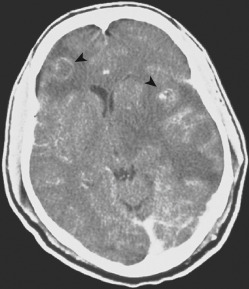
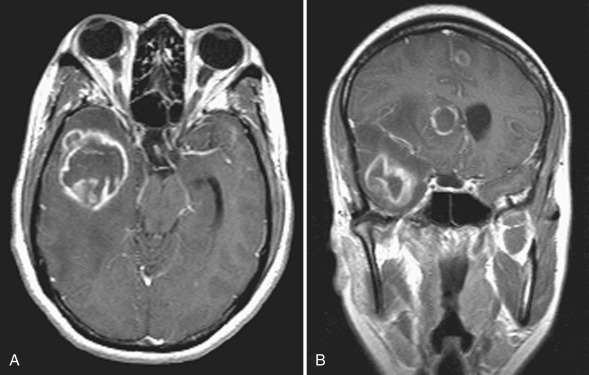
  • Cerebral CT scan (Fig. E7) or MRI (Fig. E8) if encephalitis suspected

Figure E7 Toxoplasmic encephalitis in a person who has acquired immunodeficiency syndrome.

A cranial computed tomography scan shows bilateral contrast-enhanced ring lesions with peripheral edema and mass effect.

From Cohen J, Powderly WG: Infectious diseases, ed 2, St Louis, 2004, Mosby.

Figure E8 Cerebral toxoplasmosis in acquired immunodeficiency syndrome.

Postgadolinium axial (A) and coronal (B) T1-weighted magnetic resonance imaging showing multiple ring-enhancing lesions with mass effect.

From Jankovic J et al: Bradley and Daroff’s neurology in clinical practice, ed 8, Philadelphia, 2022, Elsevier.

Treatment ⬆ ⬇

Nonpharmacologic Therapy

  • Selected cases of ocular infection:
    1. Photocoagulation
    2. Vitrectomy
    3. Lensectomy
  • Selected cases of congenital cerebral infection:
    1. Ventricular shunting
Acute General Rx

  • Acute infection, immunocompetent, nonpregnant host:
    1. Usually requires no treatment, unless severe and persistent symptoms or vital organ damage
  • Acute infection, immunocompromised host, non-AIDS:
    1. Treat even if asymptomatic
    2. Duration:
      1. Until 4 to 6 wk after resolution of all signs and symptoms
      2. Usually 6 mo or longer
  • Reactivated infection, immunocompromised host, non-AIDS:
    1. Treat if symptomatic
  • Acute or reactivated infection, AIDS:
    1. Treat in all cases
    2. Induction course:
      1. 3 to 6 wk
      2. Maintenance therapy continued for life; consider discontinuation of suppressive therapy if the patient has a good response to antiretroviral therapy and if the CD4 count remains >200 cells/mm3 for more than 3 mo
    3. Empiric therapy:
      1. AIDS with positive IgG
      2. Multiple ring-enhancing lesions on cerebral CT scan or MRI
      3. Response seen by day 7 in 71% and day 14 in 91%
  • Ocular infection:
    1. Treat in all cases
    2. Therapy continued for 1 mo or longer if needed
    3. Response seen in 70% within 10 days
    4. Retreat as needed
    5. Steroids may be indicated in patients with signs or symptoms of increased intracranial pressure
    6. Surgical treatment in selected cases
  • Treatment regimens (Table 2):
    1. Pyrimethamine 200 mg loading dose once PO, then 50 mg (<60 kg) to 75 mg (>60 kg) daily; plus
    2. Leucovorin 10 to 25 mg PO daily; plus
    3. Sulfadiazine 1 (<60 kg) to 1.5 g (>60 kg) PO q6h

TABLE 2 Treatment of Toxoplasmosis

DiseaseMedicationDosageLength of Therapy
Acute acquired-generally not treated unless severe or persistent symptoms, vital organ damage, or host immunosuppressionaPyrimethamine plus2 mg/kg daily for 2 days, then 1 mg/kg daily4-6 wk or 2 wk after symptoms resolve for normal host; 4-6 wk beyond resolution for immunosuppressed hosts. In AIDS patients, treat until CD4+ count >200
Sulfadiazine plus75-100 mg/kg daily divided twice daily (maximum 4 g/day); consider the lower dose in children >20 kg (see text)
Folinic acid5-20 mg 3 times wkly; use higher doses if marrow suppression
Ocular, older childPyrimethamine plus2 mg/kg daily for 2 days, then 1 mg/kg daily (maximum 50 mg/day)4-6 wk or 2 wk after symptoms resolve
Sulfadiazine plus75-100 mg/kg daily divided twice daily (maximum 4 g/day); consider the lower dose in children >20 kg (see text)Prednisone should be continued until resolution of sight-threatening active chorioretinitis
Folinic acid plus5-20 mg 3 times wkly
Prednisone1 mg/kg daily divided twice daily
CongenitalPyrimethamine plus2 mg/kg daily for 2 days, then 1 mg/kg daily for 6 mo, then 3 times wkly (M-W-F) for 6 mo1 yr
Sulfadiazine plus100 mg/kg daily divided twice daily
Folinic acid plus5-10 mg 3 times wkly
Prednisone1 mg/kg daily divided twice dailyUntil resolution of elevated CSF protein level or sight-threatening active chorioretinitis
Pregnant women-acute infection first 21 wk of gestationSpiramycin3 g/day divided twice daily without foodUntil fetal infection documented or excluded at 21 wk of gestation; if fetus infected, change to pyrimethamine plus sulfadiazine plus folinic acid until delivery
Pregnant women-fetal infection confirmed (amniotic fluid PCR positive)Pyrimethamine plus100 mg/day divided twice daily for 2 days, then 50 mg/dayUntil delivery
Sulfadiazine plus3 g/day divided twice daily
Folinic acid5-20 mg/day

AIDS, Acquired immunodeficiency syndrome; CSF, cerebrospinal fluid; PCR, polymerase chain reaction.

a For more detailed recommendations for patients with human immunodeficiency virus infection/AIDS, see http://aidsinfo.nih.gov/guidelines.

From Cherry JD et al: Feigin and Cherry’s pediatric infectious diseases, ed 8, Philadelphia, 2019, Elsevier.

Other treatment options (if sulfa hypersensitivity or allergy is present): Pyrimethamine 50 to 75 mg/day PO with leucovorin 10 to 25 mg/day PO and either (1) clindamycin 600 mg q6h PO or IV q6h, or (2) atovaquone 1500 mg PO q12h, or (3) azithromycin 900 to 1200 mg PO daily.

  • Acute infection in pregnancy:
    1. Treat immediately
    2. Risk of fetal infection reduced by 60% with treatment
      1. Seroconversion in the first trimester
        1. Spiramycin 1 g q8h
      2. Seroconversion beyond the first trimester or positive amniotic fluid PCR/ultrasound findings consistent with congenital toxoplasmosis:
        1. Sulfadiazine 75 mg/kg daily in two divided doses ×2 days, then 50 mg/kg bid, plus
        2. Pyrimethamine 50 mg bid ×2 days, then 50 mg/day PO, plus
        3. Leucovorin 10 to 20 mg/day PO
  • Postnatal treatment of congenital infection:
    1. Sulfadiazine 50 mg/kg PO bid, plus
    2. Pyrimethamine 2 mg/kg PO for 2 days, then 1 mg/kg PO daily for the first 2 to 6 mo, then 3× wkly, plus
    3. Leucovorin 5 to 20 mg PO 3×s wkly
    4. Minimum duration of treatment: 12 mo
Chronic Rx

Maintenance therapy in AIDS patients because of the high risk (80%) of relapse:

  • Pyrimethamine 25 mg PO qid
  • Sulfadiazine 500 mg PO qid
  • Leucovorin 10 to 20 mg PO qid
Disposition

  • Prognosis:
    1. Excellent in the immunocompetent host
    2. Good in ocular infection (although relapses are common)
  • Treatment of acute infection in pregnancy:
    1. Reduces incidence and severity of congenital toxoplasmosis
  • Treatment of congenital infection:
    1. Improvement in intellectual function
    2. Regression of retinal lesions
  • AIDS:
    1. 70% to 95% response to therapy
Referral

  • To infectious disease expert:
    1. Immunocompromised hosts
    2. Pregnant women
    3. Difficulty in making a diagnosis or deciding on treatment
  • To pediatric infectious disease expert:
    1. Congenital infection
  • To obstetrician:
    1. Pregnant seronegative mother
    2. Acute seroconversion
  • To ophthalmologist:
    1. Congenital infection
    2. Any case of ocular infection

Pearls & Considerations ⬆ ⬇

Comments

  • Prevention of toxoplasmosis is most important in seronegative pregnant women and immunocompromised hosts.
  • Patient instructions:
    1. Cook meat to 66° C (150.8° F).
    2. Cook eggs.
    3. Do not drink unpasteurized milk.
    4. Wash hands thoroughly after handling raw meat.
    5. Wash kitchen surfaces that come in contact with raw meat.
    6. Wash fruits and vegetables.
    7. Avoid contact with materials potentially contaminated with cat feces.
Related Content

Toxoplasmosis (Patient Information)

Related Content ⬆

    1. Maldonado Y.A., Read J.S. : Committee on infectious diseases: diagnosis, treatment, and prevention of congenital toxoplasmosis in the United StatesPediatrics. ;139(2), 2017.