▶Represents epidermal proliferation process with minimal increase in melanin.
▶Believed to be due to insulin resistance and its effect on the skin.
▶May be seen in the following settings:
■Obesity
■Insulin resistance syndromes
■Endocrinologic disorders (eg, type 2 diabetes mellitus, Addison disease, Cushing disease, hypothyroidism, hyperandrogenism, hypogonadism, polycystic ovary syndrome)
■Medications (oral contraceptives, nicotinic acid)
▶Malignancy: In adults, sudden onset of acanthosis nigricans may herald a malignant tumor, but no such association is recognized in childhood.
▶Velvety thickening of the skin creates a brown to gray-black color that may be mistaken by patients as dirt (Figure 68.1).
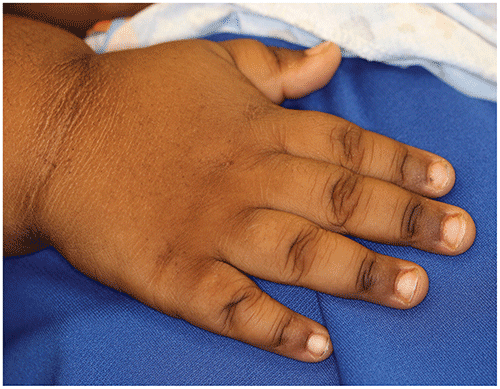
▶Most commonly observed on the nape or sides of the neck, axillae, and groin (crural creases); some patients may exhibit lesions over the knuckles (Figure 68.2) and around the mouth.
Figure 68.1. Velvety, Hyperpigmented Thickening of the Skin Characterizes Acanthosis Nigricans, Seen Here over the Lateral Aspect of the Neck.
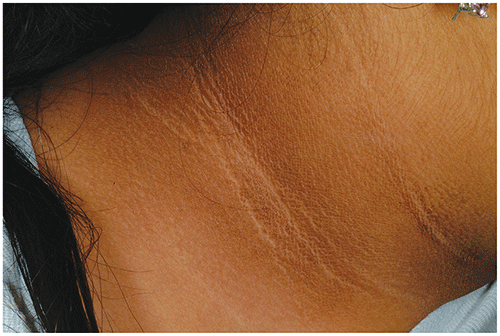
Figure 68.2. In This 4-Year-Old Who Had Morbid Obesity, Changes of Acanthosis Nigricans Were Present in a Diffuse Pattern, Including Classic Locations, as Well as Overlying the Knuckles and in the Wrist Folds, as Demonstrated Here.
Look-alikes
| Disorder | Differentiating Features |
|---|
| Postinflammatory hyperpigmentation | |
| Lichenification (ie, thickening of the skin) associated with chronic atopic or contact dermatitis | Lacks the velvety texture of acanthosis nigricans. Other features of atopic dermatitis often present. Pruritus common (acanthosis nigricans not pruritic).
|
▶The diagnosis is made clinically based on the clinical appearance (ie, velvety thickening of skin) in typical locations.
▶Evaluate patient for underlying cause based on history and physical examination.
■Evaluate the patient for the possibility of type 2 diabetes and hyperlipidemia.
■Consider obtaining an insulin level or other endocrinologic testing if the patient does not have obesity.
▶Treatment of acanthosis nigricans is difficult and often unsatisfactory.
■Consider application of keratolytic preparation (ie, one containing lactic or salicylic acid) or a retinoid.
■Extensive acanthosis nigricans may benefit from carbon dioxide laser resurfacing.
■If otherwise indicated, metformin may improve acanthosis due to reduced insulin resistance.
■Changes often (but not always) improve with weight loss (and resultant improved insulin sensitivity).
▶If an underlying disorder is identified in a patient who has acanthosis nigricans, it should be managed appropriately.
▶Acanthosis nigricans is an important marker for insulin resistance, hyperlipidemia, and metabolic syndrome.
▶Familial acanthosis nigricans has an excellent prognosis.
▶If associated with other disorders, the prognosis depends on the other conditions and is variable.