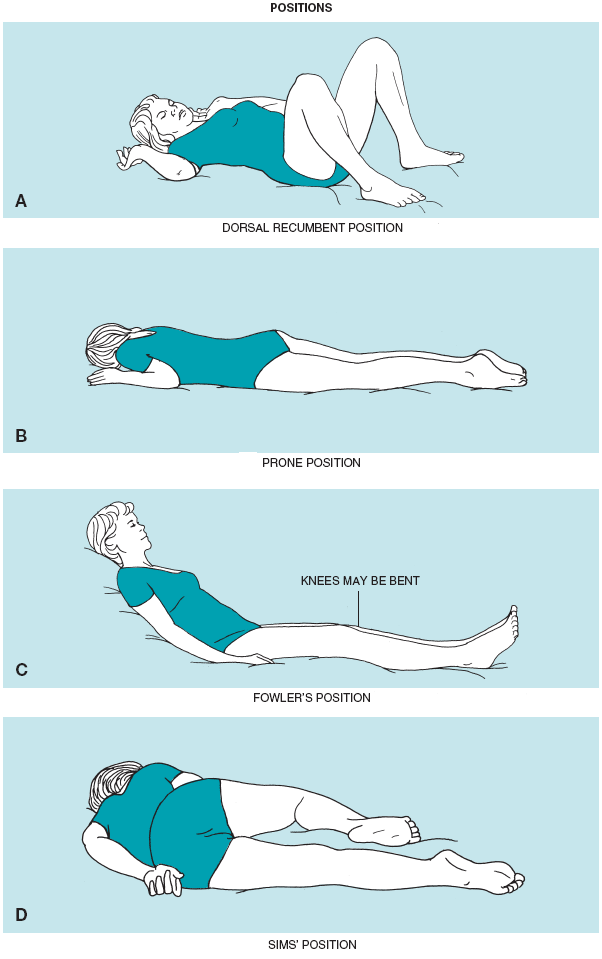
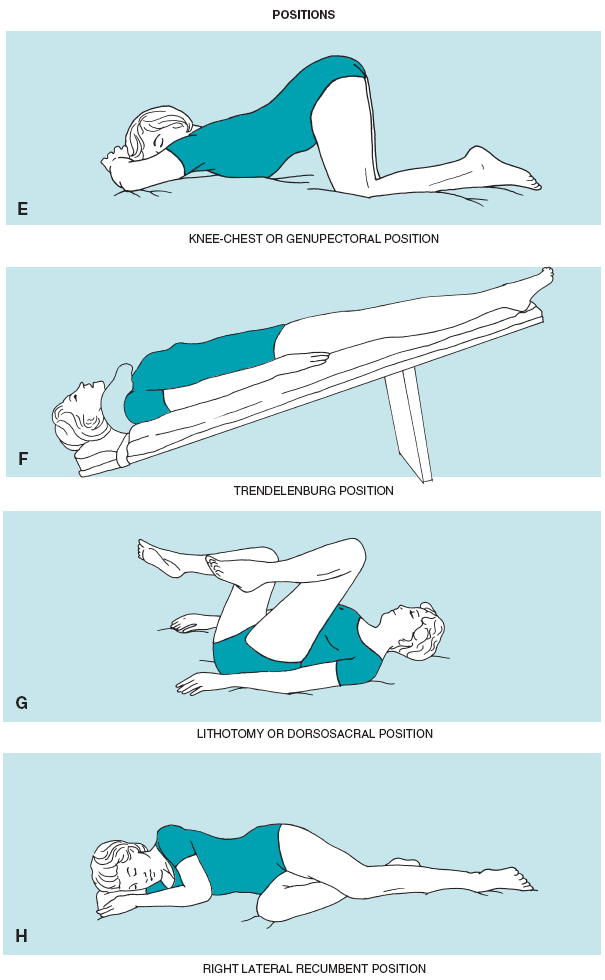
(A) Dorsal recumbent (back-lying), legs up—used in gynecological and obstetrical procedures such as forceps delivery or vaginal examination; legs down—for comfort and following spinal anesthesia. (B) Prone—may be used in clients who are unconscious to promote drainage from mouth and prevent flexion contractures. (C) Fowler's—semi-sitting; 45 to 60 degrees; knees may or may not be bent.Facilitates breathing and drainage. (D) Sims'—position of choice for enemas and rectal examination, prevents aspiration in clients who are unconscious, comfortable sleeping position for women who are pregnant. (E) Knee-chest or genupectoral—used for gynecological and obstetrical conditions such as impacted fetal head or transverse presentation. (F) Trendelenburg—used in abdominal surgery. Modified Trendelenburg (torso flat and feet elevated) preferred in shock. (G) Lithotomy or dorsosacral—used in genital tract operations and vaginal hysterectomy. (H) Right lateral recumben—side-lying, relieves pressure on sacrum and heels.