The pulmonary system delivers oxygen (O2) to the bloodstream and removes excess carbon dioxide (CO2) from the body. The delivery of O2 to the cells is essential for cell survival. The alveoli are the gas exchange units of the lungs. The lungs in a typical adult contain about 300 million alveoli.
A closer look at alveoli
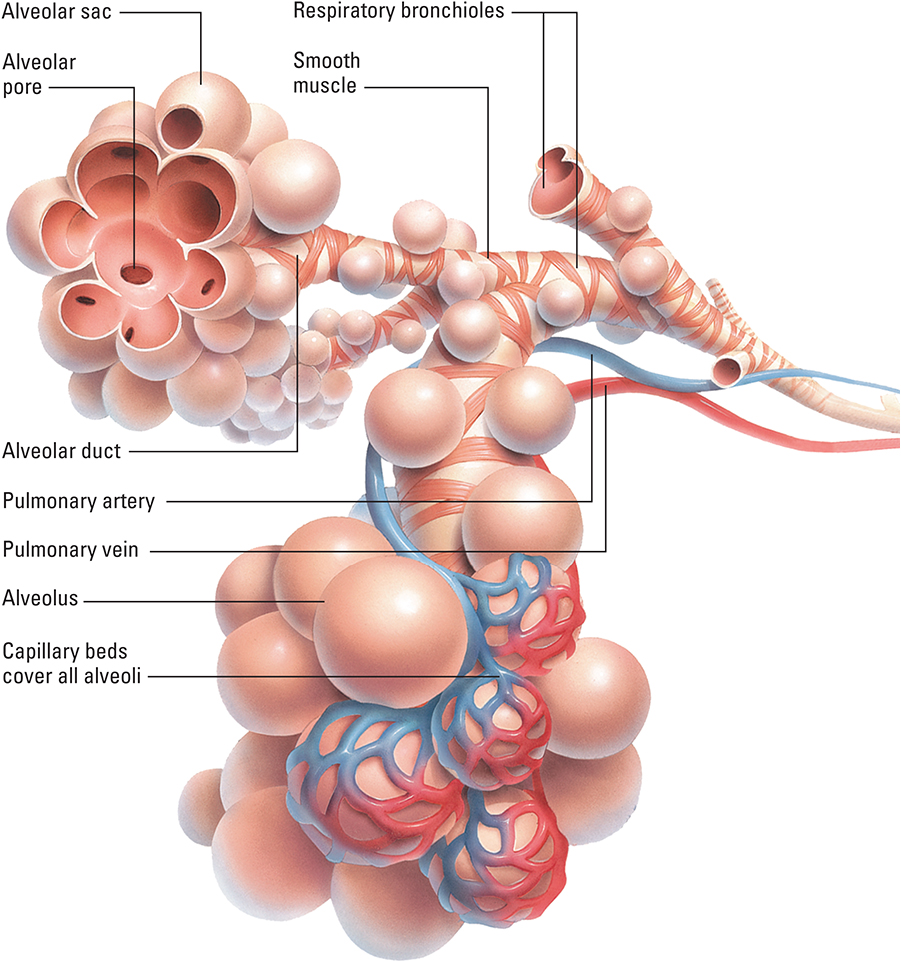
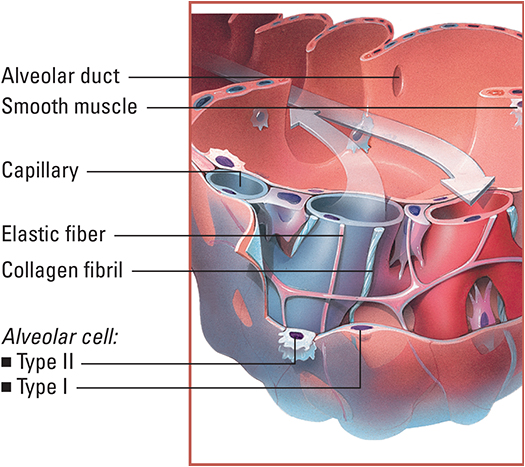
Gas exchange occurs rapidly in the tiny, thin-membraned alveoli. Inside these air sacs, O2 from inhaled air diffuses into the blood as carbon dioxide diffuses from the blood into the air and is exhaled. Macrophages are present in the alveoli and protect from bacterial invasion through phagocytosis.
Alveoli consist of type I and type II epithelial cells:
Type I cells form the alveolar walls, through which gas exchange occurs.
Type II cells produce surfactant, a lipid-type substance that coats the alveoli. During inspiration, the alveolar surfactant allows the alveoli to expand uniformly. During expiration, the surfactant prevents alveolar collapse.
This illustration shows a cross-sectional view of an alveolus.


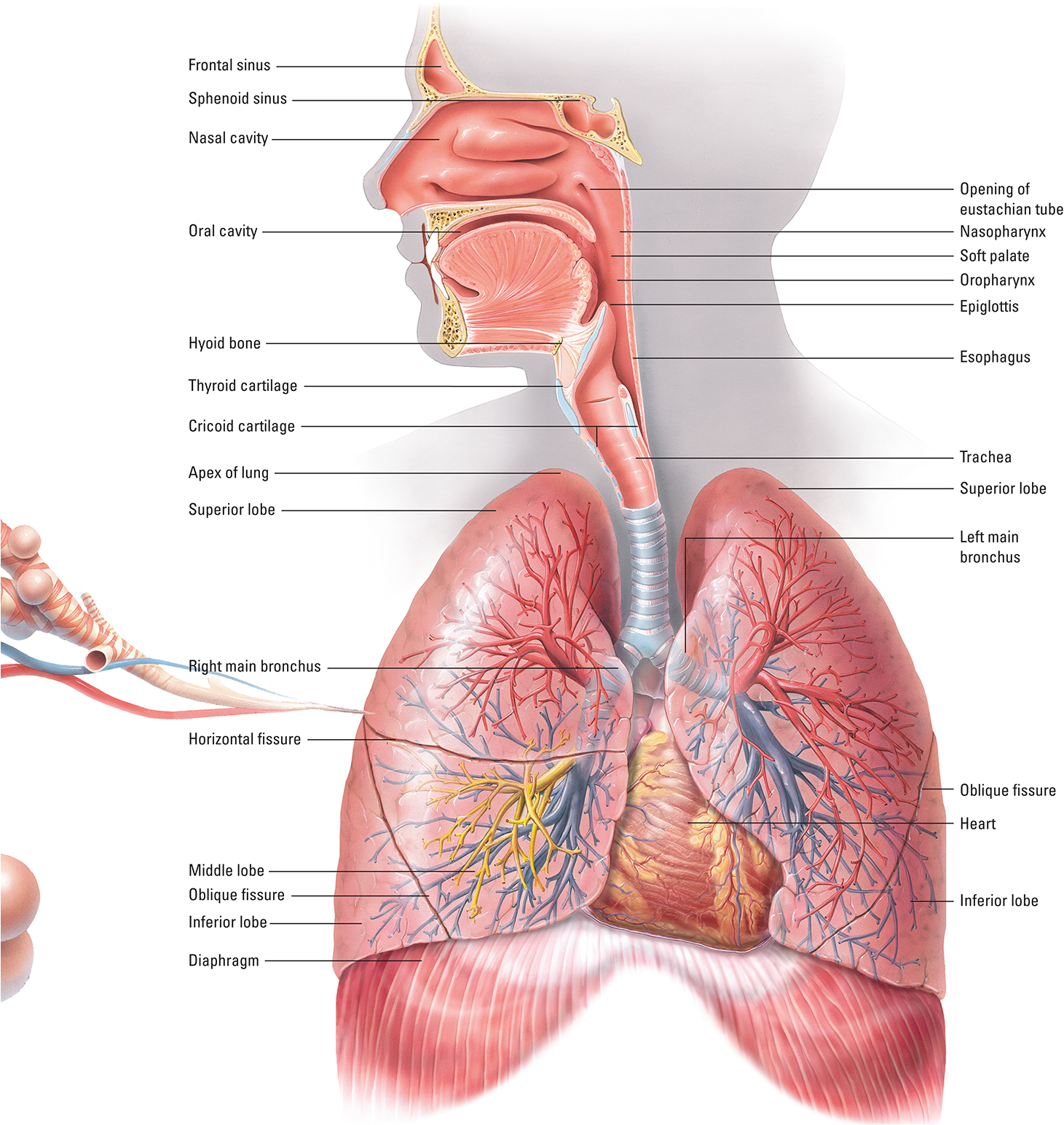
The respiratory system is divided into the upper respiratory tract and the lower respiratory tract. The upper respiratory tract consists of the nose, mouth, nasopharynx, oropharynx, laryngopharynx, and larynx. The lower respiratory tract consists of the trachea, lungs, left and right mainstem bronchi, five secondary bronchi, and bronchioles. The left mainstem bronchus has two lobes, and the right mainstem bronchus has three lobes. Each lung is protected by a pleural membrane. The visceral pleura attaches to the outer surface of the lung, whereas the parietal pleura lines the inside of the thoracic cavity.
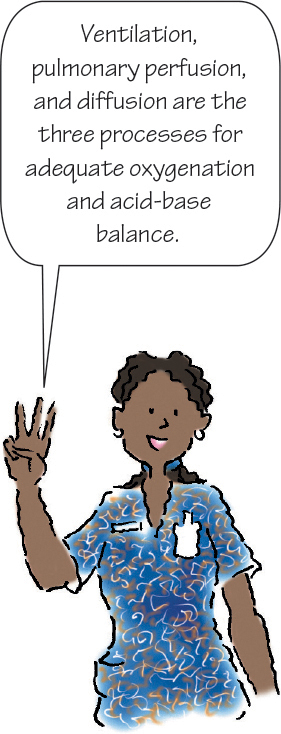
Effective respiration requires gas exchange in the lungs (external respiration) and in the tissues (internal respiration). Three external respiration processes are needed to maintain adequate oxygenation and acid-base balance:
Ventilation (gas distribution into and out of the pulmonary airways)
Pulmonary perfusion (blood flow from the right side of the heart, through the pulmonary circulation, and into the left side of the heart)
Diffusion (gas movement from an area of greater concentration to an area of lesser concentration through a semipermeable membrane): Deoxygenated blood enters the pulmonary capillaries, which have lower partial pressure of O2 in inhaled alveolar air.
Ventilation
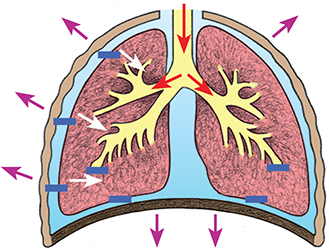
Breathing, or ventilation, is the movement of air into and out of the respiratory system. During inspiration, the diaphragm extends downward to allow a greater area for lung expansion. The external intercostal muscles contract, causing the rib cage to expand and the volume of the thoracic cavity to increase. Air then rushes in to equalize the pressure. The air moves throughout the respiratory tract down to the alveoli, where gas exchange takes place. During expiration, the lungs passively recoil as the diaphragm and intercostal muscles relax, pushing air out of the lungs. CO2 is then expired.
The mechanics of breathing
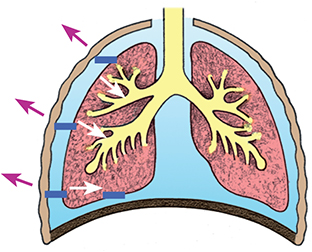
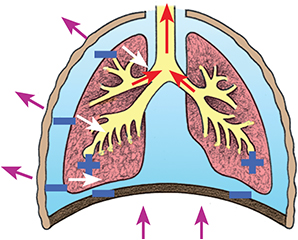
Mechanical forces, such as movement of the diaphragm and intercostal muscles, drive the breathing process, which is a response to the changes in the atmospheric pressure within the alveoli and pleural cavity. In the figures that follow, a plus sign (+) indicates positive pressure, and a minus sign () indicates negative pressure.
Inspiratory muscles relax.
Atmospheric pressure is maintained in the tracheobronchial tree.
Atmospheric pressure = pressure in the alveoli and lungs.
No air movement occurs.
Inspiratory muscles contract.
The diaphragm descends.
Negative alveolar pressure is maintained.
Pulmonary perfusion
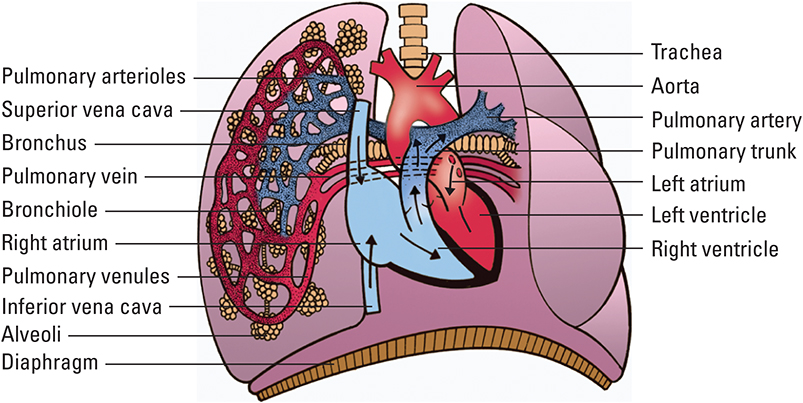
Blood flow through the lungs is powered by the right ventricle. The right and left pulmonary arteries carry deoxygenated blood from the right ventricle to the lungs. These arteries divide to form distal branches called arterioles, which terminate as a concentrated capillary network in the alveoli and alveolar sac, where gas exchange occurs. After the deoxygenated blood flows from the right side of the heart through the pulmonary circulation, oxygenated blood is delivered to the left side of the heart.
Venules-the end branches of the pulmonary veins-collect oxygenated blood from the capillaries and transport it to larger vessels, which carry it to the pulmonary veins. The pulmonary veins enter the left side of the heart and distribute oxygenated blood throughout the body.
Tracking pulmonary perfusion
Pulmonary vascular resistance
Pulmonary vascular resistance (PVR) refers to the resistance in the pulmonary vascular bed against which the right ventricle must eject blood. PVR is largely determined by the caliber and degree of tone of the pulmonary arteries, capillaries, and veins and is measured with the use of hemodynamic monitoring. Because these vessels are thin walled and highly elastic, PVR is normally very low. However, PVR may be easily influenced by vasoactive stimuli that dilate or constrict the pulmonary vessels or affect the tone of these vessels.
Factors that increase PVR include:
vasoconstricting drugs
hypoxemia
acidemia
hypercapnia
atelectasis.
Factors that decrease PVR include:
vasodilating drugs
alkalemia
hypocapnia
conditions that result in high cardiac output, such as during strenuous exercise.
Diffusion
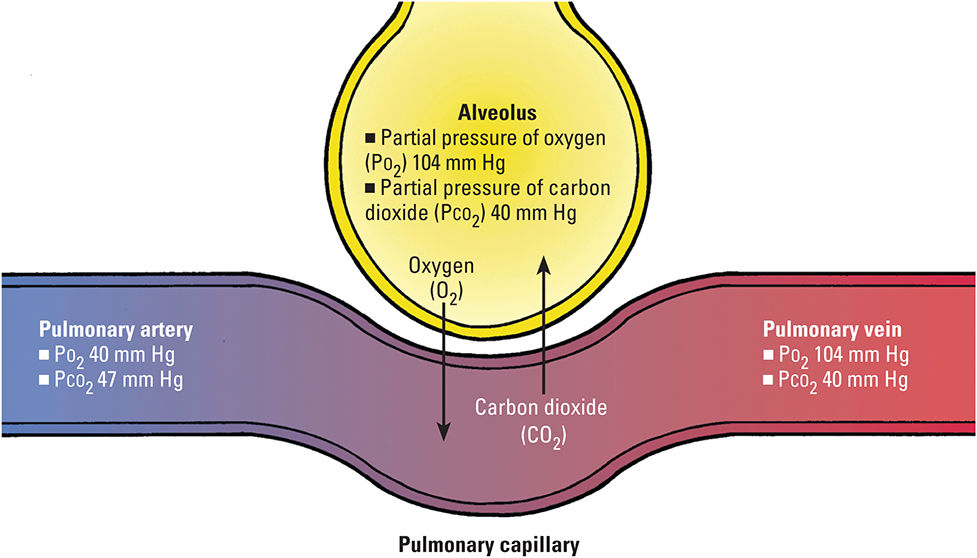
Blood in the pulmonary capillaries gains O2 and loses CO2 through the process of diffusion (gas exchange). In this process, O2 and CO2 move from an area of greater concentration to an area of lesser concentration through the pulmonary capillary, a semipermeable membrane.
Diffusion across the alveolarcapillary membrane
This illustration shows how the differences in gas concentration between blood in the pulmonary artery (deoxygenated blood from the right side of the heart) and alveolus make this process possible. Gas concentrations depicted in the pulmonary vein are the end result of gas exchange and represent the blood that is delivered to the left side of the heart and systemic circulation.
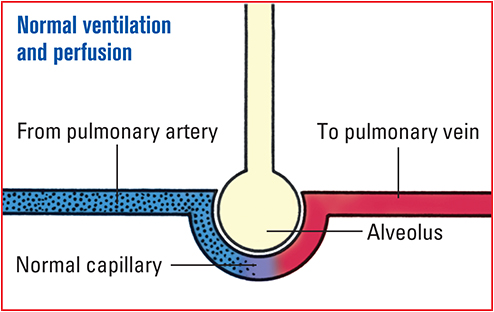
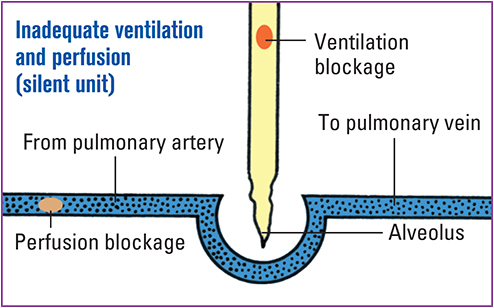
Areas where perfusion and ventilation are similar have a ventilation-perfusion match (V̇/Q̇ match). Gas exchange is most efficient in such areas. For example, in normal lung function, the alveoli receive air at a rate of about 4 L/min, whereas the capillaries supply blood to the alveoli at a rate of about 5 L/min, creating a V̇/Q̇ ratio of 4:5, or 0.8 (the normal range for a V̇/Q̇ ratio is from 0.8 to 1.2).
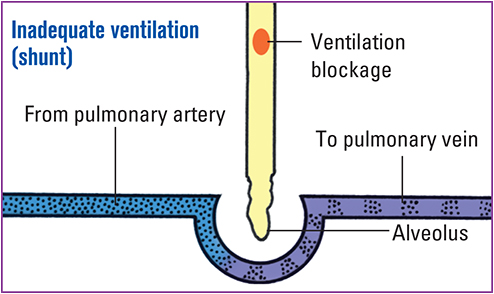
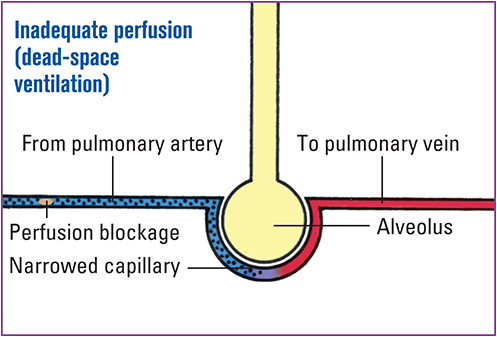
A V̇/Q̇ mismatch, resulting from ventilation-perfusion dysfunction or altered lung mechanics, indicates ineffective gas exchange between the alveoli and pulmonary capillaries and can affect all body systems by changing the amount of O2 delivered to living cells.
Understanding ventilation and perfusion
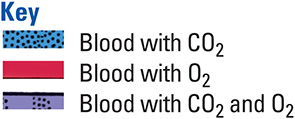
When V̇/Q̇ matches, unoxygenated blood from the venous system returns to the right side of the heart through the pulmonary artery to the lungs, carrying CO2. The arteries branch into the alveolar capillaries. Gas exchange takes place in the alveolar capillaries. This process is depicted in the below illustration, and possible causes of a V̇/Q̇ mismatch are described in the table that follows.


Possible causes of a V̇/Q̇ mismatch
The cardiac system:
works in conjunction with the pulmonary system to carry life-sustaining O2 and nutrients in the blood to all cells of the body.
removes metabolic waste products in the blood from the cells.
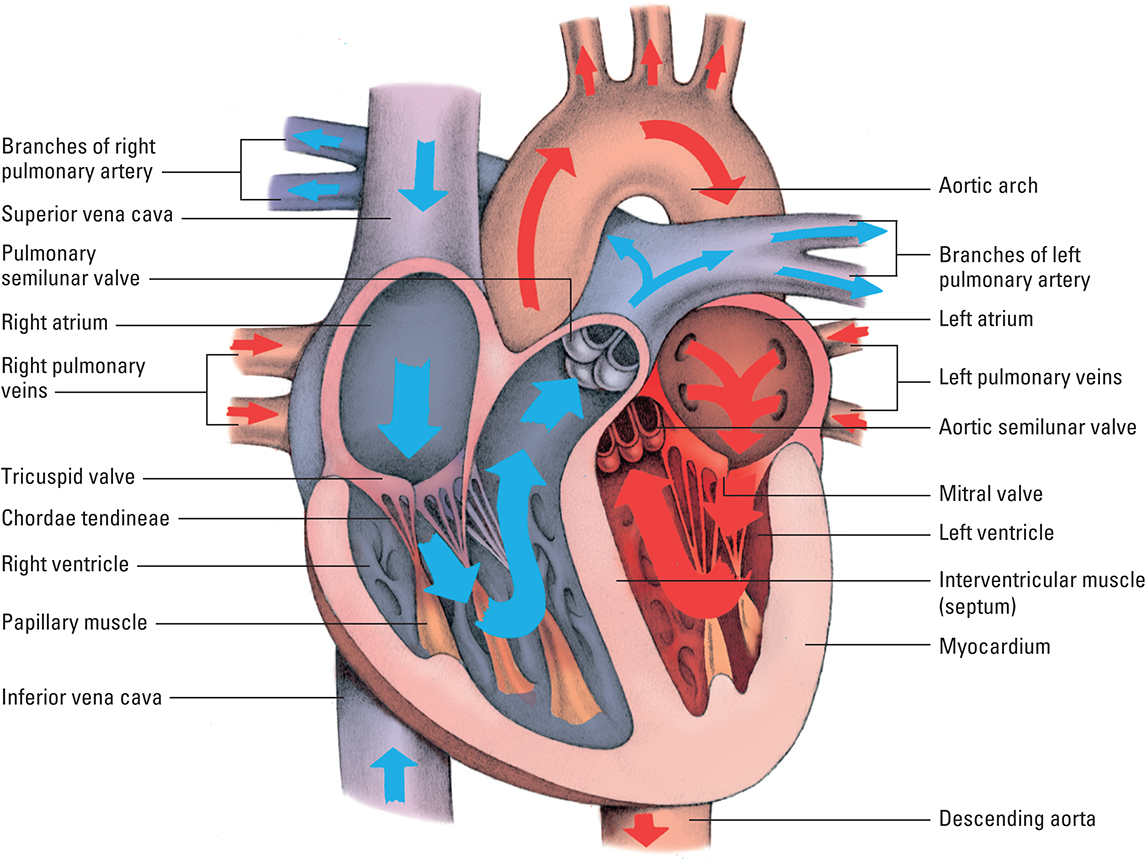
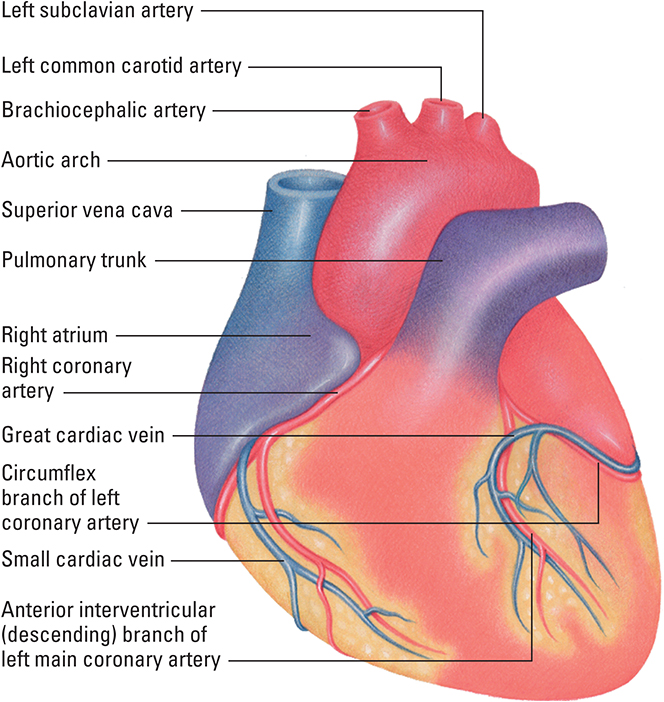
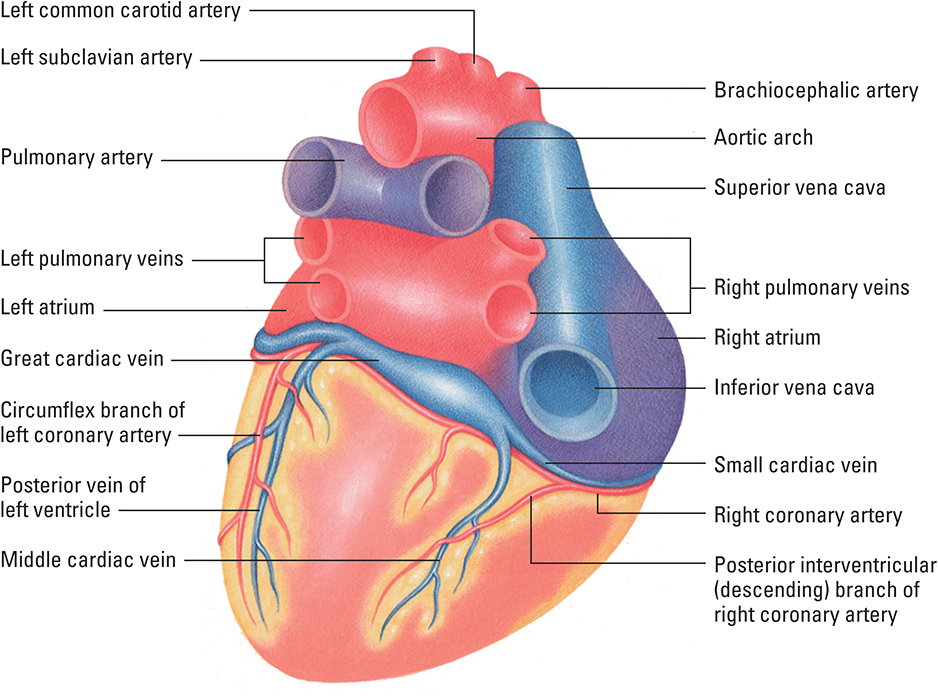
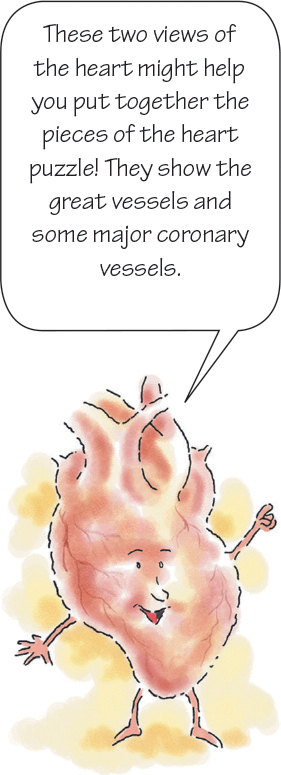
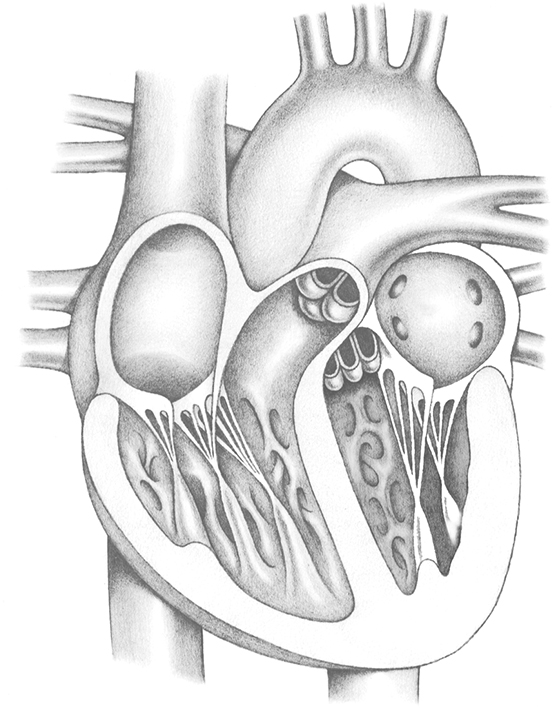
The heart is a cone-shaped muscle located within the mediastinum and is surrounded by a protective sac called the pericardium. The major blood vessels of the heart are the left and right coronary arteries, which branch from the base of the aorta. The heart is divided into four chambers: the right and left atria and the right and left ventricles. The right heart is responsible for delivering deoxygenated blood to the lungs and is a low-pressure system. The left heart is responsible for delivering oxygenated blood to the body and is a high-pressure system.
The valves of the heart facilitate the flow of blood in a forward direction. The atrioventricular (AV) valves are the tricuspid and mitral valves. The semilunar valves are the pulmonic and aortic valves. The tricuspid valve is located between the right atrium and the right ventricle. The mitral valve is located between the left atrium and the left ventricle. The pulmonic valve is located between the right ventricle and the pulmonary artery. The aortic valve is located between the left ventricle and the aorta.
A closer look at the heart


On the level: Normal intracardiac pressures
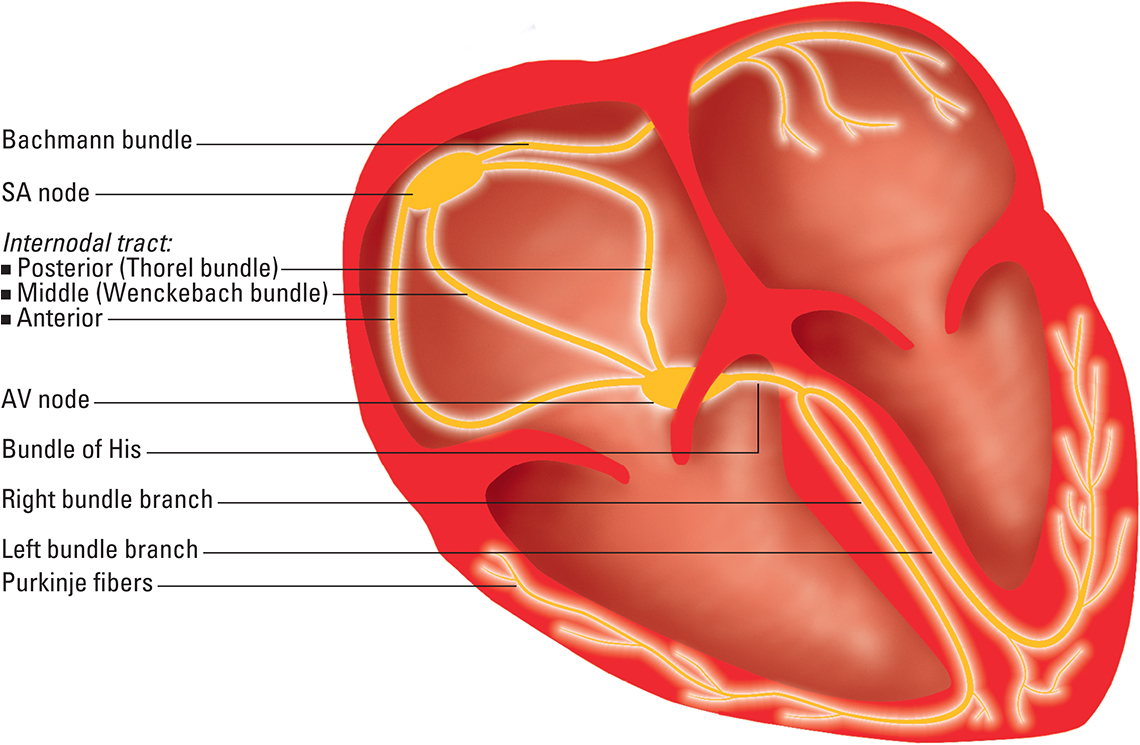
The conduction system of the heart begins with the heart's pacemaker, the sinoatrial (SA) node, which is located in the right atrium. When an impulse leaves the SA node, it travels through the atria along the Bachmann bundle and the internodal pathways on its way to the AV node and the ventricles. After the impulse passes through the AV node, it travels to the ventricles, first down the bundle of His, then along the bundle branches, and, lastly, down the Purkinje fibers.
Cardiac conduction system

Memory jogger
To remember the path of cardiac conduction, use this mnemonic: Some Believe In Acting Badly Before Performing. The first letter of the words in the mnemonic stand for: Sinoatrial node Bachmann bundle Internodal pathways Atrioventricular node Bundle of His Bundle branches Purkinje fibers |
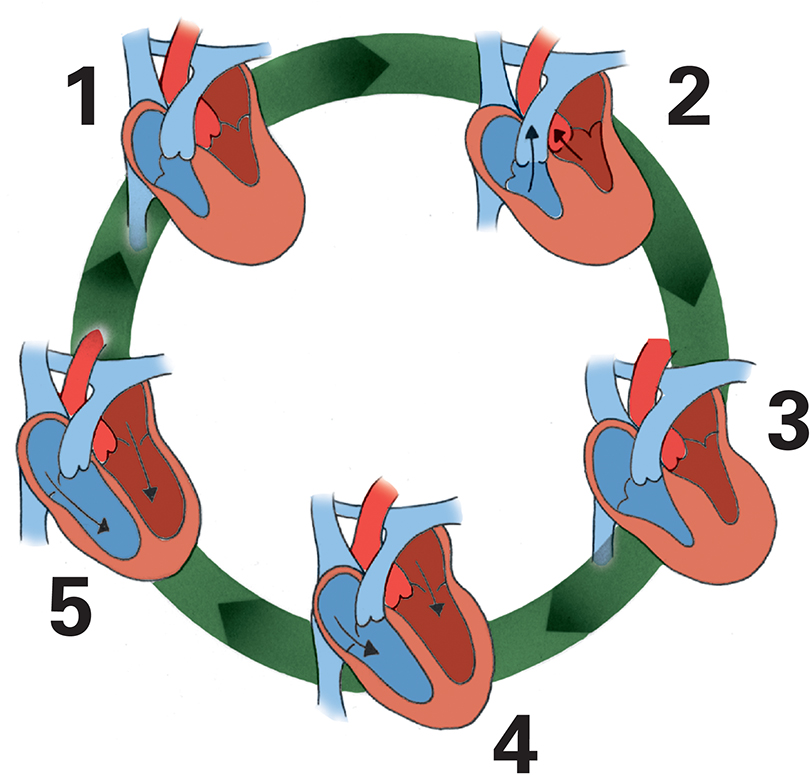
The steps in the cardiac cycle, described here, are illustrated in the figure that follows:
Isovolumetric ventricular contraction: In response to ventricular depolarization, tension in the ventricles increases. This rise in pressure within the ventricles leads to closure of the mitral and tricuspid valves. The pulmonic and aortic valves stay closed during the entire phase.
Ventricular ejection: When ventricular pressure exceeds aortic and pulmonary arterial pressure, the aortic and pulmonic valves open and the ventricles eject blood.
Isovolumetric relaxation: When ventricular pressure falls below the pressure in the aorta and pulmonary artery, the aortic and pulmonic valves close. All valves are closed during this phase. Atrial diastole occurs as blood fills the atria.
Ventricular filling: Atrial pressure exceeds ventricular pressure, which causes the mitral and tricuspid valves to open. Blood then flows passively into the ventricles. About 70% of ventricular filling takes place during this phase.
Atrial systole: Known as the atrial kick, atrial systole (coinciding with late ventricular diastole) supplies the ventricles with the remaining 30% of the blood for each heartbeat.

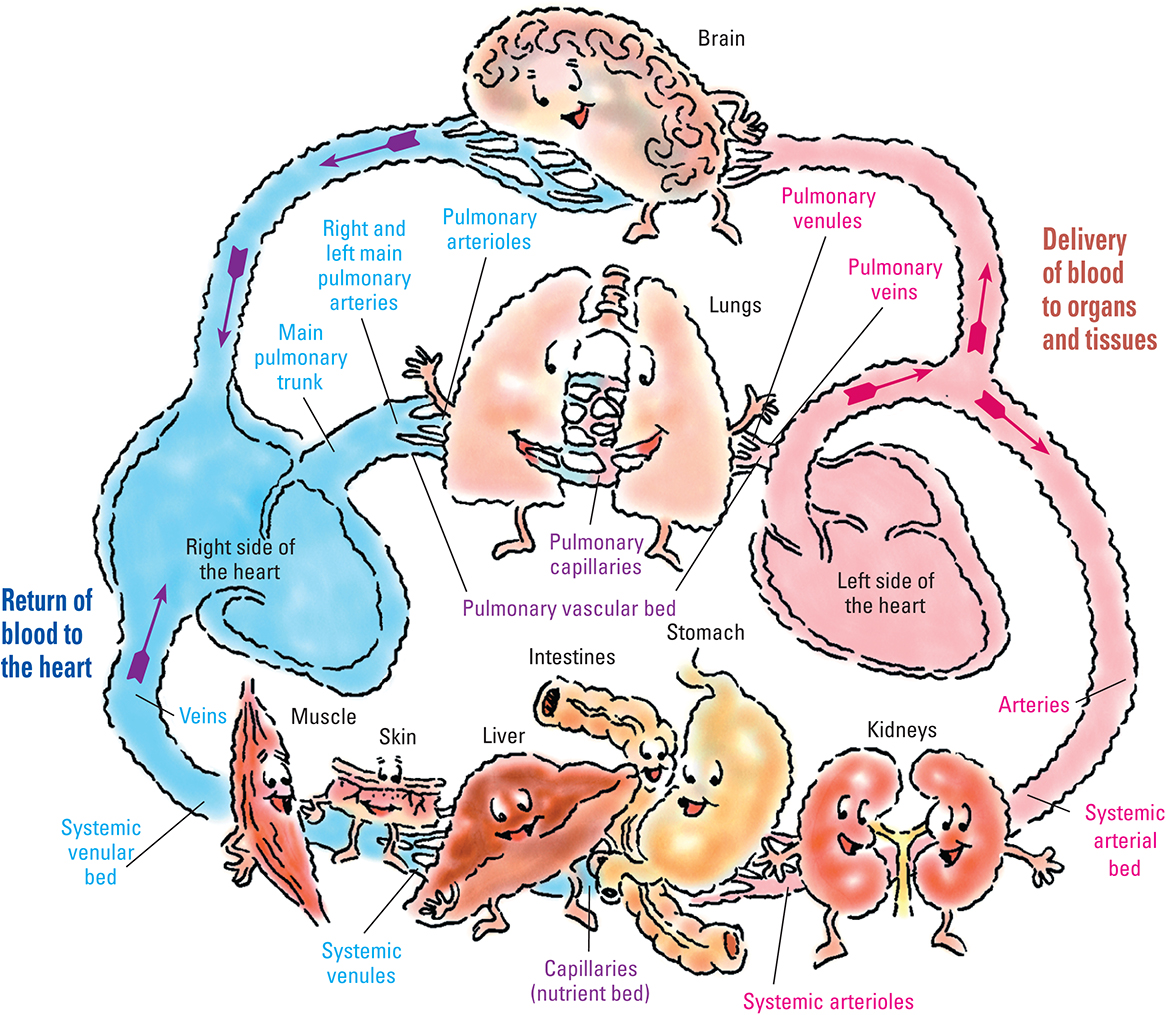
The cardiovascular circuit is a continuous, closed, fluid-filled elastic system of arteries, capillaries, and veins. The heart acts as a pump for this system.
Blood circulation
Blood enters the right atrium from the vena cava and flows into the right ventricle during diastole. During systole, the heart muscles contract to send blood through the pulmonary trunk to the lungs for oxygenation. Blood returns to the left atrium through the pulmonary veins and flows into the left ventricle. Heart muscles contract again to drive blood through the aorta into the arterial system of the body. Because arteries become increasingly smaller, blood reaches capillary beds, where O2 is released to the cells of organs and tissues. Veins then carry the O2-poor blood back to the vena cava.

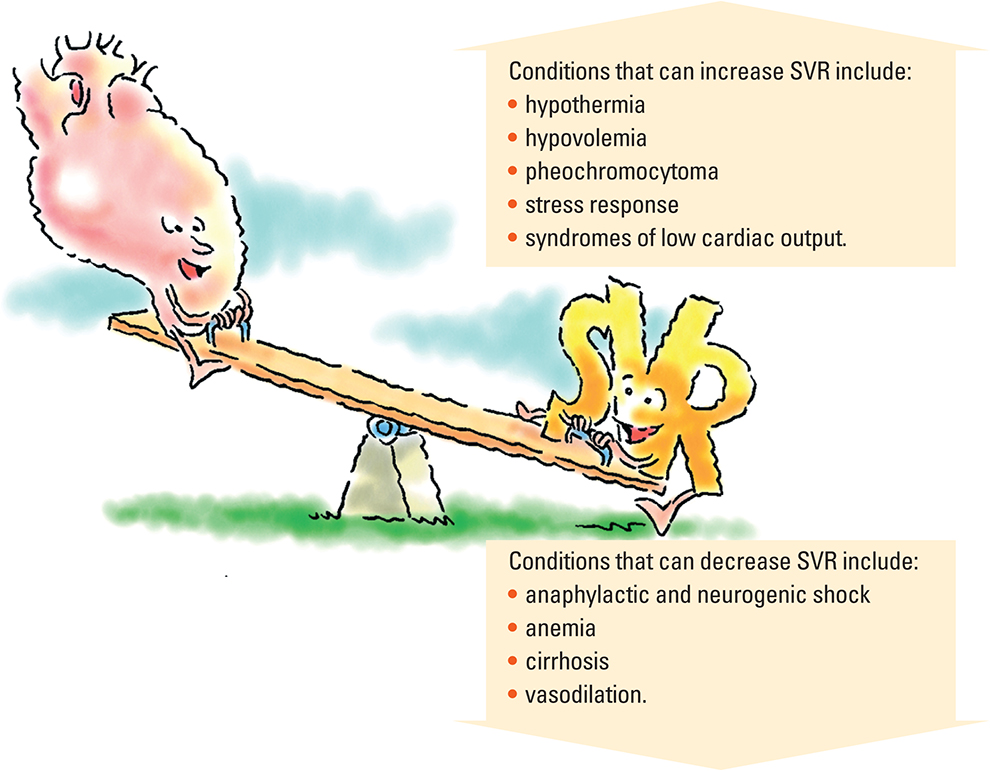
Systemic vascular resistance (SVR) represents the resistance against which the left ventricle must pump to move blood throughout systemic circulation. SVR can be affected by:

tone and diameter of the blood vessels
viscosity of the blood
resistance from the inner lining of the blood vessels.
SVR usually has an inverse relationship to cardiac output; that is, when SVR decreases, cardiac output increases, and when cardiac output decreases, SVR will increase.
Although newer electronic monitors can automatically calculate SVR from hemodynamic measurements, the following formula can be used to calculate it by hand:

On the level: Measurements of systemic vascular resistance
Normal measurements of SVR range from 770 to 1,500 dynes/sec/cm5.
|
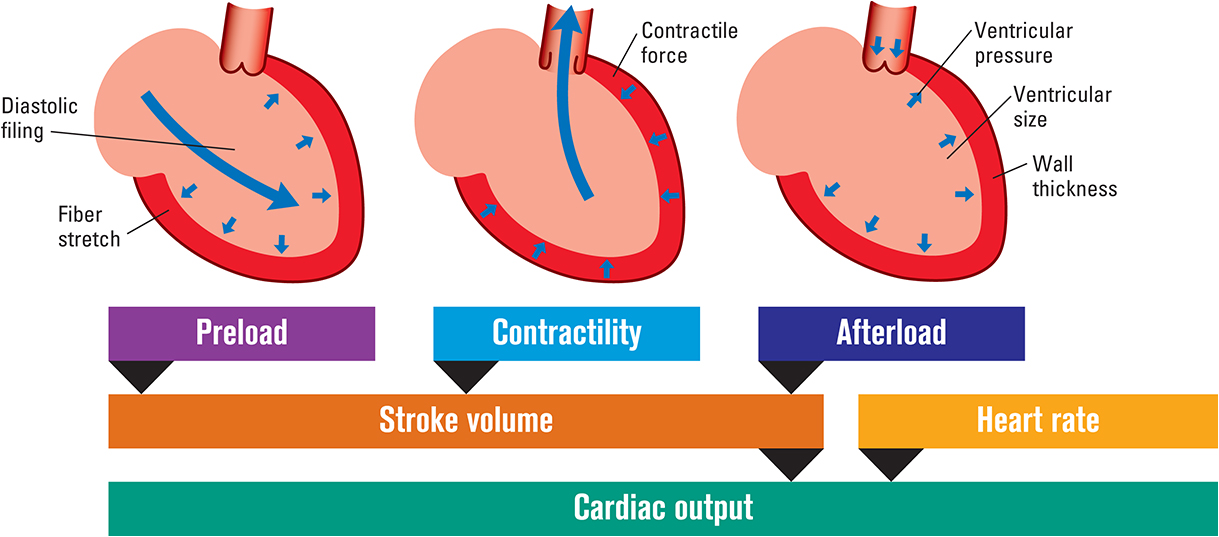
Cardiac output is the amount of blood the heart pumps in 1 minute. It is equal to the heart rate multiplied by the stroke volume (the amount of blood ejected with each heartbeat).

Stroke volume depends on three major factors:
preload
contractility
afterload.
Influences on stroke volume and cardiac output

Understanding preload, contractility, and afterload
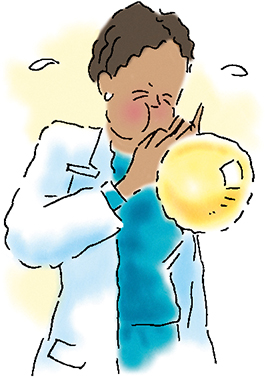
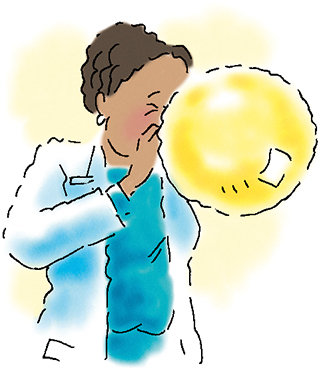
If you think of the heart as a balloon, it will help you understand preload, contractility, and afterload. (See the images that follow.)
Preload (blowing up the balloon)
Preload is the stretching of muscle fibers in the ventricle. This stretching results from blood volume in the ventricles at end diastole. According to Starling law, the more the heart muscles stretch during diastole, the more forcefully they contract during systole. Think of preload as the balloon stretching as air is blown into it. The more the air, the greater the stretch.

Contractility (the balloon's stretch)
Contractility refers to the inherent ability of the myocardium to contract normally. Contractility is influenced by preload. The greater the stretch, the more forceful the contraction-or, the more air in the balloon, the greater the stretch, and the farther the balloon will fly when air is allowed to expel.

Afterload (the knot that ties the balloon)
Afterload refers to the pressure that the ventricular muscles must generate to overcome the higher pressure in the aorta to get the blood out of the heart. Resistance is the knot on the end of the balloon, which the balloon has to work against to get the air out.

| Factor | Possible cause | Effects on heart |
|---|---|---|
| Increased preload |
|
|
| Decreased preload |
|
|
| Increased afterload |
|
|
| Decreased afterload |
|
|

Trace the path of blood flow through the heart. Color sections blue where deoxygenated blood flows and red where oxygenated blood flows.

Cardiac output __________
A.the pressure that the ventricular muscles must generate to overcome the higher pressure in the aorta.
B.the stretching of muscle fibers in the ventricle.
C.the amount of blood the heart pumps in 1 minute.
D.the amount of blood ejected with each heartbeat.
E.the inherent ability of the myocardium to contract normally.
Stroke volume ___________
A.the pressure that the ventricular muscles must generate to overcome the higher pressure in the aorta.
B.the stretching of muscle fibers in the ventricle.
C.the amount of blood the heart pumps in 1 minute.
D.the amount of blood ejected with each heartbeat.
E.the inherent ability of the myocardium to contract normally.
Preload _________________
A.the pressure that the ventricular muscles must generate to overcome the higher pressure in the aorta.
B.the stretching of muscle fibers in the ventricle.
C.the amount of blood the heart pumps in 1 minute.
D.the amount of blood ejected with each heartbeat.
E.the inherent ability of the myocardium to contract normally.
Afterload _______________
A.the pressure that the ventricular muscles must generate to overcome the higher pressure in the aorta.
B.the stretching of muscle fibers in the ventricle.
C.the amount of blood the heart pumps in 1 minute.
D.the amount of blood ejected with each heartbeat.
E.the inherent ability of the myocardium to contract normally.
Contractility ____________
A.the pressure that the ventricular muscles must generate to overcome the higher pressure in the aorta.
B.the stretching of muscle fibers in the ventricle.
C.the amount of blood the heart pumps in 1 minute.
D.the amount of blood ejected with each heartbeat.
E.the inherent ability of the myocardium to contract normally.