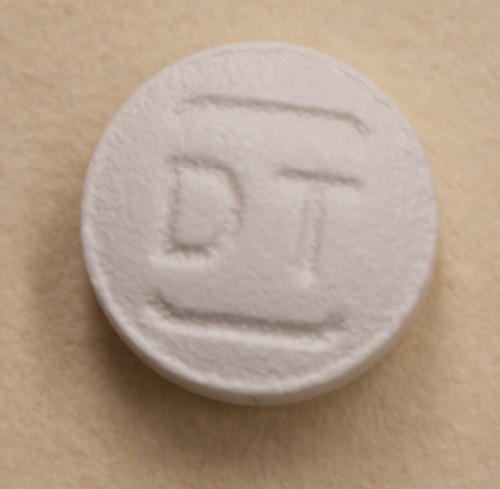
tol-TER-oh-deen 
Therapeutic Classification: urinary tract antispasmodics
Pharmacologic Classification: anticholinergics
Absorption: Well absorbed (77%) following oral administration.
Distribution: Extensively distributed to tissues.
Protein Binding: 96.3%.
Metabolism/Excretion: Extensively metabolized by the liver, via the CYP2D6 isoenzyme; (the CYP2D6 enzyme system exhibits genetic polymorphism; 7% of population may be poor metabolizers and may have significantly ↑ tolterodine concentrations and an ↑ risk of adverse effects); one metabolite (5-hydroxymethyltolterodine) is active; other metabolites are excreted in urine.
Half-life: Tolterodine: 1.9–3.7 hr; 5-hydroxymethyltolterodine: 2.9–3.1 hr.
Contraindicated in:
Use Cautiously in:
EENT: blurred vision, dry eyes.
GI: dry mouth, constipation, dyspepsia.
Neuro: dizziness, headache, sedation.
Misc: HYPERSENSITIVITY REACTIONS (INCLUDING ANAPHYLAXIS AND ANGIOEDEMA).
Drug-Drug:
Immediate-Release Tablets
Hepatic Impairment
Extended-Release Capsules
Hepatic Impairment
NDC Code*