With a new year comes an opportunity for professionals in the healthcare industry to evaluate goals and initiatives for 2023. In business, we’re constantly reminded that even the best-laid plans meet unforeseen obstacles.
In this article, originally published by pharmaphorum, I outline some of the challenges I anticipate for 2023 that our business is planning to solve. At Skyscape, we’re developing mobile solutions for the modern healthcare professional to help ameliorate these challenges, and in the spirit of our mission I offer advice to organizations preparing for coming trends.
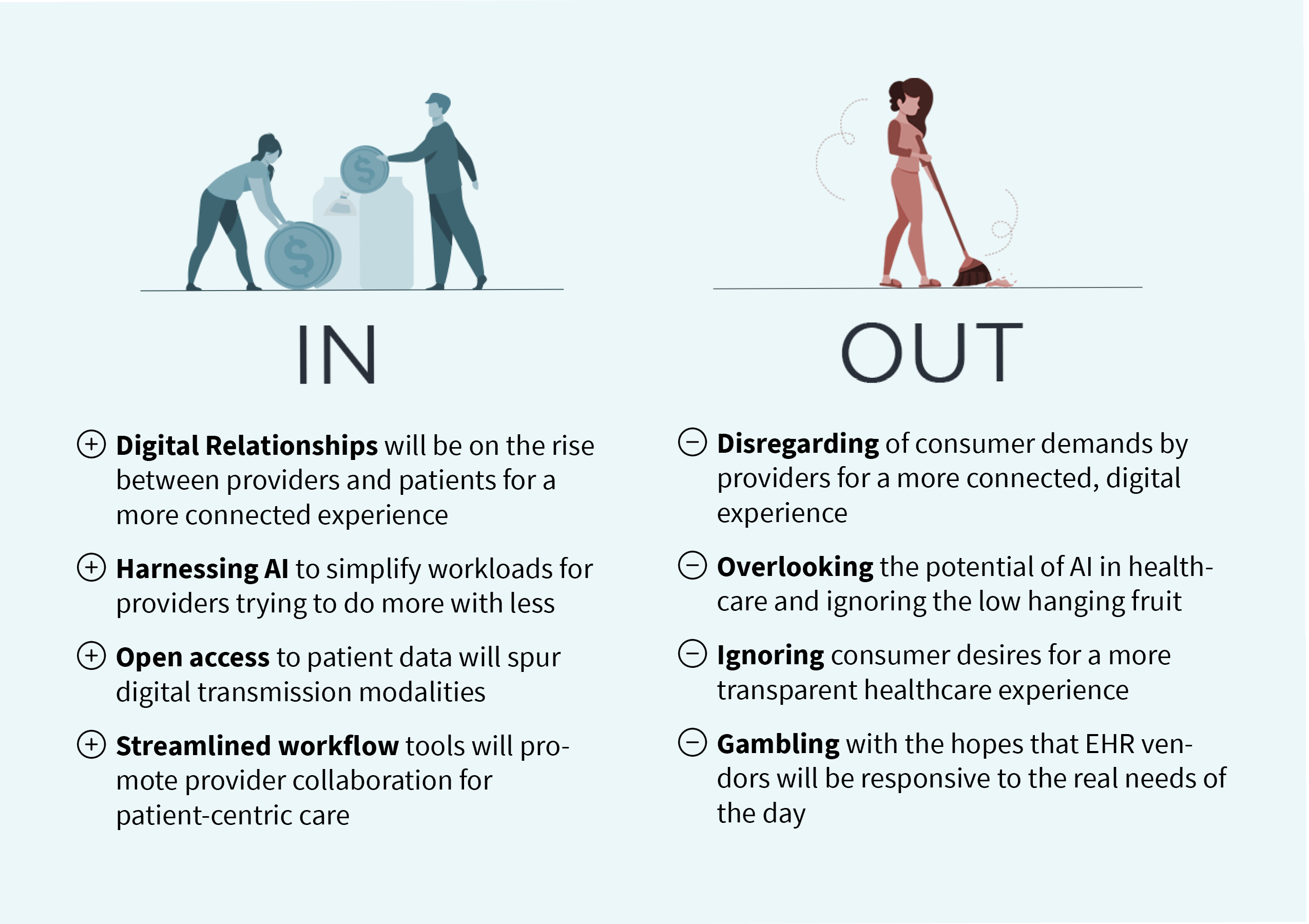
Healthcare services will be beholden to “consumerization,” or consumer demands for a more connected, transparent patient experience
Millennials and Gen Zers have lived digitally connected lives, and most consumer services have already catered to digital demands, whether that’s grocery delivery, shopping online without visiting the store, or buying a car to be delivered. The healthcare industry is next, as providers must build digital relationships with their consumers.
I expect a more patient-friendly experience, incorporating trends such as online scheduling and onboarding to create more efficient in-person visits, automated post-visit follow-ups, better incorporation of remote care into the experience, and even direct patient communication with providers to build trust.
Healthcare is ready for disruption, and artificial intelligence is ready to assist providers who are struggling to do more with less
With the rising cost of doing business, staff shortages across all aspects of healthcare, and the compounding effect of “doing more with less,” healthcare companies must turn to technology to simplify their workloads. From data management to facilities, scheduling, and reliable medical content, AI is poised to support practices in transition.
For example, with large volumes of data and AI entering healthcare management, providers can simplify administrative tasks by handing them to AI-powered automation. The biggest criticism of AI is its dehumanizing aspect. But with careful and cultural considerations, AI can free clinicians from menial, repetitive administrative tasks and let them focus more of their attention on patient care.
Non-human resources such as facilities, beds, or operating rooms will continue to be used more intelligently with better scheduling and utilization. This is especially crucial given the post-COVID surge in preventive and chronic disease care that was artificially suppressed over the last two years.
Finally, further experimental services with AI could provide more reliable medical content than the misinformation available through Google or other search engines. Patient care questions can be vetted more carefully against appropriate source content libraries.
Healthcare companies must provide open access to patient data, as consumers will demand a more transparent healthcare experience
One recently enacted provision of the 21st Century Cures Act states that providers must offer electronic access to protected health information and payment records, and it will change the game for consumers’ right to transparency.
Companies must move to patient portals or other systems that provide access to patient data online, and begin removing silos in electronic health record (EHR) systems. Consumers today expect to be empowered and educated in the experience, and with simpler access to their records, they can make better-informed decisions about their healthcare.
Healthcare companies that don’t streamline workflow and collaboration for patient-centric care will fail
There have been many ventures with targeted solutions, but they fail to recognize the complexity and connectivity across the care continuum. With patients increasingly relying on online, connected care, provider organizations must consider incremental technology adoption and how to communicate electronically in a HIPAA-compliant manner.
Privacy is of great concern, especially when transmitting patient information remotely, and leaders must place greater emphasis not only on ease of access but on the security of protected health information. As the social media explosion makes evident, there are abundant channels to communicate, but none are well suited to connecting the silos.
The EHR is the 800-pound gorilla. It is not incentivized to respond to the real needs of the day, but it certainly will not be displaced anytime soon. Solutions that coexist with it and enhance care delivery, acting as the glue in the current machinery, will help improve the bottom line and patient outcomes by reducing hospital readmissions and eliminating the redundancy caused by a lack of effective collaboration.