section name header

Basic Information ⬇

Author: Ritesh Rathore, MD

Definition

Chemotherapy-induced nausea and vomiting (CINV) refers to the adverse emetic effects resulting from the use of systemic therapies in the treatment of cancer.

CINV is one of the most common, distressing, and debilitating symptoms experienced by cancer patients. These are the recognized subtypes:

  • •Acute-phase CINV: Nausea and vomiting starting within 24 h after receiving chemotherapy
  • •Delayed-phase CINV: Nausea and vomiting beginning or returning >24 h after receiving chemotherapy
  • •Long-delayed CINV is a continuation of delayed CINV assigned to episodes occurring >120 h after administration of chemotherapy and is present commonly in patients who have delayed vomiting on days 4 and 5 of their course. Incidence rates were nausea (31%) and vomiting (6%) as reported in a recent combined analysis of 2048 patients undergoing moderately and highly emetogenic chemotherapy1
  • •Breakthrough CINV: Nausea and vomiting occurring despite appropriate prophylactic treatment. Determinants of CINV are summarized in Box E1
  • •Anticipatory CINV: Nausea and vomiting beginning prior to receiving therapy as a conditioned response in patients who have developed significant emesis during previous chemotherapy administration
  • •Refractory CINV: Recurring in subsequent cycles of therapy, excluding anticipatory CINV

BOX E1 Determinants of Chemotherapy-Induced Nausea and Vomiting

Chemotherapy

  • Emetic potential of drug(s) used
  • Dose
  • Schedule of administration
  • Route of administration
Patient Characteristics

  • Age
  • Gender
  • Alcohol use
  • Emesis control during prior chemotherapy
Antiemetic Agents

  • Dose
  • Schedule
  • Combination regimens

From Niederhuber JE et al: Abeloff’s clinical oncology, ed 6, Philadelphia, 2020, Elsevier.

Synonyms

  • Drug-induced nausea and vomiting
  • Chemotherapy-induced emesis
  • CINV
ICD-10CM CODES
R11.2Nausea with vomiting, unspecified
R11.0Nausea
R11.10Vomiting, unspecified
Z51.11Encounter for antineoplastic chemotherapy
Epidemiology & Demographics

  • •The patient’s risk for development of nausea and vomiting is most strongly dependent on the emetogenicity of the chemotherapy agent(s) being used (Table E1).
  • •Chemotherapy emetogenicity is classified into four categories: Highly emetic (>90%), moderately emetic (>30% to 90%), low emetic (10% to 30%), and minimally emetic (0% to 10%).2
  • •With certain chemotherapy regimens, CINV will occur in most patients. However, patients’ tolerance may vary, and symptoms may occur in as low as 10% of patients.
  • •Symptoms may be dose dependent (the higher the dose, the greater the risk for symptoms).
  • •CINV is more likely to affect female and younger patients.
  • •Patients expecting CINV before receiving therapy (anticipatory emesis) are at greater risk of experiencing symptoms.

TABLE E1 Emetogenic Potential of Commonly Used Oral Antineoplastic Agents

RiskFrequency of Emesis (%; Without Prophylaxis)Agent
High>90
  • Altretamine
  • Procarbazine
Moderate30-90
  • Cyclophosphamide
  • Crizotinib
  • Olaparib
  • Temozolomide
Low10-30
  • Alectinib
  • Axitinib
  • Capecitabine
  • Ceritinib
  • Cobimetinib
  • Dasatinib
  • Everolimus
  • Gefitinib
  • Ibrutinib
  • Imatinib
  • Ixazomib
  • Lapatinib
  • Lenalidomide
  • Nilotinib
  • Palbociclib
  • Panobinostat
  • Pazopanib
  • Sorafenib
  • Sunitinib
  • Thalidomide
  • Vemurafenib
Minimal<10
  • Alectinib
  • Busulfan
  • Chlorambucil
  • Dabrafenib
  • Erlotinib
  • Hydroxyurea
  • Idelalisib
  • Melphalan
  • Methotrexate
  • Osimertinib
  • Ruxolitinib
  • 6-Thioguanine
  • Trametinib
  • Vismodegib

Modified from Roila F et al: Guideline update for MASCC and ESMO in the prevention of chemotherapy and radiotherapy-induced nausea and vomiting: results of the Perugia consensus conference, Ann Oncol 21(Suppl 5):232-243, 2010.

Incidence:

The highest incidence of CINV is before or during the first cycle of chemotherapy.

Risk Factors (See Box E1):

  • •Previous history of CINV
  • •History of motion sickness or vestibular dysfunction
  • •Higher levels of anxiety
  • •History of alcohol use decreases risk
Genetics:

It has been demonstrated that three SNPs in 5-hydroxytryptamine receptor (5-HT3R) genes, two alleles of the cytochrome P450 family 2 subfamily D member 6 (CYP2D6) gene, and three SNPs in ATP binding cassette subfamily B member 1 (ABCB1) gene are associated with the occurrence and severity of CINV.3

Physical Findings & Clinical Presentation

  • •Symptoms may include anxiety and lightheadedness.
  • •The most common physical findings are increased pulse rate and abnormal blood pressure (elevated if the patient is highly anxious, reduced if the patient is dehydrated).
  • •Symptoms such as fever, headache, diarrhea, and abdominal pain may suggest an alternative diagnosis; physical examination findings such as increased blood pressure, abdominal tenderness, or focal neurologic deficits may suggest symptoms caused by cancer progression or other acute illnesses such as infection.
Pathophysiology

The pathophysiology of nausea and vomiting is illustrated in Figs. E1 and E2. CINV is likely the result of chemotherapy acting in two places: Directly in the GI tract and in the vomiting center of the brain. In both areas, nausea and vomiting are mediated by the actions of certain neurotransmitters, with serotonin, dopamine, and neurokinin-1 (NK-1) being the most important.
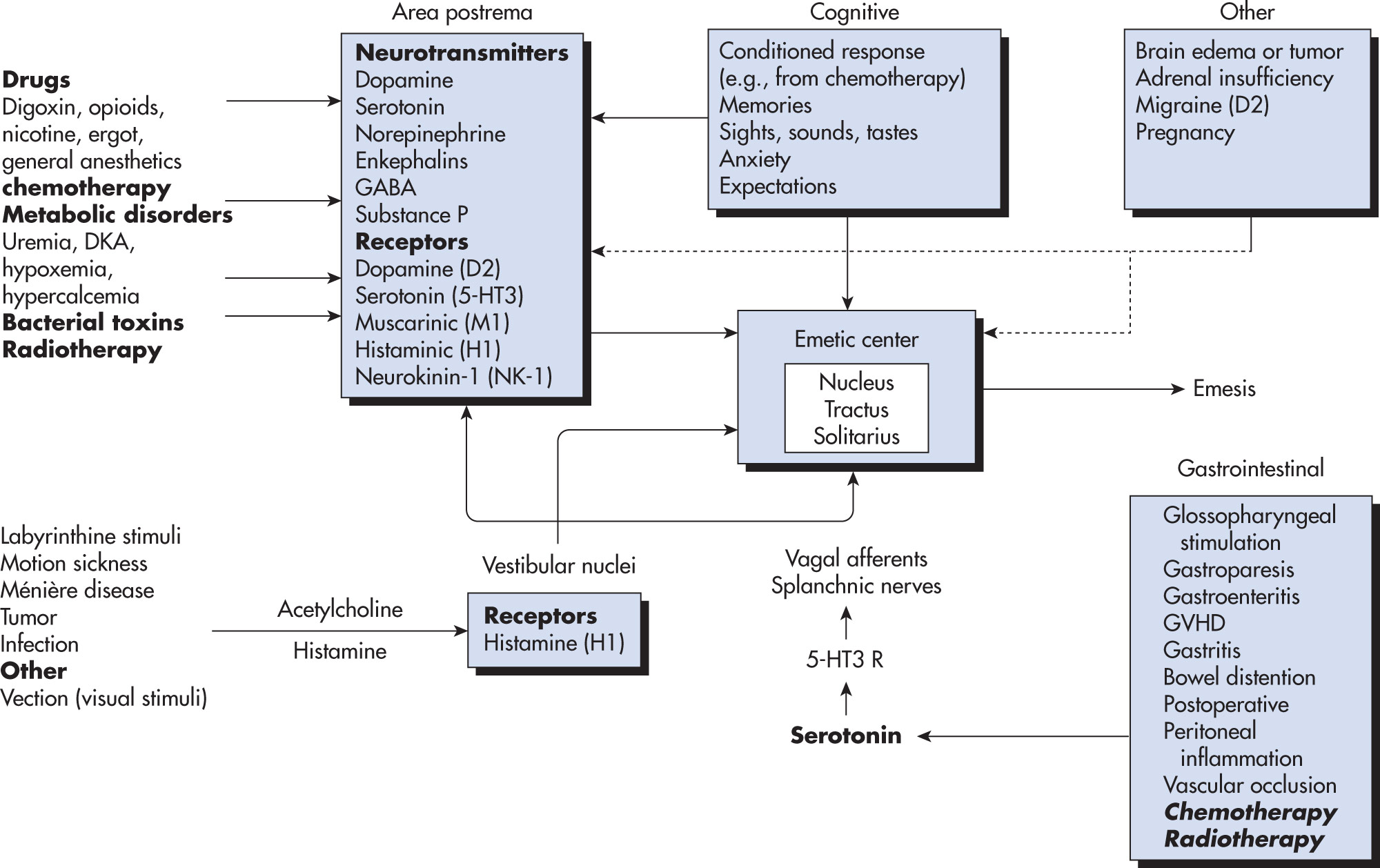
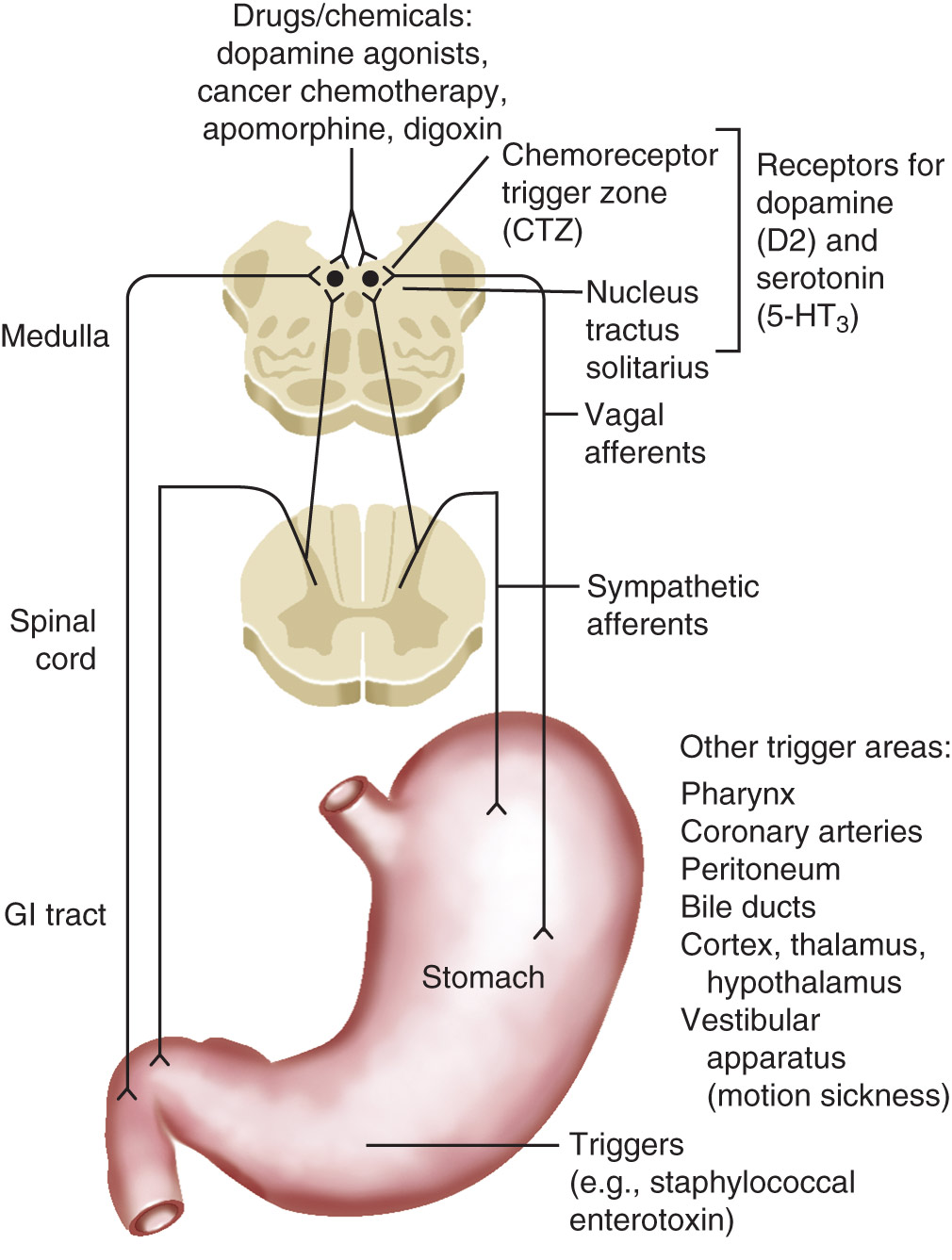
Figure E1 Pathophysiology of nausea and vomiting.

DKA, Diabetic ketoacidosis; GABA,γ-aminobutyric acid; GVHD, graft-versus-host-disease; 5-HT3, serotonin; 5-HT3 R, serotonin receptor.

(From Hoffman R et al: Hematology, basic principles and practice, ed 8, Philadelphia, 2023, Elsevier.)

Figure E2 Schematic representation of the proposed neural pathways that mediate vomiting.

5-HT, 5-hydroxytryptamine; GI, gastrointestinal.

(From Feldman M et al: Sleisenger and Fordtran’s gastrointestinal and liver disease, ed 11, Philadelphia, 2021, Elsevier.)

Diagnosis ⬆ ⬇

Differential Diagnosis

  • •The two major considerations are progression of cancer and infection
  • •Intestinal/gastric: Obstruction or partial obstruction of the digestive tract from tumor progression
  • •Neurologic: Brain metastases causing vomiting or metastatic infiltration of nerves affecting the digestive tract
  • •Infectious: Acute bacterial, viral, or parasitic infections of the digestive tract causing symptoms (can be associated with diarrhea or pain)
  • •Renal: Dehydration leading to acute kidney injury and failure, causing worsening of nausea and vomiting
Workup

Additional workup is not indicated if patient’s symptoms and the onset of nausea and vomiting fit the typical CINV presentation. If other symptoms or unexpected physical examination findings are present, then other likely causes need to be ruled out with a combination of blood work and computed tomography (CT) scan imaging.

Laboratory Tests

  • •If the onset of symptoms is not typical for CINV, then blood tests such as CBC, comprehensive chemistry panel, and central nervous system (CNS) imaging are indicated for assessing secondary causes.
  • •Stool studies looking for infections from viruses, bacteria, or parasites may be ordered if diarrhea is also present.
Imaging Studies

  • •Abdominal radiographs may reveal ileus or obstruction of the digestive tract.
  • •Abdomen and pelvic CT scans may provide more detailed information about local cancer progression/invasion in relation to the digestive tract and whether ileus or obstruction is present.
  • •CNS imaging with CT or MRI scanning of the brain may provide information about possible brain or leptomeningeal metastases.

Treatment ⬆ ⬇

BOX E2 Management Approach:Chemotherapy-Induced Nausea and Vomiting (CINV)

Antiemetic therapy for CINV should be based on the emetic potential of the chemotherapy regimen being used and should take into account individual patient factors (e.g., sex, age, history of alcohol use, and previous emesis with chemotherapy). Excellent methods for predicting the likelihood of emesis with single chemotherapeutic agents or combination regimens have been developed.

All patients receiving chemotherapy with moderate or high emetogenic potential should receive antiemetic prophylaxis for acute (day 1) and delayed (days 2-5) nausea and vomiting. Patients receiving highly emetogenic regimens should receive prophylaxis on day 1 with a 5-HT3 receptor antagonist (preferably palonosetron) plus neurokinin-1 (NK1) receptor antagonist plus dexamethasone, followed on days 2-4 by dexamethasone. Olanzapine should be added in patients judged to be at high risk. For moderately emetogenic regimens, treatment with a 5-HT3 receptor antagonist (preferably palonosetron) plus dexamethasone on day 1, followed by dexamethasone on days 2 and 3, is recommended.

Patients receiving therapy with low emetic potential should receive dexamethasone (8 mg intravenously or orally); a 5-HT3 receptor antagonist should be added with subsequent courses only if antiemetic control is inadequate. Routine prophylaxis is not necessary for patients receiving agents or regimens of minimal risk. Patients with inadequate control should have intensification of their antiemetic prophylaxis during subsequent treatment cycles.

From Niederhuber JE: Abeloff’s clinical oncology, ed 6, Philadelphia, 2020, Elsevier.

TABLE E2 Antiemetic Drugs

Antiemetic ClassMechanism of ActionRecommended UsesLevel of Evidence to Support Use in Cancer-Related Nausea and Vomiting
  • Corticosteroid:
  • Dexamethasone
Unknown, possibly reduced prostaglandin activity in the brain
  • Treatment-related nausea and vomiting
  • Nausea and vomiting secondary to raised intracranial pressure
High
Vomiting secondary to bowel obstructionLow
  • 5-HT3 antagonist:
  • Granisetron
  • Ondansetron
  • Palonosetron
  • Dolasetron
Inhibit visceral afferents by blocking binding of peripheral 5-HT to serotonin (type 3) receptors along the vagus nerve in the GI tract
  • Treatment-related nausea and vomiting
  • Opioid-induced nausea and vomiting
  • Nausea of advanced cancer
High
  • NK1 antagonist:
  • Aprepitant
  • Fosaprepitant
Blockade of the binding of substance P to NK1 receptors in the chemotrigger zone of the area postremaTreatment-related nausea and vomitingHigh
  • Benzodiazepine:
  • Lorazepam
  • Alprazolam
  • Presumably due to anxiolytic, sedative and anterograde amnesic effects of these medications centrally
  • Especially useful in delayed or anticipatory nausea as adjuvant agents
Adjuvant support for the management of treatment-related nausea and vomiting, particularly when nausea associated with anxietyHigh
  • Atypical antipsychotic:
  • Olanzapine
  • Antipsychotic in the thienobenzodiazepine drug class that blocks multiple neurotransmitters, including:
    • -Dopamine at D1, D2, D3, and D4 brain receptors
    • -Serotonin at 5-HT2a, 5-HT2c, 5-HT3, and 5-HT6 receptors
    • -Catecholamines at alpha-1 adrenergic receptors
    • -Acetylcholine at muscarinic receptors
    • -Histamine at H1 receptors
Adjuvant agent to manage treatment-related nausea and vomitingModerate
  • Antihistamine:
  • Diphenhydramine
  • Promethazine
  • Predominantly histamine antagonist in vestibular nucleus and chemotrigger zone
  • Central dopamine and acetylcholine antagonist
Adjuvant, especially when the extra-pyramidal effects of dopamine antagonists are considered problematicModerate
  • Butyrophenone:
  • Haloperidol
  • Droperidol
Dopaminergic (D2 subtype) receptor antagonistsAdjuvantModerate
  • Phenothiazine:
  • Prochlorperazine
  • Dopamine antagonist
  • Histamine antagonist
  • Acetylcholine antagonist
AdjuvantHigh
  • Dopamine2-antagonist:
  • Metoclopramide
  • Competitive antagonist at central dopaminergic (D2) receptors
  • Weak competitive antagonist peripherally at GI 5-HT3 receptors (at high dose)
  • 5-HT4 agonist
  • Increased lower esophageal sphincter pressure
  • Enhanced rate of gastric emptying
  • Adjuvant
  • Gastric stasis
  • Opioid-induced nausea and vomiting
  • Nausea of advanced disease
High

5-HT, 5-hydroxytryptamine; GI, gastrointestinal; NK1, neurokinin-1.

From Talley NJ et al: Essentials of internal medicine, ed 4, Chatswood, NSW, 2021, Elsevier Australia.

On a 32-point scale, calculated before each cycle of therapy, patients with risk scores ≥16 units are considered at high risk for developing moderate CINV.4 The calculator is available online for routine use (https://www.riskcinv.org/).

TABLE E3 Antiemetic Agents: Recommended Dosing

Recommended Dose
Antiemetic AgentAcute Emesis (Before Chemotherapy)Delayed Emesis
5-HT3 antagonists
Ondansetron0.15 mg/kg or 8 mg IV; 12-16 mg PO8 mg PO twice a day × 2-3 days
Granisetron1 mg IV or PO; 10 mg subcutaneous (extended release)
Dolasetron1.8 mg/kg or 100 mg IV; 100-200 mg PO
Palonosetron0.25 mg IV or 0.5 mg PO
NK1 receptor antagonists
Aprepitant125 mg PO80 mg PO days 2 and 3
Fosaprepitant150 mg IV
Rolapitant180 mg PO
Combination 5-HT3/NK1 receptor antagonist
NEPA (palonosetron 0.5 mg/netupitant 300 mg)1 tablet PO
Multireceptor antagonist
Olanzapine10 mg PO10 mg PO days 2-4
Corticosteroids
Dexamethasone
With NK1 antagonist12 mg IV or PO8 mg PO for 2-3 days
Without NK1 antagonist8 mg (moderate risk) or 20 mg (high risk) IV or PO4-8 mg PO twice a day for 2-3 days
Other agents
Prochlorperazine10 mg PO or IV every 3-4 h as needed
Lorazepam1-2 mg IV (for anticipatory nausea/vomiting)
Dronabinol5 mg/m2 PO every 3-4 h as needed

5-HT3, 5-Hydroxytryptamine 3; NK1, neurokinin 1; IV, intravenous; PO, by mouth.

From Niederhuber JE: Abeloff’s clinical oncology, ed 6, Philadelphia, 2020, Elsevier.

TABLE E4 Summary of Recommended Antiemetic Prophylaxis for Patients Receiving Intravenous Chemotherapy

Risk of EmesisDay 1 (Prechemotherapy)After Day 1
High (includes cyclophosphamide and doxorubicin)5-HT3 receptor antagonist (palonosetron preferred) + NK1 receptor antagonist + dexamethasone + olanzapine (if patient considered high risk)Dexamethasone days 2-4 + aprepitant days 2-3 (if used on day 1) + olanzapine days 2-4 (high-risk patients)
Moderate5-HT3 receptor antagonist (palonosetron preferred) + dexamethasoneDexamethasone days 2 and 3
LowDexamethasoneNone
MinimalAs neededNone

5-HT3, 5-Hydroxytryptamine 3; NK1, neurokinin 1.

From Niederhuber JE: Abeloff’s clinical oncology, ed 6, Philadelphia, 2020, Elsevier.

Nonpharmacologic Therapy

  • •Patients who have a significant anxiety component to their CINV may benefit from cognitive behavioral therapy.
  • •Digital acupressure may be beneficial in reducing CINV in patients receiving highly-emetogenic chemotherapy according to results from a recent metanalysis.
Disposition

CINV treatment has been revolutionized with the introduction of newer classes of antiemetics leading to a significant majority of patients achieving adequate symptom control.

Pearls & Considerations ⬆ ⬇

Comments

  • •Aggressive symptom control in the acute phase of CINV is the key initial therapeutic approach. Prevention of the acute phase has led to much improved control of delayed CINV and decreased the incidence of anticipatory CINV.
  • •Prevention of symptoms is much easier to achieve than controlling or treating active symptoms.

Reference(s) ⬆

  1. Chow R : Prevalence and predictors of long-delayed (> 120 h) chemotherapy-induced nausea and vomiting (CINV)-a systematic review and individual patient data meta-analysisSupport Care Cancer. 31(8):505, 2023.
  2. Hesketh PJ : Antiemetics: ASCO guideline updateJ Clin Oncol. 38(24):2782-2797, 2020.
  3. Singh KP : A review of the literature on the relationships between genetic polymorphisms and chemotherapy-induced nausea and vomitingCrit Rev Oncol Hematol. 121:51-61, 2018.
  4. Dranitsaris G : The development of a prediction tool to identify cancer patients at high risk for chemotherapy-induced nausea and vomitingAnn Oncol. 28(6):1260-1267, 2017.
  5. Radhakrishnan V : Dexamethasone-free antiemetic prophylaxis for highly emetogenic chemotherapy: a double-blind, phase III randomized controlled trial (CINV POD study)JCO Glob Oncol. 10:e2300301, 2024.
  6. Azizoddin DR : Cannabis use among adults undergoing cancer treatmentCancer. 129(21):3498-3508, Nov 2023.