- •Disclosures:
- 1.For sexual abuse, often the only evidence is the child’s disclosure.
- 2.Document clearly any disclosures a child makes regarding abuse or neglect.
- 3.When speaking with a young child who may have been abused or neglected, it is important to use open-ended, nonleading questions. If available in the community, the child will benefit from a referral to a Children’s Advocacy Center for a forensic interview.
- •Injuries:
- 1.Documentation:
- a.Carefully document any injuries identified that may be the result of abuse or neglect.
- b.Photodocumentation of injuries is essential but does not replace the written description of the injuries.
- 2.Concerning histories suggestive of abuse3:
- a.The history of injury provided is incompatible with the developmental capabilities of the child. Clues to the diagnosis of physical abuse are summarized in Table E1
- b.Changing history from the caregiver or a history that is different among caregivers
- c.The injury/injuries are not consistent with the mechanism provided by caregivers
- d.A history of trauma is denied by the family; especially with a nonmobile infant
- e.Delay in seeking care for a significant injury
- 3.Concerning physical injuries:
- a.Patterned bruising (e.g., loop-shaped, two semicircles, rectangular, multiple parallel linear marks) (Table E2, Fig. E1)
- b.Bruising to the torso, ears, neck, frena, angle of the jaw, fleshy part of the cheeks, eyelids, and subconjunctival hemorrhages in children less than 4 yr, and ANY bruise in an infant 4 mo and younger4,5
- c.Injury (bruise, burn, intraoral injury, fracture, intracranial hemorrhage) in an infant who is not ambulatory and not cruising4,5
- d.Patterned burns, such as an impression of the burning object (lighter, iron, cigarette), immersion burns (Figs. E2 and E3)
- e.Certain fractures (especially in infants) are highly concerning for abuse: Metaphyseal, rib, sternum, scapula, vertebral body
- f.Any injury that a child says is inflicted
- 4.Sexual abuse:
- a.Most children who have been sexually abused will have a normal or nonspecific genital examination. A normal genital examination does not mean the child was not abused. History is the most important part of the diagnosis. Forensic interview by a trained professional is recommended, as is an examination by a health care provider experienced in sexual abuse evaluations.6,7
- b.The identification of a sexually transmitted infection in a prepubertal child who is beyond the neonatal period is highly suspicious and, in some instances, virtually diagnostic of sexual abuse. Reporting and further careful investigation are mandatory. Consult current Centers for Disease Control and Prevention (CDC) guidelines and a child sexual abuse expert for further guidance.6,7
TABLE E1 Clues to the Diagnosis of Physical Abuse
- A child presents for medical care with significant injuries and a history of trauma is denied, especially if the child is an infant or toddler.
- The history provided by the caregiver does not explain the injuries identified.
- The history of the injury changes significantly over time.
- A history of self-inflicted trauma does not correlate with the child’s developmental abilities.
- There is an unexpected or unexplained delay in seeking medical care.
- Multiple organ systems are injured, including injuries of various ages.
- The injuries have a high specificity for child abuse.
|
From Marcdante KJ et al: Nelson essentials of pediatrics, ed 9, Philadelphia, 2023, Elsevier.
TABLE E2 Injury Patterns
| Method of Injury/Implement | Pattern Observed |
| Grip/grab | Relatively round marks that correspond to fingertips and/or thumb |
| Closed-fist punch | Series of round bruises that correspond to knuckles of the hand |
| Slap | Parallel, linear bruises (usually petechial) separated by areas of central sparing |
| Belt/electrical cord | Loop marks or parallel lines of petechiae (the width of the belt/cord) with central sparing; may see triangular marks from the end of the belt, small circular lesions caused by the holes in the tongue of the belt, and/or a buckle pattern |
| Rope | Areas of bruising interspersed with areas of abrasion |
| Other objects/household implements | Injury in shape of object/implement (e.g., rods, switches, and wires cause linear bruising) |
| Human bite | Two arches forming a circular or oval shape, may cause bruising and/or abrasion |
| Strangulation | Petechiae of the head and/or neck, including mucous membranes; may see subconjunctival hemorrhages |
| Binding/ligature | Marks around the wrists, ankles, or neck; sometimes accompanied by petechiae or edema distal to the ligature markMarks adjacent to the mouth if the child has been gagged |
| Hair pulling | Traumatic alopecia; may see petechiae on underlying scalp, or swelling or tenderness of the scalp (from subgaleal hematoma) |
| Tattooing or intentional scarring | Abusive cases have been described, but can also be a cultural phenomenon (e.g., Maori body ornamentation) |
Modified from Kliegman RM et al: Nelson textbook of pediatrics, ed 22, Philadelphia, 2025, Elsevier.
Figure E1 A variety of instruments may be used to inflict injury on a child.
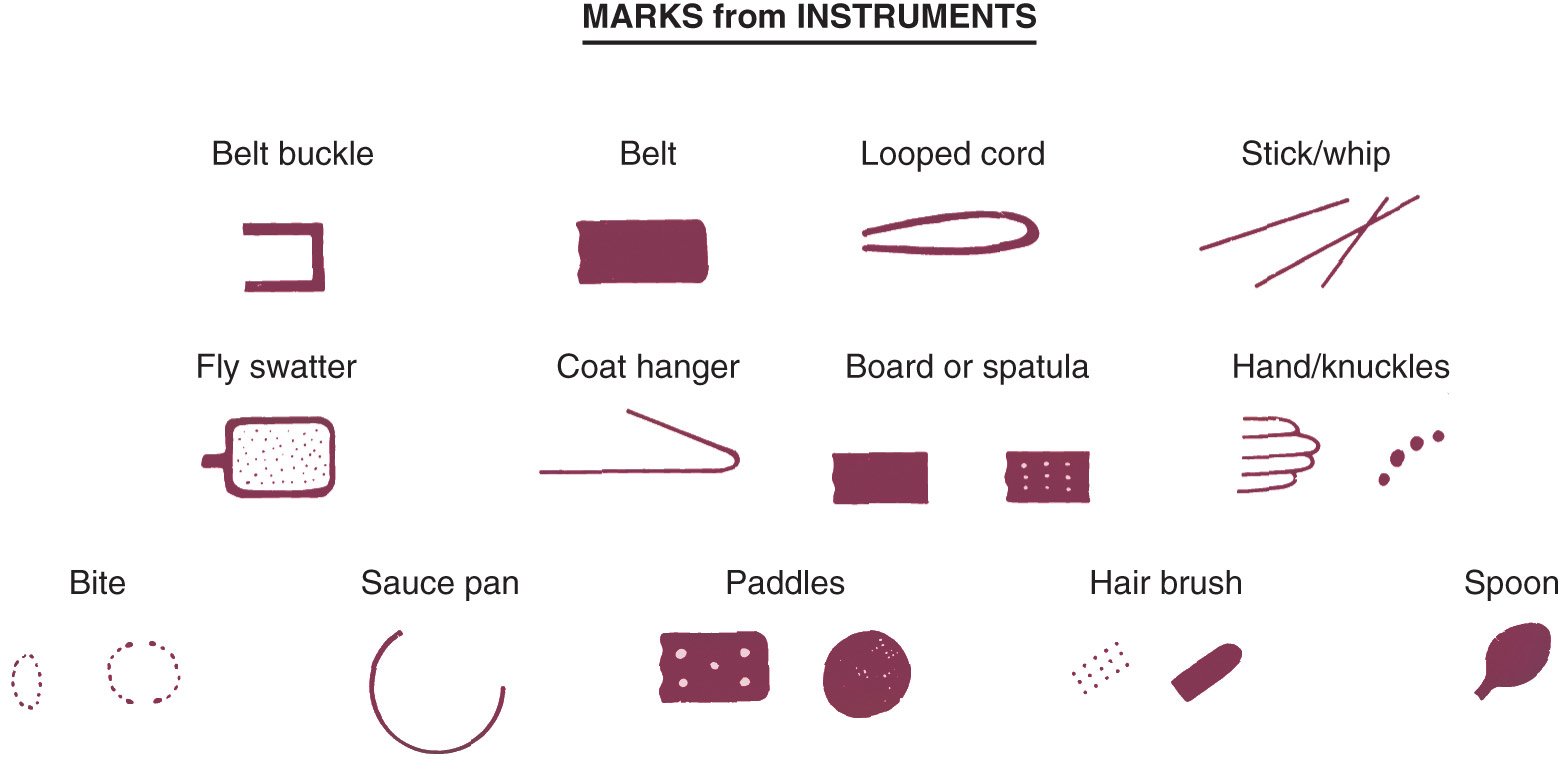
Often the choice of an instrument is a matter of convenience. Marks tend to silhouette or outline the shape of the instrument. The possibility of intentional trauma should prompt a high degree of suspicion when injuries to a child are geometric, paired, mirrored, of various types, or on relatively protected parts of the body (e.g., ears, neck, abdomen). Early recognition of intentional trauma is important to provide therapy and prevent escalation to more serious injury.
(From Kliegman RM et al: Nelson textbook of pediatrics, ed 22, Philadelphia, 2025, Elsevier.)
Figure E2 Marks from Heated Objects Cause Burns in a Pattern that Duplicates that of the Object
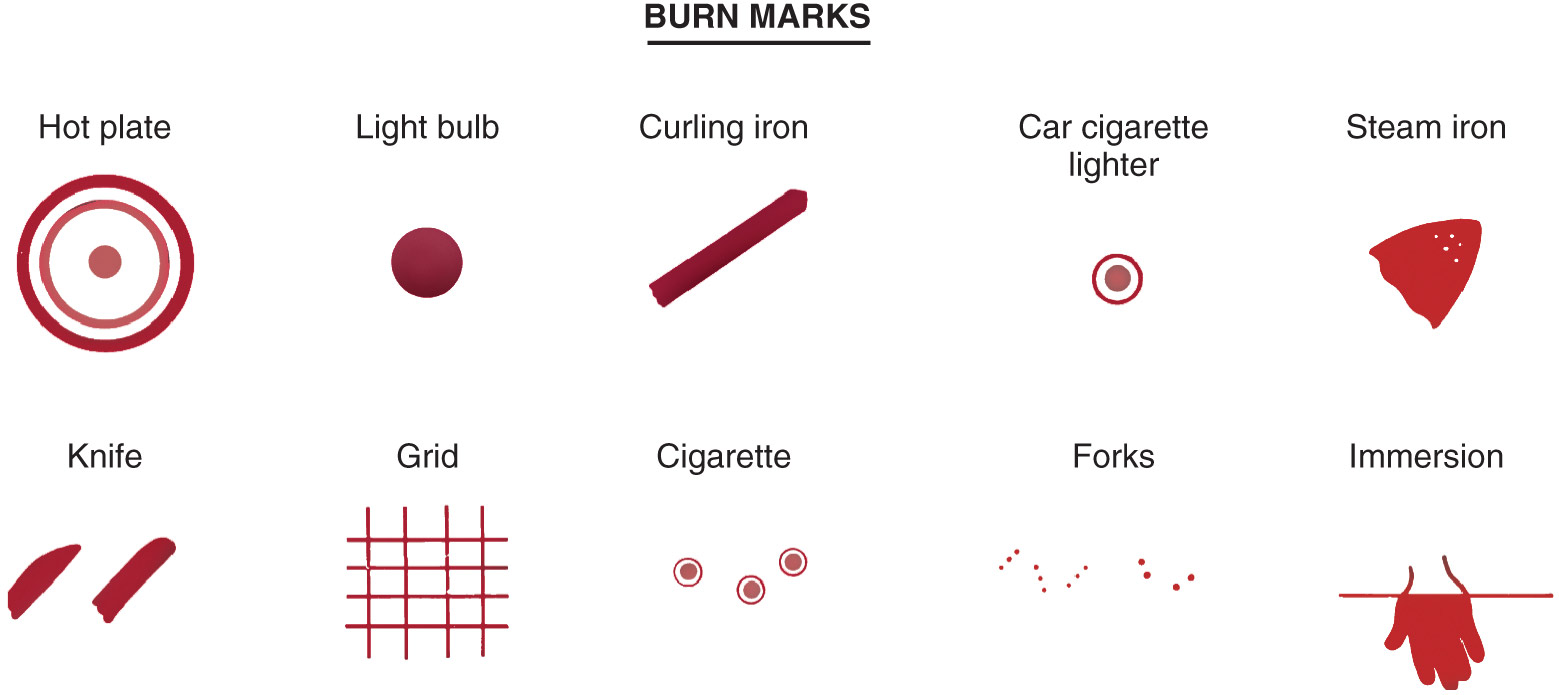
Familiarity with the common heated objects that are used to traumatize children facilitates recognition of possible intentional injuries. The location of the burn is important in determining its cause. Children tend to explore surfaces with the palmar surface of the hand and rarely touch a heated object repeatedly for long periods of time.
(From Kliegman, RM et al: Nelson textbook of pediatrics, ed 22, Philadelphia, 2025, Elsevier.)
Figure E3 Immersion injury patterns.
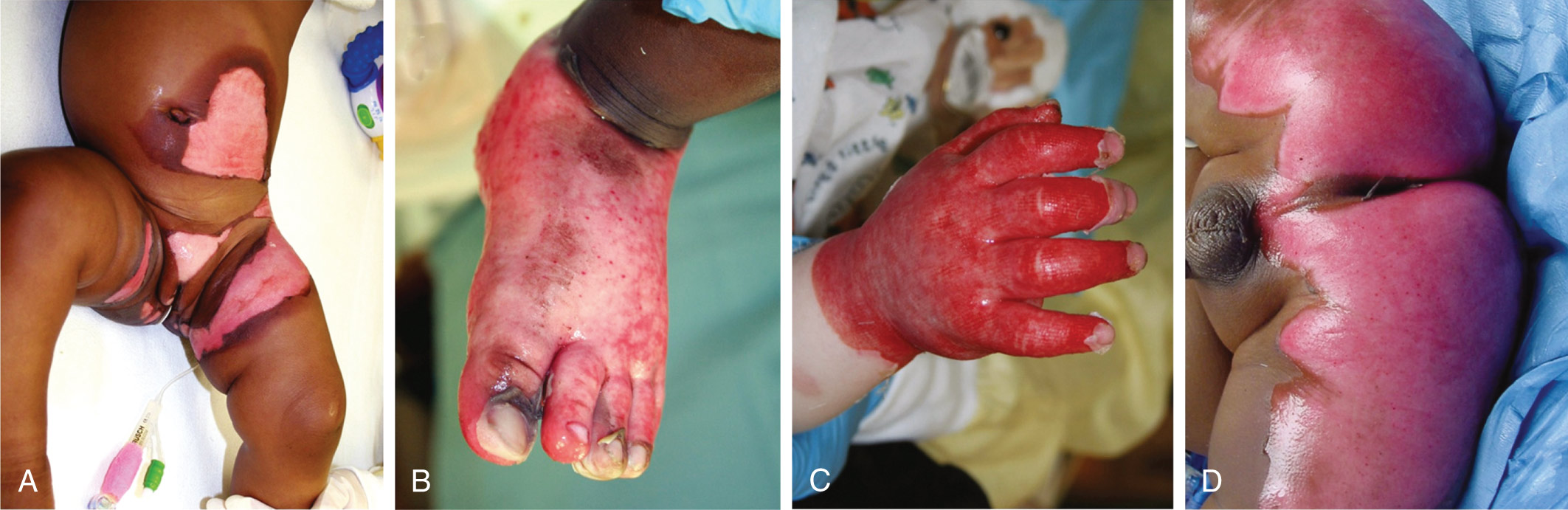
A, Sparing of the flexoral creases. B, Immersion "stocking" burn. C, Immersion "glove" burn. D, Immersion buttocks burn.
(From Jenny C: Child abuse and neglect: diagnosis, treatment, and evidence, Philadelphia, 2011, Saunders, p 225, Fig 28-3. In Kliegman RM et al: Nelson textbook of pediatrics, ed 22, Philadelphia, 2025, Elsevier.)
Differential DiagnosisThe differential diagnosis should include possible medical causes, accidental causes, and abuse. Conditions that can mimic child abuse are summarized in Table E3.
TABLE E3 Conditions That Can Mimic Child Abuse
| Condition | Comments |
| Bleeding Into the Skin (Ecchymoses, Purpura) | |
| Multiple bruises due to platelet or clotting disorders | - •Areas most commonly traumatized by children (e.g., shins, knees)
|
| Ehlers-Danlos syndrome, especially the vascular type | - •Common sites of trauma, especially shins
|
| Bruising due to "cupping" or cao gio (coin rubbing) | - •Cultural/medicinal practices often seen in parts of Southeast Asia
|
| Vasculitis, particularly Henoch-Schönlein purpura (HSP) and acute hemorrhagic edema of infancy | - •Favors lower extremities as well as the buttocks in HSP and the face in acute hemorrhagic edema; associated edema and arthritis
|
| Blue Discoloration of Skin Mistaken as Bruising |
| Dermal melanocytosis | - •Lack of progression of color to green or yellow; favors presacrum and back
|
| Infantile hemangioma (deep) or vascular malformation | |
| Linear Hyperpigmentation |
| Phytophotodermatitis | |
| Sock-line or mitten-line hyperpigmentation | |
| Vesicles, Bullae, or Erosions Mistaken as Nonaccidental Burns or Other Intentional Injuries |
| Impetigo, ecthyma, blistering distal dactylitis | |
| Erythema multiforme, fixed drug eruption | |
| Bullous mastocytosis | |
| Irritant contact dermatitis | - •For example laxative-induced irritant contact dermatitis mimicking an immersion burn, chemical burns from topical application of garlic or apple cider vinegar
|
| Arthropod bite reaction | |
| Moxibustion | - •Cultural/medicinal practice primarily in SE Asia
|
| - •Burning of herbs on or near the skin
|
| Maqua | - •Cultural/medicinal practice seen in parts of Africa and the Middle East
|
| - •Small burns produced by hot metal spits or coals in areas of illness or pain
|
| Burn from a hot car seat or seat-belt buckle | |
| Genetic disorders of skin fragility (e.g., forms of epidermolysis bullosa or porphyria) | |
| Other |
| Osteogenesis imperfecta | - •Multiple fractures in the setting of bone fragility, may have blue sclerae
|
| Hair tourniquet |
| Self-inflicted injury | |
Bruising:
- •Bleeding disorder (idiopathic thrombocytopenic purpura, hemophilia, leukemia, hemorrhagic disease of the newborn, von Willebrand disease)
- •Connective tissue disorder (Ehlers-Danlos syndrome, vasculitis)
- •Pigments (dermal melanocytosis)
- •Dermatitis (phytophotodermatitis, nickel allergy)
- •Complementary and Alternative Medicine (coining, cupping)
- •Accidental bruises
Burns:
- •Accidental burn
- •Impetigo
- •Complementary and Alternative Medicine (moxibustion)
- •Dermatitis (phytophotodermatitis)
- •Senna diaper dermatitis
Intracranial Hemorrhage:
- •Accidental trauma
- •Bleeding disorder with minor trauma
- •Perinatal trauma (should resolve by 6 wk)
- •Arteriovenous malformation rupture
- •Glutaric aciduria
Fractures:
- •Accidental trauma
- •Osteogenesis imperfecta
- •Rickets
- •Congenital syphilis
- •Osteopenia of prematurity
- •Osteomyelitis
Sexual Abuse:
- •Normal variants
- •Lichen sclerosis et atrophicus
- •Congenital abnormalities
- •Urethral prolapse
- •Hemangioma
- •Nonsexually acquired infection (group A Streptococcus, Shigella)
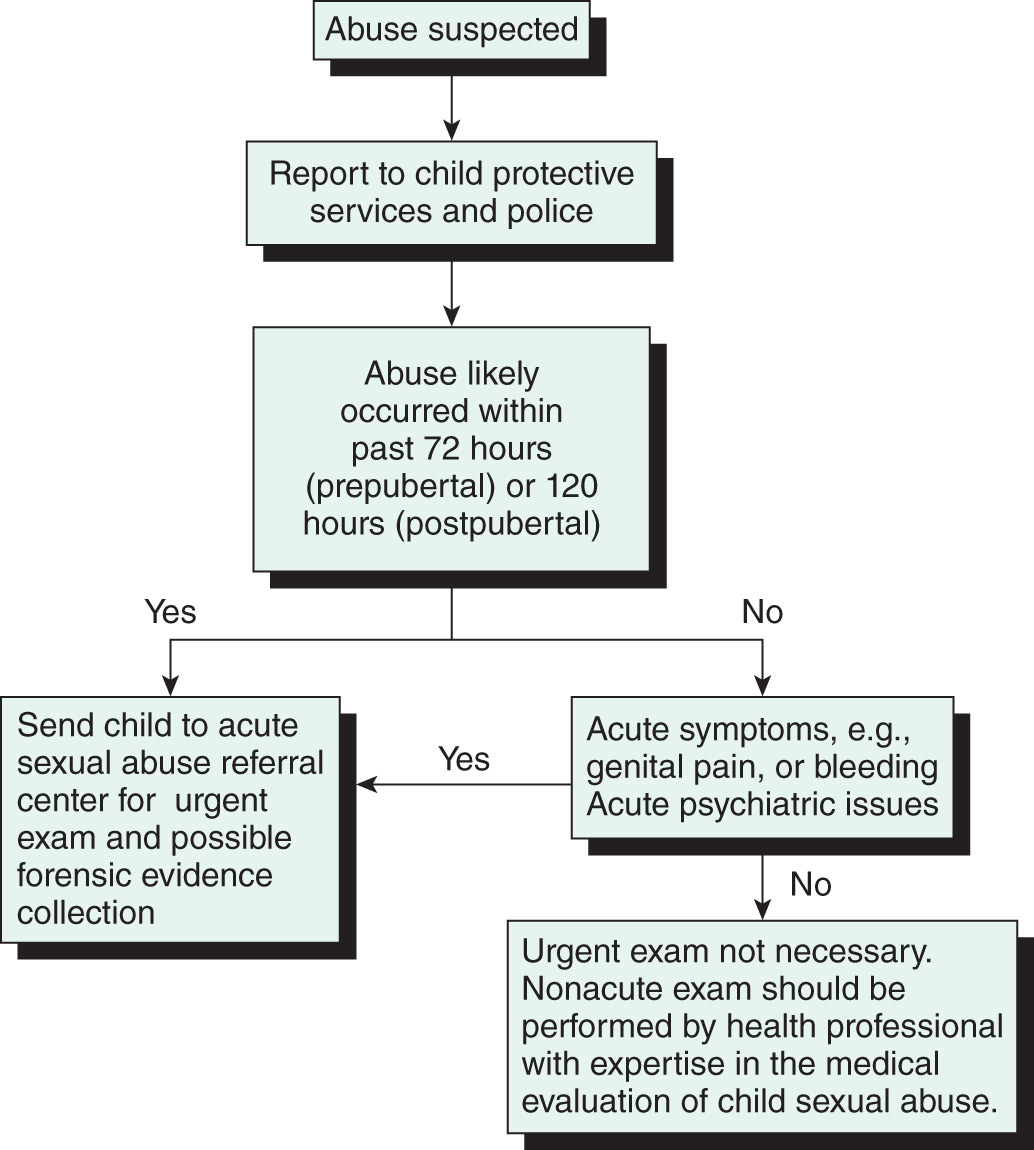
Workup (Fig. E4History and physical examination:
- •Careful history should be obtained and documented from all caregivers, separately if possible.
- •Careful history should be obtained from the child. When children are less than 14 yr of age, history should be obtained in a forensically informed manner without asking direct or leading questions. A referral to a Children’s Advocacy Center may be indicated.
- •Scene investigation may be necessary and is typically conducted by law enforcement and/or CPS.
- •Complete head-to-toe physical examination.
- •Sexual abuse: Forensic interview and well-documented, photographed examinations by trained professionals are the standard for evaluation and evidence collection. This is especially important to avoid further psychological or physical trauma to the child.
Figure E4 Management of suspected child abuse.

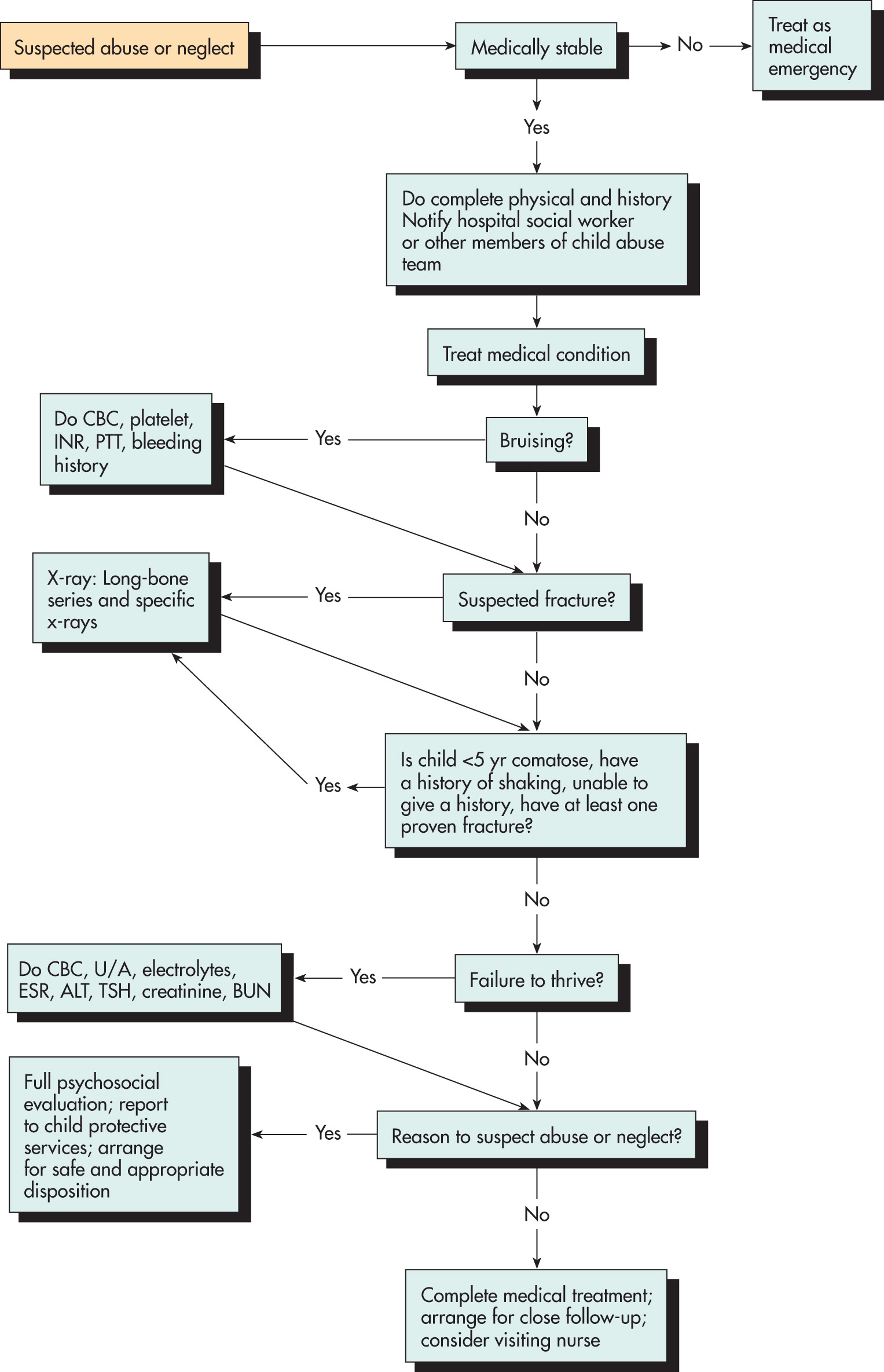
ALT, Alanine aminotransferase; AST, aspartate aminotransferase; BUN, blood urea nitrogen; CBC, complete blood count; ESR, erythrocyte sedimentation rate; INR, international normalized ratio; PTT, partial thromboplastin time; TSH, thyroid-stimulating hormone; U/A, urinalysis.
Laboratory tests to assess for bleeding disorder in the case of children with suspicious bruising. These tests may not be necessary if the abuse was witnessed or if the child has clear patterned bruising or other indicators of physical abuse8:
- •CBC with differential and platelets
- •Prothrombin time, activated partial thromboplastin time
- •Von Willebrand factor antigen and activity
- •Factor VIII and IX levels
- •Alanine aminotransferase, aspartate aminotransferase, amylase, lipase, urinalysis should be considered in infants or other children with abdominal bruising or concern for occult abdominal trauma to look for evidence of internal injury to the liver, pancreas, or kidneys
Laboratory tests to assess for bleeding disorder in the case of children with suspicious intracranial hemorrhage (i.e., Abusive Head Trauma)8:
- •CBC with differential and platelets
- •Prothrombin time, activated partial thromboplastin time
- •Factor VIII and IX levels
- •D-dimer and fibrinogen if there is neurologic compromise
- •Consultation with a child abuse expert physician should be strongly considered in children with suspicion of abusive head trauma
Laboratory tests for sexual abuse:
- •If within 72 h of acute sexual assault/abuse, a forensic evidence kit (rape kit) can be collected. Swabs are obtained from the oropharynx, areas of skin exposure (use an alternate light source or history provided to identify appropriate areas), genitalia, and rectum to send to the crime lab for DNA and other testing. Also collect samples of foreign hair, blood, saliva, or other tissue if present. Underwear and clothing can also be collected. Referral to a local emergency department is often required.7
- •Per current CDC recommendations, adolescent victims of acute assault should have appropriate specimens collected from sites of penetration or attempted penetration for Neisseria gonorrhoeae and Chlamydia. Nucleic acid amplification tests (NAATs) may be used and are preferred. NAATs are also available for trichomonas testing. If there is itching, vaginal discharge, or malodor present, wet mount for bacterial vaginosis and Candida should also be done. Serum should be obtained for HIV, hepatitis B, and syphilis testing acutely. If negative, HIV and syphilis testing should be repeated 6, 12, and 24 wk after the assault.7,9
- •Children (i.e., prepubertal) who have been sexually abused should receive testing for sexually transmitted infections (STI) if clinically indicated. Testing for gonorrhea and chlamydia is typically obtained via NAAT testing due to it being less invasive and more sensitive than culture. NAAT testing is most easily obtained from a urine sample but can also be obtained from a vaginal swab by an experienced examiner if discharge is present. If there is concern for oral or anal sexual contact, NAAT testing can be obtained from those sites. Due to the medicolegal implications of positive STI testing in prepubertal children, confirming the positive test result via NAAT testing of a second nucleic acid sequence is recommended. Testing for other sexually transmitted infections including T. vaginalis, HIV, syphilis, and hepatitis can also be obtained in prepubertal children when there is concern for sexual abuse.7
Imaging StudiesPhysical abuse:
- •Radiographic skeletal survey for all children with suspicious injuries up to 2 yr of age. Additionally, a skeletal survey should be considered for any sibling or household member less than 2 yr of age of a child who has been physically abused. Skeletal surveys can be done on older children when there are extenuating circumstances (severe battering, homicide). In many cases, a repeat skeletal survey should be done 2 to 3 wk after the initial skeletal survey. Adjunct imaging (MRI, ultrasound, bone scan) may be useful to further define suspicious lesions seen on plain films. Skeletal survey should conform to American College of Radiology Standards.3
- •Noncontrast head computed tomography (CT) scan or MRI for all children <6 mo of age with concern of physical abuse. Head imaging should be considered for children 6 mo to 1 yr with concern of physical abuse. Children over 1 yr of age should have head imaging if neurologic changes or per clinical judgment.3
- •When injury or possible injury is identified on head CT, a brain MRI should be obtained.
- •Abdominal CT scan if indicated by clinical examination or laboratory evaluation suggest abdominal trauma.3
- •Box E1 describes the specificity of radiologic findings for child abuse.
BOX E1 Specificity of Radiologic Findings for Child Abuse
High Specificity
- Classic metaphyseal lesions
- Rib fractures, especially posterior
- Scapular fractures
- Spinous process fractures
- Sternal fractures
Moderate Specificity
- Multiple fractures, especially bilateral
- Fractures of different ages
- Epiphyseal separations
- Vertebral body fractures and subluxations
- Digital fractures
- Complex skull fractures
Common but Low Specificity
- Subperiosteal new bone formation
- Clavicular fractures
- Long bone shaft fractures
- Linear skull fractures
|
From Manaster BJ: Musculoskeletal imaging-the requisites, ed 3, Philadelphia, 2006, Mosby.