section name header

Basic Information ⬇

Author: Abhishek Lenka, MD, PhD

Definition

Idiopathic Parkinson disease (PD) is a progressive neurodegenerative synucleinopathy clinically characterized by parkinsonism. The latter is defined by the presence of bradykinesia plus either resting tremor or rigidity.

Synonyms

  • PD
  • Paralysis agitans
ICD-10cm Codes

ICD-10CM CODES
G20Parkinson disease
G21.1Other drug-induced secondary parkinsonism
G21.11Neuroleptic-induced parkinsonism
G21.2Secondary parkinsonism due to other external agents
G21.3Postencephalitic parkinsonism
G21.4Vascular parkinsonism
G21.8Other secondary parkinsonism
G21.9Secondary parkinsonism, unspecified
Epidemiology & Demographics
Prevelance:

  • •It is the second most common neurodegenerative disease worldwide and is found in every country.1
  • •Affects more than 1 million people in North America at 0.3% of the population and 1% of people over the age of 60. Prevalence increases with age.
  • •In those aged >70 yr, 700/100,000 are affected.
  • •Lifetime risk of PD is 2% in men and 1.3% in women.
Physical Findings & Clinical Presentation

  • •Prodromal symptoms during 3 yr before patients receive a diagnosis of PD include problems with working, lifting heavy objects, and balance.2
  • •Tremor (Fig. E1 and Fig. E2 ): Typically, a resting tremor with a frequency of 4 to 6 Hz that is often first noted in the hand as a pill-rolling tremor (thumb and forefinger). Can also involve the leg and lip. Tremor improves with purposeful movement. Usually starts asymmetrically. A subset of patients may develop postural and/or kinetic tremor during the course of illness.3
  • •Rigidity (Fig. E3 ): Increased muscle tone that persists throughout the range of passive movement of a joint. Rigidity, like resting tremor, is usually asymmetric at onset.
  • •Akinesia/bradykinesia (Fig. E4 and Fig. E5 ): Slowness in initiating movement and decrement with repeated movements. Slowness may also affect speech (hypophonia) and thinking (bradyphrenia). Combination of rigidity and bradykinesia may result in worsening of handwriting, usually characterized as micrographia (small letter sizes).
  • •Postural instability: Tested by “pull test.” Ask patient to stand in place with back to examiner. Examiner pulls patient back by the shoulders, and proper response would be to take no steps back or very few steps back without falling. Retropulsion is a positive test, as is falling straight back. Postural instability is usually mild early in the disease course but can be significant in later stages. If falls and postural reflexes are greatly impaired early on, then consider other disorders, such as progressive supranuclear palsy (PSP).
  • •Masked facies (hypomimia) (Fig. E6 ): Face seems expressionless, giving the appearance of depression. Decreased blink; often there is excess drooling.
  • •Gait disturbance: Patients usually have a stooped posture and often walk slowly with short steps and reduced arm swing. As the disease advances, patients may develop festination, which is characterized by difficulty initiating the first step and small shuffling steps that increase in speed (Fig. E7 ). Steps become progressively faster and shorter while the trunk inclines further forward.
  • •Nonmotor symptoms in PD include neuropsychiatric (depression, apathy, impulse control disorders, hallucinations), cognitive, dysautonomia (especially orthostatic hypotension, sexual dysfunction, and anosmia), and sensory abnormalities. These symptoms also may be subject to fluctuations during “on” vs. “off” states.
  • •Common premotor symptoms of PD include constipation, anosmia, depression, and REM sleep behavior disorder (Table 1 ).

Figure E1 The parkinsonian syndrome.
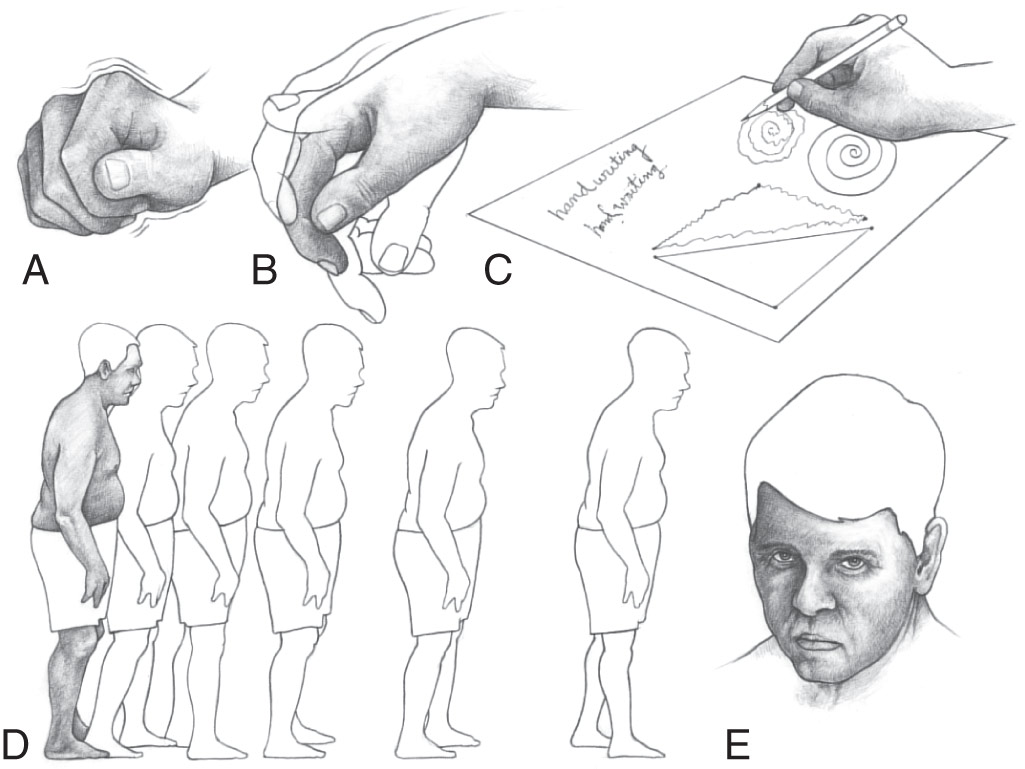
A, The “pill-rolling” tremor. B, Tremor that can worsen with emotional stress. C, Handwriting abnormalities, including micrographia. D, Typical posture and gait, which becomes faster (festination). E, Lack of facial expression as well as “stare” from decreased blinking.
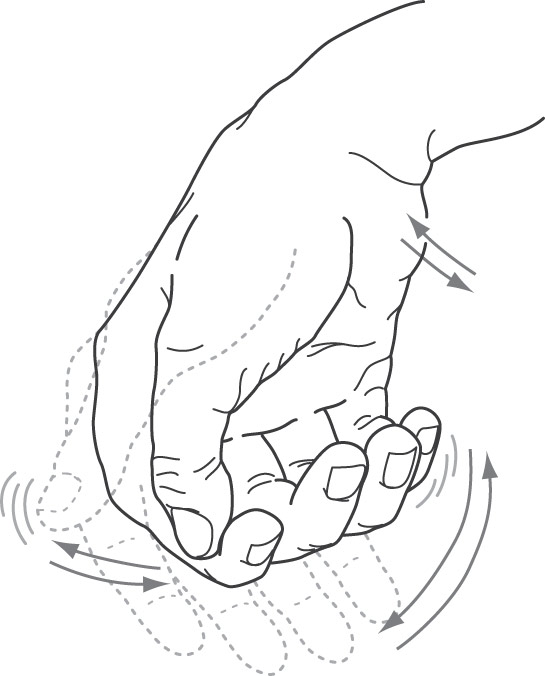
Figure E2 Resting tremor.

Resting tremor—a cardinal feature of Parkinson disease—consists of a relatively slow (4 to 6 Hz) to-and-fro flexion movement of the wrist, hand, thumb, and fingers most apparent when patients sit comfortably. Its similarity to rolling a pill or a coin between the thumb and index finger gave rise to the description “pill-rolling” tremor. The tremor is exaggerated or sometimes apparent only when patients are anxious.

(From Kaufman DM et al: Kaufman’s clinical neurology for psychiatrists, ed 9, Philadelphia, 2023, Elsevier.)

Figure E3 Neurologists Describe Resistance to Passive Movement of the Patient’s Limbs as Rigidity

A Superimposed Tremor Creates Ratchetlike Cogwheel Rigidity.
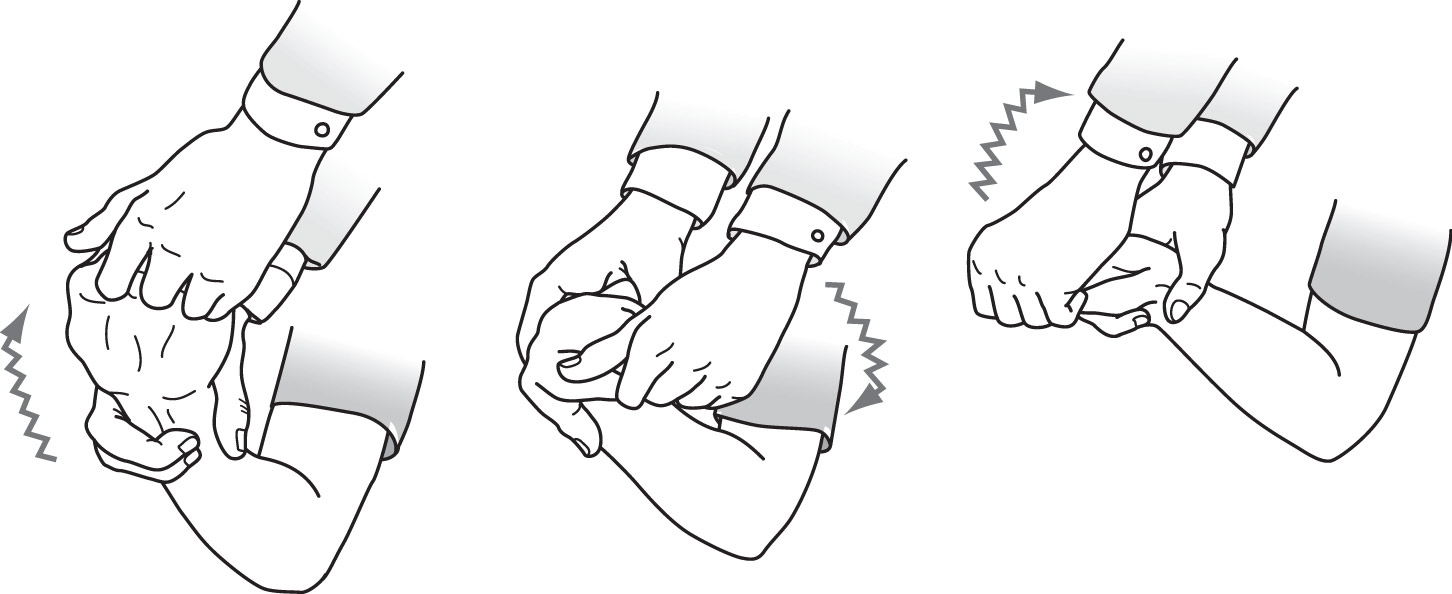
(From Kaufman DM et al: Kaufman’s clinical neurology for psychiatrists, ed 9, Philadelphia, 2023, Elsevier.)

Figure E4 Patients with Akinesia and Rigidity Cannot Rapidly Flex Their Spine, Hips, or Knees

When Sitting, They Tend to Fall Slowly and Solidly into a Chair, and Because They are Unable to Bend Rapidly, Their Feet Rise Several Inches Off the Floor. Sitting and Turning En Bloc Signal Early Parkinsonism.
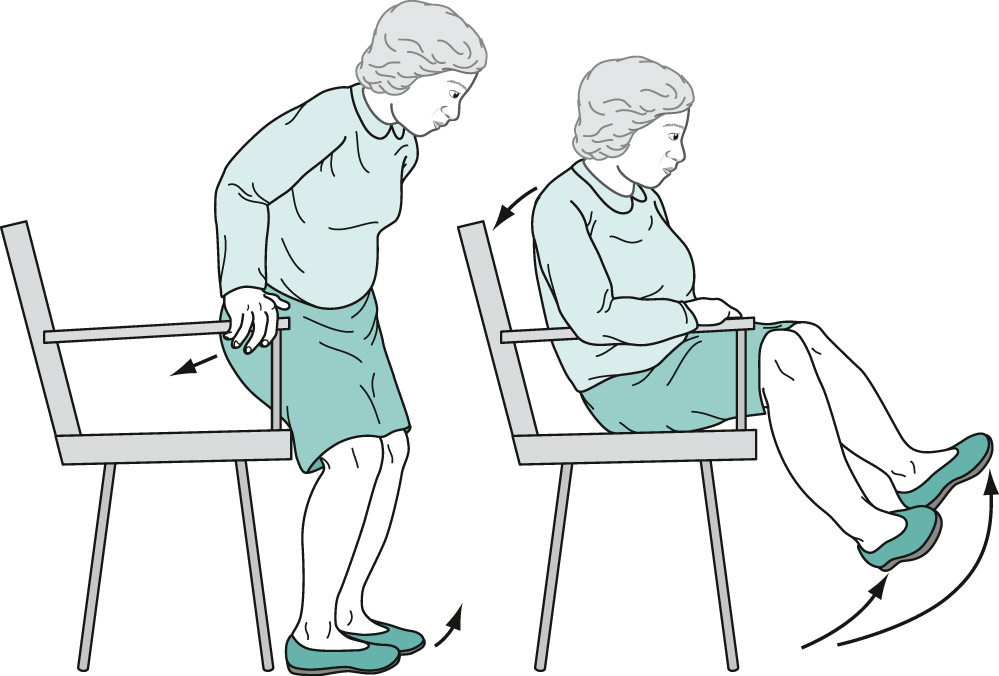
(From Kaufman DM et al: Kaufman’s clinical neurology for psychiatrists, ed 9, Philadelphia, 2023, Elsevier.)

Figure E5 Parkinson Disease Patients Typically Sit Motionless with Their Legs Uncrossed and Their Feet Flat

Their Arms Remain on the Chair or in Their Lap and Rarely Participate in Normal Gestures or Repositioning Movements. They Do Not Shift Their Weight from One Hip to Another or Make any Unnecessary Movements.
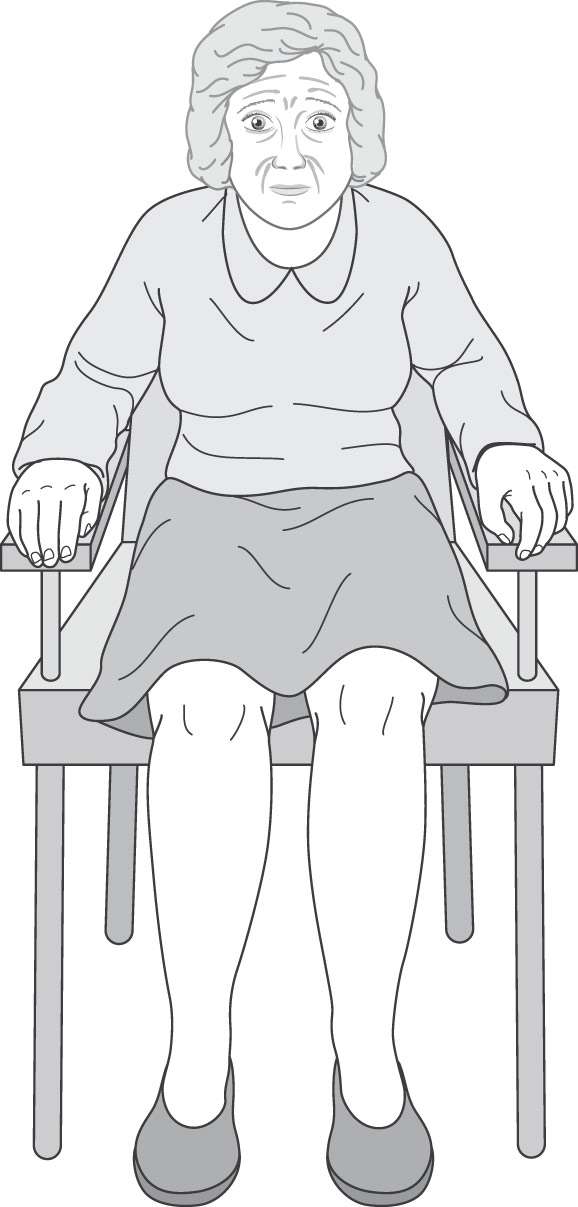
(From Kaufman DM et al: Kaufman’s clinical neurology for psychiatrists, ed 9, Philadelphia, 2023, Elsevier.)

Figure E6 Compared to Normal Individuals of the Same Age, Parkinson Disease Patients Blink Less Frequently, Show Less Facial Expression, and Move Their Head Less Frequently

Neurologists have Called Patients’ Facial Appearance a “stare” or “masked Facies” (Latin, Face or Countenance). Even When Subtle, the Masked Face Gives the Appearance of Apathy or Depression.
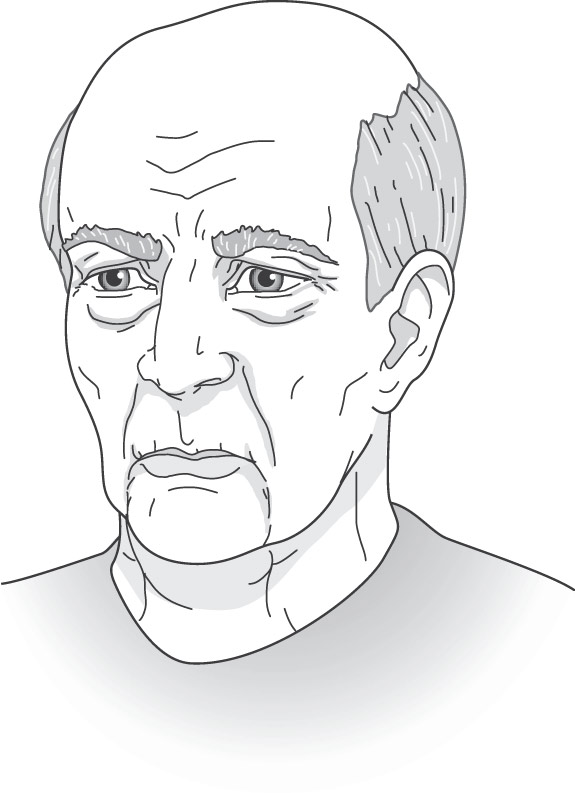
(From Kaufman DM et al: Kaufman’s clinical neurology for psychiatrists, ed 9, Philadelphia, 2023, Elsevier.)

Figure E7 A, Parkinson Disease Patients Often Take Short, Shuffling, Sometimes Accelerating (Festination) Steps Without Swinging Their Arms. Their Neck and Lower Spine, as Well as Their Limbs, are Typically Flexed. While Turning, They Simultaneously Move Their Head, Trunk, and Legs En Bloc. B, The Pull Test Consists of the Physician’s Gently, but Rapidly, Pulling the Patient’s Shoulders Backward

Unaffected Individuals Will Compensate by Taking One or Two Steps Backward. Parkinson Patients, as a Sign of Impaired Postural Reflexes, Will Take Many Steps Backward (Exhibiting Retropulsion) or, in Pronounced Cases, Pitch Backward En Bloc and Fall into the Physician’s Arms.
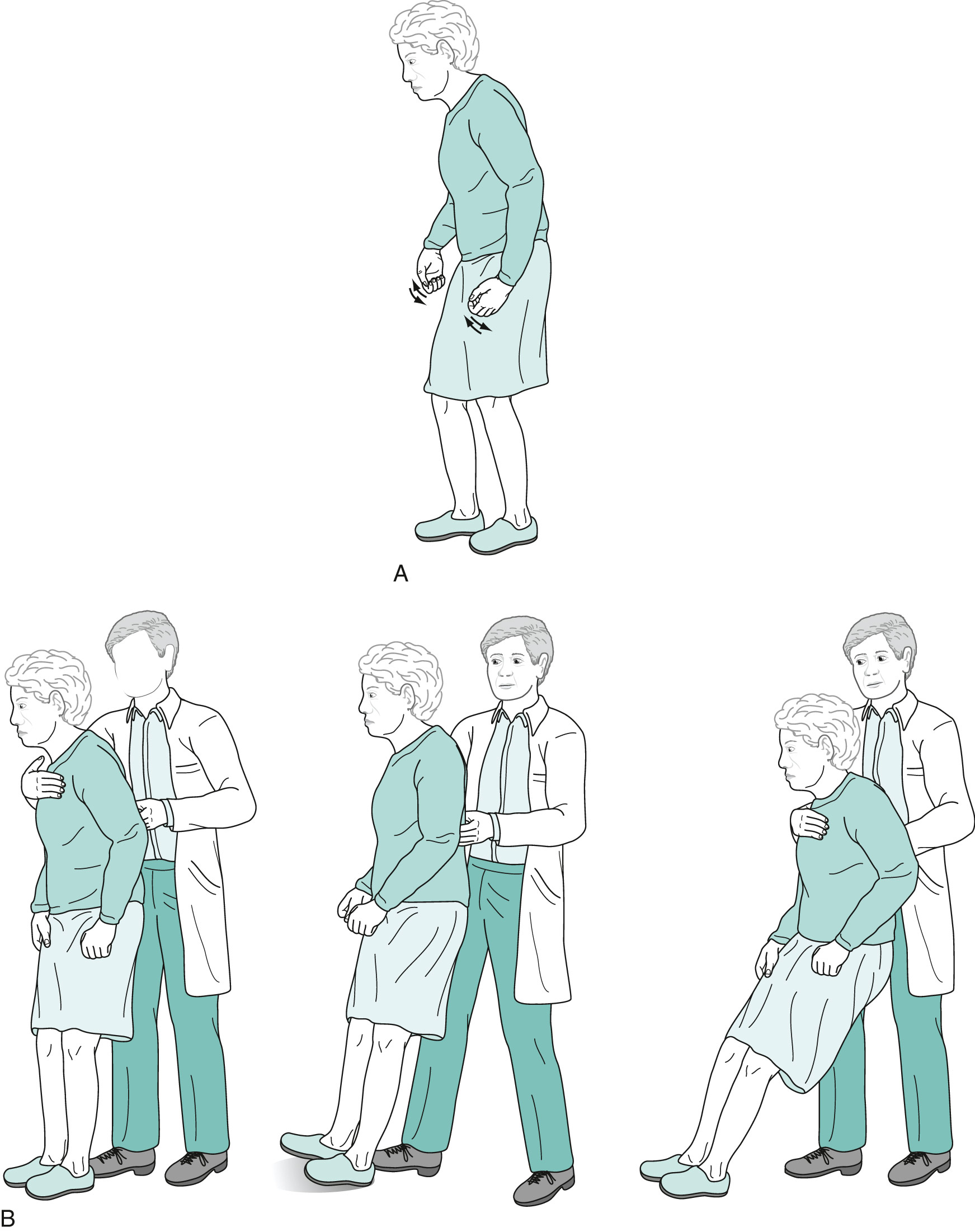
(From Kaufman DM et al: Kaufman’s clinical neurology for psychiatrists, ed 9, Philadelphia, 2023, Elsevier.)

TABLE 1 Sleep and Night Problems in Parkinson Disease and Suggested Management

ProblemPotential DiagnosisProposed Management
Frequent Nocturia (± Two Episodes/Night)
Normal volumesSleep apnea syndromeCheck for sleep apnea and treat appropriately
Small volumes, poor streamProstatismRefer to urologist
Small volumes, good streamParkinsonism: Associated nocturia

Intranasal desmopressin, oral amitriptyline, or transdermal rotigotine patch; if detrusor instability: oxybutynin, tolterodine, Myrbetriq

Decrease evening fluid intake; empty bladder before bed; avoid evening dosing with diuretics, antihypertensives, or vasodilators; have a urinal at the bedside table

Difficulty Initiating Sleep
Early in the eveningToo early lights-offSwitch off lights later
Anxiety or behavioral insomnia

Sleep hygiene; treat anxiety

Evening melatonin, eszopiclone, doxepin

With restlessnessRestless legs syndromeCheck for low ferritin; remove antidepressant drugs; if the diagnosis is uncertain, consider polysomnography with leg monitoring; try gabapentin, pregabalin, or opiates, such as tramadol, if not confused
Late in the nightAltered circadian cycle

Sleep hygiene; decrease levodopa/dopamine agonists in the evening

Melatonin 1-2 h before the desired bedtime

Late in night, hypomanicAssess for impulse control disorderDecrease dopamine agonists; keep on levodopa monotherapy; close neuropsychologic follow-up
Difficulty Resuming Sleep
With cramps, muscle pain, slownessNocturnal bradykinesia

Immediate-release levodopa with a glass of water during awakenings

Continuous drug delivery (ropinirole transdermal patch; pramipexole or extended-release ropinirole; apomorphine infusion; intrajejunal levodopa-carbidopa infusion)

Satin bed sheets to aid movement in bed

With restlessnessRestless legs syndromeSimilar to nocturnal bradykinesia treatment
With anxietyAnxious disorderEvening antidepressants (mirtazapine, doxepin, paroxetine)
With low moodDepressive disorderTreat the depression
Nightmares, Agitation
Confused at night when awakeHallucinations, psychosis, confusion

Remove or reduce the evening dose of dopamine agonist or antidepressant; assess for sleep apnea

Antipsychotics (quetiapine, clozapine)

Kicks, shouts, slapsREM sleep behavior disorders

Secure the bed environment; discontinue antidepressant; assess likelihood of sleep apnea (video-PSG before treating)

Melatonin, 3-9 mg in the evening, clonazepam, 0.5-2 mg in the evening

Daytime Sleepiness
Falls asleep unexpectedlySleep attackCheck for possible sedating drugs (e.g., dopamine agonists) and remove or change them; warn patient not to drive
Falls asleep more often than before

Consider the Epworth Sleepiness Score; ask about associated hallucinations; consider PSG and MSLT

Treat sleep apnea if severe

Decrease/stop the dopamine agonist during daytime, and other sedative drugs

Caffeine, modafinil, methylphenidate

MSLT, Multiple Sleep Latency Test; PSG, polysomnography; REM, rapid eye movement.

From Kryger M et al: Principles and practice of sleep medicine, ed 7, Philadelphia, 2023, Elsevier.

Etiology

  • •Most cases are sporadic. Age is the most common risk factor, although a combination of both environmental and genetic factors likely contributes to disease expression.
  • •Both pesticides and drinking well water are factors correlated with a higher incidence of PD.
  • •10% to 15% have a genetic etiology. Several different genes have been identified; these include the parkin gene (a significant cause of early-onset autosomal recessive PD), LRRK2 (the most common cause of familial and sporadic parkinsonism associated with later onset of PD), SNCA (codes for protein alpha synuclein), DJ1, and PINK1 (associated with early-onset PD).1 , 4

Diagnosis ⬆ ⬇

Differential Diagnosis

Other diseases that cause parkinsonism:

  • •Multiple system atrophy (MSA): Distinguishing features include early autonomic dysfunction (including urinary incontinence, orthostatic hypotension, and erectile dysfunction), symmetric parkinsonism, cerebellar signs, and normal cognition. MSA usually results in faster disease progression and early death.
  • •Dementia with Lewy bodies (DLB): Parkinsonism with concomitant dementia; patients often have early visual hallucinations and fluctuations in level of alertness and mental status (often worse in the evening and night).
  • •Corticobasal syndrome (CBS): Often begins asymmetrically with apraxia, dystonia, cortical sensory loss in one limb, and, sometimes, alien limb phenomenon.
  • •Progressive supranuclear palsy (PSP): Tends to have axial rigidity greater than appendicular (limb) rigidity. These patients have early and severe postural instability. Hallmark is supranuclear gaze palsy that usually involves vertical gaze (especially downward) before horizontal.
  • •Essential tremor: Bilateral postural and action tremor. Although controversial, there is some evidence suggesting that a subset of patients may develop PD in the future.6
  • •Normal pressure hydrocephalus (NPH): Parkinsonism with gait impairment characterized by slow, shuffling gait with very low ground clearance (“magnetic gait”) along with cognitive impairment and urinary incontinence.
  • •Secondary (acquired) parkinsonism (Box 1 ):
    1. 1.Iatrogenic: Many, including any of the neuroleptics and antipsychotics. The high-potency D2-blocker neuroleptics are most likely to cause parkinsonism. Metoclopramide can also cause parkinsonism. Abuse of methamphetamine has been linked to risk of PD.
    2. 2.Postinfectious parkinsonism: Von Economo encephalitis.
    3. 3.Chronic traumatic encephalopathy (dementia pugilistica): Parkinsonism and dementia after repeated head trauma.
    4. 4.Toxins (e.g., MPTP, manganese, carbon monoxide).
    5. 5.Cerebrovascular disease: “Vascular parkinsonism” (basal ganglia infarcts); often lower limbs (especially gait) affected more than upper extremities.
    6. 6.Red flags suggesting a diagnosis other than PD are summarized in Box 2 .

BOX 2 “Red Flags” Suggesting a Diagnosis Other Than Parkinson Disease

  • •Early or prominent dementia
  • •Symmetric signs
  • •Bulbar dysfunction
  • •Early gait disorder
  • •Falls within the first yr
  • •Wheelchair dependence within 5 yr
  • •Early autonomic failure
  • •Sleep apnea
  • •Inspiratory stridor
  • •Apraxia
  • •Alien limb
  • •Cortical sensory loss

From Jankovic J et al: Bradley and Daroff’s neurology in clinical practice, ed 8, Philadelphia, 2022, Elsevier.

BOX 1 Causes of Parkinsonism

Primary Parkinsonism

  • •Parkinson disease (idiopathic/sporadic parkinsonism)
Secondary Parkinsonism

  • •Drug-induced parkinsonism
    1. 1.Neuroleptic drugs
    2. 2.Calcium blocker cinnarizine
  • •Vascular parkinsonism (pseudoparkinsonism)
    1. 1.Multiinfarct states
    2. 2.Single basal ganglia/thalamic infarct
    3. 3.Binswanger disease
  • •Multisystem degenerative diseases
    1. 1.Progressive supranuclear palsy
    2. 2.Multiple system atrophy (striatonigral type)
    3. 3.Corticobasal degeneration
    4. 4.Alzheimer disease
    5. 5.Wilson disease (young-onset parkinsonism)
    6. 6.Dementia with Lewy bodies
    7. 7.Neurofibrillary tangle parkinsonism
  • •Toxins
    1. 1.MPTP
    2. 2.Manganese
  • •Familial parkinsonism
  • •Postinfectious parkinsonism
    1. 1.Creutzfeldt-Jakob disease
    2. 2.AIDS
    3. 3.Postencephalitis (encephalitis lethargica)
  • •Miscellaneous causes
    1. 1.Hydrocephalus
    2. 2.Posttraumatic
    3. 3.Tumors
  • •Metabolic causes (postanoxic)

From Fillit HM: Brocklehurst’s textbook of geriatric medicine and gerontology, ed 8, Philadelphia, 2017, Elsevier.

Workup

  • •Identification of clinical signs and symptoms associated with PD (see “Physical Findings & Clinical Presentation”) and elimination of conditions that may mimic it with a comprehensive history and physical examination.
  • •Routine genetic testing is not recommended but should be considered in young patients (<40 yr) or in those with a strong family history of PD.
  • •Can evaluate for response to carbidopa/levodopa (C/L) to differentiate PD from other causes of parkinsonism such as PSP, MSA, CBD.
  • •Biomarkers for abnormal alpha-synuclein can distinguish persons with clinically defined Parkinson disease, dementia with lewy bodies, or REM sleep behavior disorder from healthy controls and from persons with other neurologic disease with high sensitivity and specificity.7
Imaging Studies

  • •MRI of the head may sometimes distinguish between idiopathic PD and other conditions that present with signs of parkinsonism (see “Differential Diagnosis”).
  • •Dopamine transporter imaging (DaTscan with [123I]β-CIT SPECT) evaluates the level of dopamine in the striatum and can be used to confirm parkinsonism in atypical cases. Normally there is dopamine reuptake in the caudate and putamen that can light up to look like a comma. If there is poor reuptake in the putamen as seen in PD, only the caudate lights up, similar to a period on imaging. DaTscan is approved to distinguish essential tremor from parkinsonism but cannot distinguish between different causes of parkinsonism.5 Interpretation can be tricky, and routine use is not recommended at this time.

Treatment ⬆ ⬇

Nonpharmacologic Therapy

  • •High-intensity aerobic exercise (heart rate target: 80% of the maximum heart rate for age) 4 to 5 times/week (30 to 40 min daily) has shown to have neuroprotective potential.8
  • •Physical therapy (to help with exercise and help in evaluation of safe equipment to use), speech therapy, swallow evaluation. 8-10
  • •Avoidance of drugs that can induce or worsen parkinsonism: Neuroleptics (especially high potency), certain antiemetics (prochlorperazine, trimethobenzamide), metoclopramide, nonselective MAO inhibitors (MAO-Is) (may induce hypertensive crisis), reserpine, methyldopa.
Acute General Rx

  • •Levodopa is the gold standard, but patients <65 can be started on agonists if preferred.10
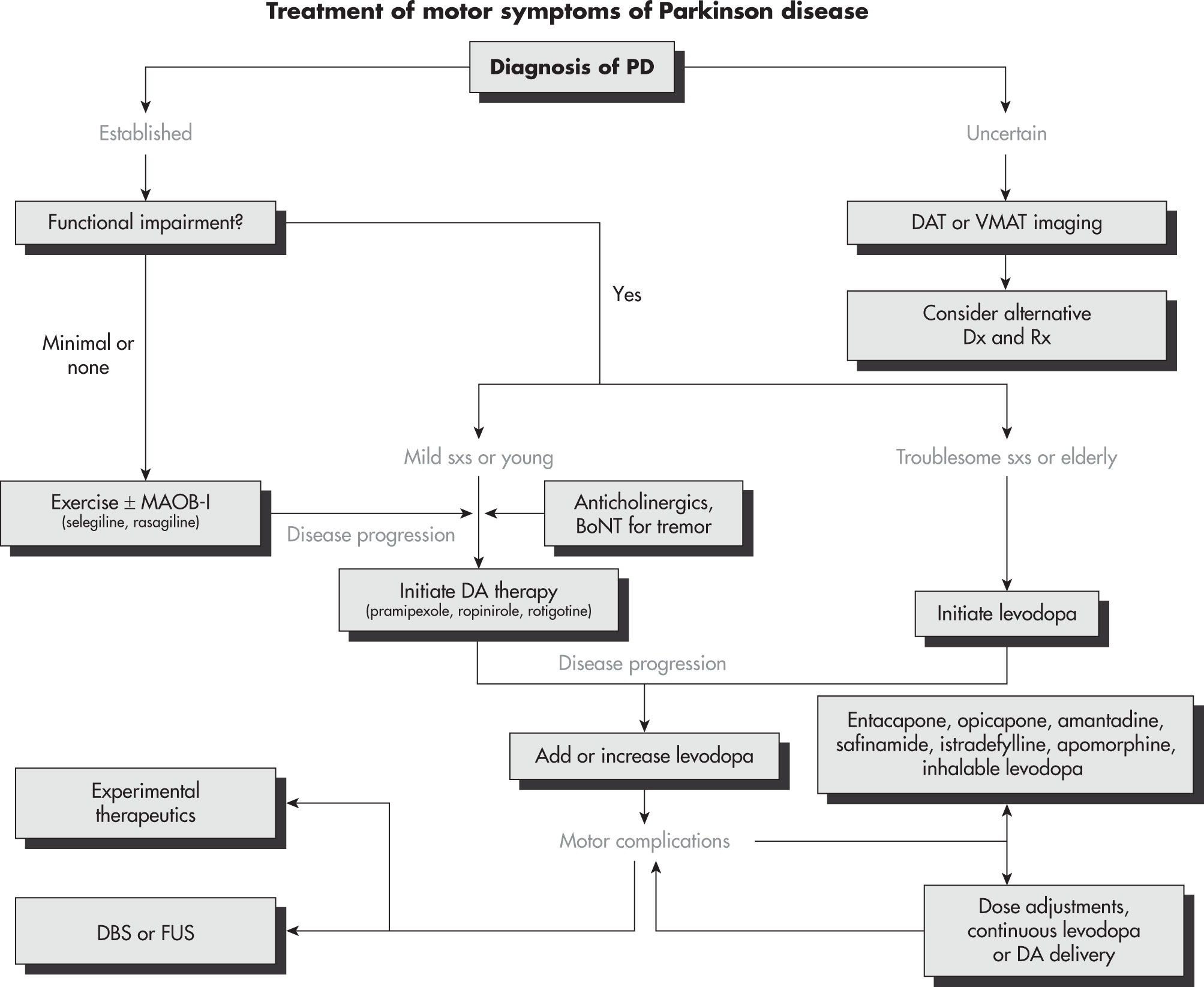
  • •It is appropriate to initiate pharmacotherapy when required by symptoms. Fig. 8 describes treatment of motor symptoms in patients with parkinsonism.
  • •Motor complications do develop during the course of the disease and likely reflect the combination of disease progression and the side effects of dopaminergic medications.

Figure 8 Treatment of motor symptoms of Parkinson disease.

!!flowchart!!

Algorithm for the treatment of Parkinson disease (PD). BoNT, Botulinum neurotoxin; DA, dopamine agonist; DAT, dopamine transporter; DBS, deep brain stimulation; Dx, diagnosis; FUS, focused ultrasound; MAOB-1, monoamine oxidase inhibitor type 1; MAOI, monoamine oxidase inhibitor; Rx, treatment; VMAT2, vesicular monoamine transporter 2.

(From Jankovic J et al: Bradley and Daroff’s neurology in clinical practice, ed 8, Philadelphia, 2022, Elsevier.)

Chronic Rx

  • •Levodopa therapy:
    1. 1.The gold standard is levodopa with a peripheral dopa decarboxylase inhibitor (carbidopa) to minimize side effects (nausea, light-headedness, postural hypotension).11 The combination of the two drugs is marketed under the trade name Sinemet. Levodopa therapy has been found to reduce morbidity and mortality in PD patients.
    2. 2.Usual starting dose is 25/100 mg (C/L) tid 1 h before meals (can be given after meals if there is nausea). There is no official upper limit of the dose. Controlled-release (CR) tablets are usually preferred (given at bedtime) if patients have a lot of nighttime stiffness.
    3. 3.Stalevo (combination Sinemet and entacapone, a COMT inhibitor). Useful for patients with motor fluctuations (wearing off); has no role in treating patients with early PD.
    4. 4.Duopa (C/L), administered by a 16-h infusion to the jejunum through either a nasojejunal tube (short-term) or PEG-J tube (long-term), is used for treating motor fluctuations in patients with advanced PD.
    5. 5.Inbrija (levodopa inhalation powder) is used to treat “off” periods in patients taking C/L, but does not replace taking regular C/L. It works quickly and is easy to carry. It cannot be used if an MAO-I was used in the past 2 wk.
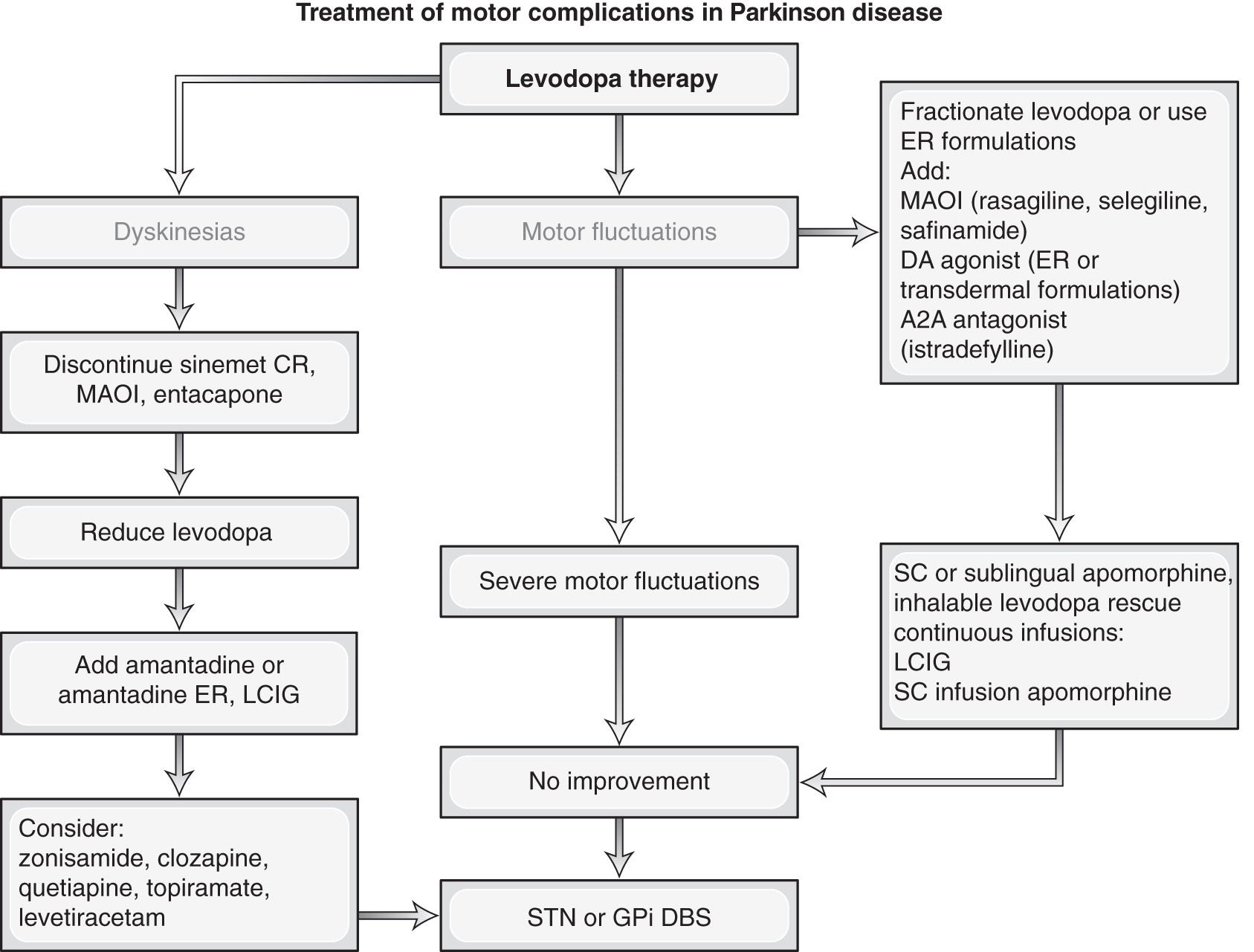
    6. 6.Treatment of levodopa-related motor complications in PD are summarized in Fig. 9 .
  • •Dopamine receptor agonists (ropinirole, pramipexole, rotigotine) are not as potent as levodopa, but they are often used as initial treatment in younger patients in an attempt to delay the onset of complications (dyskinesias, motor fluctuations) associated with levodopa therapy.10,11 In general, they cause more side effects than levodopa, including nausea, vomiting, light-headedness, peripheral edema, hallucinations, confusion, and somnolence. They can also cause impulse control behaviors such as hypersexuality, binge eating, and compulsive shopping and gambling. Presence of these must be assessed at each visit as the appearance of these side effects is often underreported and their consequences can be severe. Dopamine agonists also can be associated with a prolonged withdrawal syndrome.
    1. 1.Ropinirole: Initial dose is 0.25 mg tid but must be titrated over the course of 4 wk to 1 mg tid and then may be increased by 1.5 mg/wk to a maximum of 24 mg/day. An extended-release formulation is also available.
    2. 2.Pramipexole: Initial dose is 0.125 mg tid but must be titrated over the course of weeks to 1.5 to 4.5 mg/day in three doses. An extended-release formulation is also available.
    3. 3.Rotigotine: 2 mg to 6 mg/24 h as transdermal patch.
    4. 4.Apomorphine: A dopamine agonist used for acute, intermittent treatment of unpredictable “off” episodes with advanced Parkinson disease.
  • •COMT inhibitors (entacapone, opicapone, and tolcapone) are used as adjunct to levodopa therapy to treat end-of-dose wearing off.
  • •MAO-B inhibitors can be used as monotherapy early in the disease or as adjunctive therapy in later stages; they have been shown to have milder symptomatic benefit than dopamine agonists or levodopa.11,12 They are well tolerated and easy to titrate. Concurrent use of stimulants and sympathomimetics should be avoided. Certain food restrictions may apply.
    1. 1.Rasagiline: Initial dose is 0.5 mg/day, then 1 mg/day. The ADAGIO study suggests that 1 mg rasagiline may have disease-modifying benefits, but results must be interpreted with caution.
    2. 2.Selegiline: Usual dose, 5 mg bid with breakfast and lunch. Has amphetamine by-product, so has mild stimulant-like effects, which can be beneficial in some patients.
    3. 3.Safinamide: FDA approved as add-on therapy for C/L that reduces “off time” and increases “on time” with fewer dyskinesias. Starting dose is 50 mg/day for 2 wk, which can be increased if needed to 100 mg/day.
  • •Istradefylline is the first FDA-approved adenosine A 2A receptor agonist for use as an adjunct to C/L in adults with PD experiencing “off” episodes.
  • •Amantadine (unclear mechanism of action, but reported to modulate the dopamine and glutamate systems in the CNS) can be used alone early in the disease. Later in the disease, it is especially useful in the treatment of dyskinesias. Dosage is 100 mg tid (titrate weekly from 100 mg daily). Must adjust for elderly and renal impairment. The most notable side effect, especially in the elderly, are confusion and hallucinations. Rarely, it leads to leg edema and pigmentation (classically described as “livedo reticularis”). Extended-release amantadine (Gocovri) may have fewer side effects.
  • •Anticholinergic agents are only helpful in treating tremor but may be more effective than levodopa for tremor in some circumstances. They can also be used to treat drooling in patients with PD. However, their use is restricted largely due to frequent side effects such as constipation, urinary retention, memory impairment, and hallucinations. They should be avoided in the elderly.
    1. 1.Trihexyphenidyl: Initial dose, 1 mg PO tid
    2. 2.Benztropine: Usual dose, 0.5 to 1 mg daily or bid
  • •Treatment of nonmotor symptoms9: Nonmotor symptoms such as depression, anxiety, irritability, dementia, psychosis, constipation, urinary and sexual dysfunction, sleep disturbances such as REM behavior disorder, decreased sense of smell, and impulsive behavior, among others, often cause a great deal of distress for patients and caretakers alike. Treatable symptoms should be addressed pharmacologically using medications appropriate for elderly patients sensitive to antidopaminergic medications.
  • •Psychosis: Dopamine agonists, anticholinergics, and amantadine can cause hallucinations, so adjustment of these medications should be the first step. Pimavanserin (Nuplazid) is FDA approved for the treatment of PD psychosis and has been shown effective for the treatment of hallucinations and delusions associated with PD psychosis. The medication is an inverse agonist of 5-HT2A and 5-HT2C receptors without any evidence of dopamine blockade. Quetiapine is also very effective in managing hallucinations in PD patients.
  • •PD dementia: Rivastigmine (Exelon), a cholinesterase inhibitor available both orally and transdermally as a patch (with few GI side effects), is approved to treat not only Alzheimer disease but also PD dementia.
  • •There are monoclonal antibody therapies against alpha synuclein in the pipeline to help with treatment of motor symptoms and cognitive symptoms in PD; however, thus far trials have been unsuccessful.13

Figure 9 Treatment of levodopa-related motor complications in Parkinson disease.

!!flowchart!!

A2A, Adenosine A2A receptor; COMTI, catechol-o-methyl-transferase inhibitor; CR, controlled release; DA, dopamine agonist; DBS, deep brain stimulation; ER, extended release; GPi, globus pallidus interna; LCIG, levodopa-carbidopa infusion gel; MAOI, monoamine oxidase inhibitor; SC, subcutaneous; STN, subthalamic nucleus.

(From Jankovic J et al: Bradley and Daroff’s neurology in clinical practice, ed 8, Philadelphia, 2022, Elsevier.)

Surgical Options (Box 3

  • •Deep brain stimulation of the globus pallidus interna (GPi-DBS) and subthalamic nucleus (STN-DBS) are currently the surgical options of choice for PD patients with motor fluctuations. Similar improvement in motor function and adverse effects have been reported after either procedure.14-16 STN-DBS has the benefit of possible medication lowering compared to pallidal targets. Compared to ablative procedures, DBS has the advantage of being reversible and adjustable. DBS is useful for the treatment of tremor refractory to levodopa. It improves the cardinal motor symptoms, extends medication “on” time, and reduces motor fluctuations during the day. In general, patients are likely to benefit from this therapy if they show a clear response to levodopa. Therefore when considering DBS, patients should be evaluated for motor response to levodopa by stopping levodopa overnight and evaluating motor response before and after a dose of levodopa.
  • •Focused ultrasound (FUS) is a MRI-guided an imaging-guided method for creating therapeutic lesions in deep brain structures, including the subthalamic nucleus. FUS subthalamotomy in one hemisphere improved motor features of PD in selected patients with asymmetric signs.17 At 3 mo, patients who were most likely to benefit were younger, had lower motor severity scores, or had higher dyskinesia scores.18 Longer and larger trials are required to determine the effect and safety of FUS in persons with Parkinson disease. DBS is currently favored over FUS as it can be continually reprogrammed to account for worsening disease and does not cause a permanent lesion.
  • •Surgery is often limited to patients with disabling, medically refractory problems, and patients must still have a good response to l-dopa to undergo surgery. Yet for many patients, earlier stimulation might provide an improved motor benefit before disability from other symptoms has occurred and should be considered at an earlier stage of PD. DBS results in decreased dyskinesias, fluctuations, rigidity, and tremor.
Disposition

PD usually follows a slowly progressive course leading to disability over the course of several years. However, every patient will progress individually, and patients should be reassured that this diagnosis does not, by definition, result in being either wheelchair or bed bound.

Referral

  • •Neurology consultation is recommended at initial diagnosis of PD.
  • •Moderate- to high-intensity aerobic exercise is important for all patients with PD.
  • •Participation in outpatient physical and speech therapy program is recommended for patients with moderate to advanced disease.
  • •Neuropsychology testing in patients considering DBS.

Pearls & Considerations ⬆ ⬇

Related Content

  • Parkinson Disease (Patient Information)

Reference(s) ⬆

  1. Homayoun H : Parkinson diseaseAnn Intern Med. 169(5):ITC33-ITC48, 2018.
  2. Miller-Patterson C : Functional impairment in individuals with prodromal or unrecognized Parkinson diseaseJAMA Neurol. 80(2):200-204, 2023.
  3. Pasquni J : The clinical profile of tremor in Parkinson’s diseaseDoi:10.1002/Mdc3.13845 PMID: 37868914.Mov Disord Clin Pract. 10(10):1496-1506, 2023.
  4. Cook L : Parkinson’s disease variant detection and disclosure: PD GENEration, a North American studyDoi:10.1093/Brain/Awae142Brain. 147(8):2668-2679, 2024.
  5. Postuma RB : MDS clinical diagnostic criteria for Parkinson’s diseaseMov Disord. 30(12):1591-1601, 2015.
  6. Louis ED : Conversion rate of essential tremor to essential tremor Parkinson disease: data from a prospective longitudinal studyDoi:10.1212/Cpj.0000000000200162Neurol Clin Pract. 13(3):e200162, 2023.
  7. Tanner CM, Ostrem JL : Parkinson's diseaseN Engl J Med. 391:442-452, 2024.
  8. Rosenfeldt AB : High intensity aerobic exercise improves information processing and motor performance in individuals with Parkinson’s diseaseDoi:10.1007/S00221-020-06009-0Exp Brain Res. 239(3):777-786, 2021.
  9. Seppi K : Update on treatments for nonmotor symptoms of Parkinson’s disease—an evidence-based medicine reviewMov Disord. 34(2):180-198, 2019.
  10. Li F : T’ai chi and postural stability in patients with Parkinson’s diseaseN Engl J Med. 366:511-519, 2012.
  11. Connolly BS, Lang EL : Pharmacologic treatment of Parkinson disease, a reviewJAMA. 311(16):1670-1683, 2014.
  12. Fox SH : International Parkinson and Movement Disorder Society Evidence-based medicine review: update on treatments for the motor symptoms of Parkinson’s diseaseMov Disord. 33(8):1248-1266, 2018.
  13. Vijayakumar D, Jankovic J : Slowing Parkinson’s disease progression with vaccination and other immunotherapiesDoi:10.1007/S40263-022-00903-7CNS Drugs. 36(4):327-343, 2022.
  14. Follett KA : Pallidal versus subthalamic deep-brain stimulation for Parkinson’s diseaseN Engl J Med. 362:2077-2091, 2010.
  15. Machado A : Deep brain stimulation: what can patients expect from it?Clev Clin J Med. 79:113, 2012.
  16. Okun MS : Deep brain stimulation for Parkinson’s diseaseN Engl J Med. 367:1529-1538, 2012.
  17. Martínez-Fernández R : Randomized trial of focused ultrasound subthalamotomy for Parkinson’s diseaseN Engl J Med. 383(26):2501-2513, 2020.
  18. Krishna V : Trial of globus pallidus focused ultrasound ablation in Parkinson’s diseaseN Engl J Med. 388(8):683-693, 2023.
  19. Standaert DG : GLP-1, Parkinson's disease, and neuroprotectionN Engl J Med. 390(13):1233-1234, 2024.