Author: David R. Rendon, DO, MS and Joseph S. Kass, MD, JD, FAAN

Definition
- •HIV-associated cognitive dysfunction, referred to as HIV-associated neurocognitive disorder (HAND), covers a spectrum of disorders ranging from asymptomatic (asymptomatic neurocognitive impairment) to mild (mild neurocognitive disorder) to severe (including HIV-associated dementia).
- •Cognitive, motor, and behavioral abnormalities.
Synonyms
- HAD
- HAND
- HIV-associated neurocognitive disorder (HAND)
- HIV dementia
- HIV-associated dementia
- Mild neurocognitive disorder
- AIDS dementia complex
- HIV-1 encephalopathy
| ICD-10CM CODES | |||
| B20 | Human immunodeficiency virus [HIV] disease | ||
| B97.35 | Human immunodeficiency virus, type 2 [HIV 2] as the cause of diseases classified elsewhere | ||
| R41.8 | Other and unspecified symptoms and signs involving cognitive functions and awareness | ||
Epidemiology & Demographics
- •According to the CHARTER study, ∼52% of HIV-infected individuals have HAND. The largest group has asymptomatic neurocognitive impairment (∼33%), followed by minor neurocognitive disorder (12%), and HIV-associated dementia (2%).1
- •The epidemiology has changed in the era of antiretroviral therapy (ART), with the number of cases of HIV-associated dementia (HAD) falling from 15% in the pre-ART era to 2% now, but the proportion of mildly affected patients is increasing.
- •As HIV-infected patients live longer, the prevalence of HAND may be increasing.
Physical Findings & Clinical Presentation
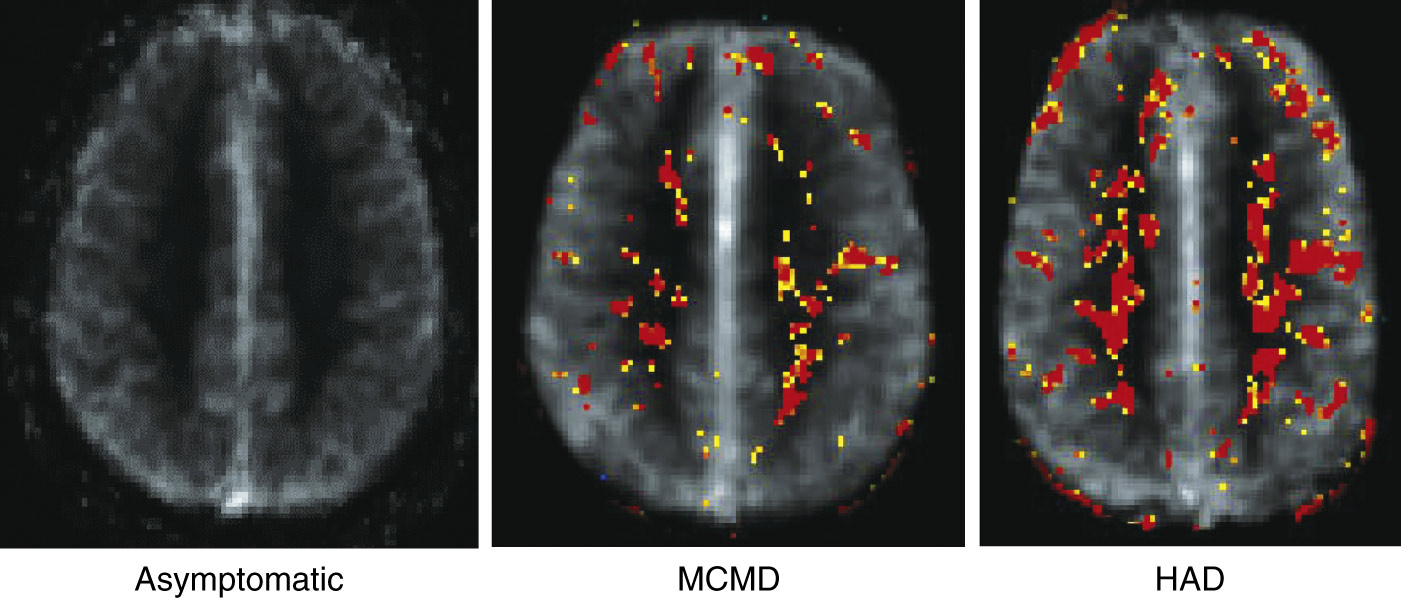
- •The 2007 Frascati Criteria for HAND require assessment of five cognitive domains: verbal/language ability, attention and working memory, abstraction and executive function, speed of information processing, sensory perceptual skills, and motor skills. The criteria define three levels of HAND2:
- 1.Asymptomatic neurocognitive disorder: An acquired impairment in at least two cognitive domains as defined by a performance on neuropsychologic testing of >1 standard deviation (SD) below expected age and education-adjusted norms. This impairment does not affect daily functioning, and the patient may be unaware of its existence.
- 2.Mild neurocognitive disorder: An acquired impairment in at least two cognitive domains as defined by a performance on neuropsychologic testing of more than 1 SD below expected age and education-adjusted norms. This impairment does affect daily functioning to a mild degree. For example, work efficiency is decreased, but the patient can compensate for the deficits.
- 3.HAD: An acquired impairment in at least two cognitive domains as defined by a performance on neuropsychologic testing of more than 2 SD below expected age and education-adjusted norms. This impairment does affect daily functioning to a significant degree.
- •Cognitive changes3: Forgetfulness, poor attention and concentration, increased difficulty performing complex tasks, slowed psychomotor speed.
- •Behavioral changes: Apathy, lack of initiative, social withdrawal, irritability, occasionally agitation, psychosis, or obsessive-compulsive disorder.
- •Motor problems: Clumsiness, unsteady gait, poor balance, tremor, leg weakness.
- •Progressive/later stages: Bedbound, severe dementia, bowel/bladder incontinence.
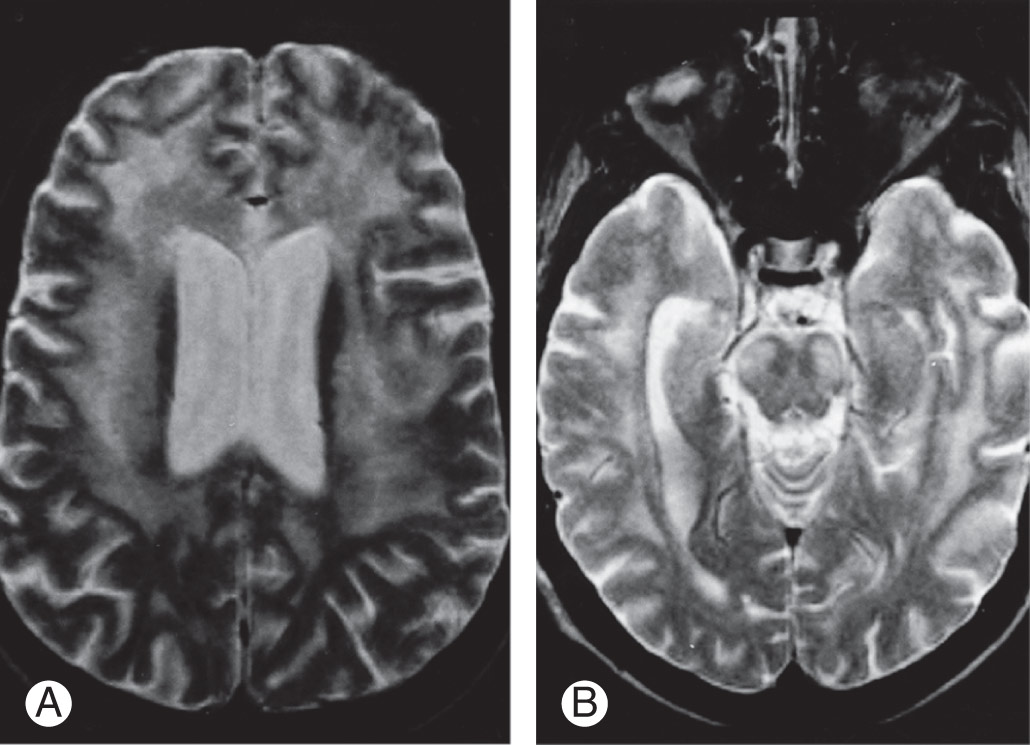
- •Results from inflammation triggered by HIV itself (not related to opportunistic infection) and immune activation of microglia.
- •In children: Developmental delay, microcephaly, and spasticity are common.