▶Erythema multiforme (EM; previously called erythema multiforme minor) is a reactive inflammatory disorder of limited duration that may become recurrent.
▶Causes include infection and medications, with infections the most common cause in children.
▶Herpes simplex virus (HSV) infection is the most common cause of recurrent EM in children.
▶Begins as erythematous, blanching, round or oval papules or plaques.
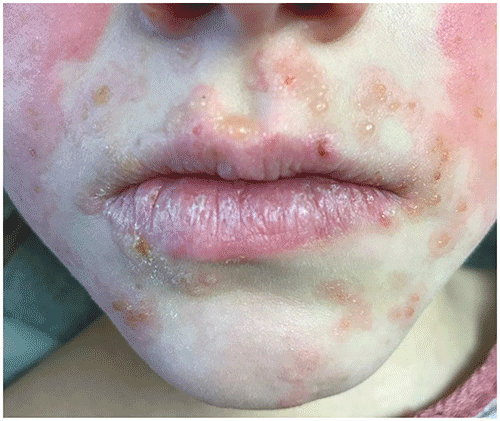
▶Lesions then develop a target appearance, with central dusky to violaceous color (Figures 111.1 and 111.2) (sometimes with a central vesicle, bulla [Figures 111.3 and 111.4], or crust) surrounded by concentric white (sometimes) and red rings, the latter 2 representing vasoconstriction or vasodilation, respectively.
▶A single mucosal surface (usually lips) may be involved.
▶The disease lasts 7 to 10 days before resolving spontaneously.
Figure 111.1. Erythema Multiforme. Target Lesions are Papules or Plaques that Develop a Central Violaceous Discoloration (or Blister or Crust), Surrounded by a Pale Edematous Zone and a Peripheral Red Color.
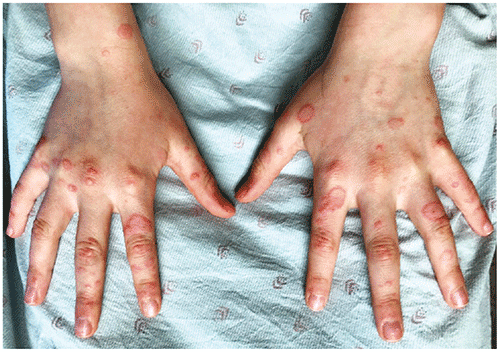
Figure 111.2. Erythema Multiforme. Target Lesions on the Palm.
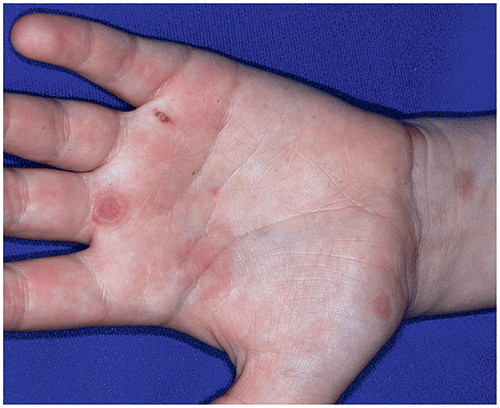
Figure 111.3. Target Lesions May Develop Central Bullae or Vesicles.
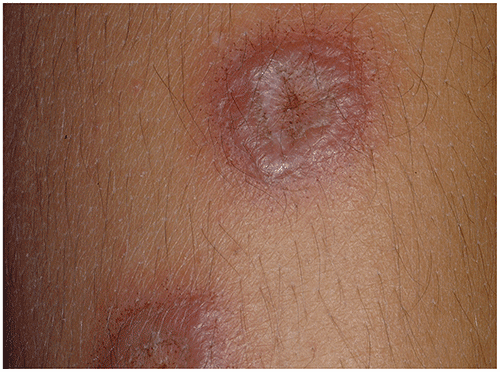
Figure 111.4. Target Lesions on the Face with Central Vesicles. This Child Had a Preceding Herpes Simplex Virus Infection, as Noted by the Crusted Papule on the Left Side of the Upper Lip.
Look-alikes
| Disorder | Differentiating Features |
|---|
| Urticaria | Erythematous blanching wheals that resolve or change in 24 hours or sooner. Occasionally, lesions may become centrally dusky, but no vesicle or crust formation. Although lesions may become annular, true target lesions do not occur. In “urticaria multiforme,” annular, polycyclic, and occasionally dusky urticarial papules and plaques occur and may be mistaken for erythema multiforme.
|
| Stevens-Johnson syndrome (SJS)/toxic epidermal necrolysis (TEN) | Prodromal symptoms (eg, fever, sore throat, malaise) precede appearance of rash by as much as 14 days. Patients are systemically ill. Target lesions may be few in number or atypical in their appearance (especially in TEN). Erythematous macules or patches that develop bullae and erosions. Extensive mucosal involvement with 2 or more sites affected. TEN often associated with reaction to systemic drug.
|
| Mycoplasma pneumoniae–induced rash and mucositis | Newer classification for what once was referred to as “mucosal-predominant M pneumoniae–associated SJS.” Prominent erosions of 2 or more mucous membranes with more sparse skin lesions (target lesions and bullae). Milder disease course than with SJS or TEN.
|
| Serum sickness–like eruption | Large, often purple, urticarial-appearing plaques present (has been termed “purple urticaria”). Target lesions and blistering absent. Fever, arthralgia, arthritis are common features. Periarticular swelling often present. Ambulatory children may refuse to walk during episode.
|
▶The diagnosis of EM is made clinically and may be confirmed with skin biopsy.
▶Presence of target lesions concentrated on the palms, soles, arms, and legs.
▶Target lesions exhibit peeling, blistering, or crusting in the center of some lesions.
▶Involvement of no more than 1 mucosal surface.
▶Consider antiviral prophylaxis for presumed HSV infection if EM is recurrent.
▶If pruritus is significant, an antihistamine may be prescribed.
▶Corticosteroid therapy is not indicated.
▶EM resolves spontaneously, leaving only occasional postinflammatory hyperpigmentation.
▶Recurrent EM may indicate HSV infection and reactivation. In such cases, antiviral prophylaxis may be required to prevent EM recurrences.