▶Acute febrile illness caused by varicella-zoster virus, a double-stranded DNA virus of the Herpesviridae family.
▶Humans are the only natural host of varicella-zoster virus.
▶Highly contagious disease of childhood transmitted by person-to-person contact; airborne spread has been documented.
▶Immunization with a live, attenuated virus vaccine has been available in the United States since 1995 and is highly effective. Incidence dropped dramatically since that time, but outbreaks still occur owing to undervaccination. Mild forms can also occur in those who have been vaccinated.
▶Incubation period typically is 14 to 16 days (range, 10–21 days) from exposure to onset of symptoms.
▶Infections usually occurred during the winter and spring in the pre-vaccine era; cases now may occur year-round without notable seasonality.
▶Vesicular exanthem that usually begins on the scalp or trunk.
▶Lesions may appear in crops and may first appear as red macules, which quickly develop a surface vesicle (Figure 22.1).
▶Individual lesions appear as a clear vesicle on an erythematous base (“dewdrop on a rose petal”).
▶The lesions usually crust within hours to days and then begin to heal gradually.
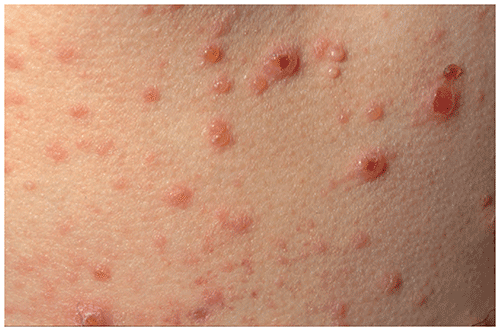
▶The exanthem spreads centrifugally, so fresh vesicles may be seen on the extremities, with older crusted lesions on the trunk. Lesions in varying stages of development are characteristic of varicella (Figure 22.2).
▶Increased numbers of lesions may be seen in areas of skin injury or irritation (eg, atopic dermatitis sites, areas of sunburn).
▶Low-grade fever and malaise are typical; more severe disease may occur in adolescents, adults, and individuals who are immunocompromised.
▶Pruritus is common and sometimes severe.
▶Complications include staphylococcal and streptococcal superinfection of skin lesions, pneumonia, encephalitis, and purpura fulminans. Streptococcal superinfection usually presents with a reappearance of fever in the patient who is several days into the illness. Reye syndrome (liver dysfunction and neurologic symptoms) may occur in children taking salicylates.
▶Chickenpox occurring in a person who has previously received the varicella vaccine generally is a milder illness than in a child who is unvaccinated, with fewer lesions (<50), lower fever, and shorter disease duration.
Figure 22.1. Varicella. Typical Vesicles (“dewdrop on a Rose Petal”) are Present (Arrows).
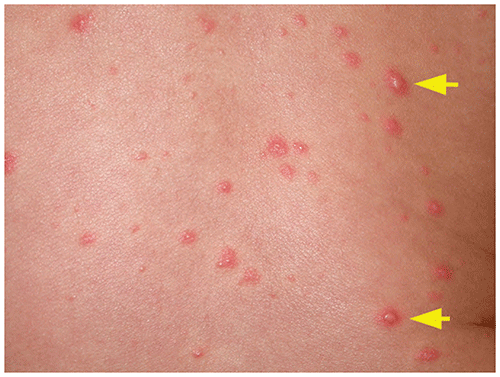
Figure 22.2. In Varicella, Lesions are in Different Stages of Development. This Patient Demonstrates Papules, Vesicles, and Crusts.
Look-alikes
| Disorder | Differentiating Features |
|---|
| Hand, foot, and mouth disease (HFMD) | Eruption concentrated on the hands, feet, and buttocks (is not typically generalized, although in recent years a more severe and diffuse form of HFMD has been observed; see below). Oval vesicles with a rim of erythema (classic appearance of “dewdrop on a rose petal”) are lacking.
|
| Other enteroviral exanthems | Erythematous macules and papules that may mimic early varicella; petechiae may be present. Severe form of HFMD may present with widespread vesicles or bullae; lesions tend to predominate on distal extremities, anogenital region, and face; in some instances, involvement may be concentrated at sites of preceding atopic dermatitis (so-called eczema coxsackium).
|
| Herpes simplex virus infection | Clustered (not single) vesicles on an erythematous base. Eruption typically localized, not generalized.
|
| Bullous insect bite reaction | Eruption not generalized. Lower extremities most often involved. Constitutional symptoms absent.
|
| Rickettsialpox | |
| Disseminated herpes zoster (shingles) | Occurs in patients who are immunocompromised. Reactivation of varicella-zoster virus may cause dissemination beyond dermatomal borders, with visceral involvement.
|
| Smallpox (variola) | Rash begins on face and rapidly spreads to the distal extremities; later involves the trunk (ie, centripetal distribution, unlike centrifugal distribution seen in varicella). Vesicles and pustules are deep-seated and firm (not fragile as in varicella). All lesions are simultaneously in the same stage of development.
|
▶Characteristic clinical features of lesional morphology, distribution, and progression usually suggest the diagnosis of varicella.
▶Laboratory testing is rarely necessary in uncomplicated disease. If testing is required, the following tests may be available:
■Vesicular fluid or crusts sent for polymerase chain reaction (PCR) testing. This is the preferred method owing to superior sensitivity and specificity.
■Scrapings of the base of intact vesicles with direct fluorescent antibody examination provide rapid diagnosis, but sensitivity is inferior to that of PCR.
■Viral culture from skin lesions can be performed, but sensitivity is limited compared with that of PCR, and results may take several days.
■Fourfold increase in titer in serum varicella immunoglobulin G antibody between acute and convalescent samples can confirm diagnosis retrospectively, but this method is seldom used or indicated.
▶In children who are immunocompetent, supportive care is directed at measures to reduce itching and prevent secondary bacterial skin infection.
▶Antipruritic lotions with menthol, camphor, colloidal oatmeal, or calamine are helpful, as are antihistamines administered orally.
▶Once- to twice-daily baths and trimming of fingernails will minimize trauma from scratching (and risk of secondary bacterial superinfection).
▶Oral acyclovir can reduce the duration and severity of varicella in children who are otherwise healthy, if initiated within the first 24 hours of rash. It is not recommended for routine use in children who are otherwise healthy but is indicated for those at risk of serious disease, including those older than 12 years; with chronic cutaneous or pulmonary disease; receiving long-term salicylate therapy; and receiving short, intermittent, or aerosolized steroid therapy. Consult the current edition of Red Book®: Report of the Committee on Infectious Diseases (https://redbook.solutions.aap.org) for guidelines.
▶Secondary bacterial infections, most often caused by Staphylococcus aureus or Streptococcus pyogenes, should be treated with a systemic antibiotic on the basis of local susceptibility patterns.
▶Children who are healthy typically recover uneventfully, and scarring is rare.
▶Children with uncomplicated chickenpox who have been excluded from school or child care may return when all lesions have crusted. Persons who are immunized who have not developed crusting may return when no new lesions have appeared in the last 24 hours.
▶Permanent cutaneous scars are possible, especially in areas of secondary infection.
▶Varicella lesions may become secondarily infected with S aureus or S pyogenes; these should be managed appropriately. Such infections may progress rapidly and require prompt treatment and close follow-up. Hospitalization is sometimes necessary.
▶Individuals who are immunocompromised, infants, adolescents, adults, pregnant people, and individuals with chronic pulmonary or cutaneous conditions are at risk of severe disease. If exposed to varicella, they should be treated in consultation with a pediatric infectious disease specialist. Postexposure prophylaxis is available and effective if initiated promptly.