▶Depending on the syndrome, there are combinations of defects in teeth, hair, nails, and sweat glands.
▶Many ectodermal dysplasias have additional variations, such as eczema, hearing defects or deafness, cleft lip and palate, vision differences, limb deformities, developmental delay or intellectual disability, and urinary tract anomalies.
▶Two forms that are most likely to be encountered are
■Anhidrotic (hypohidrotic) ectodermal dysplasia (Christ-Siemens-Touraine syndrome).
– Characterized by reduced sweating, hypotrichosis, and defective dentition.
– Neonates appear red and scaly at birth.
– Scalp and body hair are sparse and light colored (Figure 91.1).
– Decreased sweat glands with decreased sweating (hypohidrosis) and risk of hyperthermia.
– Delayed tooth eruption; conical or misshapen teeth (Figure 91.2).
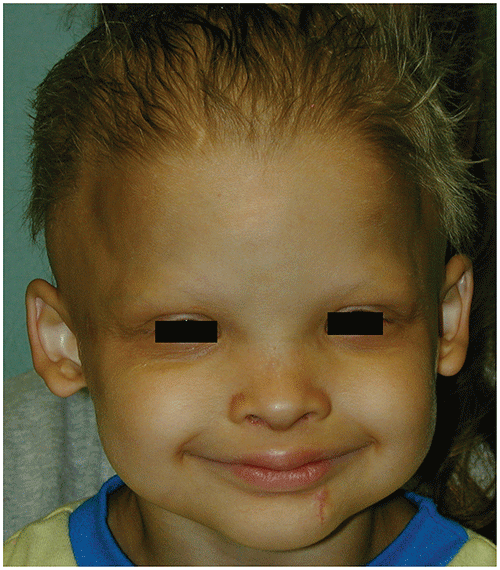
– Characteristic facial features include saddle nose, midface hypoplasia, and periorbital hyperpigmentation (Figure 91.3).
– Most often occurs in male patients because of X-linked recessive pathogenic variant in ectodysplasin A.
■Hidrotic ectodermal dysplasia (Clouston syndrome).
– Characterized by sparse scalp and sexual hair, nail variations, and keratoderma (marked thickening) of palms and soles. Sweat glands are intact (thus termed hidrotic).
– Hair loss is usually gradual and more pronounced after puberty.
– Nails may be typical at birth and gradually become thickened and misshapen.
– Keratoderma increases with age.
– Caused by an autosomal-dominant pathogenic variant in GJB6.
Figure 91.1. Light-Colored, Short, Sparse Hair is Seen in This Young Patient with Anhidrotic (Hypohidrotic) Ectodermal Dysplasia.
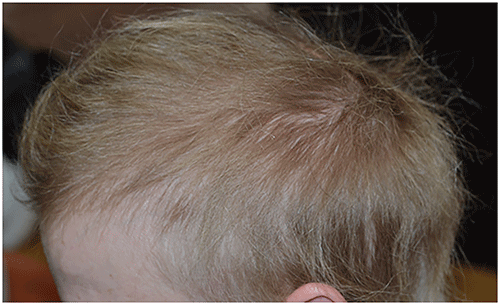
Figure 91.2. This Infant with Anhidrotic (Hypohidrotic) Ectodermal Dysplasia Has Conical Teeth.
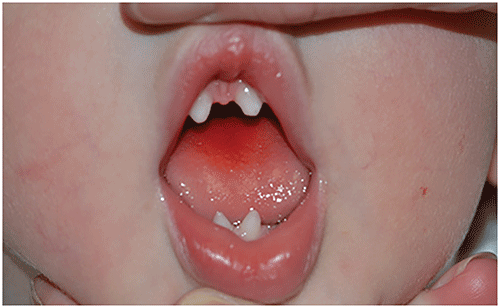
Figure 91.3. This Patient with Anhidrotic (Hypohidrotic) Ectodermal Dysplasia Exhibits the Typical Facial Features, Including Depressed Nasal Bridge, Midface Hypoplasia, Periocular Hyperpigmentation, and Sparse Hair.
Look-alikes
For anhidrotic ectodermal dysplasia, the facial features, hypotrichosis, and atypical dentition are unique and, in the absence of other differences (eg, major skeletal anomalies, immunodeficiency), usually are sufficient for diagnosis and to distinguish it from other entities.
| Disorder | Differentiating Features |
|---|---|
| Pachyonychia congenita |
|
| Keratosis-ichthyosis-deafness syndrome |
|