▶Hyperhidrosis (ie, excessive sweating) is characterized by the secretion of sweat that is greater than what is typically needed for thermoregulation.
▶Primary hyperhidrosis is idiopathic and chronic. It usually presents between 14 and 25 years of age and can be familial.
▶Focal, primary hyperhidrosis is usually palmoplantar and/or axillary. Sweating tends to be bilateral and symmetric; involvement is rarely generalized.
▶The face, scalp, inguinal folds, and inframammary regions can also be involved.
■Heat and emotional stimuli can make sweating worse.
■Quality of life and mood can be affected depending on the severity and individual.
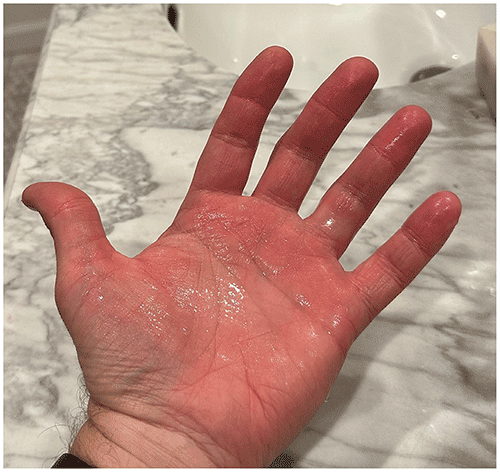
▶Moist skin or visible droplets of sweat may be seen at examination (Figures 130.1 and 130.2).
▶There may be erythema, unpleasant odor, or skin maceration in involved regions.
▶Patients may keep hands in pockets, keep wiping hands on their pants, or wear layers of clothing to avoid sweat being visible.
Figure 130.1. Excessive Palmar and Fingertip Sweating in a Teenager with Hyperhidrosis.
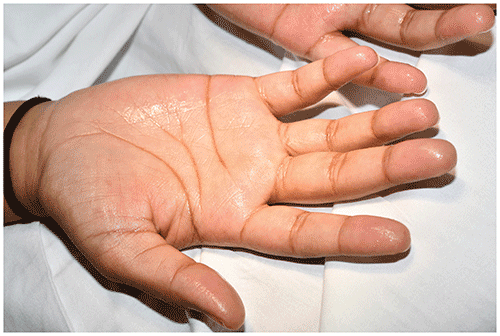
Figure 130.2. Palmar Hyperhidrosis. Note the Excessive Sweating of the Palm and Fingers.
Look-alikes (secondary forms of hyperhidrosis)
| Disorder | Differentiating Features |
|---|
| Drug-induced hyperhidrosis (cholinergic agonists, antidepressants, sympathomimetics, hypoglycemic agents, others) | |
| Malignancy (lymphoma, solid tumors) | |
| Infection (tuberculosis, HIV, malaria, tick-borne illnesses, bacterial, others) | Generalized sweating. History of infected contacts or risk factors for infection. Fever, weight loss, cough may be present.
|
| Endocrine disorders (carcinoid syndrome, insulinoma, pheochromocytoma, hyperthyroidism) | Generalized sweating, usually with flushing. Tachycardia, weight changes, diarrhea, wheezing. Sweating may occur when asleep.
|
| Neurologic (spinal cord injury and syringomyelia) | Localized or generalized sweating, usually with flushing. Fever, muscle spasticity, bowel/urinary continence dysfunction, changes in blood pressure.
|
▶The history and physical examination are typically sufficient to make the diagnosis of primary idiopathic hyperhidrosis.
▶Further investigations should be considered if there are clinical concerns for an underlying associated disorder.
▶Generalized hyperhidrosis warrants special attention.
▶Hyperhidrosis is a chronic condition. In addition to the treatments mentioned herein, referral to a mental health professional may be helpful in more severe cases.
▶Refer to a dermatologist when hyperhidrosis is severe, unresponsive to first-line therapies, and/or affecting daily activities or quality of life.