▶Alopecia areata is a common cause of non-scarring hair loss (alopecia) in children and adults.
▶Prevalence is estimated at approximately 0.2% of the population, and lifetime risk is believed to be between 1% and 2%.
▶Genetic and environmental factors may be important; approximately 1 in 5 patients has a family member who is affected. Recent studies have identified nucleotide polymorphisms that appear to be associated with alopecia areata.
▶Believed to be an organ-specific autoimmune disease; melanocyte peptides are the suspected antigen.
▶Patients may be more frequently affected by atopic diseases such as asthma, allergic rhinitis, and atopic dermatitis. Patients may have a family history positive for alopecia areata.
▶May be associated with other autoimmune or systemic disorders, including thyroid disease, vitiligo, diabetes, systemic lupus erythematosus, and inflammatory bowel disease; risk of potential associations remains unclear and controversial.
▶Also rarely reported in association with HIV and other immunodeficiency diseases.
▶Most patients have a history of asymptomatic sudden hair loss, which is often rapidly progressive.
▶The affected scalp usually has round to oval, smooth, well-circumscribed patches of complete hair loss (Figure 92.1).
▶Alopecia may range from a small solitary patch to many patches of variable sizes (Figure 92.2).
▶Less commonly, a patient may present with an ophiasis distribution in which there is circumferential hair loss extending around the temporal and occipital hairlines; this form has a poorer prognosis and is often recalcitrant to treatment.
▶Occasionally, the condition can progress to complete loss of more than 90% of scalp hair (alopecia totalis) (Figure 92.3) or complete alopecia of all hair-bearing surfaces, including eyelashes, eyebrows (Figure 92.4), nose hairs, and body hair (alopecia universalis).
▶Rarely, alopecia areata may present with diffuse scalp hair thinning that may resemble telogen effluvium.
▶Usually, there are no associated scalp findings of scale or inflammation, although histologically, there is evidence of a perifollicular lymphocytic infiltration. Sometimes the affected skin has a peachy hue.
▶In some patients, finding of exclamation point hairs, short hairs that taper proximally and are thicker distally (Figure 92.5), can further support the diagnosis.
▶Dermoscopy (magnified light examination) reveals exclamation point hairs and yellow perifollicular dots; dermatologists may use this modality if the diagnosis is in question.
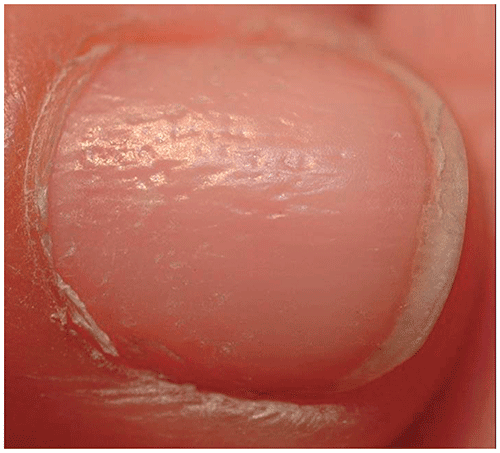
▶Nail changes occur in roughly one-half of patients with alopecia areata and (not specific for alopecia areata) include the following:
■Multiple small pits (often linear) (Figure 92.6).
■Trachyonychia (thin, longitudinal ridges giving the nail plates a diffuse sandpaper-like texture).
■Separation of the distal nail plate from the nail bed (onycholysis).
Figure 92.1. Smooth, Well-Defined Patches of Complete Hair Loss in a Child with Alopecia Areata.
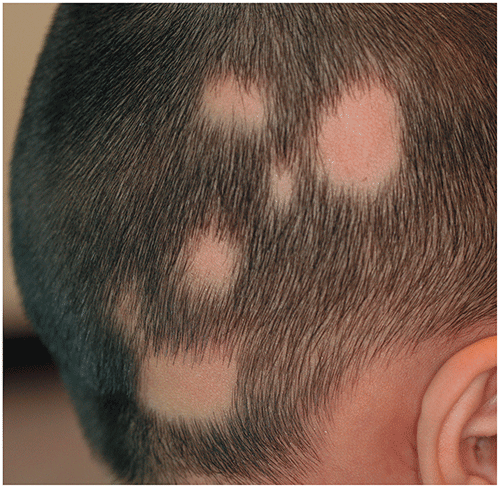
Figure 92.2. Extensive Patchy Hair Loss in a Child with Alopecia Areata.
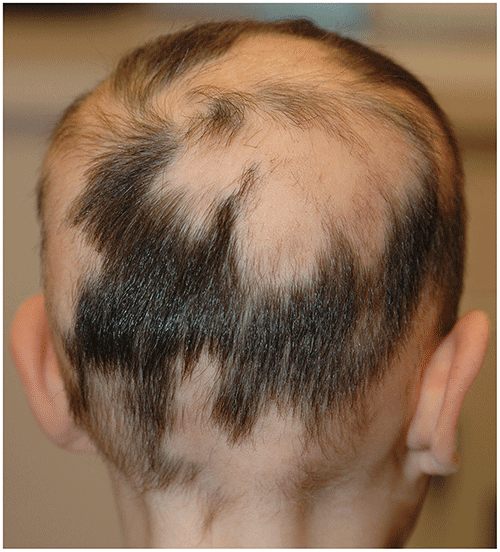
Figure 92.3. Nearly Complete Hair Loss in a Child with Severe Alopecia Areata (Alopecia Totalis).
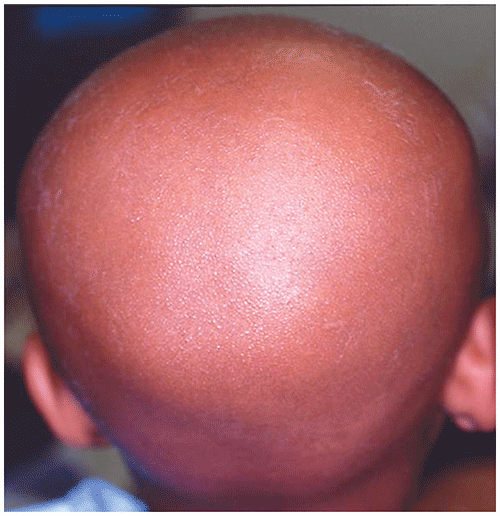
Figure 92.4. Complete Loss of Eyelashes and Eyebrows in a Child with Alopecia Universalis.
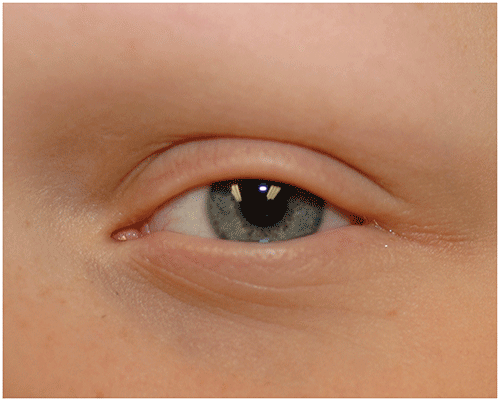
Figure 92.5. Exclamation Point Hairs (Arrows) Noted Along Right e.g. of a Patch of Alopecia Areata.
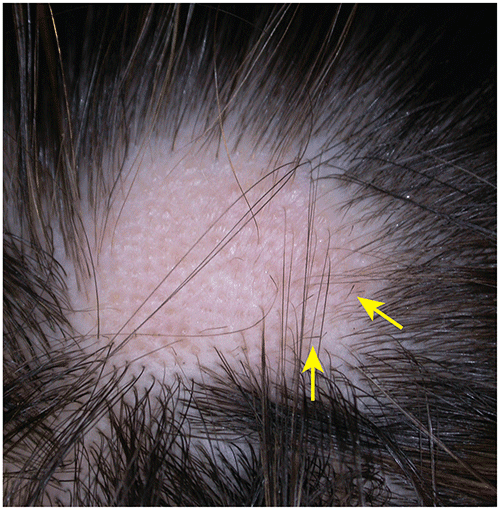
Figure 92.6. Multiple Small Nail Pits May be Observed in Patients Who Have Alopecia Areata.
Look-alikes
Nail changes would not be expected in any of the conditions listed herein, unless otherwise noted.
| Disorder | Differentiating Features |
|---|
| Tinea capitis | Scaling or inflammation (pustules, nodules) of the scalp usually present. Black dot hairs may be observed. Regional lymphadenopathy (cervical, suboccipital) may be present. Fungal (dermatophyte) culture or potassium hydroxide preparation result is positive.
|
| Traction alopecia | Symmetric bilateral involvement typical. Thinning or complete hair loss, especially around hairline or in areas where hair is parted. Most common in Black female patients; hair styling usually suggestive with tight braids or heavy hair adornments.
|
| Trichotillomania | Irregular, asymmetric areas of incomplete alopecia. Broken-off hairs are present with hairs of differing lengths in affected regions (because hairs cannot be broken all at the same time). Secondary findings (excoriations, crusting) or features of nail-biting may be present.
|
| Loose anagen syndrome | Typical onset during preschool years in blond girls. No complete hair loss; rather, diffusely thin and lusterless hair. Hair grows slowly; history of no (or few) haircuts common. Hair mount of easily extracted hairs confirms diagnosis (reveals ruffled cuticle and dystrophic anagen bulb).
|
| Telogen effluvium | Usually acute, diffuse thinning without areas of complete hair loss. Typically associated with preceding physical or emotional trauma or illness, which is believed to trigger conversion from anagen to telogen phase of hair growth. Self-limited; gradual improvement within months.
|
| Androgenetic alopecia | Not typically seen in younger children. Classic distribution: symmetric thinning over vertex and frontal hairline. No smooth, bald areas. Occurs over months to years. May occur in adolescent male or, less commonly, female patients. May be associated with signs of hyperandrogenism.
|
▶Diagnosis is usually clinical, based on the typical findings.
▶In some patients, there may be associated loss of eyebrows, eyelashes, or nose hairs. Characteristic nail changes occur in approximately one-half of patients.
▶Skin biopsy is rarely necessary to confirm the diagnosis; findings include perifollicular lymphocytic infiltration.
▶The most commonly used first-line therapy for alopecia areata is topical or intralesional corticosteroids.
■Used primarily in mild to moderate patchy disease; often not practical in patients with extensive hair loss.
■Patients receiving high-potency (Classes I–II) topical steroids or injected steroids should be monitored for cutaneous atrophy; hypothalamic-pituitary-adrenal axis suppression possible with long-term corticosteroid therapy (mainly with ultra-potent topical preparations or repeated intralesional therapy). Patients are typically treated for weeks at a time, with a short treatment holiday to minimize risk of atrophy.
■Intralesional steroid injections usually not tolerated well in younger children and, hence, used infrequently before 10 to 12 years of age.
▶Other treatments for patchy or localized alopecia areata (all off-label) include the following:
■Topical minoxidil solution or foam; oral minoxidil may be an option in older, recalcitrant cases.
■Topical calcineurin inhibitors (tacrolimus ointment or pimecrolimus cream).
■Topical 1% anthralin (short contact therapy; gradually applied for up to 1 hour nightly and then washed off).
■Topical immunotherapy (contact sensitization with squaric acid or other agents).
■Janus kinase (JAK) inhibitors (oral or topical tofacitinib; topical 1% ruxolitinib cream).
■Excimer laser therapy.
▶For alopecia totalis, some clinicians use more aggressive systemic immunosuppressive modalities, but careful analysis of the risk versus benefit ratio must be considered. Systemic corticosteroids may be considered for select patients, and usually only as a bridge to halt severe progression of hair loss, while topical therapies are also started; potential side effects make this a rarely used modality in young children.
▶Oral JAK inhibitors may be considered in older patients with more severe or recalcitrant disease; oral ritlecitinib is a JAK inhibitor approved by the US Food and Drug Administration for severe alopecia areata (defined as ≥ 50% scalp hair loss) in patients 12 years or older. Oral baricitinib is another JAK inhibitor approved for severe alopecia areata but currently is indicated only in adults.
▶Intermittent recurrence of disease activity is common in patients with alopecia areata.
▶Hair loss can be psychosocially devastating for the patient as well as family members; in patients or family members struggling with the effect of chronic or extensive hair loss, referral to a psychologist or local mental health provider may be helpful.
▶Education about other supportive resources, including the National Alopecia Areata Foundation, may be very beneficial (see
Resources for Families
section).▶Hair prosthesis should be considered for children with severe hair loss who express interest in this modality. Students should be allowed to wear hair prostheses, hats, or other scalp coverings in school or public settings if they desire.
▶Some patients may simply opt for no therapy or may wish to take treatment holiday periods.
▶Because alopecia areata can occur more commonly in the setting of other autoimmune disorders, a comprehensive family history and review of systems should be performed for other autoimmune disorders, including thyroid disease, type 1 diabetes, and inflammatory bowel disease.
▶Laboratory workup should be based on findings from the history and physical examination.
▶Alopecia areata has been reported in the setting of autoimmune polyglandular syndromes.
▶Because response to therapy is unpredictable, prognosis is difficult to predict and extremely variable.
▶Many children with an isolated episode of localized patchy hair loss will have spontaneous hair regrowth without therapy.
▶In children with rapid and extensive hair loss, especially when progressing to complete loss, therapy usually works poorly.
▶Prepubertal onset and family history of alopecia areata are associated with a poorer prognosis.
▶Referral to a pediatric dermatologist should be considered in children with more extensive or chronic hair loss or when the diagnosis of alopecia areata is uncertain.
▶Referral may also be beneficial if the primary care physician is not experienced in treating the disorder.
▶If the patient has a second autoimmune disorder or a first-degree relative who has 2 autoimmune disorders, consultation with a pediatric endocrinologist is warranted.