▶Henoch-Schönlein purpura (HSP) is a systemic small-vessel vasculitis with immunoglobulin (Ig) A immune complexes. It is the most common vasculitis of childhood.
▶Etiology of HSP is unknown, but frequent occurrence after acute infections (especially upper respiratory tract infection or streptococcal pharyngitis) suggests infectious triggers. Immunizations and medications have been implicated, although less often.
▶Most commonly seen between 2 and 11 years of age, with a mean age of 6 years; slight male predominance.
▶Incidence is estimated to be 10 to 30 cases per 100,000 per year in those younger than 17 years.
▶Classic tetrad of nonthrombocytopenic palpable purpura, arthralgias, abdominal pain, and renal involvement.
▶Skin.
■Rash begins as urticarial macules and plaques on legs and buttocks, progressing to palpable purpura (Figures 124.1 and 124.2); petechiae may be present.
■Forearms, elbows, trunk (Figure 124.3), and face (ears) may be involved in younger children or more severe cases, along with hand and foot edema. The rash often involves pressure points or dependent areas.
■Occasional oral and nasal mucosal involvement.
■Lesions develop in crops, with newer urticarial lesions intermixed with older palpable purpura.
■Occasionally, patients may develop blisters, ulcers, or necrosis (Figures 124.4 and 124.5).
▶Renal involvement occurs in 20% to 50% of patients.
■Spectrum of disease ranges from microscopic hematuria or minimal proteinuria to nephritic or nephrotic syndrome (5%); 2% to 5% of patients progress to end-stage renal failure.
■May not appear until weeks after the onset of disease but usually within 3 months of onset; therefore, blood pressure monitoring and serial urine evaluations recommended for several months (typically every 1–2 weeks initially, then monthly for up to 3–6 months) after the diagnosis.
▶Gastrointestinal involvement occurs in 50% to 70% of children.
■Colicky abdominal pain, vomiting, and gross or occult bleeding are most common.
■Intussusception in 2% to 4%, usually involving the small bowel; more common in boys.
▶Musculoskeletal.
■Arthralgias occur in 60% to 80% of children with HSP; rarely true arthritis.
■Ankles and knees most commonly affected.
▶Other.
■Rarely, central nervous system (eg, headache, seizures, behavioral changes) or lung involvement (ie, infiltrates or diffuse alveolar hemorrhage) may occur.
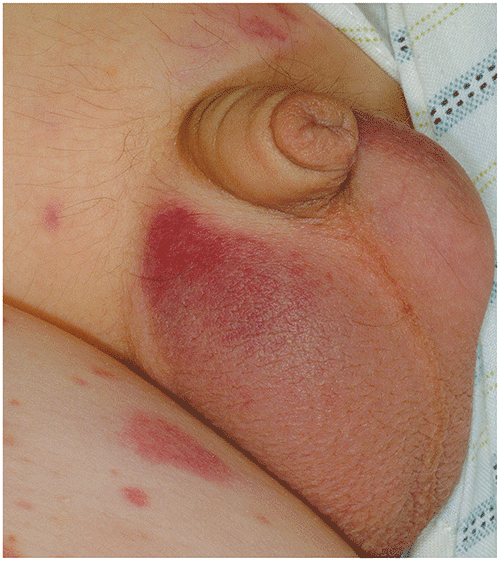
■Infrequent scrotal involvement with purpura (Figure 124.6) or pain that may mimic testicular torsion.
Figure 124.1. A Mixture of Urticarial, Violaceous, and Purpuric Plaques on the Legs is Typical of Henoch-Schönlein Purpura.
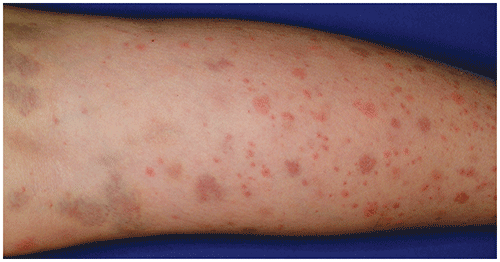
Figure 124.2. Lesions Became Progressively More Confluent and Purpuric in This Patient with Henoch-Schönlein Purpura.
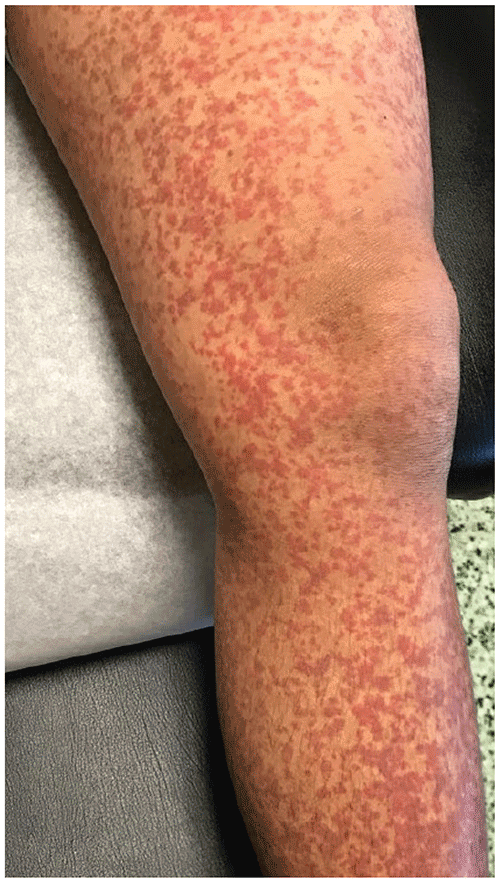
Figure 124.3. In More Extensive Cases of Henoch-Schönlein Purpura, Lesions Can be Seen on the Upper Extremities as Well as More Classic Sites Like the Lower Extremities; Both Were Present in This Patient.
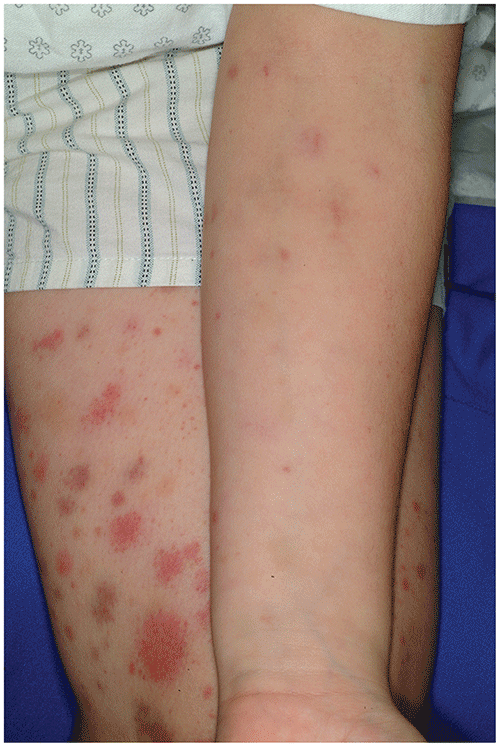
Figure 124.4. This Child Had Numerous Henoch-Schönlein Purpura Lesions, with a Mix of Palpable Purpura and Bullae.
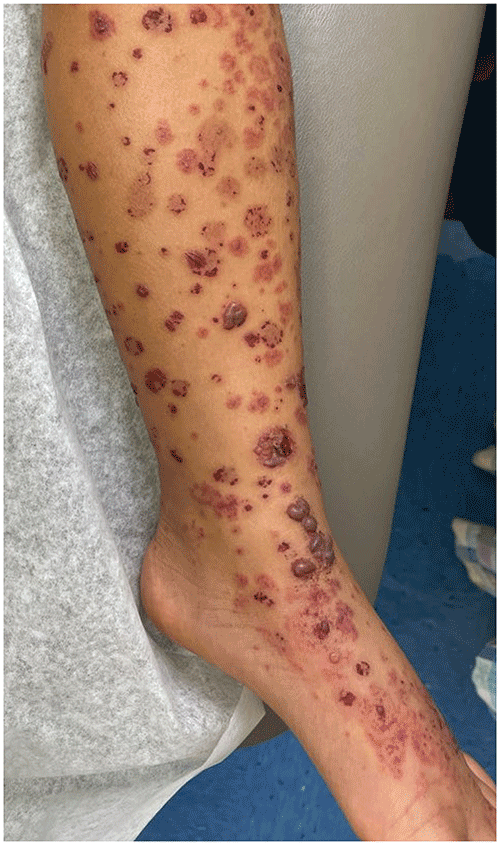
Figure 124.5. This Severe Case of Henoch-Schönlein Purpura Resulted in Ulcers with Necrosis on the Dorsal Aspect of the Feet, Which Ultimately Healed with Scarring.
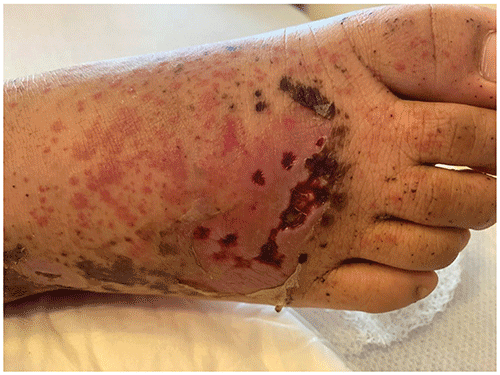
Figure 124.6. Purpura Involving the Scrotum in a Patient with Henoch-Schönlein Purpura and Scrotal Pain.
Look-alikes
| Disorder | Differentiating Features |
|---|
| Acute hemorrhagic edema of infancy | Younger children (4 months–3 years). Cockade (medallion-like) purpura. Facial, hand, and foot edema. No systemic features. Immunoglobulin A deposition usually absent at histologic evaluation of skin biopsy specimen. Benign self-limited course.
|
| Septic vasculitis | |
| Hypersensitivity vasculitis | Often induced by medication. Lesions often more widespread. Often presents with petechiae and small purpuric papules.
|
| Ecchymoses, benign | Usually no renal, gastrointestinal, or joint concerns. Skin lesions typically fewer in number. Usually limited to areas overlying bony prominences (eg, anterior tibial surfaces).
|
| Ecchymoses associated with child abuse | Usually no renal, gastrointestinal, or joint associations. Skin lesions typically fewer in number. Historical context important. Other features of abuse may be present (eg, retinal hemorrhage, bony fractures).
|
| Urticaria | |
▶The clinical presentation is usually highly suggestive, especially when the classic tetrad (ie, lower body purpura, arthralgias, abdominal pain, renal involvement) is present.
▶No laboratory tests are specific to HSP, making it largely a clinical diagnosis.
▶Skin biopsy (when necessary) is usually confirmatory at histologic and immunofluorescence study (demonstrating hypersensitivity vasculitis with IgA1 deposits and neutrophil infiltration of small blood vessel walls).
▶Renal biopsy, if needed, reveals proliferative glomerulonephritis with IgA1 deposition.
▶Most patients require only supportive care.
▶If severe joint or abdominal pain or with severe skin involvement, consider oral corticosteroid therapy.
▶Must assess renal function and urinalysis in the long term, given possible delayed presentation of renal disease in HSP.
▶Treatment of renal involvement depends on severity. In patients with significant nephritis or nephrosis, consultation with a pediatric nephrologist is warranted.
▶Some evidence exists that treatment with systemic corticosteroids may reduce intussusception risk or renal disease progression. Steroid use does not prevent recurrence.
▶Excellent in most. Typically resolves in 4 to 6 weeks.
▶Recurrences in one-third of patients, usually within 3 to 4 months.
▶Severity of nephritis predicts outcome.
▶Renal insufficiency or rapidly progressive kidney disease, nephritic or nephrotic syndrome.
▶Concern for intussusception.
▶Acute scrotal pain or swelling (when concern exists for testicular torsion).
▶Central nervous system involvement (eg, change in mental status or behavior, seizures).
▶Hemoptysis.