▶Also known as swimmer’s itch, sawah itch, koganbyo.
▶An inflammatory disorder caused by nonhuman schistosome parasites that penetrate human skin.
▶Occurs most often in midwestern and southwestern United States, after swimming or wading in freshwater lakes; less commonly acquired in ocean waters.
▶Most common species implicated is Trichobilharzia.
▶Adult schistosome resides in mesenteric vasculature of birds or mammals and passes to intestine, and then eggs deposited into water with host feces; miracidia then hatch and penetrate snails (intermediate hosts), where they mature into cercariae (multicellular larvae) that reside in upper levels of water.
▶Humans (accidental hosts) become infested when exposed to these waters and develop lesions that are classically limited to exposed areas of skin; skin lesions are the result of host immune response against dead cercariae.
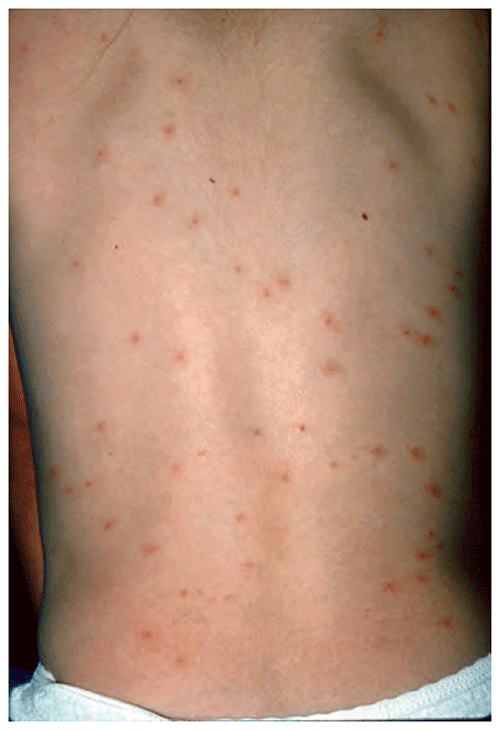
▶Nonspecific erythematous papules and papulovesicles on exposed skin (Figure 46.1).
▶Pruritus common.
▶Secondary excoriation and/or bacterial superinfection may occur.
▶Postinflammatory pigmentary alteration is common and fades over time.
Figure 46.1. Cercarial Dermatitis. There are Erythematous Papules on the Patient’s Back.
Look-alikes
| Disorder | Differentiating Features |
|---|
| Seabathers eruption (also known as sea lice) | Not a true parasitic infestation; rather, a hypersensitivity reaction to the stinging nematocysts of cnidarian larvae, which include jellyfish, Portuguese man-of-war, sea anemone, and fire coral. Usually associated with exposure to salt waters off Florida, in the Gulf of Mexico, or in the Caribbean. Lesions typically limited to covered areas of skin (ie, by the swimming garment), as swimwear acts as filter and maintains contact between larvae and skin (Figure 46.2). Pruritus often severe. Other symptoms may be present: fever, chills, headache, fatigue, abdominal pain, nausea, diarrhea.
|
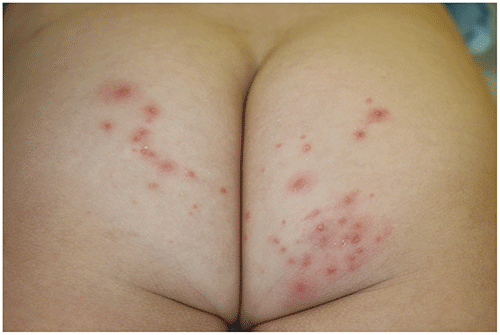
| Pseudomonas (hot tub) folliculitis | Caused by cutaneous infection with Pseudomonas aeruginosa. Follows exposure to poorly chlorinated hot tubs or swimming pools. Skin lesions composed of erythematous papules and pustules. May occur diffusely but especially at sites covered by swimming garment (Figure 46.3). Mild constitutional symptoms may be present: fever, malaise, headache, arthralgias.
|
| Arthropod bite reactions | History more consistent with potential exposures to arthropods (not typically water activities). Edematous papules and plaques, often with central punctum, vesicle, or crust. Lesions may be concentrated on lower legs (if caused by fleabites); may occasionally be bullous.
|
| Allergic contact dermatitis | History of exposure to potential contact allergen. Lesions haphazardly distributed at sites that were in contact with the allergen. Papules and papulovesicles typically become confluent into plaques, often with linear patterning.
|
| Nonspecific viral exanthem | Diffuse distribution (typically covered and uncovered areas of skin). Morphology varies, including macules, papules, and plaques. May present in morbilliform or urticarial patterns. Fever, respiratory, or gastrointestinal symptoms may also be present. Pruritus often mild or absent.
|
Figure 46.2. Seabathers Eruption, a Look-Alike of Cercarial Dermatitis, Usually Appears after Saltwater Exposure and is Located Under Garments Worn While Swimming. This 7-Year-Old Boy Developed Itchy Papules and Plaques on Areas Covered by His Swimsuit after Swimming in the Bahamas.
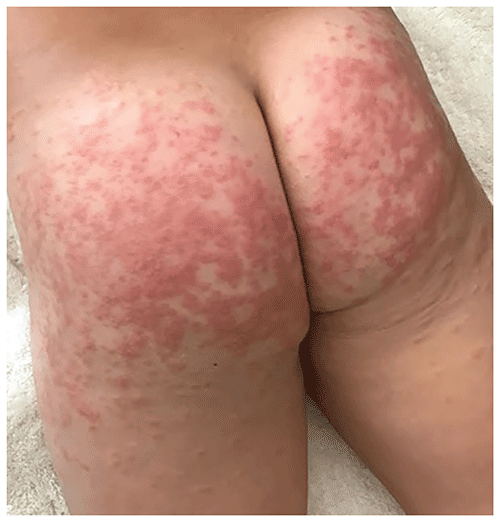
Figure 46.3. Pseudomonas (Hot Tub) Folliculitis. Tender, Erythematous Papules and Pustules Clustered on the Buttocks of a School-Aged Patient Who Had Spent Time in a Hot Tub.
▶The distribution of skin lesions combined with the history of exposure to a freshwater lake will typically suggest the diagnosis of cercarial dermatitis.
▶No diagnostic test is available; analysis via filtration and polymerase chain reaction study of water samples may be performed if confirmation of an outbreak is required.
▶Treatment is of symptoms and may include topical corticosteroids or antipruritic agents and oral antihistamines.
▶Systemic corticosteroids are rarely indicated for severe cases.
▶Cercarial dermatitis resolves completely over time, without permanent sequelae.
▶Referral to a dermatologist should be considered for patients in whom the diagnosis is in question or for whom conventional therapy is unsuccessful.