▶Stevens-Johnson syndrome (SJS) (previously called erythema multiforme [EM] major) is a more serious condition that may not be related to EM. Many believe that SJS and toxic epidermal necrolysis (TEN) are variants of the same disease, differing in the extent of body surface involvement.
■SJS is a delayed hypersensitivity-type systemic illness of acute onset, often triggered by infection (eg, with Mycoplasma pneumoniae, Epstein-Barr virus, cytomegalovirus, influenza B) or medications (eg, sulfonamides, antiepileptic drugs, acetaminophen, nonsteroidal anti-inflammatory drugs).
■In the past, M pneumoniae was considered the leading infectious cause of SJS (and was termed “Mycoplasma-induced SJS”). Over time it became apparent that some patients have a distinctive clinical presentation with prominent mucosal involvement, a sparse bullous or targetoid skin eruption, and a milder disease course. This disease, which has been named “M pneumoniae–induced rash and mucositis (MIRM),” is believed to be an immune complex–mediated condition.
■More recently it has been observed that many other infections can trigger the mucositis and rash that is seen in MIRM, so the umbrella term reactive infectious mucocutaneous eruption (RIME) is now favored. Although SJS and RIME/MIRM are considered distinct entities, they are discussed together because of their similar clinical presentations.
■There are multiple known infectious triggers for RIME (aside from M pneumoniae), including Chlamydophila (formerly Chlamydia) pneumoniae, adenovirus, influenza A/B, enterovirus, rhinovirus, parainfluenza, human metapneumovirus, and SARS-CoV-2.
▶Early in the course of the disease, SJS or RIME/MIRM may have a presentation similar to that of EM (eg, erythematous or targetoid lesions on extremities).
▶The incidence of SJS is about 1 in 500,000 per year and can be seen in all ages, but RIME/MIRM is seen primarily in children and young adolescents.
▶Recurrence of SJS may occur in up to 18% of patients and may be delayed for up to 7 years.
▶RIME/MIRM can also recur and not necessarily in association with the same infectious trigger.
▶Often begins with prodromal symptoms of fever, headache, cough, sore throat, arthralgias, or malaise that precede the onset of the rash by up to 14 days.
▶Patients develop target lesions or areas of erythema that form blisters that rupture, leaving erosions (Figures 115.1 and 115.2). The skin may appear dull and dusky before the blistering phase begins. Skin lesions are less prominent in RIME/MIRM, and true target lesions are typically absent.
▶Extensive mucosal surface erosions (involving ≥2 sites) are common; these may involve the eye (eyelids, conjunctiva, cornea), mouth/lips (Figure 115.3), nares, esophagus, anus, urethra, genitalia, or respiratory tract.
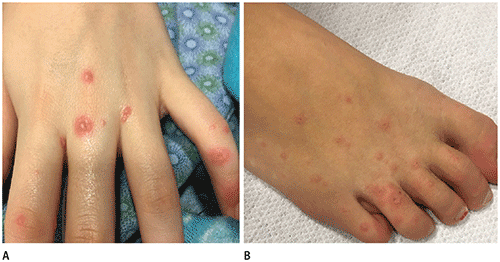
▶While the mucosal and skin lesions of SJS and RIME/MIRM may be indistinguishable, RIME/MIRM tends to produce prominent mucous membrane involvement (Figure 115.4) and sparse cutaneous involvement that favors acral sites (Figure 115.5). Occasionally, patients with RIME/MIRM present with purely mucositis (without cutaneous involvement).
▶Potential complications include interstitial pneumonitis, nephritis, and blindness. The severity of ocular sequelae is related to the severity of eye involvement early in the disease course.
▶Dehydration from poor oral intake may be seen in patients with moderate to severe oral mucosal involvement.
Figure 115.1. Target Lesion in a Patient Who Has Stevens-Johnson Syndrome.
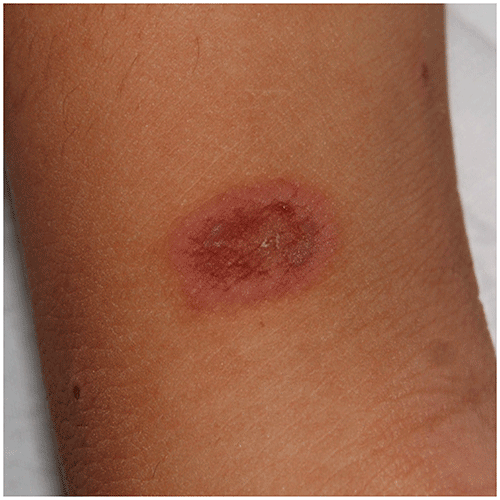
Figure 115.2. Erythematous Erosions in a Patient Who Has Stevens-Johnson Syndrome.
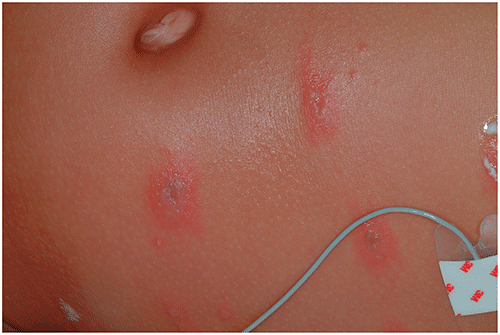
Figure 115.3. Extensive Ulceration of the Lips and Oral Mucosa are Observed in Stevens-Johnson Syndrome.
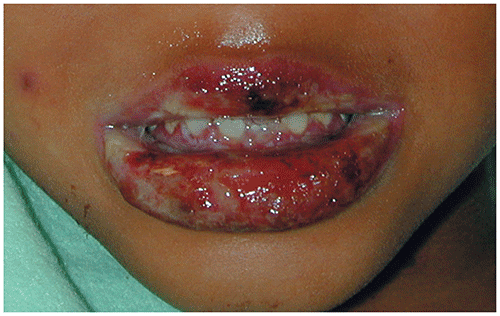
Figure 115.4. Prominent Erosions of Nasal and Oral Mucosa in a Patient with Mycoplasma Pneumoniae–induced Rash and Mucositis.
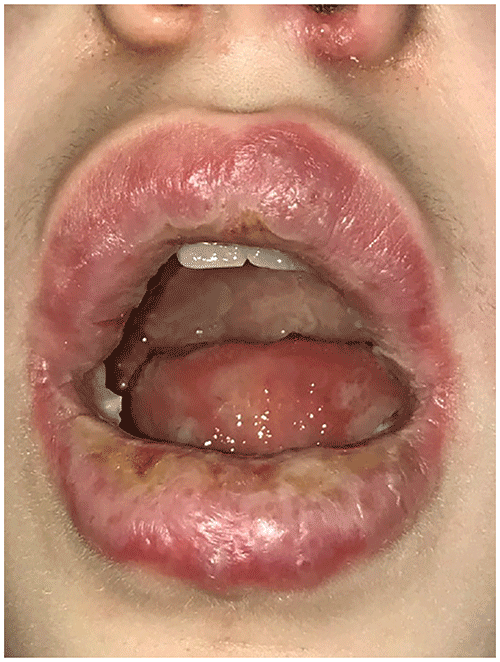
Figure 115.5. Small Erythematous Papules of the Dorsal Hand (A) and Dorsal Foot (B) of a Patient with Mycoplasma Pneumoniae–induced Rash and Mucositis.
Look-alikes
| Disorder | Differentiating Features |
|---|
| Urticaria | Erythematous blanching wheals that resolve or change in 24 hours or sooner. Occasionally, lesions may become centrally dusky, but no vesicle or crust formation. Although lesions may become annular, true target lesions do not occur. Mucosal erosions do not occur.
|
| Kawasaki disease | Eruption typically morbilliform, without vesicles, bullae, or crusting. Patients have non-purulent conjunctival injection, not purulent conjunctivitis as observed in SJS or RIME/MIRM. Patients may have erythema and cracking of lips but not mucosal ulcers.
|
| Serum sickness–like eruption | Large, often purple, urticarial-appearing plaques present (“purple urticaria”). Target lesions, blistering, mucosal erosions absent. Fever, arthralgia, or arthritis are common features. Periarticular swelling often present. Ambulatory children may refuse to walk during episode.
|
| Staphylococcal scalded skin syndrome | Radial (“sunburst”) erosions and crusting around mouth. Sunburn-like erythema concentrated in skinfolds. Superficial erosions develop but intact blisters uncommon (in contrast with SJS); Nikolsky sign present. Oral erosions and ulcers absent. Target lesions absent.
|
| Toxic epidermal necrolysis (TEN) | Target lesions may be present but also dusky erythematous patches that rapidly form bullae and erosions. Widespread detachment of the epidermis usually present. More extensive skin involvement in TEN (>30% of body surface area [BSA]); in SJS, less than 10% of BSA is involved, while in SJS-TEN overlap, 10% to 30% BSA is involved. More often drug-related.
|
▶Presence of prodromal symptoms.
▶Target lesions, blisters, or erosions.
▶Involvement of 2 or more mucosal surfaces.
▶Infectious workup may include chest radiography, M pneumoniae titers, polymerase chain reaction panel for respiratory viruses, and additional testing based on clinical features or suspicion.
▶Patients with SJS are systemically ill and may acutely decompensate.
▶Treatment is largely supportive.
▶Identify and rapidly remove or treat the suspected precipitant (ie, medication); if infection with M pneumoniae or C pneumoniae is demonstrated or strongly suspected clinically, treat with an appropriate macrolide antibiotic.
▶The role of systemic steroids for SJS and RIME/MIRM remains controversial, but occasionally used in more severe or recalcitrant cases.
▶Patients who have SJS or RIME/MIRM may benefit from
■Hospitalization (in a burn or other intensive care unit if there are extensive erosions) with careful attention to fluids, nutrition, and eye care (including consultation with ophthalmologist) and consideration for secondary bacterial infection.
■Intravenous immunoglobulin administration.
■Other treatments (ie, immunosuppressant or biologic agents such as cyclosporine, etanercept) occasionally used, but there is no consensus on their indications.
▶Avoid repeat exposure to offending medications, when identified.
▶SJS and RIME/MIRM usually last 1 to 2 weeks, but complicated cases may resolve more slowly. Severe ocular sequelae may result.
▶Most pediatric patients with SJS or RIME/MIRM heal fully without permanent sequelae.
▶The Score of TEN (SCORTEN) severity-of-illness scale has been used to predict mortality of SJS and TEN in adults and has also been shown to be useful in predicting morbidity in children when calculated within the first day of hospital admission.
▶Ocular involvement in SJS or RIME/MIRM should prompt ophthalmologic consultation because patients may require amniotic membrane grafts.
▶Widespread cutaneous blistering may require hospitalization in a burn or other intensive care setting.