▶Hypertrichosis is the presence of excessive hair on the body, either generalized or localized.
▶Localized hypertrichosis can be seen as an isolated patch (nevoid circumscribed hypertrichosis) or as a characteristic of other skin neoplasms such as melanocytic nevi or smooth muscle hamartomas. It can also be seen in association with developmental defects, such as a lumbosacral hair tuft seen overlying a tethered spinal cord.
▶Generalized hypertrichosis can be a feature of:
■An inherited disorder, such as congenital generalized hypertrichosis terminalis or hypertrichosis lanuginosa.
■A syndrome such as Cornelia de Lange syndrome.
■A systemic condition such as certain neurologic disorders, hypothyroidism, or malnutrition.
■Prolonged exposure to medications such as phenytoin or cyclosporine.
▶Hirsutism is a type of hypertrichosis that refers to excess hair in children or female patients that is present in what would be considered a “male” (androgen-dependent) pattern, including a mustache or beard distribution, sideburns, chest, breasts, and upper inner thighs.
■Idiopathic hirsutism is excess hair without an underlying endocrine or metabolic disorder.
■Hirsutism can be the result of an endocrine disorder including late-onset congenital adrenal hyperplasia, virilizing tumors, Cushing syndrome, polycystic ovary syndrome, or other.
▶Localized hypertrichosis presents as a patch of hair seen in apparently typical skin or in association with another skin neoplasm.
▶Generalized hypertrichosis presents as excess hair growth throughout the body (Figure 94.1A and Figure 94.1B). There is no definition of the amount that is excessive, so patients should be compared with others in that population.
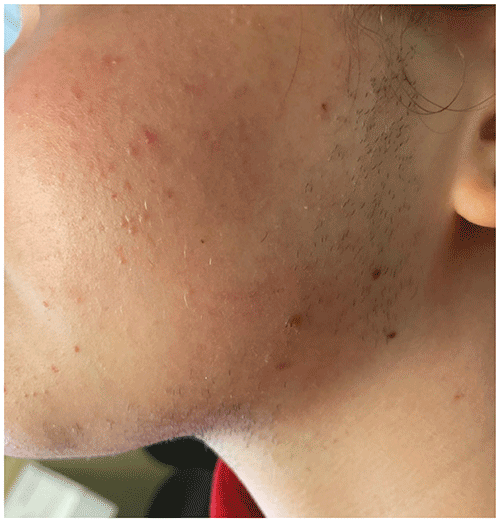
▶Hirsutism presents as excess male-pattern hair such as on the upper lip, sideburns, chin (Figure 94.2), chest, arms, and legs. The presence of menstrual difficulties, severe acne, or other signs of androgen excess should prompt workup for an endocrine disorder.
Figure 94.1. This Toddler Had Generalized Hypertrichosis after Presumed Percutaneous Absorption of Topical Minoxidil Used Daily by His Father.
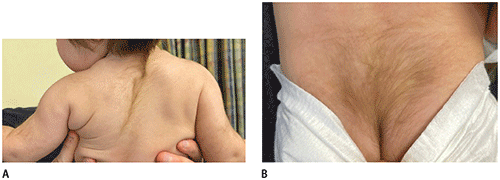
Figure 94.2. This Adolescent Girl Had Male-Pattern Facial Hair in the Setting of Polycystic Ovary Syndrome.
Look-alikes
| Disorder | Differentiating Features |
|---|
| Excess body hair as a biological variant | |
▶The diagnosis of hypertrichosis or hirsutism is usually made clinically.
▶Consider examining other family members to assess quantity of hair in these genetically similar individuals, given that some genetic groups tend to have more hair than others.
▶Assess for menstrual difficulties or other features of androgen excess (eg, deepened voice, severe acne) that would prompt an endocrinologic workup in patients with hirsutism.
▶Preliminary laboratory evaluation in this setting may include 17-hydroxyprogesterone, free testosterone, dehydroepiandrosterone sulfate, cortisol, luteinizing hormone, and follicle-stimulating hormone. In the prepubertal child, a bone age test can also be helpful.
▶Treat any underlying disorders that are identified.
■For patients with medication-induced hypertrichosis, discuss with the prescribing provider whether there is an acceptable alternative medication.
▶Hair removal techniques can be considered if the excess hair is problematic. These include:
■Mechanical: cutting, shaving, plucking, waxing (the latter may not be tolerated in young children).
■Chemical: depilatories (use caution, as these may be irritating, and there is potential for systemic absorption).
■Electrolysis and laser therapy (painful and typically not covered by insurance).
▶Systemic medications can be used to control hirsutism, often in combination. These include:
■Estrogen-progestin combination oral contraceptive pills.
■Antiandrogen therapy (spironolactone, flutamide, or finasteride).
■Insulin sensitizers (metformin).
▶Medication-induced hypertrichosis is expected to improve after the medication is withdrawn.
■Congenital hypertrichosis is lifelong, and hair removal can be considered.
■The response to medical therapies for hirsutism is variable. Patients often seek hair removal in addition to use of systemic medications.
▶Consult with the appropriate specialists in endocrinology and gynecology if an underlying disorder is suspected and for management with systemic medications.
Hirsutism:
Hypertrichosis: