▶Chronic dermatitis of unknown cause. May be related to an inflammatory response to the yeasts of the genus Malassezia (formerly Pityrosporum).
▶Seborrheic dermatitis may be divided into 2 main variants.
■Infantile: presents from soon after birth to about 1 year of age.
■Adolescent and adult: occurs primarily in older children (who have experienced adrenarche) or postpubertal individuals.
▶In addition to these variants, seborrheic dermatitis may also occasionally occur in toddlers and elementary school-aged children.
▶Infantile
■Characterized by yellowish greasy scale on the scalp (ie, cradle cap) (Figure 54.1) and erythematous patches with greasy scale that have a predilection for the face and flexural areas (eg, postauricular region, axillae, groin) (Figures 54.2 and 54.3).
■Occasionally may have near total skin involvement.
■Shares considerable clinical overlap with atopic dermatitis and infantile psoriasis.
▶Adolescent and adult
■Most common presentation is scaling of the scalp (ie, dandruff).
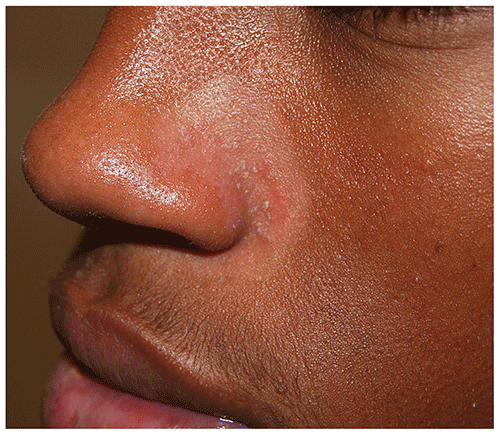
■Patients may exhibit erythematous poorly defined scaling patches on scalp (Figure 54.4), ears, eyebrows, nasolabial folds (Figure 54.5), central chest, and beard area in male patients.
■Pruritus is variable.
Figure 54.1. Greasy Scale on the Scalp of an Infant (Ie, Cradle Cap).
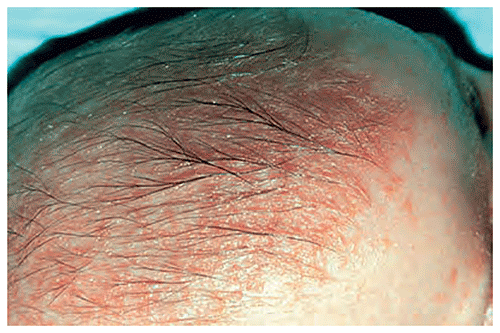
Figure 54.2. Erythematous Patches with Greasy Scale on the Face of an Infant Who Has Seborrheic Dermatitis.
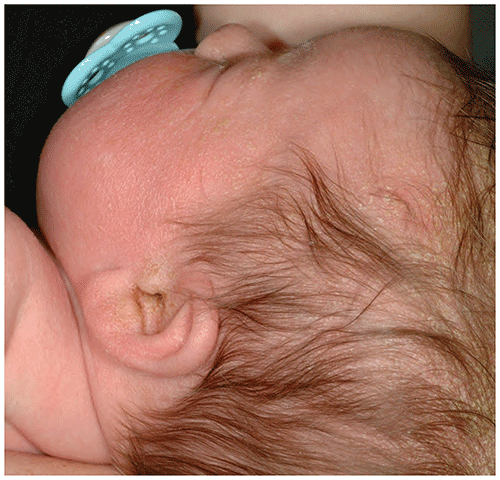
Figure 54.3. In the Diaper Area, Seborrheic Dermatitis Produces Salmon-Colored Patches with Greasy Scale that Involves the Creases and Convexities.
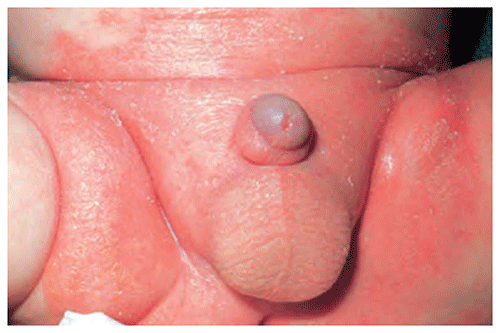
Figure 54.4. This Adolescent Had Scattered Adherent Scales Throughout the Scalp that Improved with Antiseborrheic Shampoo and a Mid-Potency Topical Steroid Solution.
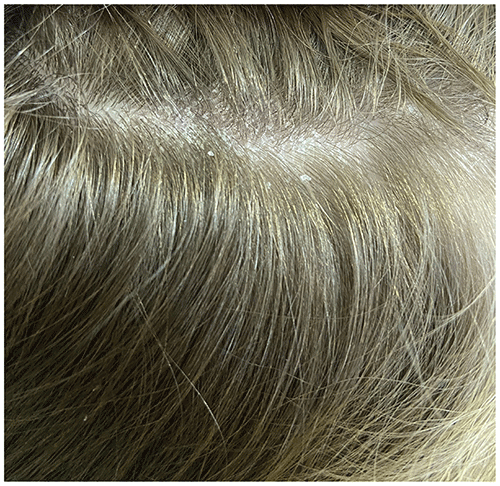
Figure 54.5. Seborrheic Dermatitis Involving the Nasolabial Folds Has Resulted in Postinflammatory Hypopigmentation.
Look-alikes
| Disorder | Differentiating Features |
|---|
| Infantile |
|---|
| Atopic dermatitis | Often difficult to distinguish from seborrheic dermatitis. In infancy, lesions tend to spare flexural areas, particularly diaper area and axillae. Family history of atopic disorders supports diagnosis.
|
| Scabies | Papules, pustules, burrows, and vesicles. Presence of lesions on palms, soles, and genitals. Marked pruritus usually present. Diagnosis confirmed by mineral oil preparation performed on scrapings from lesions or by dermoscopy.
|
| Langerhans cell histiocytosis | Erythematous, yellow or brown scaling papules, with predilection for the scalp, axillae, inguinal creases, palms, and soles. Petechiae often present. Lymphadenopathy often present. Biopsy of lesion will confirm the diagnosis.
|
| Psoriasis | |
| Neonatal lupus erythematosus | Annular erythematous plaques on sun-exposed regions, especially forehead and periorbital areas. Minimal scaling; atrophy may be present. Positive for anti–SS-A (anti-Ro), anti–SS-B (anti-La), or anti-U1RNP antibodies. Congenital heart block may be present.
|
| Adolescent and Adult |
|---|
| Psoriasis | May be difficult to differentiate from seborrheic dermatitis when involvement limited to the scalp or face. Well-defined papules or plaques with thick, adherent, dry scale. Pitting of nails may be present.
|
| Periorificial dermatitis | Erythematous papules and pustules located around mouth, nose, or eyes. History of corticosteroid use on affected areas may be present.
|
▶Infantile seborrheic dermatitis has a good prognosis, usually clearing rapidly with appropriate topical therapy.
▶Adolescent/adult seborrheic dermatitis often is a chronic condition requiring ongoing therapy.
▶When the diagnosis is uncertain or appropriate therapy fails.
▶When petechiae, purpura, or erosions (especially in skinfolds) are present, suggesting possible Langerhans cell histiocytosis.