▶Pernio (also known as chilblains) is a disorder marked by an atypical (and often robust) vascular response to cold (nonfreezing) and humid climates.
▶May occur after exposure to moistened linings of footwear or gloves.
▶Can be seen in younger children, adolescents, and adults.
▶Pernio has been reported in patients with impaired thermoregulatory ability such as anorexia nervosa, low body mass index, and palmoplantar hyperhidrosis (excessive hand/foot sweating).
▶Minor trauma may predispose acral areas to developing this exaggerated response to cold or wet exposures, although this association has not been verified.
▶Although typically idiopathic, can rarely be associated with systemic disorders including systemic lupus erythematosus, hematologic diseases, and malignancy.
▶Patients may experience a variety of symptoms ranging from mild to severe.
▶Lesions typically occur after 12 to 24 hours of exposure to the cold or triggering environment.
▶Lesions are typically symmetric and can involve fingers, toes, heels, lower extremities, ears, and the nose.
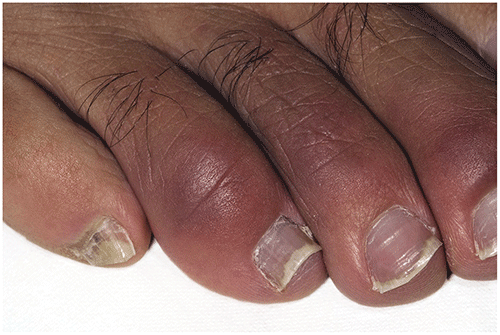
▶Lesions may include blanching, pink/red to purple macules and patches (Figures 59.1–59.4), edema, and blistering (which may lead to erosions and crusting).
▶Symptoms may include pain, tingling, itching, dysesthesia, or burning.
▶Secondary infection may occur.
Figure 59.1. Pernio. Focal Erythematous Macule on Toe of a Teen after Exposure to Cold Temperatures.
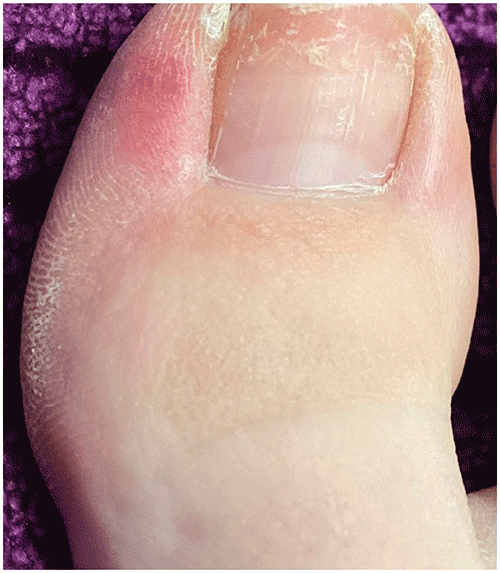
Figure 59.2. Pernio. Erythematous, Slightly Tender Macule on Toe of a Patient in Winter.
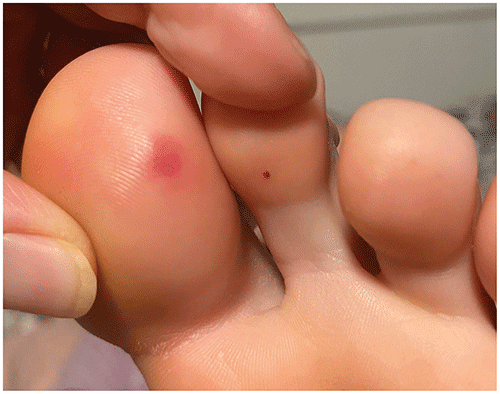
Figure 59.3. Multiple Erythematous and Purple Tender Toes in an Adolescent with Pernio.
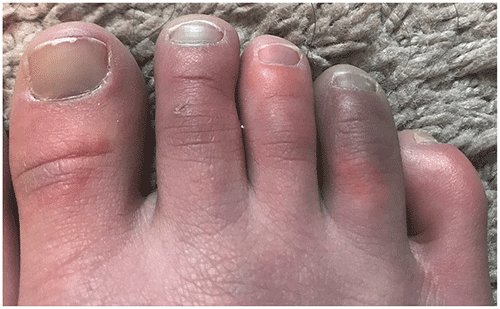
Figure 59.4. Pernio: Swelling and Erythematous to Purple Discoloration.in Persons with Darker Skin Tones the Discoloration May be More Difficult to Appreciate. Source: Nhs. Chilblains. Reviewed July 29, 2022. Https://www.nhs.uk/Conditions/Chilblains
In persons with darker skin tones the discoloration may be more difficult to appreciate. Source: NHS. Chilblains. Reviewed July 29, 2022. https://www.nhs.uk/conditions/chilblains
Look-alikes
| Disorder | Differentiating Features |
|---|
| Frostbite | Requires actual freezing of skin tissue due to extreme freezing/subzero temperatures. Results in direct cold injury, vasoconstriction, and subsequent inflammatory damage. Marked erythema and blistering within 1 to 2 days after exposure. Severe cases can lead to full-thickness tissue loss or, rarely, amputation. Rapid rewarming of tissue is necessary to reduce cold damage and restore blood flow (warm water with temperature >40 °C [>104 °F]).
|
| Dysproteinemias (cold sensitive) | Rare collection of disorders in which proteins (ie, cryoglobulins, cryofibrinogens, and cold agglutinins) become insoluble in the blood after they are exposed to cold temperatures. Wide range of symptoms including palpable purpura, urticaria, bullae, ulcerations, arthralgias, bruising, weakness, pain, and glomerulonephritis.
|
| Acrocyanosis | Common physiologic phenomenon in newborns and infants in which the feet, hands, and lips develop a purple-bluish hue that is transient. Occurs when infants hold their breath, during crying spells, or if cold (ie, after a bath). Mechanism related to vasospasm of cutaneous vessels resulting in venous pooling; transient, mild, and resolves spontaneously.
|
| Raynaud phenomenon | Transient vasospasm of peripheral arterioles/arteries (in response to cold temperatures or stress) that may have triphasic color changes (white pallor, blue cyanosis, followed by reactive hyperemia from reperfusion). Fingers most common location. Many cases are primary (idiopathic). Recurrent or severe cases may be associated with an underlying connective tissue disease.
|
| Leukocytoclastic (hypersensitivity) vasculitis | May be triggered by a variety of preceding infections such as an upper respiratory tract infection or group A streptococcal infection. Not triggered by cold temperatures. Palpable purpuric lesions, common on buttocks and lower extremities, distal upper extremities. May have associated arthritis, abdominal pain, renal involvement, gastrointestinal involvement.
|
| Hand, foot, and mouth disease (enterovirus) | Acute viral illness with fever. Not triggered by cold temperatures. Associated with oral erosions (tongue, buccal mucosa, and palate). Erythematous to gray macules and blisters on hands, feet, and buttocks.
|
| COVID-19 toes | Occurs in association with SARS-CoV-2 infection (COVID-19), although association is controversial. Not triggered by cold temperatures. Often asymptomatic.
|
▶History of preceding exposure to a cold, nonfreezing or wet/humid environment 12 to 24 hours prior to development of characteristic skin lesions usually is sufficient to suggest the clinical diagnosis.
▶Biopsy may rarely be necessary to confirm the diagnosis.
▶In some patients, additional evaluations may be indicated (and may include antinuclear antibody testing, antiphospholipid antibodies, inflammatory markers, cell counts with peripheral smear, cryoglobulins, and cold agglutinins, among others).
▶Therapy is usually supportive and includes emollients, oral antihistamines for itching, and keeping affected areas properly covered, warm, and dry.
▶Proper drying of hand wear (ie, gloves, mittens) and footwear between uses can minimize acral exposure to wet/humid conditions.
▶If hyperhidrosis is present, appropriate treatment is recommended.
▶Oral nifedipine, pentoxifylline, or hydroxychloroquine has been used in severe cases.
▶In patients whose lesions were triggered by an associated condition, that condition should be appropriately treated.
▶The prognosis is generally very good.
▶Lesions typically resolve within 1 to 3 weeks.
▶Recurrence is common if reexposure occurs or if associated with an underlying untreated causative condition.
▶Persistent or atypical presentations may require further consultation and evaluation to assess for an underlying causative condition.
▶Evaluation by a pediatric dermatologist may be necessary to help verify diagnosis or suggest other diagnostic evaluations.
▶When severe or chronic/recurrent, referral to a pediatric rheumatologist, geneticist, or oncologist should be considered, depending on clinical features and laboratory findings.