▶ACD is an inflammatory immunologic reaction in the skin.
▶Results from a biphasic, type IV hypersensitivity reaction (cell-mediated immunity), and the pathogenesis involves a sensitization phase and an elicitation phase.
▶Skin changes may be noted within a few hours after exposure to a contact allergen or may take up to 1 week to become evident.
▶A wide variety of natural and synthetic substances can produce ACD.
▶Up to 20% of childhood dermatitis may be ACD and is likely underreported.
▶Common sources of contact allergens in children include:
■Plants, especially poison ivy, poison oak, and poison sumac (urushiol is the antigen in these plants).
■Jewelry, belt buckles, clothing snaps, toys, or devices with metal (nickel).
■Shoes (potassium dichromate).
■Toilet seats (lacquered or painted wood, plastic, cleaning products; can result in irritant contact dermatitis or ACD).
■Creams, lotions (quaternium-15, formaldehyde, lanolin) and topical antimicrobials (particularly neomycin and bacitracin found in triple antibiotic ointments).
■Premoistened hygienic wipes containing preservatives such as methylisothiazolinone or methylchloroisothiazolinone.
▶Acute ACD: presents as an abrupt, intensely pruritic, exudative dermatitis. Vesiculation and blister formation may be prominent in ACD to potent sensitizers like poison ivy (Figure 5.3).
▶Chronic ACD: presents with scaling, lichenification, fissuring, and hyperpigmentation often due to less potent antigens (eg, nickel) (Figure 5.4).
▶Dermatitis typically is limited to the area(s) of skin in contact with the allergen.
■Involvement at the site of contact with a wristwatch, clothing snap, belt buckle (see Figure 5.4), earring (Figure 5.5), or necklace suggests nickel allergy.
■Involvement of the dorsum of the feet occurs in shoe dermatitis (often due to potassium dichromate in leather).
■Sharply demarcated, symmetric involvement of the anterior lower legs occurs in children with shin guard ACD (occasionally is an ACD related to rubber components).
■Symmetric involvement of the posterior thighs and buttocks in a circular pattern occurs in toilet seat dermatitis (Figure 5.6), which can arise due to allergic sensitization (essential oils in wood, varnish, paint), irritants (harsh cleaning products), or a combination of the 2.
■Linearly arranged dermatitis or vesicles are characteristic of plant dermatitis, with distribution corresponding to the plant brushing in a streaky fashion against the skin (Figure 5.7).
■Distribution can sometimes be misleading or confusing. Eyelid dermatitis may be caused by allergic contact sensitivity to components of nail polish (whereby the fingers may be spared, but the sensitive skin of the eyelids is affected) or nickel if metal eyelash curlers are used.
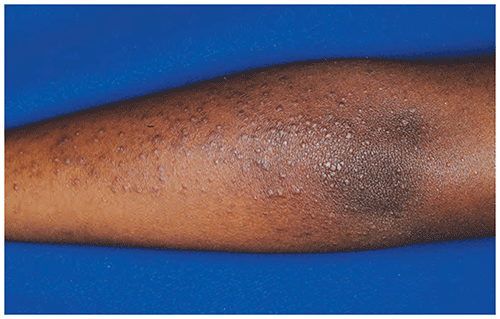
▶A hypersensitivity or id reaction may occur in association with the primary ACD and presents with diffuse, symmetrically distributed pruritic papules on the extensor aspects of the arms (Figure 5.8), legs, and cheeks.
▶Once the ACD reaction occurs, the response to a strong allergen may last 2 to 3 weeks, even without further exposure.
▶Continued appearance of new areas of dermatitis in episodes of poison ivy are more slowly evolving reactions in areas that received a lower dose of exposure to the allergen. The blister fluid of poison ivy lesions does not contain allergen and cannot spread the eruption.
Figure 5.3. Multiple Small Vesicles Overlying an Erythematous Plaque in a Patient Exposed to Poison Ivy.
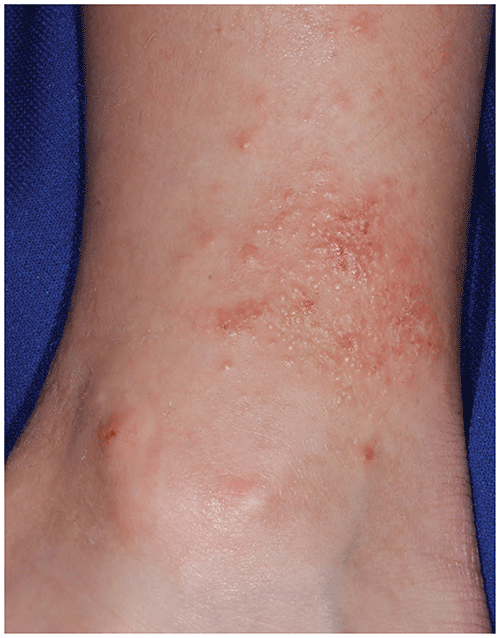
Figure 5.4. Contact Dermatitis Caused by Nickel in a Clothing Snap or Belt Buckle Affects the Lower Abdomen.
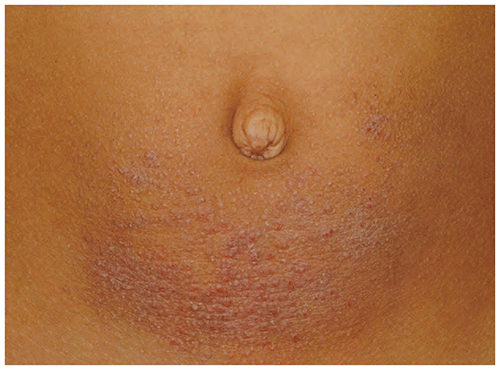
Figure 5.5. Nickel Contact Dermatitis at the Site of an Earring.
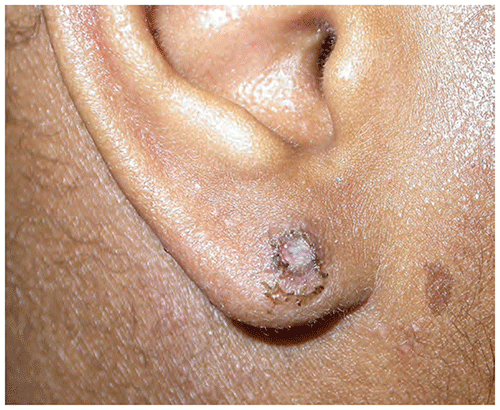
Figure 5.6. In Toilet Seat Dermatitis, Symmetric, Eczematous Lesions are Seen on the Posterior Thighs and Buttocks.
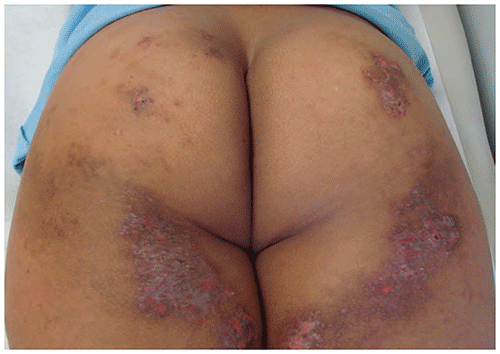
Figure 5.7. Vesicles and Erythematous Papules in a Linear Arrangement are Often Seen in Allergic Contact Dermatitis Caused by Plants.
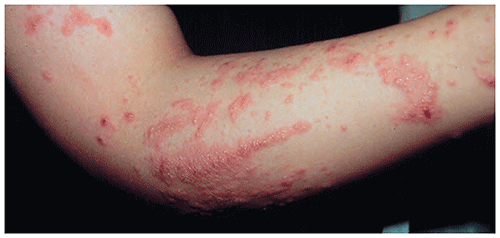
Figure 5.8. Id Reaction. These Itchy Papules Occurred on the Extensor Aspects of the Arms and Legs in a Patient with Allergic Contact Dermatitis to Nickel.
Look-alikes
| Disorder | Differentiating Features |
|---|
| Atopic dermatitis | Typical distribution based on age of patient (eg, antecubital fossae in a child or adolescent). Personal or family history of atopic dermatitis often present.
|
| Irritant contact dermatitis | |
| Seborrheic dermatitis | Located in typical areas (eg, nasolabial folds, eyebrows, scalp). Scale is greasy. Sites of involvement may not be consistent with allergen exposure.
|
| Herpes zoster | May be confused with contact dermatitis due to plants. Pain usually more prominent than pruritus. Lesions typically distributed along a dermatome. Viral culture, polymerase chain reaction technique, or direct fluorescent antibody testing may be valuable in differentiating the 2 conditions.
|
▶Acute onset, extreme pruritus, and localized distribution of the dermatitis are often sufficient to make a clinical diagnosis of acute ACD.
▶Chronic ACD can be more challenging to diagnose, but distribution of the eruption and history of potential exposures are key.
▶Chronic, lichenified sub-umbilical dermatitis is nearly always related to nickel allergy from buckles or clothing snaps.
▶Patch testing is the criterion standard for establishing the diagnosis. It is not needed for straightforward plant dermatitis or nickel allergy but may be essential to evaluate for other forms of ACD when the offending agent is less clear. Skin prick testing is not applicable to testing for ACD.
▶Contact allergen avoidance and topical corticosteroids are the mainstays of treatment for ACD.
■Moderate- or high-potency agents are often necessary to produce a therapeutic response and may be needed 2 times daily for 1 to 2 weeks.
■Wet dressings are a helpful adjunct for more severe cases.
▶Facial, genital, and extensive ACD from potent allergens, such as poison ivy, require systemic corticosteroids. Prednisone at a dose of 1 mg/kg (up to 60 mg) as a single daily dose is prescribed and tapered over 2 to 3 weeks. This prolonged treatment course is necessary to avoid rebound exacerbation.
▶Id reactions may be treated with low- to mid-potency topical corticosteroids and generally resolve concomitantly with successful treatment of the primary contact dermatitis.
▶Identification and avoidance of the offending allergen is the goal of long-term management and, in some cases, requires patch testing to help identify the allergen involved.
▶The prognosis is good, providing the responsible antigen is identified and avoided.
▶Refer patients to a dermatologist when the diagnosis is uncertain.
▶Refer patients who have recurrent or treatment-resistant contact dermatitis or those in whom an antigen has not been identified. Patch testing may be indicated in these patients.