section name header

Basic Information ⬇

AUTHOR: Philip A. Chan, MD, MS

Definition

The human immunodeficiency virus (HIV) is a retrovirus that is responsible for causing acquired immunodeficiency syndrome (AIDS). HIV infection does not necessarily mean a person has AIDS. Table 1 summarizes surveillance case definition for HIV.

TABLE 1 Surveillance Case Definition for HIV Infection in Adults and Adolescents (Age >13 yr)

StageLaboratory EvidenceClinical Evidence
Stage 1Laboratory confirmation of HIV infection and CD4+ T-lymphocyte count of ≥500 cells/μL or CD4+ T-lymphocyte percentage of ≥29%aNo AIDS-defining condition (see Table 2)
Stage 2Laboratory confirmation of HIV infection and CD4+ T-lymphocyte count of 200-499 cells/μL or CD4+ T-lymphocyte percentage of 14%-28%aNo AIDS-defining condition (see Table 2)
Stage 3Laboratory confirmation of HIV infection and CD4+ T-lymphocyte count of <200 cells/μL or CD4+ T-lymphocyte percentage of <14%aDocumentation of an AIDS-defining condition with laboratory confirmation of HIV infection (see Table 2)
Stage unknownLaboratory confirmation of HIV infection and no information on CD4+ T-lymphocyte count or percentageNo information on presence of an AIDS-defining condition

AIDS, Acquired immunodeficiency syndrome.

a The CD4+ T-lymphocyte percentage is a percentage of the total lymphocyte count.

From Hoffman R et al: Hematology: basic principles and practice, ed 7, Philadelphia, 2018, Elsevier.

Synonyms

HIV

AIDS: The result of progressive HIV infection in which a person has a weakened immune system and meets specific diagnostic criteria (See “Acquired Immunodeficiency Syndrome” in Section I and Table 2.)

ICD-10CM CODE
B20Human immunodeficiency virus (HIV) disease

TABLE 2 Surveillance Definitions of AIDS-Defining Conditions

Opportunistic Infections:
  1. Pneumocystis jiroveci (carinii)
  2. Mycobacterium avium complex
  3. Mycobacterium tuberculosis
  4. Toxoplasmosis
  5. Candidiasis: Esophageal and systemic
  6. Histoplasmosis
  7. Cryptococcosis
  8. Cryptosporidiosis and isosporiasis
  9. Leishmaniasis
  10. Cytomegalovirus disease
  11. Recurrent bacterial infections (≥2 episodes/yr)
Lymphomas
Kaposi Sarcoma
Cervical Cancer
AIDS Dementia Syndrome
Wasting Syndrome

AIDS, Acquired immunodeficiency syndrome.

From Hoffman R et al: Hematology: basic principles and practice, ed 7, Philadelphia, 2018, Elsevier.

Epidemiology & Demographics (In U.S.)

  • An estimated 1.2 million people in the United States are infected with HIV, and approximately 14% of them do not know they are infected.1
  • Worldwide each year, an estimated 1.3 million persons living with HIV become pregnant. The vast majority of pregnant persons living with HIV reside in low- and middle-income countries with limited access to anti-viral therapy (ART) and in the absence of ART, 15% to 30% of infants born to persons with HIV acquire HIV antenatally or perinatally, with additional transmission during breast feeding.1a
  • There are ∼38,000 new HIV diagnoses each year, according to the Centers for Disease Control and Prevention (CDC).1
  • Incidence is highest among gay, bisexual, and other men who have sex with men (MSM) and African American/Black and Hispanic/Latino populations.
Predominant Risk Groups

  • Gay, bisexual, and other MSM is the group most affected by HIV.
  • MSM account for approximately two thirds of all new diagnoses each year, according to the CDC.1
  • HIV disproportionately affects MSM of younger age and African American/Black and Hispanic/Latino background.
  • Heterosexual transmission accounts for ∼25% of new HIV diagnosis. Injection drug use accounts for ∼6% to 7%.
  • Table 3 summarizes risk factors associated with sexual transmission of HIV.

TABLE 3 Risk Factors Associated With Sexual Transmission of HIV

  • Sexually transmitted infections
    • Ulcerative or nonulcerative diseases
  • Genital tract inflammation
  • HIV disease
    • Higher viral loads
    • Lower CD4+ levels
    • Acute HIV infection
    • Lack of effective antiretroviral therapy
    • Lack of heterozygosity or homozygosity for the inactivating 32-base pair deletion in the chemokine receptor gene (CCR5)
  • Anatomic factors
    • Lack of circumcision
    • Cervical ectopy
    • Leukocytospermia
    • Hormonal contraception
  • Sexual practices
    • Receptive anal intercourse
    • Sexual activity during menses
    • Bleeding during intercourse (disruption of vaginal mucosa through trauma)
    • Lack of barrier protection
  • HIV viral features
    • Syncytium formation
    • Certain viral clades

From Bennett JE et al: Mandell, Douglas, and Bennett’s principles and practice of infectious diseases, ed 8, Philadelphia, 2015, Saunders.

Racial Data

  • African American/Black individuals account for >40% of all new HIV diagnoses despite being 12% of the U.S. population.1
  • Hispanics/Latinos account for >25% of all new HIV diagnoses despite being 18% of the U.S. population.
Genetics
Familial Disposition

Individuals with deletions in the CCR5 gene are immune from infection with macrophage tropic virus (the predominant virus in sexual transmission).2 Other genetic variants may contribute to rapid progression or long-term control of the virus once infected. One in 300 individuals infected with HIV is an “elite controller,” which means they are able to maintain a normal CD4 count and undetectable viral load through immune control.3

Congenital Infection

  • Fewer than 100 children a year <13 yr receive a diagnosis of perinatally acquired HIV, according to the CDC.4
  • No specific congenital abnormalities are associated with HIV infection, although there is a higher risk of spontaneous abortion and low birth weight.
Neonatal Infection

  • May occur during delivery or via breastfeeding.
  • Typically asymptomatic.
  • All pregnant women should be tested for HIV and, if positive, take anteretrovirals (ARVs).5
Physical Findings & Clinical Presentation

  • Signs and symptoms are variable with stage of disease (Fig. 1).
  • Acute HIV infection (0 to 3 mo, usually within several weeks)6:
    1. Causes a self-limited mononucleosis-like illness in 50% to 80% of individuals, characterized by fever, sore throat, lymphadenopathy, headache, and a rash resembling roseola. Individuals may also be asymptomatic.
    2. In a minority of acute cases, aseptic meningitis, Bell palsy, or peripheral neuropathy may occur.
    3. Opportunistic infections such as thrush or Pneumocystis jiroveci pneumonia (PJP) may occur.
  • Chronic HIV infection is usually characterized by a prolonged asymptomatic “latent” phase without symptoms followed by nonspecific symptoms of lymphadenopathy, fatigue, weight loss, diarrhea, and skin changes, including seborrheic dermatitis, localized herpes zoster, and/or fungal infection.
  • Advanced disease is characterized by AIDS-associated diseases, including infections and malignancies (see specific disorders). Anemia may be multifactorial (Table 4).
  • HIV infection in women may be associated with lower levels of viral load at comparable degrees of immunosuppression when compared with men. Furthermore, women may, on average, have higher CD4 counts at the time of HIV diagnosis.
  • Another special consideration in women infected with HIV is the high incidence of human papillomavirus (HPV) coinfection and risk for cervical cancer. HIV-positive women should be screened for cervical cancer at time of initial HIV diagnosis and annually thereafter if Pap testing is normal.7 If the results of three consecutive Pap tests are normal, then follow-up testing can occur every 3 yr. HPV vaccination is also recommended in men and women 9 to 26 yr who are HIV positive (three doses at 0, 1 to 2, and 6 mo). For adults aged 27 to 45 yr, clinicians should discuss and may consider HPV vaccination in persons who are most likely to benefit.
  • Coinfection with HIV and hepatitis C virus (HCV) is common because of similar transmission risk. Hepatitis C is most commonly transmitted by contaminated needles or blood exposure. HCV can be transmitted sexually, but the risk is low. Patients with HIV and HCV progress faster to cirrhosis. Patients may already have signs of advanced liver disease at the time of diagnosis.

TABLE 4 Etiology of Anemia in Human Immunodeficiency Virus

HIV RelatedHIV Infection
  • Anemia of chronic disease
  • Blunted production/response to erythropoietin
  • Suppression of CFU-GEMM (HIV/inflammatory cytokines)
Neoplasms Infiltrating BM
Non-Hodgkin lymphoma, KS, Hodgkin lymphoma
Infections of the BM
  • Parvovirus B19
  • Atypical mycobacteria (MAI/MAC)
  • Mycobacterium tuberculosis
  • Histoplasma
  • CMV
Medications Causing Decreased ProductionMedications Causing Hemolysis
  1. RT inhibitors
  2. Ganciclovir
  3. Bactrim
  4. Amphotericin B
  • Indinavir
  • Bactrim and Dapsone in G6PD deficiency
HIV Unrelated
  • B12 and/or folic acid deficiencies
  • Iron deficiency caused by chronic blood loss

BM, Bone marrow; CFU-GEMM, colony-forming unit-granulocyte, erythrocyte, macrophage, megakaryocyte; CMV, cytomegalovirus; G6PD, glucose-6-phosphate dehydrogenase; KS, Kaposi sarcoma; MAC, mycobacterium avium complex; MAI, mycobacterium avium-intracellulare; RT, reverse transcriptase.

From Hoffman R et al: Hematology: basic principles and practice, ed 7, Philadelphia, 2018, Elsevier.

Figure 1 Systemic and neurologic events in human immunodeficiency virus (HIV) infection.
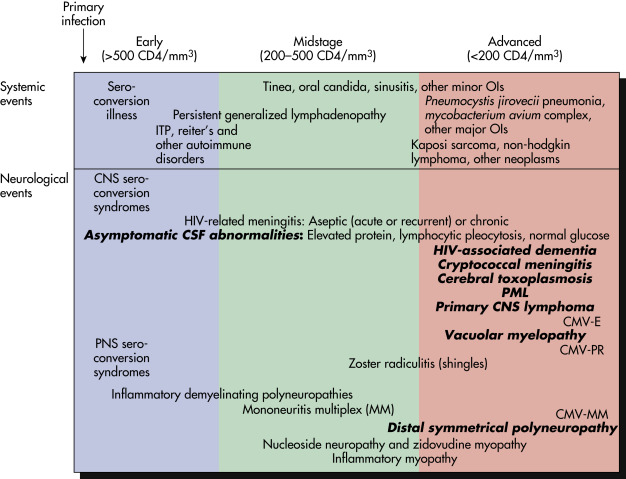
Temporal sequence is approximate and indicates the increasing risk of systemic and neurologic complications as HIV infection advances. CMV-E, Cytomegalovirus encephalitis; CMV-PR, CMV polyradiculitis; CNS, central nervous system; CSF, cerebrospinal fluid; ITP, idiopathic thrombocytopenic purpura; OIs, opportunistic infections; PML, progressive multifocal leukoencephalopathy; PNS, peripheral nervous system.

From Jankovic J et al: Bradley and Daroff’s neurology in clinical practice, ed 8, Philadelphia, 2022, Elsevier.

Etiology

  • HIV is a single-stranded ribonucleic acid (RNA) retrovirus (Fig. E2) that is categorized as type 1 or 2.

Figure E2 Structure of the human immunodeficiency virus virion.
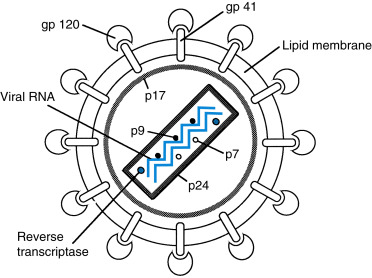
Two coding strands of genomic ribonucleic acid (RNA) are packaged in the nucleoid core with p7, p9, and p24 proteins and reverse transcriptase. The core is surrounded by the p17 matrix protein lining the inner surface of the envelope. The envelope consists of a lipid bilayer derived from the infected cell and glycoprotein spikes that consist of the outer glycoprotein (GP) 120 molecule, which contains the binding site for CD4, and GP41, which anchors the glycoprotein complex to the envelope and mediates fusion of the viral membrane with the cell membrane during viral penetration.

From Hoffman R et al: Hematology: basic principles and practice, ed 7, Philadelphia, 2018, Elsevier.

  • HIV-1 was derived from transmission of a simian immunodeficiency virus (SIV) from chimpanzees in Central Africa; HIV-2 was derived from an SIV found in sooty mangabey monkeys from West Africa.8
  • HIV-1 is the predominant pathogenic retrovirus in human populations; HIV-2 has limited distribution (primarily West Africa) and tends to progress less rapidly than HIV-1. HIV-2 should be considered in individuals from West Africa or whose sexual partners are from West Africa.
  • HIV is transmitted by sexual contact, shared needles, blood transfusion, or from mother to child during pregnancy, delivery, or breastfeeding.
  • Primary target of infection: CD4 lymphocytes.

Diagnosis ⬆ ⬇

Differential Diagnosis

  • Acute HIV infection: Often diagnosed or confused with mononucleosis or other respiratory viral infections.
  • Late symptoms: Similar to those produced by other wasting/chronic illnesses such as neoplasms, tuberculosis (TB), disseminated fungal infection (such as Candida), malabsorption, or depression.
  • HIV-related encephalopathy: Confused with Alzheimer disease or other causes of chronic dementia (cognitive impairment in HIV infection is described in another chapter in Section I); myelopathy and neuropathy possibly resembling other demyelinating diseases such as multiple sclerosis.
  • Direct central nervous system (CNS) involvement: Manifests as encephalopathy, myelopathy, or neuropathy in advanced cases. Table 5 summarizes neuromuscular syndromes in HIV infection.
  • Renal failure, rheumatologic disorders (Table 6), thrombocytopenia, or cardiac abnormalities (Table E7) may be seen in association with HIV-1.

TABLE 6 Rheumatic Diseases Associated With or Occurring in Patients With HIV Infection

Unique to HIV Infection
  1. Diffuse infiltrative lymphocytosis syndrome
  2. HIV-associated arthritis
  3. Zidovudine-associated myopathy
  4. Painful articular syndrome
Encountered in HIV-Infected Patients
  1. HIV-associated reactive arthritis
  2. Polymyositis
  3. Psoriatic arthritis
  4. Polyarteritis nodosa
  5. Giant cell arteritis
  6. Hypersensitivity angiitis
  7. Granulomatosis with polyangiitis
  8. Henoch-Schönlein purpura
  9. Behçet’s disease
  10. Infectious arthritis (bacterial, fungal)
Ameliorated by HIV Infection but Worsening or Reappearing With IRIS
  1. Rheumatoid arthritis
  2. Systemic lupus erythematosus
  3. Sarcoidosis

IRIS, Immune reconstitution inflammatory syndrome.

From Firestein GS et al: Firestein & Kelley’s textbook of rheumatology, ed 11, Philadelphia, 2021, Elsevier.

TABLE 5 Neuromuscular Syndromes in Human Immunodeficiency Virus Type 1 Infection

DiagnosisDisease StageClinical FeaturesDiagnostic StudiesTreatment
AIDPEarly >lateWeakness more than sensory lossCSF: ↑ WBCsEarly: IVIG, steroids, plasmapheresis
CIDP↑↑ProteinLate: Consider ganciclovir/foscarnet
NCS: Demyelination
MMEarly or lateMultiple painful mononeuropathiesNCS: Multifocal axonal neuropathyEarly: None
Biopsy: Inflammation/vasculitisLate: Steroids/cyclophosphamide
CMVGanciclovir/foscarnet
NucleosideAny stageDistal sensory lossNCS: Distal axonopathyNucleoside withdrawal
NeuropathyNeuropathic painIncreased serum lactate
DSPNLateDistal sensory lossNCS: Distal axonopathyNSAIDs, capsaicin
Neuropathic painAED, tricyclics
PPLateProgressive flaccid paraparesis, urinary dysfunction, LS painCSF: Increased WBCs (PMNs), CMV PCR+Ganciclovir/foscarnet
Cidofovir
DILSLateSjögren syndrome, distal motor and sensory loss, painNCS: Axonal neuropathy
Biopsy: CD8+ T cells, HIV-1
Zidovudine/ART
Steroids
ZidovudineAny stageProximal weaknessEMG: ± irritativeZidovudine withdrawal
MyopathyMyalgiasBiopsy: Ragged red fibers
PolymyositisAny stageProximal weaknessEMG: ± irritativeSteroids, IVIG
MyalgiasBiopsy: Inflammatory infiltratesImmunosuppressants
ALS-likeLateWeakness, dysphagiaEMG: NeurogenicART

AED, Antiepileptic drug; AIDP, acute inflammatory demyelinating polyneuropathy; ALS, amyotrophic lateral sclerosis; ART, antiretroviral therapy; CIDP, chronic inflammatory demyelinating polyneuropathy; CMV, cytomegalovirus; CSF, cerebrospinal fluid; DILS, diffuse infiltrative lymphocytosis syndrome; DSPN, distal sensory polyneuropathy; EMG, electromyography; IVIG, intravenous immunoglobulin; LS, lumbosacral; MM, mononeuritis multiplex; NCS, nerve conduction studies; NSAID, nonsteroidal antiinflammatory drug; PCR, polymerase chain reaction; PMNs, polymorphonuclear leukocytes; PP, progressive polyradiculopathy; WBCs, white blood cells.

From Bennett JE et al: Mandell, Douglas, and Bennett’s principles and practice of infectious diseases, ed 8, Philadelphia, 2015, Saunders.

TABLE E7 Summary of HIV-Associated Cardiovascular Diseases

DiseasePossible CausesIncidence/PrevalenceDiagnosisTreatment
Accelerated atherosclerosisProtease inhibitors, atherogenesis with virus-infected macrophages, chronic inflammation, glucose intolerance, dyslipidemia, endothelial dysfunctionUp to 8%ECG, stress testing, echocardiography, lipid profile, CT angiography, calcium scoringSmoking cessation, low-fat diet, aerobic exercise, blood pressure control, guideline-based statin use, percutaneous coronary intervention, coronary artery bypass surgery
Dilated cardiomyopathyCoronary artery diseaseUp to 8% of asymptomatic patientsChest radiographic findingsDiuretics, digoxin, ACE inhibitors, β-blockers
LV systolic dysfunctionDrug related: Cocaine, AZT, IL-2, doxorubicin, interferonInfectious: HIV, Toxoplasma, coxsackievirus group B, EBV, CMV, adenovirus
Metabolic or endocrine: Selenium or carnitine deficiency, anemia, hypocalcemia, hypophosphatemia, hyponatremia, hypokalemia, hypoalbuminemia, hypothyroidism, growth hormone deficiency, adrenal insufficiency, hyperinsulinemia
Cytokines: TNF-β, nitric oxide, TGF-β, endothelin-1, interleukins
Immunodeficiency: CD4 count <100
Autoimmune
Up to 25% of autopsy casesECG: Nonspecific conduction abnormalities, PVCs, PACsEchocardiographic findings: Low to normal LV wall thickness, increased LV mass, LV dilation, systolic LV dysfunction
Possible laboratory studies: Troponin T, brain natriuretic peptide concentration, CD4 count, viral load, viral PCR, Toxoplasma serology, thyroid-stimulating hormone, cortisol, carnitine, selenium, serum ACE, stress testing, myocardial biopsy, cardiac catheterization
Adjunctive treatment in HIV patientsTreatment of infection
Nutritional replacement
IVIG
Intensify antiretroviral therapy
Follow-up serial echocardiograms
LV diastolic dysfunctionTNF, IL-6Hypertension
Chronic viral infection
Up to 37% asymptomaticEchocardiographyTissue Doppler imagingTreat hypertensionIntensify antiretroviral therapy
Primary pulmonary hypertensionPlexogenic pulmonary arteriopathy0.5%ECG, echocardiography, right-heart catheterizationAnticoagulation, vasodilators, prostacyclin analoguesEndothelin antagonists
PDE-5 inhibitors
PericardialBacteria: Staphylococcus, Streptococcus, Proteus, Klebsiella, Enterococcus, Listeria, Nocardia, MycobacteriumViral pathogens: HIV, HSV, CMV, adenovirus, echovirus
Other pathogens: Cryptococcus, Toxoplasma, Histoplasma
Malignancy: Kaposi sarcoma, lymphoma, capillary leak/wasting/malnutrition
Hypothyroidism
Immunodeficiency
Uremia
11%/yr, markedly reduced in post-HAART studiesSpontaneous resolution in 42% of affected patients
Approximately 30% increase in 6-mo mortality
Pericardial rub on examination
Echocardiography
Fluid analysis for Gram stain, culture, and cytology
ECG-low voltage/PR depression
Associated pleural and peritoneal fluid analysis
Pericardial biopsy
Treat the causeFollow-up: Serial echocardiograms
Intensify antiretroviral therapy
Pericardiocentesis or window
Infective endocarditisAutoimmuneBacteria: Staphylococcus aureus or Staphylococcus epidermidis, Salmonella, Streptococcus, Haemophilus parainfluenzae, Pseudallescheria boydii, HASEK organisms
Fungal: Aspergillus fumigatus, Candida, Cryptococcus neoformans
6% increased incidence in IVDAs, regardless of HIV statusBlood cultures; echocardiographyIntravenous antibiotics, valve replacements
Nonbacterial thrombotic endocarditisValvular damage, vitamin C deficiency, malnutrition, wasting, DIC, hypercoagulable state, prolonged acquired immunodeficiencyRare condition, but clinically relevant emboli in 42% of casesEchocardiographyAnticoagulationTreat vasculitis or underlying illness
MalignancyKaposi sarcoma, non-Hodgkin lymphoma, leiomyosarcoma, low CD4 count, prolonged immunodeficiency HHV-8, EBVApproximately 1%Usually metastatic in HIV-positive patientsEchocardiography, biopsyChemotherapy possible
Right ventricular diseaseRecurrent pulmonary infections, pulmonary arteritis, microvascular pulmonary emboli, COPDECG, echocardiography, right-heart catheterizationDiuretics, treat underlying lung infection or disease, anticoagulation as clinically indicated
VasculitisDrug therapy with antibiotics and antiviralsIncreasing incidenceClinical diagnosisSystemic corticosteroids, withdrawal of drug
Autonomic dysfunctionCNS disease, drug therapy, prolonged immunodeficiency, malnutrition, sedentary lifestyleIncreased in patients with CNS diseaseTilt-table test, Holter or event monitoringProcedural precautions
ArrhythmiasDrug therapy, pentamidine, autonomic dysfunction, acidosis electrolyte abnormalitiesECG-long QT, Holter monitoring, exercise stress testingDiscontinue drug, procedural precautions, electrolyte replacement
LipodystrophyDrug therapy: Protease inhibitorsEchocardiography, lipid profile, cardiac catheterization, coronary calcium scoreLipid therapy (beware of drug interactions), aerobic exercise, altered antiretroviral therapy, cosmetic surgery/fat implantation

ACE, Angiotensin-converting enzyme; AZT, zidovudine (azidothymidine); CMV, cytomegalovirus; CNS, central nervous system; COPD, chronic obstructive pulmonary disease; CT, computed tomography; DIC, disseminated intravascular coagulation; EBV, Epstein-Barr virus; ECG, electrocardiogram; HAART, highly active antiretroviral therapy; HASEK, Haemophilus spp (Haemophilus parainfluenzae, Haemophilus aphrophilus, Haemophilus paraphrophilus), Actinobacillus actinomycetemcomitans, Cardiobacterium hominis, Eikenella corrodens, and Kingella spp; HHV, human herpesvirus; HSV, herpes simplex virus; IL, interleukin; IVDA, intravenous drug abuser; IVIG, intravenous immunoglobulin; LV, left ventricle; PAC, premature atrial complex; PCR, polymerase chain reaction; PDE, phosphodiesterase; PVC, premature ventricular complex; TGF, transforming growth factor; TNF, tumor necrosis factor.

From Mann DL et al: Braunwald’s heart disease, ed 10, Philadelphia, 2015, Elsevier.

Workup

Diagnosis is established by testing for HIV-1 or HIV-2 antibodies in the blood. The CDC recommends routine testing for patients in all health care settings unless the patient declines (opt-out screening). This includes routine testing of pregnant women. It is also recommended that separate written consent should no longer be required, although by law this is being addressed on a state-by-state basis. Generally, all persons aged 13 to 64 yr should undergo HIV testing at least once and more frequently (at least once a year) if risk factors.9 For individuals who may be at higher risk (e.g., men who are having sex with multiple other men), 3 to 6 mo is recommended.

An FDA-approved at-home rapid HIV screening test is available. It uses swabs of oral fluids from upper and lower gums. A positive test requires confirmatory testing. Clinicians should be aware of the “window period” (i.e., an antibody test may take up to 3 mo to become “reactive” in a person with newly acquired HIV infection).

Laboratory Tests

HIV antibodies are detected by a two-step technique:

  • An initial screening test (i.e., either an antibody/antigen test or an antibody test).
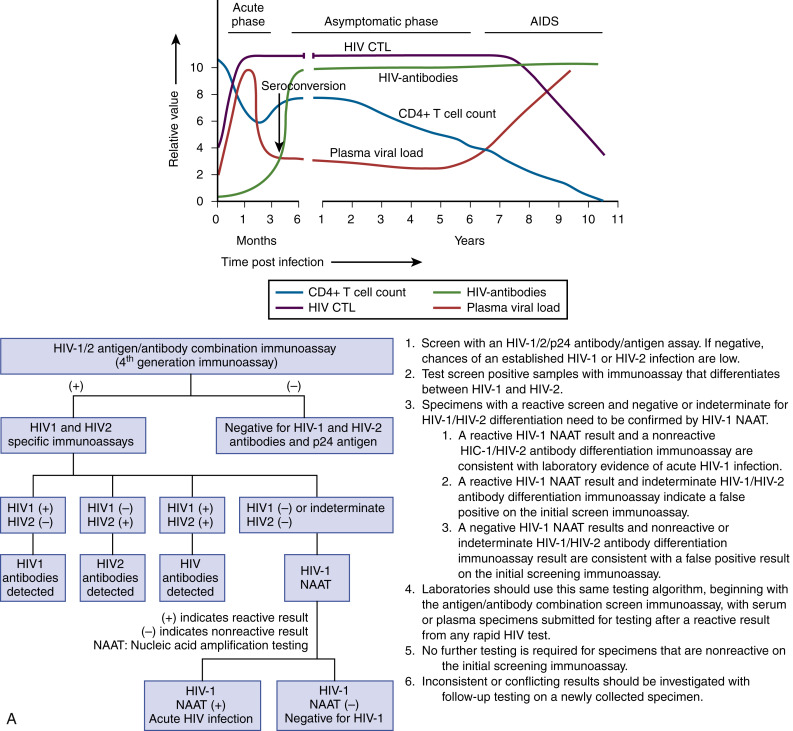
  • Confirmation of an initial positive screening test with more specific assays. The classic confirmatory test is the Western blot, but other modalities may be used. Fig. 3 illustrates the laboratory diagnosis of HIV infection.

Figure 3 Laboratory diagnosis of human immunodeficiency virus (HIV) infection.

!!flowchart!!

AIDS, Acquired immunodeficiency syndrome; CTL, cytotoxic T lymphocytes; DNA, deoxyribonucleic acid; RNA, ribonucleic acid.

From McPherson RA, Pincus MR: Henry’s clinical diagnosis and management by laboratory methods, ed 23, Philadelphia, 2017, Elsevier.

  • Screening antibody tests generally measure HIV-1 and HIV-2 antibodies. Confirmatory tests will generally differentiate between HIV-1 and HIV-2 as well. However, commercial viral load assays (HIV RNA polymerase chain reaction [PCR]) are specific only for HIV-1 in the United States.
  • Fourth-generation antibody/antigen tests can detect the “p24” antigen, which is present early in HIV infection and can be used to diagnose HIV earlier than previous generations. An HIV RNA PCR still should be sent if acute HIV infection is suspected.
  • Baseline viral resistance testing (e.g., genotype) is recommended for all newly diagnosed patients with HIV to guide choice of antiretroviral therapy (ART).
  • The CD4 count and HIV viral load (e.g., HIV RNA PCR) should be measured in all patients.
  • The CD4 count is a marker of current immune status. Table 8 describes the World Health Organization (WHO) immunologic classification for established HIV infection.
  • The HIV RNA PCR (viral load) is predictive of disease progression.
  • Rapid serologic tests have been increasingly used and are useful in specific settings: Occupational exposures, pregnant women in labor without previous testing, and patients in high seroprevalence areas (for immediate results). Specimens are either blood or saliva and results are given within 1 to 20 min. Although sensitivity is high (99%), false-positive tests are more common in low seroprevalence populations. Thus, all positive results must be confirmed with standard serology.
  • Early during infection (i.e., acute HIV infection), standard antibody tests may be negative (“window period”). The fourth-generation antibody/antigen test reduces this window period. The standard for diagnosing HIV during acute infection is by testing for HIV RNA (viral load).
  • Table 9 compares the WHO and CDC staging systems.

TABLE 9 Comparison of WHO and CDC Staging Systems∗

WHO Stage†WHO T-Lymphocyte Count and Percentage‡CDC Stage§CDC T-Lymphocyte Count and Percentage
Stage 1 (HIV infection)CD4+ T-lymphocyte count of ≥500 cells/mm3Stage 1 (HIV infection)CD4+ T-lymphocyte count of ≥500 cells/mm3 or CD4+ T-lymphocyte percentage of ≥29
Stage 2 (HIV infection)CD4+ T-lymphocyte count of 350-499 cells/mm3Stage 2 (HIV infection)CD4+ T-lymphocyte count of 200-499 cells/mm3 or CD4+ T-lymphocyte percentage of 14-28
Stage 3 (advanced HIV disease [AHD])CD4+ T-lymphocyte count of 200-349 cells/mm3Stage 2 (HIV infection)CD4+ T-lymphocyte count of 200-499 cells/mm3 or CD4+ T-lymphocyte percentage of 14-28
Stage 4 (acquired immunodeficiency syndrome [AIDS])CD4+ T-lymphocyte count of <200 cells/mm3 or CD4+ T-lymphocyte percentage of <15Stage 3 (AIDS)CD4+ T-lymphocyte count of <200 cells/mm3 or CD4+ T-lymphocyte percentage of <14

∗For reporting purposes only.

† Among adults and children aged ≥5 yr.

‡ Percentage applicable for stage 4 only.

§ Among adults and adolescents (ages ≥13 yr). CDC also includes a fourth stage, stage unknown; laboratory confirmation of HIV infection but no information on CD4+ T-lymphocyte count or percentage and no information on AIDS-defining conditions.

CDC, Centers for Disease Control and Prevention; WHO, World Health Organization.From Bennett JE et al: Mandell, Douglas, and Bennett’s principles and practice of infectious diseases, ed 8, Philadelphia, 2015, Saunders.

TABLE 8 World Health Organization Immunologic Classification for Established HIV Infection

HIV-Associated ImmunodeficiencyAge-Related CD4 Values
<11 mo (% CD4+)12-35 mo (% CD4+)36-59 mo (% CD4+)>5 yr (Absolute No/mm3 or % CD4+)
None or not significant>35>30>25>500
Mild30-3525-3020-25350-500
Advanced25-2920-2415-19200-349
Severe<25<20<15<200 or <15%

From Bennett JE et al: Mandell, Douglas, and Bennett’s principles and practice of infectious diseases, ed 8, Philadelphia, 2015, Saunders.

Treatment ⬆ ⬇

Nonpharmacologic Therapy

Maintenance of adequate nutrition

Acute General Rx

Acute management of opportunistic infections and malignancies (see “AIDS-associated disorders,” “Pneumonia, Pneumocystis jiroveci (carinii);” “Cryptococcosis;” “Tuberculosis, Pulmonary;” “Cryptosporidium Infection;” “Toxoplasmosis;” etc., elsewhere in this text)

Chronic Rx

All HIV-infected patients should be considered for ART regardless of CD4 cell count. The benefit of ART is well established in preventing progression to AIDS and associated opportunistic infections. Furthermore, individuals who are on ART and undetectable are highly unlikely to transmit HIV to others (i.e., “Treatment as Prevention”). Identifying individuals with HIV as soon as possible and prescribing ART is the basis of effective public health approaches to addressing HIV. Updated guidelines are available for further recommendiates.10

  • Therapy is strongly recommended for all patients with established HIV infection regardless of the CD4 count. Most people with chronic HIV infection are asymptomatic. ART is recommended regardless of CD4 cell counts. The recommendations are due to the safety and benefit of newer antivirals in preventing AIDS and decreasing both morbidity and mortality. Earlier treatment may also help reduce transmission of the virus to others due to reductions in viral loads.
  • ART generally consists of using a three-drug regimen to treat HIV infection. Classes of antiretrovirals include11:
    1. Nucleoside/nucleotide reverse transcriptase inhibitor (NRTI): Zidovudine (AZT), lamivudine (3TC), emtricitabine (FTC), tenofovir disoproxil fumarate (TDF), tenofovir alafenamide (TAF), and abacavir (ABC).
    2. Protease inhibitors (PI): Lopinavir/ritonavir, atazanavir, fosamprenavir, darunavir, saquinavir, and tipranavir. These PIs may be “boosted” by ritonavir or cobicistat to increase levels.
    3. Nonnucleoside reverse transcriptase inhibitors (NNRTI): Nevirapine, efavirenz, etravirine, doravirine, or rilpivirine.
    4. Integrase inhibitors (II): Raltegravir, elvitegravir, bictegravir, dolutegravir, and cabotegravir.
    5. Fusion inhibitors: Enfuvirtide (T-20). This drug is administered through subcutaneous injections and is only used as part of a salvage regimen for individuals who have failed multiple other regimens.
    6. CCR5 inhibitors: Maraviroc. Before using this drug, a viral trophism assay should be checked to determine if the virus uses the CCR5 coreceptor to infect cells. If the virus uses the CXCR4 coreceptor, this drug will not be effective.
    7. Postattachment inhibitors: Ibalizumab. Blocks CD4 receptors that HIV needs to enter cells with.
    8. Attachment inhibitors: Fostemsavir. Binds to the gp120 protein on the outer surface of HIV, preventing HIV from entering CD4 cells.
  • Adding a fourth drug to the three-drug regimen does not improve viral suppression or outcomes and is not recommended. Treatment interruptions based upon CD4 responses appear harmful in recent comparative studies versus standard continuous treatment protocols and should be avoided. Antiretroviral regimens for initial therapy are summarized in Table 10.
  • Typical dosing regimen consists of two NRTIs and either an NNRTI, PI, or II. IIs are now the preferred third drug because of tolerability. Data support inclusion of lamivudine or emtricitabine as one of the two NRTIs.
  • Two-drug regimens with specific antiretroviral medications may be an option in certain situations. Dolutegravir/lamivudine is the preferred option in appropriate clinical situations in which it is preferable to avoid other NRTIs such as abacavir and tenofovir-based regimens. Dolutegravir/lamivudine is not recommended for individuals with a higher viral load (>500,000 copies/ml), hepatitis B virus (HBV) and HIV coinfection, or when results of genotypic resistance testing are unavailable.
  • Individuals with drug-resistant HIV may be on more complex and atypical regimens. Consultation with an HIV specialist is recommended.

TABLE 10 Which Antiretroviral Regimen to Choose for Initial Therapy

Preferred RegimensComments
Integrase inhibitor-based regimen
Bictegravir/TAF/FTC
Use abacavir only in individuals who are HLA-B∗5701 negative. Dolutegravir/3TC should not be used in individuals with HIV RNA >500,000 copies/ml, HBV coinfection, or in whom ART is to be started before the results of HIV genotypic resistance testing for reverse transcriptase or HBV testing are available.
Dolutegravir + TDF/FTC or TAF/FTC
Dolutegravir/ABC/3TCDolutegravir/3TC
PI-based regimen
Darunavir/r or Darunavir/c (once daily) + TDF/FTC or TAF/FTC

Use if there is a concern for drug resistance.
Preferred regimen for pregnant women
ABC/3TC or TDF/FTC plus raltegravir or darunavir/r or atazanavir/r
TDF should be avoided in renal impairment.
Alternative RegimensComments
INSTI-based regimens
Raltegravir + TDF/FTC or TAF/FTC
Elvitegravir/cobicistat/TDF/FTC
Elvitegravir/cobicistat/TAF/FTC
RAL + ABC/3TC
NNRTI-based regimens (in alphabetical order)
DOR/TDF/3TC or DOR + TAF/FTC
EFV/TDF/FTC or EFV + TAF/FTC
RPV/TDF/FTC or RPV/TAF/FTC
EFV should not be used with caution in the first trimester of pregnancy or in women trying to conceive.
NVP should not be used in patients with moderate to severe hepatic impairment (Child-Pugh B or C). Should not be used in women with pretreatment CD4 >250 cells/mm3 or men with CD4 >400 cells/mm3.
ABC should not be used in patients who test positive for HLA-B∗5701.
Use with caution in patients with high risk of cardiovascular disease or with pretreatment HIV.
RNA >100,000 copies/ml.
Once-daily LPV/r is not recommended in pregnant women.
PI-based regimens (in alphabetical order)
ATV/r or ATV/c + TDF/FTC or TAF/FTC
DRV/c or DRV/r + ABC/3TC

3TC, Lamivudine; ABC, abacavir; ART, antiretroviral therapy; ATV, atazanavir; DOR, doravirine; DRV, darunavir; EFV, efavirenz; FPV, fosamprenavir; FTC, emtricitabine; HLA, human leukocyte antigen; INSTI, integrase strand transfer inhibitor; LPV, lopinavir; MRV, maraviroc; NNRTI, nonnucleoside reverse transcriptase inhibitor; NVP, nevirapine; PI, protease inhibitor; r, low dose ritonavir; RAL, raltegravir; RNA, ribonucleic acid; RVP, rilpivirine; TAF, tenofovir alafenamide; TDF, tenofovir disoproxil fumarate. The following combinations in the recommended list are available as fixed-dose combination formulations: ABC/3TC, EFV/TDF/FTC, LPV/r, TDF/FTC, RPV/TDF/FTC, and ZDV/3TC.

Modified from DHHS Panel on Antiretroviral Guidelines for Adults and Adolescents: Guidelines for the use of antiretroviral agents in adults and adolescents with HIV. Washington, DC: Department of Health and Human Services.

Standard NRTIs include:

  • Tenofovir disoproxil fumarate/emtricitabine 1 tablet once daily. Individuals with underlying renal dysfunction or requiring other nephrotoxic agents may be at increased risk of renal toxicity while taking tenofovir. TDF may also be associated with reductions in bone mineral density.
  • Tenofovir alafenamide/emtricitabine 1 tablet once daily. TAF is a newer formulation of TDF with less nephrotoxicity and bone mineral density effects but may lead to increased weight gain. Both TDF/FTC and TAF/FTC are recommended components of the initial regimen (with a “backbone” medication). TDF should be avoided in patients with a creatinine clearance (CrCl) <60 ml/min. TAF should be avoided in patients with a CrCl <30 ml/min.
  • Abacavir/lamivudine 1 tablet once daily. Abacavir may be associated with increased risk of myocardial infarction. Before using this drug, individuals should be checked for human leukocyte antigen (HLA)-B∗5701. Individuals with this allele are at higher risk of serious hypersensitivity reactions, and this drug should be avoided.
  • Zidovudine/lamivudine 1 tablet twice daily. Once widely prescribed; now rarely used due to lower efficacy compared with tenofovir-emtricitabine; zidovudine is associated with lipoatrophy and anemia, as well as GI and CNS side effects.

Standard backbone regimens include:

  • Integrase inhibitors: (these are now considered first line):
    1. Bictegravir (50 mg once daily): Fixed-dose combination of bictegravir with the NRTIs TAF and FTC.
    2. Dolutegravir (50 mg once daily): Fixed-dose combination of dolutegravir and the NRTIs abacavir and lamivudine for once-daily treatment of HIV-1 infection. HLA-B∗5701 should be checked first.
    3. Elvitegravir: Given with cobicistat (booster) and tenofovir/emtricitabine in a fixed-dose combination.
    4. Raltegravir (400 mg twice a day). Has a lower barrier to resistance, and other IIs should be considered first.
  • NNRTIs:
    1. Efavirenz 600 mg daily: Should be used in caution in women in the first trimester or those who are contemplating pregnancy.
    2. Rilpivirine: Given with tenofovir and emtricitabine as part of a fixed-dose combination.
    3. Nevirapine 200 mg two times a day: Avoid with CD4 count >250 in men and >350 cells/mm3 in women because of the risk of hepatitis. Rarely used.
    4. Etravirine 200 mg two times a day: This drug is generally used in patients for whom other regimens have failed. Etravirine retains activity in many patients who have developed resistance against efavirenz and nevirapine.
  • PIs (ritonavir boosted):
    1. Darunavir and ritonavir (800 mg and 100/day): This is considered a preferred PI regimen within the U.S. Department of Health and Human Services (DHHS) guidelines with either tenofovir disoproxil fumarate or TAF and emtricitabine.
    2. Atazanavir and ritonavir (300 mg and 100 mg) 2 tablets a day: Lower pill burden but use with caution with acid-reducing agents (can alter absorption).
    3. Lopinavir and ritonavir (200 mg/50 mg) 2 tablets twice a day (or 4 tablets once a day): Most likely to cause diarrhea and has the greatest negative effect on triglyceride levels; less commonly used.
    4. Fosamprenavir and ritonavir (700 mg and 100 mg) 2 tablets twice a day (or 4 tablets once a day): Cannot take fosamprenavir with sulfa allergy; less commonly used.
    5. Saquinavir and ritonavir: Saquinavir is no longer recommended for initial treatment of any patient and should be prescribed only in consultation with a specialist.
  • All these drugs have their own unique, as well as class-specific, side effects and require careful follow-up to achieve optimal antiviral effects. Compliance with the drug regimen and tolerance of common side effects are critically important to maintain drug efficacy. Antiviral response should be monitored by baseline HIV viral load and CD4 count and repeat measurement at 2 and 4 wk into treatment and then periodically (every 3 to 6 mo) to ensure viral suppression.
  • All patients should have genotypic resistance testing upon entry into medical care and before initiation of ART.
  • In experienced patients, an antiretroviral regimen should be constructed based on past antiretroviral use and the results of genotypic or phenotypic testing.
  • Patients with a CD4 count <200/mm3 should be given preventive therapy for PJP (Table 11).
  • Evaluation of chronic diarrhea in patients with HIV is described in the “Acquired Immunodeficiency Syndrome” topic in Section I.
  • Criteria for discontinuing and restarting opportunistic infection prophylaxis for adults and adolescents with HIV infection is described in Table 12.
  • HIV infection in a pregnant woman poses special challenges and considerations. Appropriate and timely ART given to mother and newborn has been shown to dramatically reduce the risk of perinatal transmission of HIV. The goal of therapy is to achieve an undetectable viral load. For HIV-infected pregnant women who are already receiving ART: (1) Continue therapy if suppressing viral replication, but avoid use of efavirenz in the first trimester (substitution is recommended in the first trimester); (2) if viremia on therapy, genotypic testing is recommended. For HIV-infected pregnant women who have never received ART: (1) All women should start on ART as soon as possible. Most antiretrovirals are safe in pregnancy; however, efavirenz should be avoided because of possible teratogenicity (Class D), DDI and D4T should be avoided (potential of lactic acidosis), and some protease inhibitors may be dose-altered in pregnancy. Nevirapine should not be initiated in an antiretroviral-naive pregnant patient with CD4 counts >250 cells/mm3 because of the risk of hepatotoxicity. (2) Women who do not need ART for their own health should also initiate three-drug therapy but may do so at the end of the first trimester.
  • Preferred ART medications during pregnancy include:
    1. NRTIs: TDF/FTC, TDF/3TC, or ABC/3TC
    2. INSTI: Raltegravir; dolutegravir can be used after the first trimester; limited data with bictegravir. Elvitegravir should not be used in pregnancy because of inadequate drug concentrations.
    3. PIs: ATV/r or DRV/r
  • ART should continue through the baby’s birth. Zidovudine should also be given intravenously to the woman at the time of labor if the woman has an HIV RNA >1000 copies/ml or there is a concern for poor adherence, regardless of whether it is an existing component of her three-drug regimen. In women with viral loads persistently >1000 copies/ml despite appropriate ART, cesarean section may further lower risk of transmission. For women with HIV RNA <1000 copies/ml zidovudine (AZT) should also be given to the newborn for the first 6 wk of life. If HIV RNA levels are >1000 copies/ml, infants should receive combination ART, which may include zidovudine, lamivudine, and nevirapine for 6 wk. Mothers should completely avoid nursing.

TABLE 12 Prophylaxis to Prevent First Episode of HIV-Related Opportunistic Disease

PathogenIndicationFirst ChoiceAlternative
Pneumocystis jiroveci pneumonia (PJP, previously referred to as Pneumocystis carinii, PCP)CD4+ count <200 cells/mm3 or oropharyngeal candidiasis
CD4+ <14% or history of AIDS-defining illness
CD4+ count >200 but <250 cells/mm3 if monitoring CD4+ count every 1-3 mo is not possible
Trimethoprim-sulfamethoxazole (TMP-SMX) double-strength PO daily; or single-strength dailyTMP-SMX 1 double-strength PO 3 times weekly; or dapsone 100 mg PO daily or 50 mg PO bid; or aerosolized pentamidine 300 mg via Respirgard II nebulizer every month; or atovaquone 1500 mg PO daily
Toxoplasma gondii encephalitisToxoplasma IgG-positive patients with CD4+ count <100 cells/mm3
Seronegative patients receiving PCP prophylaxis not active against toxoplasmosis should have Toxoplasma serology retested if CD4+ count declines to <100 cells/mm3
Prophylaxis should be initiated if seroconversion occurred
TMP-SMX, 1 double-strength PO dailyTMP-SMX 1 double-strength PO 3 times weekly; or TMP-SMX 1 single-strength PO daily; or dapsone 50 mg PO daily + pyrimethamine 50 mg PO weekly + leucovorin 25 mg PO weekly; or dapsone 200 mg PO weekly + pyrimethamine 75 mg PO weekly + leucovorin 25 mg PO weekly
Mycobacterium tuberculosis infection (TB) (treatment of latent TB infection or LTBI)(1) Diagnostic test for LTBI, no evidence of active TB, and no prior history of treatment for active or latent TB
(2) Diagnostic test for LTBI, but close contact with a person with infectious pulmonary TB and no evidence of active TB
(3) A history of untreated or inadequately treated healed TB (i.e., old fibrotic lesions) regardless of diagnostic tests for LTBI and no evidence of active TB
Isoniazid (INH) 300 mg PO daily or 900 mg PO twice weekly for 9 mo-both plus pyridoxine 25 mg PO daily; or for persons exposed to drug-resistant TB, selection of drugs after consultation with public health authoritiesRifampin (RIF) 600 mg PO daily × 4 mo; or rifabutin (dosage depends on ART regimen). Be careful of drug interactions with these medications (PIs and NNRTIs)
Isoniazid (15 mg/kg rounded up to the nearest 50 or 100 mg; 900 mg maximum) and rifapentine (10-14.0 kg 300 mg; 14.1-25.0 kg 450 mg; 25.1-32.0 kg 600 mg; 32.1-49.9 kg 750 mg; ≥50.00 kg 900 mg maximum) once weekly for a total of 3 mo
Disseminated Mycobacterium avium complex (MAC) diseaseCD4+ count <50 cells/mm3-after ruling out active MAC infectionAzithromycin 1200 mg PO once weekly; or clarithromycin 500 mg PO bid; or azithromycin 600 mg PO twice weeklyRFB 300 mg PO daily (dosage adjustment based on drug-drug interactions with antiretroviral therapy); rule out active TB before starting RFB
Streptococcus pneumoniae infectionCD4+ count >200 cells/mm3 and no receipt of pneumococcal vaccine in the past 5 yr. CD4+ count <200 cells/mm3-vaccination can be offered
In patients who received polysaccharide pneumococcal vaccination (PPV) when CD4+ count <200 cells/mm3 but has increased to >200 cells/mm3 in response to antiretroviral therapy
A single dose of PCV13 followed by a single dose of PPSV23 at least 8 wk later. A second dose of PPSV23 should be given 5 yr after the initial PPSV23 dose
Influenza A and B virus infectionAll HIV-infected patientsInactivated influenza vaccine 0.5 ml IM annually
Histoplasma capsulatum infectionCD4+ count ≤150 cells/mm3 and at high risk because of occupational exposure or live in a community with a hyperendemic rate of histoplasmosis (>10 cases/100 patient-yr)Itraconazole 200 mg PO daily
CoccidioidomycosisPositive IgM or IgG serologic test result in a patient from a disease-endemic area; and CD4+ count <250 cells/mm3Fluconazole 400 mg PO daily itraconazole 200 mg PO bid
Varicella-zoster virus (VZV) infectionPreexposure prevention: Patients with CD4+ count ≥200 cells/mm3 who have not been vaccinated, have no history of varicella or herpes zoster, or who are seronegative for VZV
NOTE: Routine VZV serologic testing in HIV-infected adults is not recommended.
Postexposure-close contact with a person who has active varicella or herpes zoster
For susceptible patients (those who have no history of vaccination or of either condition, or are known to be VZV seronegative)
Preexposure prevention: Primary varicella vaccination (Varivax), 2 doses (0.5 ml SC) administered 3 mo apart. If vaccination results in disease because of vaccine virus, treatment with acyclovir is recommended
Postexposure therapy:
Varicella-zoster immune globulin (VariZIG) 125 IU per 10 kg (maximum of 625 IU) IM, administered within 96 h after exposure to a person with active varicella or herpes zoster
NOTE: As of June 2007, VariZIG can be obtained only under a treatment IND (1-800-843-7477, FFF Enterprises).
VZV-susceptible household contacts of susceptible HIV-infected persons should be vaccinated to prevent potential transmission of VZV to their HIV-infected contacts. Alternative postexposure therapy:
Postexposure varicella vaccine (Varivax) 0.5 ml SC × 2 doses, 3 mo apart if CD4+ count >200 cells/mm3; or preemptive acyclovir 800 mg PO 3×/day for 5 days
These two alternatives have not been studied in the HIV population
Human papillomavirus (HPV) infectionWomen aged 11-26 yr. Men aged 11-26 yrHPV quadrivalent vaccine 0.5 ml IM mo 0, 2, and 6
Hepatitis A virus (HAV) infectionHAV-susceptible patients with chronic liver disease or who are injection-drug users, or men who have sex with men. Certain specialists might delay vaccination until CD4+ count >200 cells/mm3Hepatitis A vaccine 1 ml IM ×2 doses-at 0 and 6-12 mo IgG antibody response should be assessed 1 mo after vaccination; nonresponders should be revaccinated
Hepatitis B virus (HBV) infectionAll HIV patients without evidence of prior exposure to HBV should be vaccinated with HBV vaccine, including patients with CD4+ count <200 cells/mm3.
Patients with isolated anti-HBc: Consider screening for HBV DNA before vaccination to rule out occult chronic HBV infection
Hepatitis B vaccine IM (Engerix-B 20 μg/ml or Recombivax HB 10 μg/ml) at 0, 1, and 6 mo anti-HBs should be obtained 1 mo after completion of the vaccine series.Some experts recommend vaccinating with 40-μg doses of either vaccine
Vaccine nonresponders: Defined as anti-HBs <10 IU/ml 1 mo after a vaccination series
For patients with low CD4+ count at the time of first vaccination series, certain specialists might delay revaccination until after a sustained increase in CD4+ count with antiretroviral therapy
Revaccinate with a second vaccine seriesSome experts recommend revaccinating with 40-μg doses of either vaccine

AIDS, Acquired immunodeficiency syndrome; ART, antiretroviral therapy; HB, hepatitis B; Ig, immunoglobulin; IM, intramuscular; IND, investigational new drug; NNRTI, nonnucleoside analog reverse transcriptase inhibitor; PI, protease inhibitors; PO, by mouth; RFB, rifabutin.

Modified from Centers for Disease Control and Prevention: Guidelines for prevention and treatment of opportunistic infections in HIV-infected adults and adolescents: recommendations from CDC, the National Institutes of Health, and the HIV Medicine Association of the Infectious Disease Society of America, MMWR 58(RR-4), 2009.

TABLE 11 Criteria for Discontinuing and Restarting Opportunistic Infection Prophylaxis for Adults and Adolescents With Human Immunodeficiency Virus Infection

Opportunistic InfectionCriteria for Discontinuing Primary ProphylaxisCriteria for Restarting Primary ProphylaxisCriteria for Discontinuing Secondary Prophylaxis/Chronic Maintenance TherapyCriteria for Restarting Secondary Prophylaxis/Chronic Maintenance Therapy
Pneumocystis pneumonia (PJP)CD4+ count >200 cells/mm3 for >3 mo in response to ARTCD4+ count <200 cells/mm3CD4+ count increased from <200 cells/mm3 to >200 cells/mm3 for ≥3 mo in response to ART If PJP is diagnosed when CD4+ count >200 cells/mm3, prophylaxis should probably be continued for life regardless of CD4+ count rise in response to ARTCD4+ count <200 cells/mm3, or if PCP recurred at a CD4+ count >200 cells/mm3
Toxoplasma gondii encephalitis (TE)CD4+ count >200 cells/mm3 for >3 mo in response to ARTCD4+ count <100-200 cells/mm3Successfully completed initial therapy, remain asymptomatic of signs and symptoms of TE, and CD4+ count >200 cells/mm3 for >6 mo in response to ARTCD4+ count <100 cells/mm3
MicrosporidiosisNot applicableNot applicableNo signs and symptoms of nonocular microsporidiosis and CD4+ count >200 cells/mm3 for >6 mo in response to ARTPatients with ocular microsporidiosis should be on therapy indefinitely regardless of CD4+ countNo recommendation
Disseminated Mycobacterium avium complex (MAC) diseaseCD4+ count >100 cells/mm3 for ≥3 mo in response to ARTCD4+ count <50 cells/mm3If fulfill the following criteria
Completed ≥12 mo therapy, and no signs and symptoms of MAC, and have sustained (≥6 mo) CD4+ count >100 cells/mm3 in response to ART
CD4+ count <50 cells/mm3
BartonellosisNot applicableNot applicableIf fulfill the following criteria
Received 3-4 mo of treatment
CD4+ count >200 cells/mm3 for ≥6 mo
Certain specialists would discontinue therapy only if Bartonella titers have also decreased by fourfold
No recommendation
Mucosal candidiasisNot applicableNot applicableIf used, reasonable to discontinue when CD4+ count >200 cells/mm3No recommendation
Cryptococcal meningitisNot applicableNot applicableIf fulfill the following criteria
Completed course of initial therapy
Remain asymptomatic of cryptococcosis
CD4+ count ≥200 cells/mm3 for >6 mo in response to ART
Certain specialists would perform a lumbar puncture to determine if cerebrospinal fluid is culture and antigen negative before stopping therapy
CD4+ count <100 cells/mm3
Histoplasma capsulatum infectionIf used, CD4+ count >150 cells/mm3 for 6 mo on ARTFor patients at high risk for acquiring histoplasmosis, restart at CD4+ count ≤150 cells/mm3If fulfill the following criteria
Received itraconazole for ≥1 yr. Negative blood cultures
CD4+ count >150 cells/mm3 for ≥6 mo in response to ART
Serum Histoplasma antigen <2 units
CD4+ count ≤150 cells/mm3
CoccidioidomycosisIf used, CD4+ count ≥250 cells/mm3 for ≥6 moIf used, restart at CD4+ count <250 cells/mm3Only for patients with focal coccidioidal pneumonia:
Clinically responded to ≥12 mo of antifungal therapy
CD4+ count >250 cells/mm3
Receiving ART
Suppressive therapy should be continued indefinitely, even with increase in CD4+ count on ART for patients with diffuse pulmonary, disseminated, or meningeal diseases
No recommendation
Cytomegalovirus retinitisNot applicableNot applicableCD4+ count >100 cells/mm3 for >3-6 mo in response to ART. Therapy should be discontinued only after consultation with an ophthalmologist, taking into account magnitude and duration of CD4+ count increase, anatomic location of the lesions, vision in the contralateral eye, and the feasibility of regular ophthalmologic monitoring. Routine (every 3 mo) ophthalmologic follow-up is recommended for early detection of relapse or immune restoration uveitisNo recommendation
Isospora belli infectionNot applicableNot applicableSustained increase in CD4+ count to >200 cells/mm3 for >6 mo in response to ART and without evidence of I. belli infectionNo recommendation

ART, Antiretroviral therapy.

Modified from Centers for Disease Control and Prevention: Guidelines for prevention and treatment of opportunistic infections in HIV-infected adults and adolescents. Recommendations from CDC, the National Institutes of Health, and the HIV Medicine Association of the Infectious Disease Society of America, MMWR 58(RR-4), 2009.

Disposition

  • Ongoing care consisting of frequent medical evaluations and monitoring of CD4 counts and HIV viral loads.
  • Long-term care focused on providing up-to-date ART and prophylaxis of PJP and other opportunistic infections, as well as early detection of complications.
  • Ongoing assessment for cardiovascular risk and other primary prevention interventions.
  • Screening for hepatitis A, B, and C. Treatment when indicated. Drugs such as TDF and lamivudine have activity against both HIV and hepatitis B and may be used in patients with coinfection.
  • Vaccinations including hepatitis A and B (when susceptible), pneumococcus (PCV13 and PPSV23), tetanus/diphtheria/pertussis, meningococcal, and influenza. COVID-19 vaccination is also safe to administer at all CD4 cell counts. Box 1 summarizes vaccinations in HIV-positive adults.
  • Yearly screening for other sexually transmitted infections (chlamydia, gonorrhea, and syphilis). This includes trichomonas in women and extragenital testing for chlamydia and gonorrhea (i.e., pharyngeal and rectal) in MSM.
  • Consideration of AIDS (lymphomas, HPV) and non-AIDS related (screening for general population, age-specific cancers).

BOX 1 Vaccination in HIV-Positive Adults

Generally Avoid

  • Bacille Calmette-Guérin (BCG)
  • Oral polio
  • Oral typhoid
Avoid if CD4+ Cells <200

  • Yellow fever
  • Measles
  • Varicella-zoster virus (VZV)
Give Routinely

  • Tetanus/diphtheria (or Tdap)
  • Hepatitis A/B
  • Streptococcus pneumoniae
  • Haemophilus influenzae type B (Hib)
  • Meningococcal
  • Influenza, yearly
Give if Indicated for Travel

  • Typhoid Vi
  • Meningococcal
  • Polio, inactivated polio vaccine (IPV)
  • Rabies
  • Japanese encephalitis
  • Tick-borne encephalitis

From Auerbach P: Wilderness medicine, expert consult, premium edition-enhanced online features and print, Philadelphia, 2012, Saunders.

Referral

To a physician knowledgeable and experienced in the management of HIV infection and its complications. According to 2018 CDC surveillance data, only 78% of patients are linked to care within 30 days after diagnosis, and a sustained viral suppression is achieved in only 55% to 60% of persons (and a smaller percentage of infected adolescents and young adults) with diagnosed HIV.12

Prevention

  • TDF/FTC or TAF/FTC may be used as preexposure prophylaxis (PrEP). Individuals who are HIV negative may take TDF/FTC or TAF/FTC once a day to prevent HIV infection. TDF/FTC as PrEP has been demonstrated to be effective in MSM, heterosexuals, and injection drug users. Importantly, TAF/FTC as PrEP has been shown to be effective in MSM and transwomen but not for cisgender women. Individuals on PrEP should be monitored every 3 mo for renal dysfunction, HIV status, other STIs, and adherence. The FDA has approved Apretude, an intramuscular extended-release (ER) formulation of the integrase strand transfer inhibitor (INSTI) cabotegravir (CAB-LA) for use every 2 mo to prevent sexually acquired HIV-1 infection in at-risk adolescents and adults. Recent trials have shown that CAB-LA is superior to daily oral TDF-FTC in preventing HIV infection among MSM and transgender women.
  • Postexposure prophylaxis (PEP) is an effective prevention intervention for individuals exposed to HIV infection, either occupationally or through a sexual exposure. PEP should be taken within 72 h of an exposure and continued for 28 days. Baseline HIV status, renal function, hepatitis B/C, and liver function should be assessed. The recommended first-line regimen is TDF/FTC or TAF/FTC once daily plus raltegravir 400 mg PO twice daily or dolutegravir 50 mg once daily. The FDA has approved Cabenuva, an extended-release formulation of cabotegravir copackaged with an extended-release formulation of rilpivirine. As a once-monthly IM regimen for adults with HIV-1 infection who are virologically suppressed (HIV-1 RNA <50 copies/mL) on a stable antiretroviral regimen without history of treatment failure and without resistance to either drug.

Pearls & Considerations ⬆ ⬇

Comments

  • ART should be initiated in all HIV-infected individuals regardless of CD4 cell counts.
  • ART in combination with avoidance of breastfeeding and elective cesarean section in women with viremia reduces risk for mother-to-child transmission.
Related Content

Human Immunodeficiency Virus (HIV) Infection (Patient Information)

Acquired Immunodeficiency Syndrome (Related Key Topic)

Suggested Readings ⬆ ⬇

  1. Baeten J.M. : Use of a vaginal ring containing dapivirine for HIV-1 prevention in womenN Engl J Med. ;375:2121-2132, 2016.
  2. Cohen M.S. : Antiretroviral therapy for the prevention of HIV-1 transmissionN Engl J Med. ;375:830-839, 2016.
  3. Feinberg J. : Prevention and initial management of HIV infectionAnn Intern Med. ;175(6):ITC81-ITC96, 2022.
  4. Hall HI et al: Prevalence of diagnosed and undiagnosed HIV infection-United States, 2008-2012, MMWR Morb Mortal Wkly Rep 64(24), 2015.
  5. Initiation of antiretroviral therapy in early asymptomatic HIV infectionN Engl J Med. ;373:795-807, 2015.
  6. Molina J.M. : On-demand pre-exposure prophylaxis in men at high risk for HIV-1 infectionN Engl J Med. ;373:2237-2246, 2015.
  7. Reynolds E.F. : Preexposure prophylaxis for HIV preventionAnn Intern Med. ;163:941-948, 2015.
  8. Siemieniuk R.A.C. : Antiretroviral therapy in pregnant women living with HIV: a clinical practice guidelineBMJ. ;358, 2017.
  9. Working Group of the Office of AIDS Research Advisory Council: Guidelines for the use of antiretroviral agents in HIV-1 infected adults and adolescents: developed by the DHHS Panel on antiretroviral guidelines for adults and adolescents. Available at http://AIDSinfo.nih.gov.

Related Content ⬆

    1. Centers for Disease Control and Prevention: Basic statistics. Available at http://www.cdc.gov/hiv/basics/statistics.html/.
    2. Eke C.C. : Antiretroviral therapy and adverse pregnancy outcomes in people living with HIVN Engl J Med. ;388(4):344-356, 2023.
    3. Lederman M.M. : Biology of CCR5 and its role in HIV infection and treatmentJAMA. ;296(7):815-826, 2006.https://doi.10.1001/jama.296.7.815
    4. Gebara N.Y. : HIV-1 elite controllers: an immunovirological review and clinical perspectivesJ Virus Erad. ;5(3):163-166, 2019.
    5. Centers for Disease Control and Prevention: HIV and perinatal transmission. Available at https://wwwcdc.gov/hiv/group/gender/pregnantwomen/index.html.
    6. Centers for Disease Control and Prevention: Screening recommendations. Available at https://www.cdc.gov/nchhstp/pregnancy/screening/index.html.
    7. Cohen M.S. : Acute HIV-1 infectionN Engl J Med. ;364(20):1943-1954, 2011.https://doi.10.1056/NEJMra1011874
    8. Centers for Disease Control and Prevention: Guidelines for the prevention and treatment of opportunistic infections in adults and adolescents with HIV. Available at https://clinicalinfo.hiv.gov/en/guidelines/adult-and-adolescent-opportunistic-infection/human-papillomavirus-disease.
    9. Sharp P.M., Hahn B.H. : Origins of HIV and the AIDS pandemicCold Spring Harb Perspect Med. ;1(1), 2011.https://doi.10.1101/cshperspect.a006841.U
    10. Centers for Disease Control and Prevention: Screening in clinical settings. Available at https://www.cdc.gov/hiv/clinicians/screening/clinical-settings.html.
    11. Centers for Disease Control and Prevention: Guidelines for the use of antiretroviral agents in adults and adolescents with HIV. Available at https://clinicalinfo.hiv.gov/en/guidelines/adult-and-adolescent-arv/initiation-antiretroviral-therapy?.
    12. HIVinfo.NIH.gov: HIV overview: FDA-approved HIV medicines. Available at https://hivinfo.nih.gov/understanding-hiv/fact-sheets/fda-approved-hiv-medicines.
    13. Saag M.S. : HIV infection: screening, diagnosis, and treatmentN Engl J Med. ;384(22):2131-2143, 2021.