| Opportunistic Infection | Preferred Therapy | Alternative Therapy | Other Comments |
|---|
| PJP | - Patients who develop PJP despite TMP-SMX prophylaxis can usually be treated with standard doses of TMP-SMX.
- Duration of PJP treatment: 21 days.
- For Moderate to Severe PJP:
- TMP-SMX: (TMP 15-20 mg and SMX 75-100 mg/kg/day) IV given q6h or q8h, may switch to PO after clinical improvement.
- For Mild to Moderate PJP:
- TMP-SMX: (TMP 15-20 mg and SMX 75-100 mg/kg/day), given PO in 3 divided doses, or
- TMP-SMX: (160 mg/800 mg or DS) 2 tablets PO tid.
- Secondary Prophylaxis, after completion of PJP treatment:
- TMP-SMX DS: 1 tablet PO daily or
- TMP-SMX (80 mg/400 mg or SS): 1 tablet PO daily.
| For Moderate to Severe PJP:- Pentamidine 4 mg/kg IV daily infused over ≥60 min; can reduce dose to 3 mg/kg IV daily because of toxicities, or
- Primaquine 30 mg (base) PO daily + (clindamycin 600 mg q6h IV or 900 mg IV q8h) or (clindamycin 300 mg PO q6h or 450 mg PO q8h).
- For Mild to Moderate PJP:
- Dapsone 100 mg PO daily + TMP 5 mg/kg PO tid, or
- Primaquine 30 mg (base) PO daily + (clindamycin 300 mg PO q6h or 450 mg PO q8h), or
- Atovaquone 750 mg PO bid with food.
- Secondary Prophylaxis, after completion of PJP treatment:
- TMP-SMX DS: 1 tablet PO tiw, or
- Dapsone 100 mg PO daily, or
- Dapsone 50 mg PO daily + (pyrimethamine 50 mg + leucovorin 25 mg) PO weekly, or
- (Dapsone 200 mg + pyrimethamine 75 mg + leucovorin 25 mg) PO weekly, or
- Aerosolized pentamidine 300 mg monthly via Respirgard II nebulizer, or
- Atovaquone 1500 mg PO daily, or
- (Atovaquone 1500 mg + pyrimethamine 25 mg + leucovorin 10 mg) PO daily.
| Indications for Adjunctive Corticosteroids:- PaO2 <70 mm Hg at room air, or
- Alveolar-arterial O2 gradient >35 mm Hg.
- Prednisone Doses (beginning as early as possible and within 72 h of PJP therapy):
- Days 1-5: 40 mg PO bid.
- Days 6-10: 40 mg PO daily.
- Days 11-21: 20 mg PO daily.
- IV methylprednisolone can be administered as 75% of prednisone dose.
- Benefit of corticosteroid if started after 72 h of treatment is unknown, but some clinicians will use it for moderate-to-severe PJP.
- Whenever possible, patients should be tested for G6PD before use of dapsone or primaquine. Alternative therapy should be used in patients found to have G6PD deficiency.
- Patients who are receiving pyrimethamine/sulfadiazine for treatment or suppression of toxoplasmosis do not require additional PJP prophylaxis.
- If TMP-SMX is discontinued because of a mild adverse reaction, reinstitution should be considered after the reaction resolves. The dose can be increased gradually (desensitization) or be reduced, or the frequency can be modified.
- TMP-SMX should be permanently discontinued in patients with possible or definite Stevens-Johnson syndrome or toxic epidermal necrosis.
|
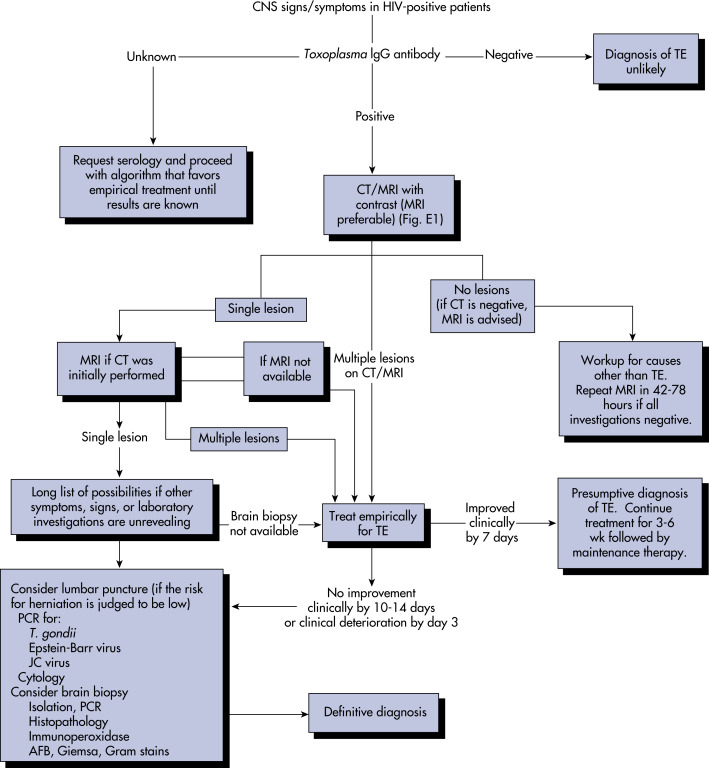
| Toxoplasma gondii encephalitis | Treatment of Acute Infection:- Pyrimethamine 200 mg PO 1 time, followed by weight-based therapy:
- If <60 kg, pyrimethamine 50 mg PO once daily + sulfadiazine 1000 mg PO q6h + leucovorin 10-25 mg PO once daily.
- If ≥60 kg, pyrimethamine 75 mg PO once daily + sulfadiazine 1500 mg PO q6h + leucovorin 10-25 mg PO once daily.
- Leucovorin dose can be increased to 50 mg daily or bid.
- Duration for Acute Therapy:
- At least 6 wk; longer duration if clinical or radiologic disease is extensive or response is incomplete at 6 wk.
- Chronic Maintenance Therapy:
- Pyrimethamine 25-50 mg PO daily + sulfadiazine 2000-4000 mg PO daily (in 2-4 divided doses) + leucovorin 10-25 mg PO daily (AI).
- After collecting specimen for culture and molecular diagnostic tests, empiric TB treatment should be started in individuals with clinical and radiographic presentation suggestive of TB.
- Initial Phase (2 mo, given daily):
- INH + [RIF or RFB] + PZA + EMB.
| Treatment of Acute Infection:- Pyrimethamine (leucovorin)∗ + clindamycin 600 mg IV or PO q6h or
- TMP-SMX (TMP 5 mg/kg and SMX 25 mg/kg) IV or PO bid, or
- Atovaquone 1500 mg PO bid with food + pyrimethamine (leucovorin), or
- Atovaquone 1500 mg PO bid with food + sulfadiazine 1000-1500 mg PO q6h (weight-based dosing, as in preferred therapy) or
- Atovaquone 1500 mg PO bid with food, or
- Pyrimethamine (leucovorin)∗ + azithromycin 900-1200 mg PO daily.
- Chronic Maintenance Therapy:
- Clindamycin 600 mg PO q8h + (pyrimethamine 25-50 mg + leucovorin 10-25 mg) PO daily or
- TMP-SMX DS 1 tablet bid, or
- Atovaquone 750-1500 mg PO bid + (pyrimethamine 25 mg + leucovorin 10 mg) PO daily, or
- Atovaquone 750-1500 mg PO bid + sulfadiazine 2000-4000 mg PO daily (in 2-4 divided doses), or
- Atovaquone 750-1500 mg PO bid with food.
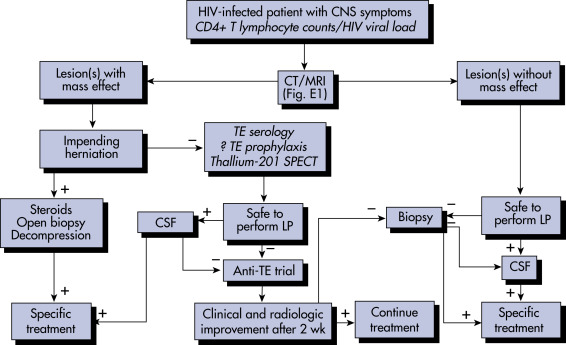
| - Adjunctive corticosteroids (e.g., dexamethasone) should only be administered when clinically indicated to treat mass effect associated with focal lesions or associated edema; discontinue as soon as clinically feasible.
- Anticonvulsants should be administered to patients with a history of seizures and continued through acute treatment but should not be used as seizure prophylaxis.
- If clindamycin is used in place of sulfadiazine, additional therapy must be added to prevent PCP.
|
| Mycobacterium tuberculosis disease (TB) | - Continuation Phase:
- INH + (RIF or RFB) daily.
- Total Duration of Therapy (for drug-susceptible TB):
- Pulmonary TB: 6 mo.
| Treatment for Drug-Resistant TB- Resistant to INH:
- (RIF or RFB) + EMB + PZA + (moxifloxacin or levofloxacin) for 2 mo; followed by (RIF or RFB) + EMB + (moxifloxacin or levofloxacin) for 7 mo.
| - Adjunctive corticosteroid improves survival for TB meningitis and pericarditis. See text for drug, dose, and duration recommendations.
- RIF is not recommended for patients receiving HIV PI because of its induction of PI metabolism.
- RFB is a less potent CYP3A4 inducer than RIF and is preferred in patients receiving PIs.
|
| - Pulmonary TB and culture-positive after 2 mo of TB treatment: 9 mo.
- Extrapulmonary TB with CNS infection: 9-12 mo.
- Extrapulmonary TB with bone or joint involvement: 6-9 mo.
- Extrapulmonary TB in other sites: 6 mo.
- Total duration of therapy should be based on number of doses received, not on calendar time.
| Treatment for Drug-Resistant TB- Resistant to INH:
- (RIF or RFB) + EMB + PZA + (moxifloxacin or levofloxacin) for 2 mo; followed by (RIF or RFB) + EMB + (moxifloxacin or levofloxacin) for 7 mo.
- Resistant to Rifamycins ± Other Drugs:
- Regimen and duration of treatment should be individualized based on resistance pattern, clinical and microbiologic responses, and in close consultation with experienced specialists.
| - Once-weekly rifapentine can result in development of rifamycin resistance in HIV-infected patients and is not recommended.
- Therapeutic drug monitoring should be considered in patients receiving rifamycin and interacting ART.
- Paradoxical IRIS that is not severe can be treated with NSAIDs without a change in TB or HIV therapy.
- For severe IRIS reaction, consider prednisone and taper over 4 wk based on clinical symptoms. For example:
- If receiving RIF: Prednisone 1.5 mg/kg/day for 2 wk, then 0.75 mg/kg/day for 2 wk.
- If receiving RFB: Prednisone 1.0 mg/kg/day for 2 wk, then 0.5 mg/kg/day for 2 wk.
- A more gradual tapering schedule over a few mo may be necessary for some patients.
|
| Disseminated MAC disease | At Least Two Drugs as Initial Therapy With:
Clarithromycin 500 mg PO bid + ethambutol 15 mg/kg PO daily, or Azithromycin 500-600 mg + ethambutol 15 mg/kg PO daily if drug interaction or intolerance precludes the use of clarithromycin.
Duration:
At least 12 mo of therapy, can discontinue if no signs and symptoms of MAC disease and sustained (>6 mo) CD4 count >100 cells/μl in response to ART. | - Addition of a third or fourth drug should be considered for patients with advanced immunosuppression (CD4 counts <50 cells/μl), high mycobacterial loads (>2 log CFU/ml of blood), or in the absence of effective ART.
Third or Fourth Drug Options May Include:- RFB 300 mg PO daily (dosage adjustment may be necessary based on drug interactions), or
- Amikacin 10-15 mg/kg IV daily, or
- Streptomycin 1 g IV or IM daily, or
- Moxifloxacin 400 mg PO daily or levofloxacin 500 mg PO daily.
| - Testing of susceptibility to clarithromycin and azithromycin is recommended.
- NSAIDs can be used for patients who experience moderate to severe symptoms attributed to IRIS.
- If IRIS symptoms persist, short-term (4-8 wk) systemic corticosteroids (equivalent to 20-40 mg prednisone) can be used.
|
| Bacterial respiratory diseases (with focus on pneumonia) | Empiric antibiotic therapy should be initiated promptly for patients presenting with clinical and radiographic evidence consistent with bacterial pneumonia. The recommendations listed are suggested empiric therapy. The regimen should be modified as needed once microbiologic results are available. | - Fluoroquinolones should be used with caution in patients in whom TB is suspected but is not being treated.
- Empiric therapy with a macrolide alone should be used with caution in areas with high (>25%)3 pneumococcal resistance.
- Patients receiving a macrolide for MAC prophylaxis should not receive macrolide monotherapy for empiric treatment of bacterial pneumonia.
- For patients begun on IV antibiotic therapy, switching to PO should be considered when they are clinically improved and able to tolerate oral medications.
- Chemoprophylaxis can be considered for patients with frequent recurrences of serious bacterial pneumonia.
|
Empiric Outpatient Therapy:- A PO β-lactam + a PO macrolide (azithromycin or clarithromycin).
- Preferred β-lactams:Amoxicillin/clavulanate.
- Alternative β-lactams:Cefpodoxime or cefuroxime, or
- For penicillin-allergic patients: Levofloxacin 750 mg PO once daily, or moxifloxacin 400 mg PO once daily.
- Duration: 7-10 days (a minimum of 5 days). Patients should be afebrile for 48-72 h and clinically stable before stopping antibiotics.
- Empiric Therapy for Non-ICU Hospitalized Patients:
| Empiric Outpatient Therapy:- A PO β-lactam + PO doxycycline.
- Preferred β-lactams: Amoxicillin/clavulanate.
- Alternative β-lactams: Cefpodoxime or cefuroxime.
- Empiric Therapy for Non-ICU Hospitalized Patients:
- An IV β-lactam + doxycycline
- Empiric Therapy for ICU Patients:
- For penicillin-allergic patients:Aztreonam IV + (levofloxacin 750 mg IV once daily or moxifloxacin 400 mg IV once daily). May add other agents depending on concern for MRSA.
Empiric Therapy for Patients at Risk of Pseudomonas Pneumonia: |
| - An IV β-lactam + a macrolide (azithromycin or clarithromycin).
- Preferred β-lactams:Ceftriaxone, cefotaxime, ceftaroline or ampicillin-sulbactam.
- For penicillin-allergic patients:
- Levofloxacin, 750 mg IV once daily, or moxifloxacin, 400 mg IV once daily.
- Empiric Therapy for ICU Patients:
- An IV β-lactam + IV azithromycin, or
- An IV β-lactam + (levofloxacin 750 mg IV once daily or moxifloxacin 400 mg IV once daily).
- Preferred β-lactams: Ceftriaxone, cefotaxime, ceftaroline or ampicillin-sulbactam.
- Empiric Therapy for Patients at Risk of Pseudomonas Pneumonia:
- An IV antipneumococcal, antipseudomonal β-lactam + ciprofloxacin 400 mg IV q8-12h or levofloxacin 750 mg IV once daily.
- Preferred β-lactams:Piperacillin-tazobactam, cefepime, imipenem, or meropenem.
- Empiric Therapy for Patients at Risk for Methicillin-Resistant Staphylococcus aureus Pneumonia:
- Add vancomycin IV or linezolid (IV or PO) to the baseline regimen.
- Addition of clindamycin to vancomycin (but not to linezolid) can be considered for severe necrotizing pneumonia to minimize bacterial toxin production.
| - Above β-lactam + an aminoglycoside + (levofloxacin 750 mg IV once daily or moxifloxacin 400 mg IV once daily), or
- For penicillin-allergic patients: Replace the β-lactam with aztreonam.
- An IV antipneumococcal, antipseudomonal β-lactam + an aminoglycoside + azithromycin.
| - Clinicians should be cautious about using antibiotics to prevent recurrences because of the potential for developing drug resistance and drug toxicities.
|
| Bacterial enteric infections | - Diagnostic fecal specimens should be obtained before initiation of empiric antibiotic therapy.
- Empiric antibiotic therapy is indicated for patients with advanced HIV (CD4 count <200 cells/μl or concomitant AIDS-defining illnesses), with clinically severe diarrhea (>6 stools/day), and/or accompanying fever or chills.
- Empiric Therapy:
- Ciprofloxacin 500-750 mg PO (or 400 mg IV) q12h.
- Therapy should be adjusted based on the results of diagnostic workup.
- For patients with chronic diarrhea (>14 days) without severe clinical signs, empiric antibiotic therapy is not necessary; can withhold treatment until a diagnosis is made.
| Empiric Therapy:
Ceftriaxone 1 g IV q24h, or Cefotaxime 1 g IV q8h. | - Hospitalization with IV antibiotics should be considered in patients with marked nausea, vomiting, diarrhea, electrolyte abnormalities, acidosis, and blood pressure instability.
- Oral or IV rehydration if indicated.
- Antimotility agents should be avoided if there is concern about inflammatory diarrhea, including Clostridium difficile-associated diarrhea.
- If no clinical response after 5-7 days, consider follow-up stool culture with antibiotic susceptibility testing or alternative diagnostic tests (e.g., toxin assays, molecular testing), alternative diagnosis, or antibiotic resistance.
|
| Salmonellosis | All HIV-infected patients with salmonellosis should be treated because of high risk of bacteremia. | |
| - Ciprofloxacin 500-750 mg PO (or 400 mg IV) q12h, if susceptible.
- Duration of Therapy:
- For gastroenteritis without bacteremia:
- If CD4 count ≥200 cells/μl: 7-14 days.
- If CD4 count <200 cells/μl: 2-6 wk.
- For gastroenteritis with bacteremia:
- If CD4 count ≥200/μl: 14 days; longer duration if bacteremia persists or if the infection is complicated (e.g., if metastatic foci of infection are present).
- If CD4 count <200 cells/μl: 2-6 wk.
Secondary Prophylaxis Should Be Considered for:- Patients with recurrent Salmonella gastroenteritis ± bacteremia, or
- Patients with CD4 <200 cells/μl with severe diarrhea.
| - Levofloxacin 750 mg (PO or IV) q24h, or
- Moxifloxacin 400 mg (PO or IV) q24h, or
- TMP, 160 mg-SMX 800 mg (PO or IV) q12h, or
- Ceftriaxone 1 g IV q24h, or
- Cefotaxime 1 g IV q8h.
| - Oral or IV rehydration if indicated.
- Antimotility agents should be avoided.
- The role of long-term secondary prophylaxis in patients with recurrent Salmonella bacteremia is not well established. Must weigh benefit against risks of long-term antibiotic exposure.
- Effective ART may reduce the frequency, severity, and recurrence of Salmonella infections.
|
| Mucocutaneous candidiasis | For Oropharyngeal Candidiasis; Initial Episodes (for 7-14 days):- Oral Therapy
- Fluconazole 100 mg PO daily, or
- Topical Therapy
- Clotrimazole troches, 10 mg PO 5 times daily, or
- Miconazole mucoadhesive buccal 50-mg tablet-apply to mucosal surface over the canine fossa once daily (do not swallow, chew, or crush).
For Esophageal Candidiasis (for 14-21 days):- Fluconazole 100 mg (up to 400 mg) PO or IV daily, or
- Itraconazole oral solution 200 mg PO daily.
For Uncomplicated Vulvovaginal Candidiasis:- Oral fluconazole 150 mg for 1 dose, or
- Topical azoles (clotrimazole, butoconazole, miconazole, tioconazole, or terconazole) for 3-7 days.
For Severe or Recurrent Vulvovaginal Candidiasis:- Fluconazole 100-200 mg PO daily for ≥7 days, or
- Topical antifungal ≥7 days.
| For Oropharyngeal Candidiasis; Initial Episodes (for 7-14 days):- Oral Therapy
- Itraconazole oral solution 200 mg PO daily, or
- Posaconazole oral solution 400 mg PO bid for 1 day, then 400 mg daily.
- Topical Therapy
- Nystatin suspension 4-6 ml qid or 1-2 flavored pastilles 4-5 times daily.
For Esophageal Candidiasis (for 14-21 days):- Voriconazole 200 mg PO or IV bid, or
- Posaconazole 400 mg PO bid, or
- Anidulafungin 100 mg IV 1 time, then 50 mg IV daily, or
- Caspofungin 50 mg IV daily, or
- Micafungin 150 mg IV daily, or
- Amphotericin B deoxycholate 0.6 mg/kg IV daily, or
- Lipid formulation of amphotericin B 3-4 mg/kg IV daily.
For Uncomplicated Vulvovaginal Candidiasis:- Itraconazole oral solution 200 mg PO daily for 3-7 days.
| - Chronic or prolonged use of azoles may promote development of resistance.
- Higher relapse rate for esophageal candidiasis is seen with echinocandins than with fluconazole use.
- Suppressive therapy is usually not recommended unless patients have frequent or severe recurrences.
If Decision Is to Use Suppressive Therapy: Oropharyngeal Candidiasis:- Fluconazole 100 mg PO daily or tiw.
- Itraconazole oral solution 200 mg PO daily.
Esophageal Candidiasis:- Fluconazole 100-200 mg PO daily.
- Posaconazole 400 mg PO bid.
Vulvovaginal Candidiasis:- Fluconazole 150 mg PO once weekly.
|
| Cryptococcosis | Cryptococcal Meningitis- Induction Therapy (for at least 2 wk, followed by consolidation therapy):
- Liposomal amphotericin B 3-4 mg/kg IV daily + flucytosine 25 mg/kg PO qid. (NOTE: Flucytosine dose should be adjusted in patients with renal dysfunction.)
- Consolidation Therapy (for at least 8 wk followed by maintenance therapy):
- Fluconazole 8004 mg PO (or IV) daily.
- Maintenance Therapy:
- Fluconazole 200 mg PO daily for at least 12 mo.
For Non-CNS, Extrapulmonary Cryptococcosis and Diffuse Pulmonary Disease:- Treatment same as for cryptococcal meningitis.
Non-CNS Cryptococcosis With Mild to Moderate Symptoms and Focal Pulmonary Infiltrates:- Fluconazole, 400-800 mg PO daily for 12 mo.
| Cryptococcal Meningitis- Induction Therapy (for at least 2 wk, followed by consolidation therapy):
- Amphotericin B deoxycholate 0.7 mg/kg IV daily + flucytosine 25 mg/kg PO qid, or
- Amphotericin B lipid complex 5 mg/kg IV daily + flucytosine 25 mg/kg PO qid, or
- Liposomal amphotericin B 3-4 mg/kg IV daily + fluconazole 800 mg PO or IV daily, or
- Amphotericin B deoxycholate 0.7 mg/kg IV daily + fluconazole 800 mg PO or IV daily, or
- Fluconazole 800-1200 mg5 PO or IV daily + flucytosine 25 mg/kg PO qid, or
- Fluconazole 1200 mg PO or IV daily.
- Consolidation Therapy (for at least 8 wk followed by maintenance therapy):
- Itraconazole 200 mg PO bid for 8 wk-less effective than fluconazole.
- Maintenance Therapy:
- No alternative therapy recommendation.
| - Addition of flucytosine to amphotericin B has been associated with more rapid sterilization of CSF and decreased risk for subsequent relapse.
- Patients receiving flucytosine should have either blood levels monitored (peak level 2 h after dose should be 30-80 μg/ml) or close monitoring of blood counts for development of cytopenia. Dosage should be adjusted in patients with renal insufficiency.
- Opening pressure should always be measured when an LP is performed. Repeated LPs or CSF shunting are essential to effectively manage increased intracranial pressure.
- Corticosteroids and mannitol are ineffective in reducing intracranial pressure and are not recommended.
- Some specialists recommend a brief course of corticosteroid for management of severe IRIS symptoms.
|
| Histoplasmosis | Moderately Severe to Severe Disseminated Disease Induction Therapy (for at least 2 wk or until clinically improved):- Liposomal amphotericin B 3 mg/kg IV daily.
- Maintenance Therapy:
- Itraconazole 200 mg PO tid for 3 days, then 200 mg PO bid.
Less Severe Disseminated Disease- Induction and Maintenance Therapy:
- Itraconazole 200 mg PO tid for 3 days, then 200 mg PO bid.
- Duration of Therapy:
- At least 12 mo.
Meningitis- Induction Therapy (4-6 wk):
- Liposomal amphotericin B 5 mg/kg/day.
- Maintenance Therapy:
- Itraconazole 200 mg PO bid to tid for ≥1 yr and until resolution of abnormal CSF findings.
- Long-Term Suppression Therapy:
| Moderately Severe to Severe Disseminated Disease Induction Therapy (for at least 2 wk or until clinically improved):- Amphotericin B lipid complex 3 mg/kg IV daily, or
- Amphotericin B cholesteryl sulfate complete 3 mg/kg IV daily.
- Alternatives to Itraconazole for Maintenance Therapy or Treatment of Less Severe Disease:
- Voriconazole 400 mg PO bid for 1 day, then 200 mg bid, or
- Posaconazole 400 mg PO bid.
- Fluconazole 800 mg PO daily.
Meningitis- No alternative therapy recommendation.
- Long-Term Suppression Therapy:
- Fluconazole 400 mg PO daily.
| - Itraconazole, posaconazole, and voriconazole may have significant interactions with certain ARV agents. These interactions are complex and can be bidirectional.
- Therapeutic drug monitoring and dosage adjustment may be necessary to ensure triazole antifungal and ARV efficacy and to reduce concentration-related toxicities.
- Random serum concentration of itraconazole + hydroxyitraconazole should be >1 μg/ml.
- Clinical experience with voriconazole or posaconazole in the treatment of histoplasmosis is limited.
- Acute pulmonary histoplasmosis in HIV-infected patients with CD4 counts >300 cells/μl should be managed as nonimmunocompromised host.
|
| - For patients with severe disseminated or CNS infection after completion of at least 12 mo of therapy; and those who relapse despite appropriate therapy
- Itraconazole 200 mg PO daily.
| | |
| Coccidioidomycosis | Clinically Mild Infections (e.g., focal pneumonia):- Fluconazole 400 mg PO daily or
- Itraconazole 200 mg PO bid.
Severe, Nonmeningeal Infection (diffuse pulmonary infection or severely ill patients with extrathoracic, disseminated disease):- Amphotericin B deoxycholate 0.7-1.0 mg/kg IV daily.
- Lipid formulation amphotericin B 4-6 mg/kg IV daily.
- Duration of therapy: Continue until clinical improvement, then switch to an azole.
Meningeal Infections:- Fluconazole 400-800 mg IV or PO daily.
- Chronic Suppressive Therapy:
- Fluconazole 400 mg PO daily, or
- Itraconazole 200 mg PO bid.
| Mild Infections (focal pneumonia) for patients who failed to respond to fluconazole or itraconazole:- Posaconazole 200 mg PO bid, or
- Voriconazole 200 mg PO bid.
Severe, Nonmeningeal Infection (diffuse pulmonary infection or severely ill patients with extrathoracic, disseminated disease):- Some specialists will add a triazole (fluconazole or itraconazole, with itraconazole preferred for bone disease) 400 mg per day to amphotericin B therapy and continue triazole once amphotericin B is stopped.
Meningeal Infections:- Itraconazole 200 mg PO tid for 3 days, then 200 mg PO bid, or
- Posaconazole 200 mg PO bid, or
- Voriconazole 200-400 mg PO bid, or
- Intrathecal amphotericin B deoxycholate, when triazole antifungals are ineffective.
- Chronic Suppressive Therapy:
- Posaconazole 200 mg PO bid, or
- Voriconazole 200 mg PO bid.
| - Some patients with meningitis may develop hydrocephalus and require CSF shunting.
- Therapy should be continued indefinitely in patients with diffuse pulmonary or disseminated diseases because relapse can occur in 25%-33% of HIV-negative patients. It can also occur in HIV-infected patients with CD4 counts >250 cells/μL.
- Therapy should be lifelong in patients with meningeal infections because relapse occurs in 80% of HIV-infected patients after discontinuation of triazole therapy.
- Itraconazole, posaconazole, and voriconazole may have significant interactions with certain ARV agents. These interactions are complex and can be bidirectional. Therapeutic drug monitoring and dosage adjustment may be necessary to ensure triazole antifungal and antiretroviral efficacy and to reduce concentration-related toxicities.
- Intrathecal amphotericin B should be given only in consultation with a specialist and should be administered by an individual with experience with the technique.
|
| Aspergillosis, invasive | Preferred Therapy:- Voriconazole 6 mg/kg IV q12h for 1 day, then 4 mg/kg IV q12h, followed by voriconazole 200 mg PO q12h after clinical improvement.
- Duration of Therapy:
- Until CD4 cell count >200 cells/μl and the infection appears to be resolved.
| Alternative Therapy:- Lipid formulation of amphotericin B 5 mg/kg IV daily, or
- Amphotericin B deoxycholate 1 mg/kg IV daily, or
- Caspofungin 70 mg IV 1 time, then 50 mg IV daily, or
- Micafungin 100-150 mg IV daily, or
- Anidulafungin 200 mg IV 1 time, then 100 mg IV daily, or
- Posaconazole 200 mg PO qid, then, after condition improved, 400 mg PO bid.
| - Potential for significant pharmacokinetic interactions between certain ARV agents and voriconazole; they should be used cautiously in these situations. Consider therapeutic drug monitoring and dosage adjustment if necessary.
|
| CMV disease | CMV Retinitis Induction Therapy for Immediate Sight-Threatening Lesions (adjacent to the optic nerve or fovea)- Consult ophthalmologist; ganciclovir implant no longer available:
- Ganciclovir 5 mg/kg IV q12h for 14-21 days followed by Valganciclovir 900 mg PO bid.
For Small Peripheral Lesions:- Valganciclovir 900 mg PO bid for 14-21 days.
- One dose of intravitreal ganciclovir can be administered immediately after diagnosis until steady-state plasma ganciclovir concentration is achieved with oral valganciclovir.
- Chronic Maintenance (secondary prophylaxis):
- Valganciclovir 900 mg PO daily (for small peripheral lesion).
CMV Esophagitis or Colitis:- Ganciclovir 5 mg/kg IV q12h; may switch to valganciclovir 900 mg PO q12h once patient can tolerate oral therapy.
| CMV Retinitis Induction Therapy:- Ganciclovir 5 mg/kg IV q12h for 14-21 days, or
- Foscarnet 90 mg/kg IV q12h or 60 mg q8h for 14-21 days, or
- Cidofovir 5 mg/kg/wk IV for 2 wk; saline hydration before and after therapy and probenecid, 2 g PO 3 hours before dose, followed by 1 g PO 2 h and 8 h after the dose (total of 4 g). (Note: This regimen should be avoided in patients with sulfa allergy because of cross-hypersensitivity with probenecid.)
- Chronic Maintenance (secondary prophylaxis):
- Ganciclovir 5 mg/kg IV 5-7 times weekly, or
| - The choice of therapy for CMV retinitis should be individualized, based on location and severity of the lesions, level of immunosuppression, and other factors (e.g., concomitant medications and ability to adhere to treatment).
- The choice of chronic maintenance therapy (route of administration and drug choices) should be made in consultation with an ophthalmologist. Considerations should include the anatomic location of the retinal lesion, vision in the contralateral eye, the patients’ immunologic and virologic status, and response to ART.
|
| - Duration: 21-42 days or until symptoms have resolved.
- Maintenance therapy is usually not necessary but should be considered after relapses.
Well-Documented, Histologically Confirmed CMV Pneumonia:- Experience for treating CMV pneumonitis in HIV patients is limited. Use of IV ganciclovir or IV foscarnet is reasonable (doses same as for CMV retinitis).
- The optimal duration of therapy and the role of oral valganciclovir have not been established.
- CMV Neurologic Disease
- Note: Treatment should be initiated promptly.
- Ganciclovir 5 mg/kg IV q12h + (foscarnet 90 mg/kg IV q12h or 60 mg/kg IV q8h) to stabilize disease and maximize response; continue until symptomatic improvement and resolution of neurologic symptoms.
- The optimal duration of therapy and the role of oral valganciclovir have not been established.
| - Foscarnet 90-120 mg/kg IV once daily, or
- Cidofovir 5 mg/kg IV every other wk with saline hydration and probenecid as above.
CMV Esophagitis or Colitis:- Foscarnet 90 mg/kg IV q12h or 60 mg/kg q8h for patients with treatment-limiting toxicities to ganciclovir or with ganciclovir resistance, or
- Valganciclovir 900 mg PO q12h in milder disease and if able to tolerate PO therapy, or
- For mild cases, if ART can be initiated without delay, consider withholding CMV therapy.
- Duration: 21-42 days or until symptoms have resolved.
| - Patients with CMV retinitis who discontinue maintenance therapy should undergo regular eye examinations for early detection of relapse IRU-optimally every 3 mo and then annually after immune reconstitution.
- IRU may develop in the setting of immune reconstitution.
- Treatment of IRU:
- Periocular corticosteroid or short courses of systemic steroid.
- Initial therapy in patients with CMV retinitis, esophagitis, colitis, and pneumonitis should include initiation or optimization of ART.
|
| HSV disease | Orolabial Lesions (for 5-10 days):- Valacyclovir 1 g PO bid or
- Famciclovir 500 mg PO bid or
- Acyclovir 400 mg PO tid.
Initial or Recurrent Genital HSV (for 5-14 days):- Valacyclovir 1 g PO bid, or
- Famciclovir 500 mg PO bid, or
- Acyclovir 400 mg PO tid.
Severe Mucocutaneous HSV:- Initial therapy acyclovir 5 mg/kg IV q8h
- After lesions begin to regress, change to PO therapy as previously. Continue until lesions are completely healed.
- Chronic Suppressive Therapy for Patients With Severe Recurrences of Genital Herpes or for Patients Who Want to Minimize Frequency of Recurrences:
- Valacyclovir 500 mg PO bid.
- Famciclovir 500 mg PO bid.
- Acyclovir 400 mg PO bid.
- Continue indefinitely regardless of CD4 cell count.
| For Acyclovir-Resistant HSV- Preferred Therapy:
- Foscarnet 80-120 mg/kg/day IV in 2-3 divided doses until clinical response.
- Alternative Therapy
- IV cidofovir (dosage as in CMV retinitis), or
- Topical trifluridine, or
- Topical cidofovir, or
- Topical imiquimod.
- Duration of Therapy:
- 21-28 days or longer.
| - Patients with HSV infections can be treated with episodic therapy when symptomatic lesions occur, or with daily suppressive therapy to prevent recurrences.
- Topical formulations of trifluridine and cidofovir are not commercially available.
- Extemporaneous compounding of topical products can be prepared using trifluridine ophthalmic solution and the IV formulation of cidofovir.
|
| VZV disease | Primary Varicella Infection (Chickenpox):- Uncomplicated Cases (for 5-7 days):
- Valacyclovir 1 g PO tid or
- Famciclovir 500 mg PO tid.
- Severe or Complicated Cases:
- Acyclovir 10-15 mg/kg IV q8h for 7-10 days.
- May switch to oral valacyclovir, famciclovir, or acyclovir after defervescence if no evidence of visceral involvement.
Herpes Zoster (Shingles) Acute Localized Dermatomal:- For 7-10 days; consider longer duration if lesions are slow to resolve.
- Valacyclovir 1 g PO tid or
- Famciclovir 500 mg tid.
Extensive Cutaneous Lesion or Visceral Involvement:- Acyclovir 10-15 mg/kg IV q8h until clinical improvement is evident.
- May switch to PO therapy (valacyclovir, famciclovir, or acyclovir) after clinical improvement (i.e., when no new vesicle formation or improvement of signs and symptoms of visceral VZV), to complete a 10- to 14-day course.
| Primary Varicella Infection (Chickenpox):- Uncomplicated Cases (for 5-7 days):
- Acyclovir 800 mg PO 5 times/day.
Herpes Zoster (Shingles)- Acute Localized Dermatomal:
- For 7-10 days; consider longer duration if lesions are slow to resolve.
- Acyclovir 800 mg PO 5 times/day.
| - In managing VZV retinitis: Consultation with an ophthalmologist experienced in management of VZV retinitis is strongly recommended.
- Duration of therapy for VZV retinitis is not well defined and should be determined based on clinical, virologic, immunologic, and ophthalmologic responses.
- Optimization of ART is recommended for serious and difficult-to-treat VZV infections (e.g., retinitis, encephalitis).
|
| Progressive Outer Retinal Necrosis:- Ganciclovir 5 mg/kg + foscarnet 90 mg/kg IV q12h + ganciclovir 2 mg/0.05 ml ± foscarnet 1.2 mg/0.05 ml intravitreal injection twice weekly or
- Initiate or optimize ART.
Acute Retinal Necrosis:- Acyclovir 10 mg/kg IV q8h for 10-14 days, followed by valacyclovir 1 g PO tid for 6 wk.
| | |
| Progressive multifocal leukoencephalopathy (JC virus infections) | - There is no specific antiviral therapy for JC virus infection. The main treatment approach is to reverse the immunosuppression caused by HIV.
- Initiate ART immediately in ART-naïve patients.
- Optimize ART in patients who develop PML in phase of HIV viremia on ART.
| None. | - Corticosteroids may be used for PML-IRIS characterized by contrast enhancement, edema, or mass effect and with clinical deterioration.
|