The substance-related disorders are classified into two categories: (1) substance-use disorders and (2) substance-induced disorders.* The substance-use disorders are characterized according to severity based on the number of relevant symptoms that the patient exhibits. The Diagnostic and Statistical Manual of Mental Disorders, fifth edition (DSM-5) specifies substance-use disorders that result from the self-administration of several different drugs of abuse.
The specific criteria for diagnosis of substance-use disorders draw heavily on the concept of the dependence syndrome. This important advance in our thinking about these disorders frames the interactions among the pharmacologic actions of the drug, individual psychopathology, and the effects of the environment in a clinically meaningful construct that is generalizable to all drugs of abuse. This concept is derived from the clinical observation that patients may have maladaptive behavior as a result of drug use without the presence of overt neurophysiologic adaptive changes such as tolerance or withdrawal (also referred to as neuroadaptation). Neuroadaptation is not necessarily dysfunctional if there is no concomitant inappropriate desire (craving) to continue the use of the drug (drug seeking). For example, driving while drunk may have devastating consequences, particularly in the sporadically drinking young driver who has not acquired tolerance to ethanol. In another example, the patient who receives morphine for pain relief for a limited period postsurgically clearly exhibits neuroadaptation but is not likely to develop the dependence syndrome.
Fundamental to the concept of the dependence syndrome is the priority of drug seeking over other behaviors in the maintenance of dysfunctional drug use. Lesser weight is attributed to the presence of tolerance or withdrawal. In general, two (or more) individual criteria from among the 11 criteria enumerated in DSM-5, which easily fall into the following three symptom clusters, need to be part of the clinical presentation to support the diagnosis of substance-use disorder: (1) loss of control (i.e., the substance is taken in larger amounts or over a longer period than intended, or there are unsuccessful efforts to reduce use); (2) salience to the behavioral repertoire (i.e., a great deal of time is spent in substance-related activities at the expense of important social, occupational, or recreational activities that are reduced or given up, or there is continued substance use despite knowledge of having a persistent or recurrent physical or psychological problem likely to have been caused or exacerbated by the substance); and (3) neuroadaptation (i.e., the presence of tolerance or withdrawal or craving manifested by a strong desire or urge to use a specific substance).
Diagnosis of a substance-use disorder by the presence of a given number of symptoms provides at best an incomplete picture of various clinically important features of the illness, such as severity, course, and prognosis, as well as indicated treatment for this heterogeneous patient population. The issue of illness severity is addressed in DSM-5 by severity specifiers, that is, moderate substance-use disorder with two to three criteria and severe with four or more criteria. In order to augment diagnostic sensitivity and also maintain the primacy of drug-seeking behavior, a person can be diagnosed as having a substance-use disorder without ever having exhibited tolerance or withdrawal. In DSM-5, substance-use disorder is formally subtyped according to whether or not there is physiologic dependence (i.e., the presence of tolerance or withdrawal). Finally, to better characterize individual patients, certain descriptive terms, or course specifiers, have been added to distinguish among different clinical courses of substance-use disorder. For example, a patient may be in remission (which may be early or sustained, full or partial), on agonist therapy (e.g., methadone or buprenorphine, a partial μ-opioid receptor agonist–antagonist), or in a controlled environment (e.g., locked hospital ward).
It may be exceedingly difficult to establish whether psychopathology in a given individual who has a substance-use disorder is a consequence of drug use or is due to an additional psychiatric diagnosis. There is a broad overlap between substance-induced disorders and other psychiatric syndromes considered in this book. For example, diverse psychiatric signs and symptoms, including those of delirium (see Chapter 14), psychotic disorders (see Chapters 15 and 16), mood disorders (see Chapter 17), anxiety disorders (see Chapter 18), sexual dysfunction (see Chapter 24), and sleep disorders (see Chapter 26), can have their onset during intoxication or withdrawal. Dementia, amnestic disorder, and flashbacks (recurrences of the intoxicating effects of the drug that may occur years after use) associated with hallucinogen use may persist long after the acute effects of intoxication and withdrawal have abated. Accordingly, it is helpful to determine, preferably by longitudinal observation or by history, the timing of the onset of psychopathology with respect to the initiation of drug use, and whether it is still present when drug use has ceased, recognizing that the duration of abstinence can be a determining variable.
Pharmacotherapy of a complicating psychiatric disorder is most appropriate if it is an independent (i.e., a primary) disorder, but is less likely to be effective if it is a consequence (i.e., a secondary disorder) of a substance-use disorder. The distinction between whether a complicating psychiatric disorder is primary or secondary to substance-use disorder is not easily made, particularly if both disorders started early in life or are historically closely intertwined. Nevertheless, the use of medications with dependence liability per se (e.g., benzodiazepines, methylphenidate, barbiturates, anticholinergics) for the treatment of a coexisting psychiatric disorder may be severely detrimental to the patient. Moreover, some medications may do more harm than good, e.g., administering a selective serotonin reuptake inhibitor (SSRI) to patients with externalizing disorders may result in mood instability and poor impulse control, increasing the likelihood of relapse. On the other hand, anticonvulsants for the treatment of mood instability may have beneficial effects on drug use and also on other psychopathology associated with drug use disorders. Nevertheless, treatment of a secondary disorder is unlikely to be successful if the co-occurring substance-use disorder is not adequately addressed.
The classification approach employed in DSM-5 is not always adequate to describe fully how the dependence syndrome may be modified by diverse factors such as complex drug-use patterns (i.e., more than one drug via different routes of administration), disabilities resulting from drug use (e.g., mood disorders, brain dysfunction, medical complications), or various personality disorders and the sociocultural context of drug use. Physicians cannot ignore these more difficult issues as they communicate with each other and with other health care professionals or as they serve as legal consultants, perform disability assessments, and help develop health care policy.
Use of Psychoactive Substances
Throughout history, members of almost every society have used indigenous psychoactive substances (e.g., opium, stimulants, cannabis, tobacco) for widely accepted medical, religious, or recreational purposes. In more recent times, a wide range of substances (e.g., central nervous system [CNS] depressants and stimulants, hallucinogens, and dissociative anesthetics), synthesized de novo or structurally modified from naturally occurring psychoactive compounds, have also become available for self-administration.
Descriptors of the magnitude and context of psychoactive drug use (e.g., excessive use, abuse, misuse, addiction) represent difficult value judgments. Even if such terms are defined explicitly, they are not likely to be readily generalizable from one society (or group within the society) to another. To demonstrate the arbitrary nature of these terms, one needs only to examine the changes in perceptions of drug use in the United States since the 1960s.
Maladaptive Patterns of Drug Use
Maladaptive patterns of use involve the self-administration of psychoactive agents to alter one’s subjective state and experience of the environment, under inappropriate circumstances or in greater amounts than generally considered acceptable within the social constraints of one’s culture. Medical diagnosis of substance-related disorders requires meaningful diagnostic criteria that are generalizable across cultures and drugs of abuse. Definition of maladaptive patterns of use in terms of their consequences, presumably less influenced by value judgments, has provided the conceptual basis for DSM-5 diagnostic criteria. Accordingly, considerable weight is placed on behavioral factors rather than on purely medical complications of use or physiologic effects. This conceptual advance, theoretically consistent with the biopsychosocial model of health care, is readily amenable to prevention and has important implications for treatment. The diagnostic focus has shifted from the drug per se to the interactions of drug, individual, and societal factors. Such a perspective is quite different from the traditional medical model of considering drug use as merely a bad “habit” until organ damage is diagnosable, or the social model in which even use sufficient to cause physical complications is not considered an illness.
General Considerations
A. Epidemiology
Surveys conducted by various government agencies at fixed intervals since the 1960s have monitored changes in population attitudes, the prevalence of different types of drug use, health consequences, estimated costs to society, and treatment outcome. Cross-sectional epidemiologic studies are valuable to the clinician, because knowledge of the prevalence of drug-related problems suggests the likelihood that these problems will be encountered in the patient population. For example, a physician may be assisted in the management of an overdose or other drug-related emergency by knowing “what’s on the street” at that point in time. Longitudinal population studies of cohorts of drug users are particularly informative with respect to understanding antecedents of substance-use disorders, dose–response relationships for consequences of use, and determinants of effective treatment outcome.
1. Prevalence of drug use
Patterns of drug use change over time, as do the criteria employed to identify problematic use, and contemporaneous prevalence rates can vary according to the epidemiologic survey quoted. Epidemiologic surveys in the United States documented epidemics of marijuana abuse in the 1960s, heroin in the 1970s, and cocaine in the 1980s. Although no single drug captured society’s imagination in the 1990s, opioid dependence, particularly nonmedical use, has been on the rise in the past two decades, and along with methamphetamine was perceived to have reached “epidemic” proportions in the new millennium to the present. Furthermore, epidemiologic studies have documented an upward trend in the usage of all drugs and alcohol during the 1970s, followed by a downward trend in the 1980s; this trend reversed and then stabilized in the 1990s and has again been on the rise in the new millennium. An ongoing epidemic of overdose deaths from opioids combined with central nervous system depressants like alcohol and benzodiazepines and stimulants like methamphetamine, climbing precipitously since the 2010s in the United States, is unprecedented and has reduced the life expectancy in the population. Knowledge about the prevalence of drug use is highly predictive of the proportion of the population that will develop a drug use disorder (see later discussion).
Although Americans use alcohol more often than they do any other drug, younger individuals tend to combine alcohol with multiple illicit drugs. Older cohorts (age 35 years and older) frequently use alcohol alone, or with prescribed drugs of abuse. According to the 2021 National Survey on Drug Use and Health (Table 16–1), 133 million Americans (47.5% of the population aged 12 years and older) reported being current drinkers of alcohol (at least one drink in the past month). An estimated 60.0 million (21.5%) were binge drinkers (five or more drinks within a couple of hours of each other at least once in the past 30 days), and 16.3 million (5.8%) were heavy drinkers (five or more drinks on the same occasion on at least 5 different days in the past 30 days). An estimated 61.6 million persons (22.0%) reported use of the other legal drug, tobacco.
Table 16–1 Prevalence of Substance Use in Last Month (Per 100 Persons Aged 12 Years or Older)
Drug | Prevalence (%) |
|---|---|
Alcohol | 47.5 |
• Binge drinker* | 21.5 |
• Heavy drinker** | 5.8 |
Tobacco | 22.0 |
An illicit drug | 14.3 |
• Marijuana | 13.0 |
• Cocaine | 0.7 |
• Methamphetamine | 0.6 |
• Hallucinogens | 0.8 |
• Heroin | 0.2 |
Nonmedical use of psychotherapeutic drugs | 1.5 |
• Pain relievers | 0.9 |
• Tranquillizers | 0.5 |
• Stimulants | 0.4 |
• Sedatives | 0.1 |
*Defined as having five or more drinks on the same occasion on at least 1 day in the 30 days prior to the survey.
**Defined as binge drinking on at least 5 days in the past 30 days. Adapted from Substance Abuse and Mental Health Services Administration. Results from the Substance Abuse and Mental Health Services Administration (2022). Key substance use and mental health indicators in the United States: Results from the 2021 National Survey on Drug Use and Health (HHS Publication No. PEP22-07-01-005, NSDUH Series H-57). Center for Behavioral Health Statistics and Quality, Substance Abuse and Mental Health Services Administration.
An estimated 40.0 million (14.3% of the U.S. population aged 12 or older) used an illicit drug during the month prior to the survey. Marijuana is the most prevalent illicit drug by far, used by 36.4 million in the past month. An estimated 9.0 million people (3.2%) were current users of illicit drugs other than marijuana. Most (4.3 million) used psychotherapeutic drugs nonmedically. An estimated 2.4 million used pain relievers, 1.2 million used tranquilizers, 1.1 million used stimulants, and 227,000 used sedatives. An estimated 1.8 million persons were current cocaine users; hallucinogens were used by 2.2 million persons; and 589,000 were current heroin users. National data have consistently shown that substance-use and use disorders are most prevalent among the young (age 18–34 years) and that the highest rates are observed in young men.
2. Prevalence of substance-use disorders
According to the National Comorbidity Survey, the first survey to be administered in the early 1990s using a structured psychiatric interview (Composite International Diagnostic Interview) to a nationally representative household sample of over 8000 respondents, the lifetime prevalence rate of a substance-use disorder (except for use of nicotine or caffeine) was 19.5 per 100 persons 18 years and older. Drugs covered by this survey included alcohol, tobacco, sedatives, stimulants, tranquilizers, analgesics, inhalants, marijuana/hashish, cocaine, hallucinogens, heroin, nonmedical use of prescription drugs, and polysubstance use. Alcohol abuse or dependence (combined as alcohol use disorder in DSM-5) was identified in 13.2% of the population during their lifetime, and drug abuse or dependence in 8% of the population. According to the 2021 National Survey on Drug Use and Health, an estimated 24.0 million persons (8.6% of persons 12 years and older) were classified as having drug use disorder in the past year (Table 16–2). Of these, 7.3 million had both alcohol and drug use disorders; 16.7 million had only a drug use disorder; and 22.2 million had only an alcohol use disorder. Of the 20.1 million persons classified as having an illicit drug use disorder, 2.9 million met criteria for misuse of prescription psychotherapeutics, including 1.9 million for disordered use of pain relievers; 2.5 million for misuse of opioids; and 3.4 for misuse of central nervous system stimulants. Most other illicit drugs were used in combination with alcohol, marijuana, cocaine, or opioids and by a relatively small proportion of the population who met criteria for substance-use disorder. Of note, due to legislative changes in some jurisdictions, marijuana is not considered among the illicit drugs as it was previously.
Table 16–2 Prevalence of Substance-Use Disorders During the Previous Year (Per 100 Persons Aged 12 Years or Older)*
Substance-Use Disorder | Prevalence (%) |
|---|---|
Any substance-use disorder | 16.5 |
• Alcohol abuse or dependence, no illicit drug-use disorder | 7.9 |
• Illicit drug abuse or dependence, no alcohol use disorder | 6.0 |
• Alcohol and illicit drug abuse or dependence | 2.6 |
—Marijuana abuse or dependence | 5.8 |
—Cocaine abuse or dependence | 0.5 |
—Opioid abuse or dependence | 2.0 |
*Prevalence rates obtained using DSM-IV criteria in which construct substance-use disorder is dichotomized as abuse (mild substance-use disorder) or dependence (moderate/severe substance-use disorder). Adapted from Substance Abuse and Mental Health Services Administration. Results from the Substance Abuse and Mental Health Services Administration (2022). Key substance use and mental health indicators in the United States: Results from the 2021 National Survey on Drug Use and Health (HHS Publication No. PEP22-07-01-005, NSDUH Series H-57). Center for Behavioral Health Statistics and Quality, Substance Abuse and Mental Health Services Administration.
3. Risk of co-occurring psychiatric diagnoses
According to the National Institute of Mental Health Epidemiologic Catchment Area Survey, in which 20,291 persons representative of the U.S. community and institutional population were interviewed, the odds of having a mental disorder were 2.7 times greater if one also had a substance-use disorder (excluding nicotine or caffeine) in comparison with no drug-use disorder. Drug-use disorders occurred at higher rates in individuals who had alcohol use disorder (21.5%) than in those who did not (3.7%). Alcohol use disorders were more prevalent among those who met criteria for drug use disorder (47.3%) than among those who did not (11.3%). Specific psychiatric diagnoses, such as major depressive disorder, schizophrenia, anxiety disorders, and especially bipolar affective disorder and antisocial personality disorder, have been associated with substance-use disorders in epidemiologic studies, leading to theories of related pathogenesis. For example, according to the 2021 National Survey on Drug Use and Health, persons with a major depressive episode (MDE) in the previous year were twice as likely (44.7% vs. 20.7%) as those without MDE to have used an illicit drug in the past year. Similar patterns were observed for specific illicit drugs in the previous year, such as marijuana, cocaine, heroin, hallucinogens, inhalants, methamphetamine, as well as for the misuse of prescription psychotherapeutics (pain relievers, stimulants, and tranquilizers or sedatives). However, persons with MDE in the past year had similar rates of heavy alcohol use (8.7% vs. 6.2%) as those without MDE. The rate of daily cigarette use was 1.3 times greater in those who had MDE in the last year.
Persons with MDE were more likely than those without MDE to have a drug use disorder (25.5% vs. 7.3%) and alcohol use disorder (22.7% vs. 10.3%). Among persons with substance-use disorder, 39.1% had at least one MDE in the past year compared with 22.4% who did not have at least one MDE. An important caveat for interpreting these associations is that for many individuals with substance-use disorders and MDE, the depressive episode can, and often does, represent the depressed phase of an unrecognized bipolar illness, not major depressive disorder.
Such associations suggest that the clinician should have a high index of suspicion for substance-use disorders when dealing with clinical populations diagnosed with mental disorders. The clinician should also be circumspect about prescribing psychoactive medications with dependence liability to these patients.
B. Etiology
The etiology of substance-use disorders has been conceptualized in terms of an integration of biological, psychological, and social theories. A recent advance has been recognition of shared clinical features, similar biopsychosocial underpinnings, and frequent co-occurrence of substance-use disorders and so-called behavioral addictions, such as pathological gambling, problematic hypersexuality, and obesity or other eating disorders. In DSM-5, such behavioral addictions are termed non-substance-related addictive disorders. Gambling disorder is the only accepted entity in this category to date.
1. Individual vulnerabilities
The major goal of any etiologic theory is to explain why, in the face of widespread availability of drugs and alcohol, certain individuals develop a substance-use disorder, and others do not. This is a gargantuan task because these are complex and multifaceted disorders. Substance-use disorders are heterogeneous disorders that represent the final common pathway for a variety of behavioral difficulties in diverse sociocultural contexts. Also, circumstances or causes that result in these disorders may differ among individuals. Equally difficult to understand is why in some patients, substance-use disorders continue inexorably to death despite treatment, whereas in others, drug use can be decreased or stopped (either spontaneously or with treatment). Therefore, substance-use disorders are perhaps most usefully conceptualized in terms of multiple simultaneous variables interacting over time.
The fact that not all individuals who self-administer psychoactive agents, during given developmental stages or life circumstances, progress to repeated out-of-control and problematic use has led to the search for factors that determine individual vulnerability. Biological factors that may contribute to the development of substance-use disorders include interindividual differences in (1) susceptibility to acute psychopharmacologic effects of a given drug; (2) metabolism of the drug; (3) cellular adaptation within the CNS to chronic exposure to the drug; (4) predisposing personality characteristics (e.g., sensation seeking, poor impulse control, difficulty delaying gratification, or antisocial traits); and (5) susceptibility to medical and neuropsychiatric complications of chronic drug self-administration. Psychological factors—such as the presence of co-occurring psychopathology (e.g., depression, anxiety, attention-deficit/hyperactivity disorder, psychosis, pathological gambling, eating disorders, or problematic hypersexuality); medical illnesses (e.g., chronic pain, essential tremor); or past or present severe stress (e.g., resulting from crime, battle exposure, sexual trauma, or economic difficulties)—have received considerable attention as potential causes for “self-medication.” The possibility exists that susceptibility to psychological stressors and substance-use disorders may have similar etiologies. For example, some of the etiologic factors that predispose an individual to depression following major losses (e.g., dysregulation of noradrenergic neurotransmission or the hypothalamic–pituitary–adrenal axis) may also contribute to the development of substance-use disorders. Similarly, prefrontal cortical dysfunction due to impaired connectivity of regulatory brain circuits manifested clinically by impulsiveness or poor decision making is observed in individuals diagnosed with either pathological gambling or cocaine dependence. Finally, social factors also contribute to the initiation of drug use and progression of substance-use disorders. Such social factors include peer group attitudes toward and shared expectations of the benefits of drug use (such as enhanced pleasurable activities with drug use); the availability of competing reinforcers to substance use in the form of educational, recreational, and occupational alternatives; and the availability of drugs during vital developmental stages.
The fact that individuals often use more than one drug simultaneously, or give a history of having used different drugs at different times during their lifetime, has led to an emphasis on the similarities rather than the differences among abused substances with respect to the ontogeny of drug-use behaviors. Further, the stepwise development of different substance-use disorders over time suggests common mechanisms of susceptibility and generalizable diagnostic criteria and treatment strategies. Likewise, the co-occurrence and parallel life courses of substance-use disorders and other out-of-control and self-destructive behaviors, such as pathological gambling, problematic hypersexuality, and overeating have pointed to shared abnormalities of fundamental brain reward (drive) mechanisms that may be generalized beyond drug self-administration.
i. Drug-seeking behavior
Conceptualization of substance-use disorders in terms of the biopsychosocial model, rather than as simply the physiologic consequences of chronic drug use, has led to recognition of the central role of conditioning and learning. The behavioral perspective provides a framework for understanding the entire spectrum of psychoactive substance use, from its initiation to its progression to compulsive drug use, as well as the acquisition of tolerance and physical dependence; it also explains how co-occurring psychopathology so frequently influences the clinical course of substance-use disorders. Psychopharmacologic processes that initiate, maintain, and regulate drug-seeking behavior include (1) the positive reinforcing and discriminative effects of drugs, (2) the environmental stimuli associated with drug effects (which facilitate drug seeking), and (3) the aversive effects of drugs (which extinguish drug seeking) (Figure 16–1). These processes change over the life cycle and the course of the disorder and are modulated by social, environmental, and genetic factors such as the individual’s personal history, the presence of psychopathology (e.g., anxiety, depression, thought disorders), and the individual’s previous exposure to (expectancy of) psychoactive drugs. For example, a youngster may first use alcohol/drugs (initiation of use, Figure 16–1) for novelty or to allow them to overcome shyness to approach a member of the opposite sex at a dance (Reinforcers, Figure 16–1); if this is effective, drug seeking will continue and the youngster may repeatedly engage in this behavior in many other social situations until neuroadaptive brain changes develop that make this a routine activity in their behavioral repertoire. On the other hand, this same youngster might become very ill and need to be taken to the hospital emergency room due to vomiting or passing out or might get into legal difficulties like driving while intoxicated (Aversive effects, Figure 16–1); any of these untoward consequences may lead to vowing to never use again (Cessation of drug use, Figure 16–1). In contrast, a middle-aged individual who has been drinking for decades and has developed a chronic use disorder may only find social support in their local bar and this contributes to continued drinking (Reinforcers, Figure 16–1). Continued drinking may keep them from developing the shakes and other distressing withdrawal symptoms should alcohol drinking stop. However, this individual may be able to reduce their use if the physician warns them of the adverse effects on health of continued alcohol or if they are incarcerated due to a crime committed while intoxicated (Aversive effects, Figure 16–1). The neural mechanisms and behavioral factors that influence psychoactive drug use are amenable to detailed analysis using drug self-administration models in laboratory animals, in which the neuropharmacology and neuroanatomy of the brain systems that mediate reward can be explored.
Figure 16–1. The characteristics of drug-seeking behaviors change over the clinical course of drug use disorders. Reinforcers and aversive effects are different at the initiation of drug use and at the point when the individual has been using the drug over many years and has developed a drug use disorder. This is related to plastic changes in brain reward circuits and psychosocial characteristics of the individual which typically occur with extended periods of use of the drug in question. (Adapted from Munson P, Mueller RA, Breese GR. Principles of Pharmocology: Basic Concepts and Clinical Applications. New York: Chapman & Hall; 1995.)
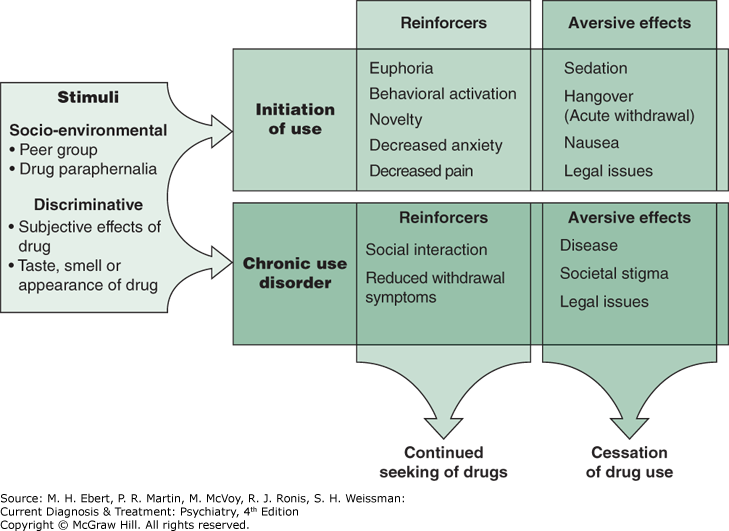 The characteristics of drug-seeking behaviors and how reinforcers and aversive effects differ between the initiation of drug use and chronic drug use disorder.
ii. Drug intoxication
Individual factors that affect the quality and magnitude of intoxication also influence drug reinforcement, and ultimately, the development of substance-use disorders. Among these are variables such as initial tolerance, previous experience with the drug, the social context of administration, and presence of disorders that affect CNS responses to the drug or disorders of other organs that determine the brain concentration of the drug. Direct adverse consequences of acute intoxication are predictable from the pharmacologic actions of the drug. For example, CNS depressants have a spectrum of dose-related effects from initial disinhibition at low doses to stupor and coma at higher doses. Similarly, CNS stimulants enhance arousal, attention, and performance at low doses but can lead to psychomotor agitation, psychotic disorganization, and convulsions at higher doses. Often the most serious consequences of these agents are indirect effects, namely, impaired performance or judgment, which can cause automobile or work-related accidents, drug-related violence, or unprotected sexual activity. Finally, the route of drug administration can greatly influence intoxication. For example, both intravenous administration and smoking result in rapid entry of the drug into the brain with intense but relatively short-lived euphoria; for highly reinforcing drugs (e.g., cocaine, opioids), this can result in compulsive use in a binge-like manner. Nasal insufflation, subcutaneous administration (“skin popping”), and oral ingestion result in relatively slower access to the drug’s site of action in the brain, with greater variability in drug bioavailability and less reinforcement.
iii. Neural mechanisms
Investigation of the neural pathways that mediate the powerful (positive) reinforcing effects of drugs of abuse have implicated dopamine, opioid, glutamate, and gamma-aminobutyric acid (GABA) systems within a midbrain-forebrain-extrapyramidal reward circuit with its focus in the nucleus accumbens. The connections of the ventral midbrain and forebrain, commonly called the medial forebrain bundle, are a major conduit for hypothalamic afferents and efferents and also support (more than any other brain region) the repeated self-administration of current through electrodes (an intracranial self-stimulation model of addiction). This system modulates, or filters, signals from the limbic system that mediate basic biological drives and motivational variables, convert emotion into motivated action and movement via the extrapyramidal system, and may also be the neuronal substrate for the rewarding effects of drugs of abuse. It has been hypothesized that the mesocorticolimbic dopamine system may be critical in motor arousal associated with the anticipation of reward, and that all addictive drugs have a psychostimulant (dopaminergic) action as a common underlying mechanism that contributes to reinforcement. Therefore, drugs of abuse activate neural pathways evolved to guide an organism through the challenges of the environment by reinforcing behavior essential for the survival of the species. If drugs of abuse are repeatedly administered, these reward circuits may cease to shape survival behavior effectively.
iv. Behavioral mechanisms
The effects of drugs that mediate their positive reinforcing influence are desirable changes in mood (euphoria), alleviation of negative affective states (e.g., anxiety, depression), functional enhancement (e.g., improved psychomotor or cognitive performance), and alleviation of withdrawal symptoms. It is difficult to understand why certain psychoactive drugs with profound aversive effects can nonetheless maintain drug-seeking behavior and have dependence liability. Aversive effects of drugs counteract the tendency toward self-administration and may limit drug use if they result in dose-dependent toxicity. For example, initial exposure to nicotine in the form of cigarettes often results in distressing symptoms, such as coughing, nausea, and lightheadedness, which may terminate smoking. Similarly, severe gastritis in the chronic alcoholic patient may result in attempts to cut down drinking or limit continued alcohol ingestion. It is now recognized that the stimulus properties of most drugs of abuse, a major determinant of drug-seeking behavior, are complex and multifaceted. Specifically, their pharmacologic profiles include both positive reinforcing and aversive components, and their effects are modified readily by associated environmental stimuli and individual differences among drug users.
If a drug is repeatedly administered under given circumstances (situation, time, place), environmental stimuli can become associated with effects of the drug by means of classical (Pavlovian) conditioning. Subsequently, the circumstances under which the drug was administered (without actual presentation of the drug) comprise certain environmental (conditioned) stimuli that can modify drug-seeking behavior, subjective state, or psychophysiologic responses (conditioned reinforcement). For example, patients who have abstained from intravenous heroin for many years can experience a desire to use heroin when they return to the location where they previously used or when they view a film that portrays others who are injecting drugs intravenously. Using positron emission tomography (PET), researchers have shown that in dependent patients, dopaminergic activation accompanies the presentation of relevant cues from the environment or the anticipation of drug (without its administration). Moreover, similar patterns of brain activation are demonstrable using functional magnetic resonance imaging (fMRI) when a subject is presented cues related to highly rewarding behaviors that do not involve drug self-administration, such as gambling, sexual activity, and food. The importance of conditioned stimuli in the response to drugs is also demonstrated readily in laboratory animals by tolerance after a drug is tested in an environment in which it was administered previously that is greater than in a distinctly different environment.
2. Neuroadaptation
Neuroadaptation refers to the neuronal changes and consequent clinical signs and symptoms that result from repeated drug administration independent of drug-seeking behavior or use-related organ damage. It encompasses the biological substrata of tolerance and physical (as opposed to psychological) dependence.
i. Tolerance
After repeated exposure to many psychopharmacologic agents, individuals require a larger dose to produce intoxication of the magnitude that was experienced when the drug was first administered. Conversely, less intoxication results from doses of the drug that were used initially. This phenomenon, called tolerance, is a pharmacologic characteristic shared by many of the substances of abuse considered in DSM (particularly the CNS depressants and the opioids). Tolerance allows and may encourage progressively greater doses to be self-administered. (After repeated exposure to CNS stimulants, reverse tolerance, or a greater pharmacologic effect, may be observed.) Tolerance is an adaptive physiologic response of the intact organism that opposes the pharmacologic effects of the drug. The mechanistic underpinnings reside in molecular changes at the cellular level and in interactions between the organ systems of the body. The components of tolerance include (1) increased capacity for clearance of a drug by metabolizing enzymes in the liver (pharmacokinetic or metabolic tolerance), (2) reduced response from the same drug concentration (functional or pharmacodynamic tolerance), and (3) accommodation to drug effects through learning (behavioral or learned tolerance). Tolerance to one CNS depressant usually results in some cross-tolerance to other (sometimes chemically unrelated) CNS depressants. Tolerance accelerates dose-related complications of drug use.
Acquired tolerance should be distinguished from sensitivity to a given drug on first administration and from acute tolerance that develops over the course of a single exposure to the drug. Differences in the population in initial or acute tolerance to a given drug are innate characteristics of the CNS that may influence individual vulnerability to the development of psychoactive substance-use disorders.
ii. Dependence
Traditionally, dependence refers to the neuronal changes (neuroadaptation) that develop after repeated exposure to a given agent, the clinical syndrome characterized by out-of-control drug use, and the serious biopsychosocial consequences that accompany these neuronal changes. At present, dependence can be defined only indirectly in terms of (1) the presence of tolerance or the emergence of a withdrawal syndrome (immediate and protracted) upon drug discontinuation (physical dependence) and (2) the craving or drug-seeking behavior manifested because of conditioned stimuli (psychological dependence). The dependence syndrome represents the elements of psychological dependence, including drug seeking and psychosocial consequences of drug use. Physical dependence usually develops in concert with tolerance, and controversy remains over whether physical dependence and tolerance are simply different manifestations of the same neuronal changes. The reacquisition of both tolerance and physical dependence are accelerated following repeated cycles of drug administration and withdrawal, suggesting certain similarities between these phenomena and learning and memory. Furthermore, the reinforcing and aversive effects of drugs may differ considerably at different stages in progression of a substance-use disorder (see Figure 16–1).
iii. Withdrawal
Upon discontinuation of chronic administration of many psychoactive agents (or administration of a specific antagonist), a withdrawal (abstinence) syndrome emerges as drug concentrations (or receptor occupancy) at the pharmacologic sites of action decline. This syndrome is characterized by a spectrum of signs and symptoms that are generally opposite to those of intoxication and whose severity is related to the cumulative dose (dosage and duration of administration). For example, withdrawal from CNS depressants results in CNS hyperexcitability, whereas withdrawal from psychostimulants causes CNS depression. For most drugs of abuse, the withdrawal syndrome also involves homeostatic responses. These represent reversal of the neuroadaptive changes that occurred with long-term drug administration, resulting in significant activation of the autonomic nervous system in the equivalent of a stress response.
iv. Cellular & molecular mechanisms of neuroadaptation
Advances in neuroscience, such as the development of specific receptor antagonists, electrophysiological and brain imaging techniques, and molecular methods to measure subtle cellular alterations including gene expression, have enhanced our fundamental understanding of neuroadaptation. Neuroadaptation can be conceptualized not only in terms of the intact organism (of relevance to understanding the clinical signs and symptoms of withdrawal), but also at the level of neuronal signal transduction, which can be studied in vitro and in animal models. Changes in synaptic membrane composition, receptor function, and post receptor intracellular events including gene regulation have all been proposed as the basis of neuroadaptation to psychoactive drugs of abuse. For example, acute alcohol exposure fluidizes cell membranes, but chronic alcohol exposure results in alterations in the lipid composition that render synaptic membranes more rigid and alters the environment and affinities of neurotransmitter receptors. The inhibition by cocaine of dopamine reuptake leads to increased intrasynaptic dopamine, subsequent depletion of presynaptic dopamine due to reduced synthesis of the neurotransmitter, and eventual upregulation (enhanced sensitivity) of postsynaptic dopamine receptors. Finally, in rats, chronic morphine administration increases G proteins, cyclic adenosine monophosphate–dependent protein kinase, and the phosphorylation of a number of proteins, including transcription factors which regulate gene expression. Emerging evidence points to such functional changes occurring specifically in neurons of the reward pathways following administration of many of the drugs of abuse, as well as natural reinforcers. Such a common pathway of responses is akin to the molecular-level alterations that occur during learning and memory. Keys to molecular changes during acute drug administration and during neuroadaptation have clear implications for the pharmacotherapy of alcohol/drug use disorders and withdrawal.
C. Genetics
The clinical features and course of alcohol use disorder have been studied more extensively than have those of other substance-use disorders. Alcohol use disorder provides a heuristically useful paradigm for understanding the genetic factors that contribute to the development of most substance-use disorders. In fact, recent studies show shared genetic factors associated with alcohol and other drug use disorders. As discussed earlier in this chapter, individual vulnerabilities to substance-use disorders span biological, psychological, and social domains. These domains are tightly interrelated and can influence one another, such that it may be difficult to unravel the role(s) of single variables. Furthermore, substance-use disorders in family members disrupt family life in countless ways, thereby affecting developmental processes in children within the family. It is not surprising, therefore, that higher than normal rates of alcohol or drug use disorders, as well as of other forms of psychopathology, exist among children of these families. In addition to these environmental factors, genetic factors also play a role in the familial predisposition to substance-use disorders. However, it is recognized that interactions of the genetic and environmental factors associated with substance-use disorders may be more important than either of these factors alone.
1. Inheritance of alcohol use disorder
Findings from twin and adoption studies demonstrate the relative contributions of genetic and environmental factors in predisposition to alcohol use disorder. For example, the concordance rate for severe alcohol use disorder is substantially higher in monozygotic (0.70) than dizygotic (0.33) twins, whereas concordance rates are no different for less severe forms of the disorder (0.8 for both monozygotic and dizygotic twins). Adoption studies show that adopted-away men with alcoholic biological parents have an increased likelihood of developing alcoholism regardless of whether they are raised in an alcoholic or nonalcoholic environment. In general, the severity of parental alcoholism tends to influence the prevalence of alcoholism in adopted-away sons; patients with the most severe alcoholism have the highest rates of alcohol use disorder in their offspring. These studies suggest that the relative contributions of environmental and genetic factors in development of alcoholism may vary with the severity or type of alcohol use disorder.
2. Heterogeneity of alcohol use disorder
As discussed earlier in this chapter, groups of alcoholic patients are heterogeneous. The challenge in genetic studies of alcohol use disorder has been to identify homogenous subgroups of alcoholic patients. Clearly defined phenotypes in patients (and their families) could then be studied in depth to identify predictors of etiology, longitudinal course, and response to treatment. One heuristically useful classification is based predominantly on age at onset of alcohol use disorder: onset after age 25 (type 1) and onset before age 25 (type 2). Reliably different clusters of alcohol-related problems and personality traits tend to occur with these two subtypes of alcohol use disorder. In general, patients with type 2 alcoholism are characterized by thrill seeking, impulsiveness, and aggressiveness, whereas those with type 1 alcoholism have a greater tendency to become anxious and depressed due to their drinking. Type 2 alcoholism tends to be more recalcitrant to treatment than is type 1 alcoholism.
Both genetic predisposition and an alcoholic rearing environment were required for adopted-away sons of fathers with type 1 alcoholism to express type 1 alcoholism. In contrast, adopted-away sons of fathers with type 2 alcoholism were significantly more likely to manifest this type of alcohol use disorder than were the offspring of fathers without type 2 alcoholism, whether or not they were raised in an alcoholic family. This observation indicates that the genetic loading for alcohol use disorder is influenced profoundly by the environment in the case of late-onset alcohol use disorder, whereas environmental background is relatively less important for early-onset alcoholism.
3. Women & addiction
There are distinct differences between the genders in the inheritance, clinical presentation, and the longitudinal course of alcohol use disorder. It is particularly important to understand alcohol use disorders in women because of the adverse effects of drinking on the developing fetus, and the disruptive effects of alcohol on the mother–child relationship. Both these consequences of alcohol consumption in women can perpetuate the transmission of alcohol use and other psychiatric disorders from one generation to the next via mechanisms that are not strictly genetic but rather environmental or epigenetic.
Women have lower rates of alcohol use disorder compared to men, although these rates are rising at a disquieting pace. Lower rates of alcohol use disorder result in part from the smaller amounts of alcohol consumed by women in general, for several psychosocial and biological reasons. Even though women start drinking later than men, they tend to develop, at about the same age as men, more serious physical complications. These observations suggest greater intrinsic toxicity of ethanol to the liver, brain, and possibly other organ systems of women compared to men. This “telescoping” of the clinical course in women is characteristic of the clinical courses of most other drug use disorders as well. Established gender-related differences in predisposition to co-occurring psychopathology (e.g., depression and somatic anxiety) may complicate and exacerbate alcohol use disorder. Daughters of fathers with type 1 alcoholism are at increased risk for alcoholism but not for other psychopathology; daughters of fathers with type 2 alcoholism are at higher risk only for somatization disorder.
4. Genetic factors in development of alcohol use disorder
Although genetic studies suggest that genetic factors are important contributors to the development of alcohol use disorder, the mechanisms involved are only now beginning to be elucidated. This is an exciting area of research, but its clinical relevance is not yet apparent. Because there is likely a complex cascade of events between the genetic underpinnings of alcohol use disorder and the eventual manifestation of symptoms, this clinical diagnosis is probably not the best phenotype for use in genetic analyses. A preferable phenotype for genetic analyses might be an intermediary measure of the neuropsychiatric functioning involved in the pathway between genotype and the outcome of interest (endophenotype). For example, it has been suggested that children of alcoholic fathers are less sensitive to the intoxicating effects of ethanol than are children of nonalcoholic fathers. Presumably, these children would have to drink more than would children of nonalcoholic fathers to become intoxicated and, thus, be more likely to develop alcohol use disorder. The abilities of researchers to match subjects retrospectively in terms of lifetime exposure to, and experience with, alcohol are important limitations of these studies. Such limitations can be overcome only by carefully conducted longitudinal investigations beginning in childhood. Early notions that difference in innate tolerance to ethanol or susceptibility to alcohol use disorder were based on differences in ethanol metabolism have not been firmly established. More recently, researchers have focused on molecular underpinnings of interindividual differences in, for example, the GABAA, mu-opioid, and glutamate receptor genotypes or brain biogenic amine metabolism as predisposing to development of alcohol use disorder. Specifically, considerable preclinical and human data implicate low brain serotonergic activity in stimulating alcohol consumption and in producing the aggressive and impulsive behavior often associated with type 2 alcoholism. In addition, an impaired ability to allocate significance to targeted stimuli, as manifested by reduced amplitude of the late positive component of event-related electroencephalographic (EEG) potential, has been identified in children of fathers with type 2 alcoholism and is considered a genetic factor predisposing to alcohol use disorder. Early-onset alcoholics may be more prone to develop brain damage because of alcohol consumption, or else they may be cognitively impaired before beginning drinking, especially with respect to attention and motor control. This line of reasoning is supported by relationships found between adult alcohol use disorder and early delays in motor development, suggesting that frontocerebellar deficits play a causal role. Of note, similar findings have been observed in individuals with all drug use disorders and in impulsive characteristics of behavioral addictions.
5. Inheritance of substance-use disorders other than alcoholism
It is unknown whether the genetic mechanisms that predispose individuals to alcohol use disorder also influence the development of other substance-use disorders. Common causality is suggested (though difficult to prove) because many (particularly younger) individuals tend to combine alcohol and other drugs of abuse, often indiscriminately.
The twin and adoption studies described earlier in this chapter provide guidelines for how to study this question in patients with other drug use disorders. For example, in one adoption study of genetic and environmental factors in drug use disorders, drug abuse in adult adoptees was associated in equivalent proportions with (1) antisocial personality in the adoptees, related to a biological background of antisocial personality; (2) no antisocial personality in the adoptees but with a biological background of alcoholism; and (3) neither antisocial personality nor alcoholism in either the adoptee or the biological background, but psychosocial factors such as divorce and psychiatric illness in the adopting family environment. Such studies show that interactions between genetic and environmental factors are as important in the development of other substance-use disorders as they are for alcoholism. A shared underlying mechanism seems most likely to involve endophenotypes related to attention, impulse control, executive functioning, related abnormalities of brain functioning, or the presence of, or vulnerability to, affective disorders, anxiety, or related psychopathology.
BevilacquaL, GoldmanD: Genetics of impulsive behaviour. Philos Trans R Soc B Biol Sci Royal Soc2013;368(1615):20120380.
KwakoLE, SchwandtML, RamchandaniVA, DiazgranadosN, KoobGF, VolkowND, BlancoC, GoldmanD: Neurofunctional domains derived from deep behavioral phenotyping in alcohol use disorder. Am J Psychiatry2019;176(9):744-753.
MartinPR: Gambling. Historical Vocabulary of Addiction. Cordoba, Argentina: INHN Publisher; 2021, pp. 90-96.
McLellanAT, KoobGF, VolkowND: Preaddiction—a missing concept for treating substance use disorders. JAMA Psychiatry2022;79((8):749-751.
VolkowND, MichaelidesM, BalerR: The neuroscience of drug reward and addiction. Physiol Rev2019;99(4):2115-2140.
Clinical Findings
A. Signs & Symptoms
1. Alcohol & Other CNS Depressants
i. Intoxication
Alcohol and other CNS depressant intoxication proceeds in stages that depend on dosage and time following administration. Apparent CNS stimulation, which occurs early in alcohol or CNS depressant intoxication or at low dosages, results from depression of inhibitory control mechanisms. The most sensitive parts of the brain are the polysynaptic structures of the reticular activating system and the cortex, depression of which causes euphoria and dulling of performance that depends on training and previous experience. Excitation resulting from intoxication is characterized by increased activity, verbal communication, and often aggression (Table 16–3). Euphoric feelings or calming effects are typically the expressed reason for drug self-administration. Higher blood concentrations of alcohol or other CNS depressants cause mild impairment of motor skills and slowing of reaction time, followed by sedation, decreased motor coordination, impaired judgment, diminished memory and other cognitive deficits, and eventually diminished psychomotor activity and sleep. At still higher concentrations, alcohol and most CNS depressants can induce stupor, and ultimately coma and death, by progressive depression of midbrain functions and interference with spinal reflexes, temperature regulation, and the medullary centers controlling cardiorespiratory functions. Death due to benzodiazepine overdose is very unlikely unless combined with alcohol or other CNS depressants.
Table 16–3 Signs and Symptoms of CNS Depressant Intoxication and Withdrawal
Intoxication | Withdrawal |
|---|---|
Anxiolysis Disinhibition (e.g., inappropriate sexual or aggressive behavior, impaired judgment, mood liability) Somnolence, stupor, or coma Impaired attention or memory Slurred speech Incoordination Unsteady gait Nystagmus | Anxiety or psychomotor agitation Tremor Insomnia Autonomic hyperactivity (e.g., tachycardia, hypertension, sweating, hyperthermia, arrhythmia) Craving Sensory distortions or hallucinations (e.g., transient visual, tactile, or auditory) Nausea or vomiting Seizures Delirium |
The dose–response curve of ethanol has been studied in greater depth than has any other CNS depressant. Sensitivity to alcohol intoxication varies widely within the population. For example, at blood ethanol concentrations of 50, 100–150, and 200 mg/100 mL, it is estimated that approximately 10%, 64%, and almost all of the general population, respectively, would be overtly intoxicated. In contrast, at a blood ethanol concentration of 300 mg/100 mL, some alcoholic individuals may appear only mildly intoxicated even though their psychomotor performance and judgment are impaired significantly. According to the Council of Scientific Affairs of the American Medical Association, blood alcohol concentrations of 60, 100, and 150 mg/100 mL increase an individual’s relative probability of causing an automobile accident 2-, 6-, and 25-fold, respectively. Legal limits of blood ethanol concentration for automobile drivers are 80 mg/100 mL (the term in common use is 0.08) for most states in the United States and in most countries in Western Europe, and between 0 and 50 mg/100 mL for Scandinavian and Eastern European countries. There is ongoing pressure to lower levels of legal impairment in many states in the United States.
ii. Drug-seeking behavior
The classic sedative–hypnotic actions of ethanol, barbiturates, and benzodiazepines correlate well with their shared ability to modulate GABA-induced chloride anion fluxes in vitro. However, the ability of alcohol to interact with a number of different receptor types, including inhibiting subtypes of NMDA receptors that mediate long-term potentiation and cannabinoid receptors, implicated in reward learning, appetite regulation, mood regulation, pain modulation, and cognition, suggests that our understanding of the mechanisms of action of CNS depressant drugs remains incomplete. These drugs can act as anxiolytics; however, benzodiazepines are unique among CNS depressants because of their ability to reduce anxiety while causing relatively little sedation. It is believed that the reinforcing actions and abuse potential of CNS depressants reside primarily in their anxiolytic and tension-reducing properties. In animal models, established GABA efferents from the nucleus accumbens to the substantia innominata–ventral pallidum can influence the expression of cocaine- or opioid-induced behavioral stimulation. This may explain why alcohol and other CNS depressants are often used by addicted individuals along with cocaine or opioids.
iii. Neuroadaptation
Adaptive neuronal changes resulting from the continued presence of alcohol or other CNS depressants involve a decrease in inhibitory functions of the nervous system. Although the molecular basis of such neuronal adaptation has not been elucidated fully, the clinical consequences are well characterized and include the development of tolerance and dependence, which usually proceed in parallel. Although pharmacokinetic differences among CNS depressants may alter the duration of time the agent is present at its site of pharmacologic action, and subtle molecular differences may influence the precise interactions of the different agents with their binding site(s) and the neuronal receptors occupied, the neuroadaptive changes that eventually result from chronic ingestion of alcohol, benzodiazepines, barbiturates, or nonbarbiturate hypnosedatives are for practical purposes much the same.
The development of tolerance to, and dependence on, CNS depressants can occur after only a few days of repeated ingestion. As with all drugs, tolerance and dependence are determined by dosage and frequency of use. For example, a drug dosage that initially caused sedation and anxiolysis may in time be insufficient to induce sleep or reduce anxiety; thus, higher dosages are needed to attain these therapeutic goals. Tolerance may not develop at the same rate to all actions of a CNS depressant. For example, whereas sedation usually diminishes after the first few days of treatment with most benzodiazepines, anxiolytic effects may persist for months without a need to increase the dosage. Euphoric effects may not be as predictable, which can cause rapid increases in dosage if the drug is being self-administered for this purpose. In general, for alcohol and other CNS depressants there is no marked elevation of the lethal dosage with repeated use, and respiratory depression may be superimposed on chronic consumption after a severe, acute overdose.
iv. Withdrawal
Cessation of alcohol or CNS depressant intake after prolonged use is associated with a syndrome of neuronal hyperexcitability with increased noradrenergic and adrenocortical activity. This syndrome is initially characterized by anxiety, apprehension, restlessness, irritability, and insomnia with clinically apparent tremors and hyperreflexia (see Table 16–3). Moderately severe cases progress to signs of autonomic hyperactivity with tachycardia, hypertension, diaphoresis, hyperthermia, and muscle fasciculations. Often patients experience anorexia, nausea, or vomiting with subsequent dehydration and electrolyte disturbances. Paroxysmal EEG discharges may precede generalized tonic–clonic seizure activity. The most severe cases develop delirium (agitation, disorientation, fluctuating level of consciousness, visual and auditory hallucinations, and intense autonomic arousal).
Among the CNS depressants, the most severe and potentially dangerous withdrawal syndrome results from barbiturates and nonbarbiturate hypnosedatives; alcohol withdrawal is of intermediate severity; and withdrawal from benzodiazepines poses the least risk. The onset, severity, and duration of the withdrawal syndrome in a given class of CNS depressants are determined by the rate of elimination of the drug and its metabolites from the body. In the alcohol withdrawal syndrome, generalized tonic–clonic seizures typically occur 12–48 hours after the last drink, and delirium tremens begins at 48–72 hours. The signs of acute alcohol withdrawal typically abate by 3–5 days after the last drink, but subtle brain abnormalities may persist for an undetermined period. Among the barbiturates, nonbarbiturate hypnosedatives, and benzodiazepines, withdrawal usually begins within 12 hours and is most severe for rapidly eliminated compounds (e.g., amobarbital, methyprylon, triazolam). For slowly metabolized compounds (e.g., phenobarbital, diazepam, clonazepam), the syndrome may be delayed for several days after drug discontinuation. More protracted effects of withdrawal from CNS depressants have not been well studied, but residual problems related to cognitive impairment, anxiety and depressive symptoms, and insomnia has emerged as an area of concern.
2. Stimulants: Cocaine & Amphetamines
i. Intoxication
The main clinically relevant pharmacologic action of cocaine and amphetamine-related stimulants is the blockade of reuptake of the catecholamine neurotransmitters norepinephrine and dopamine. The consequences of noradrenergic reuptake blockade include tachycardia, hypertension, vasoconstriction, mydriasis, diaphoresis, and tremor. The effects of dopamine reuptake blockade include self-stimulation, anorexia, stereotyped movements, hyperactivity, and sexual excitement. As a result, many of the signs and symptoms of cocaine and amphetamine intoxication are similar (Table 16–4). CNS stimulation and a subjective “high” are accompanied by an increased sense of energy, psychomotor agitation, and autonomic arousal.
Table 16–4 Signs and Symptoms of Stimulant Intoxication and Withdrawal
Intoxication | Withdrawal |
|---|---|
Stimulation (euphoria, hypervigilance, anxiety, tension, anger, impaired judgment) Psychomotor agitation (stereotyped behaviors, dyskinesias, dystonias) Energy (decreased need for sleep) Anorexia (nausea or vomiting, weight loss) Autonomic arousal (tachycardia, hypertension, pupillary dilation, perspiration, or chills) Chest pain, cardiac arrhythmias, respiratory depression Confusion Seizures | Depression (dysphoria) Psychomotor retardation Fatigue (increased need for sleep) Increased appetite Craving |
The psychoactive effects of most amphetamine-like substances last longer than those of cocaine. Furthermore, because cocaine has local anesthetic actions, the risk of its causing severe medical complications such as cardiac arrhythmia and seizures is greater than for amphetamine-like stimulants. Amphetamine-related compounds therefore remain popular in the stimulant-abusing population.
ii. Drug-seeking behavior
The most striking pharmacologic characteristic of cocaine is its tremendous reinforcing effect. Women who are cocaine dependent have higher rates of primary major depression than do cocaine-dependent men, consistent with drug use as a form of self-medication. Men with cocaine dependence have higher rates of co-occurring antisocial personality disorder than do cocaine-dependent women. Studies in animal models have shown that animals will self-administer cocaine in preference to food, leading to emaciation and death (in contrast to other highly reinforcing agents such as opioids). Dopamine seems to be the main neurotransmitter involved in the positive reinforcement of cocaine.
iii. Neuroadaptation
Although not well understood, neuroadaptation appears to occur in response to chronic stimulant use. Users develop acute tolerance to the subjective effects of cocaine, which can play a major role in dose escalation and subsequent toxicity. Sensitization appears to play a role in cocaine-induced panic attacks, paranoia, and lethality.
iv. Withdrawal
In humans, discontinuation of cocaine leads to dysphoria (a “crash”). Hypersomnolence and anergia are also common (see Table 16–4). In rats, termination of repeated cocaine administration produces interoceptive stimuli that are similar to the discriminative stimulus effects of pentetrazol, a drug that is anxiogenic in humans. As a result, the typical cycle of use consists of binges, each followed by a “crash” (lasting 9 hours to 4 days), followed by withdrawal (lasting 1–10 weeks), during which craving and relapse are common.
3. Opioids
i. Intoxication
The characteristic pharmacologic action of opioids is analgesia. Centrally, opioids are activating at low dosages and sedating at higher dosages. Other major features of intoxication are feelings of euphoria or dysphoria, feelings of warmth, facial flushing, itchy face, dry mouth, and pupil constriction (Table 16–5). Intravenous use can cause lower abdominal sensations described as an orgasm-like “rush.” This is followed by a feeling of sedation (called the “nod”) and dreaming. Severe intoxication may cause respiratory suppression, areflexia, hypotension, tachycardia, apnea, cyanosis, and death.
Table 16–5 Signs and Symptoms of Opioid Intoxication and Withdrawal
Intoxication | Withdrawal |
|---|---|
Activation or “rush” (early or with low dosages) and sedation/apathy or “nod” (late or with high dosages) Euphoria or dysphoria Feelings of warmth, facial flushing, or itching Impaired judgment, attention, or memory Analgesia Constipation Pupillary constriction Drowsiness Respiratory depression, areflexia, hypotension, tachycardia Apnea, cyanosis, coma | Depressed mood and anxiety Dysphoria Craving Piloerection (“goose flesh”) Lacrimation or rhinorrhea Hyperalgesia, joint and muscle aches Diarrhea and gastrointestinal cramping, nausea, or vomiting Pupillary dilation and photophobia Insomnia Autonomic hyperactivity (e.g., tachypnea, hyperreflexia, tachycardia, hypertension, sweating, hyperthermia) Yawning |
ii. Drug-seeking behavior
Addiction to opioids (particularly heroin) can be severe and often leads individuals to dysfunctional behavior to support their habit. Animals tend to repeat opioid self-administration and prolong its effects.
Self-administered opioid compounds affect the endogenous opioid systems of the body. Endogenous opioid peptides are distributed throughout the brain and form three major functional systems defined by their precursor molecules: β-endorphin from pro-opiomelanocortin, enkephalins from proenkephalin, and dynorphin from prodynorphin. Endogenous opioids modulate nociceptive responses to painful stimuli, stressors, reward, and homeostatic adaptive functions (hunger, thirst, and temperature regulation). Rats will self-administer opioid peptides into the ventral tegmental area and nucleus accumbens, suggesting that these regions may be responsible, at least in part, for the reinforcing properties of opioids (and cocaine). Other regions supporting rewarding effects for opioids are the hippocampus and hypothalamus. Endogenous opioid tone contributes to the maintenance of normal mood and a nondopaminergic system of opioid reward.
There are three main types of opioid receptor: μ, δ, and κ. These G protein–coupled proteins inhibit adenylyl cyclases in various tissues and cause their pharmacologic actions by reducing cyclic adenosine monophosphate (cAMP) levels. The μ-opioid receptor appears to be important for the reinforcing actions of opioids, whereas the δ-opioid receptor may play a role in the opioid motor stimulation that is dopamine (D1 receptor) dependent. Like other substances of abuse, opioids can increase dopamine release in the nucleus accumbens as measured by in vivo microdialysis in awake, freely moving animals; however, the reinforcing effect of opioids in the nucleus accumbens can be independent of dopamine release. The reinforcing actions of opioids may involve both a dopamine-dependent (i.e., ventral tegmental area) and a dopamine-independent (nucleus accumbens) mechanism.
iii. Neuroadaptation
Neuroadaptation occurs in response to regular opioid use. For example, when chronically abused by humans, heroin rapidly loses its aversive properties and increases its reinforcing ones. The tolerance that develops when opioids are administered repeatedly appears to be receptor selective. It has been theorized that μ receptors couple less well to G proteins in rat locus coeruleus neurons that have been chronically treated with morphine. Tolerance occurs both to specific opioid effects such as analgesia and motor inhibition and to the generally depressant properties of opioids, whereas the psychomotor effects are potentiated.
iv. Withdrawal
Withdrawal of opioids is characterized by hyperalgesia, photophobia, goose flesh, diarrhea, tachycardia, increased blood pressure, gastrointestinal cramps, joint and muscle aches, and anxiety and depressed mood (see Table 16–5). Spontaneous withdrawal results in intense craving because of the reduction of dopamine release in the nucleus accumbens, but the degree of physical dependence does not predict the severity of craving. The motivational (affective) properties of withdrawal are independent of the intensity and pattern of the physical symptoms. Because opioids can counteract withdrawal dysphoria and the reduction of dopaminergic transmission, these changes may contribute to maintenance of opioid addiction. This intense need to continue using opioids makes individuals particularly vulnerable to high potency synthetic opioids such as fentanyl that are now readily available and are responsible for most drug overdose deaths in the United States.
4. Cannabinoids
i. Intoxication
The subjective effect of marijuana intoxication varies from individual to individual. It is determined in part by highly variable pharmacokinetics, dosage, route of administration, setting, experience and expectation, and individual vulnerability to certain psychotoxic effects. Typically, intoxication is characterized by an initial period of “high” that has been described as a sense of well-being and happiness (Table 16–6). This euphoria is followed frequently by a period of drowsiness or sedation. The perception of time is altered, and hearing and vision distorted. The subjective effects of intoxication often include dissociative reactions. Impaired functioning occurs in a variety of cognitive and performance tasks, including memory, reaction time, concept formation, learning, perception, motor coordination, attention, and signal detection. At dosages equivalent to one or two “joints” (marijuana cigarettes), processes involved in the operation of motor vehicles or airplanes are impaired. The impairment persists for 4–8 hours, long after the user perceives the subjective effects of the drug. The impairment produced by alcohol is additive to that produced by marijuana. Tolerant individuals may exhibit somewhat less performance decrement.
Table 16–6 Signs and Symptoms of Cannabis Intoxication and Withdrawal
Intoxication | Withdrawal |
|---|---|
Euphoria, drowsiness, or sedation Sensation of slowed time Auditory or visual distortions, dissociation Impaired judgment, motor coordination, attention, or memory Slowed reaction time Conjunctival injection Tachycardia Increased appetite Anxiety, acute panic reactions, paranoia, illusions, or agitation | Insomnia, irritability, dysphoria, aggressiveness Depression/craving Strange, vivid dreams Tremor/shakiness, muscle twitches Headache Mild fever, chills Anorexia, nausea, weight loss |
Physically, dilation of conjunctival blood vessels and tachycardia may be noted. Blood pressure remains relatively unchanged unless high dosages are used, in which case orthostatic hypotension ensues. Increased appetite is often attributed to marijuana but has not been observed consistently in controlled studies. At higher dosages, acute panic reactions, paranoia, hallucinations, illusions, thought disorganization, and agitation have been observed. With extremely high dosages, an acute toxic psychosis is accompanied by depersonalization and loss of insight.
ii. Drug-seeking behavior
In chronic cannabinoid users, the degree of drug-seeking behaviors and if a use disorder may result are controversial in part because of the long-lasting biological effects of these highly lipid-soluble drugs. In some patients, drug-seeking behavior appears to be manifested primarily as drug craving. The psychological and physiologic mechanisms underpinning this craving are not understood. Laboratory animals do not self-administer the drug. The recognition and characterization of the endogenous cannabinoid system has led to important advances in our understanding of cannabinoid the degree of drug-seeking behaviors and if a use disorder may result. Moreover, there is a growing body of evidence that the endogenous cannabinoid system may contribute to psychopathologic states such as anxiety, depression and psychosis and might participate in the motivational and dopamine-releasing effects of several drugs of abuse other than cannabinoids. Finally, chronic cannabinoid use has increasingly become associated with enduring psychotic illnesses and panic disorder even after drug use has ceased.
iii. Neuroadaptation
Neuroadaptation in response to cannabinoid use has been more difficult to document than in some of the other drugs of abuse. Tolerance to cannabinoids appears to develop in animals and in humans, although it does not seem to be as profound as with some other drugs. It occurs mostly with heavy use. Chronic use of exogenous cannabinoids activates the same receptors as do endogenous cannabinoids, the CB1 and CB2 cannabinoid receptors. These G protein–coupled receptors play an important role in many processes, including metabolic regulation, craving, pain, anxiety, mood, bone growth, and immune function. The functioning of cannabinoid receptors can now be studied directly using agonists or antagonists, or indirectly by manipulating endocannabinoid metabolism, and this will likely help elucidate processes of neuroadaptation and other physiological effects of cannabinoids.
iv. Withdrawal
Cannabinoid withdrawal does not produce well-characterized withdrawal symptoms, perhaps because cannabinoids are so lipophilic that they are very slowly eliminated from the body. The DSM-5 is the first version of DSM to include cannabis withdrawal because converging evidence from basic laboratory and clinical studies indicates that a withdrawal syndrome consistently follows discontinuation of chronic heavy use of cannabis, or treatment with cannabinoid receptor antagonists. Some patients report insomnia, vivid or strange dreams, irritability, dysphoria, aggressiveness, depression/cravings, anorexia, weight loss, hand tremor/shakiness, mild fever/chills, or slight nausea with discontinuation of use. These symptoms occur primarily in patients who smoke very potent preparations.
5. Tobacco
i. Intoxication
Tobacco intoxication is not a DSM-5-TR diagnosis. However, smoking or chewing tobacco has multiple effects via its main psychoactive substituent nicotine. For example, many users report improved mood, skeletal muscle relaxation, and diminished anxiety and appetite. In addition, cognitive effects including enhanced attention, problem solving, learning, and memory have been reported.
ii. Drug-seeking behavior
Users of tobacco products frequently exhibit substance-seeking behavior. Smokers often describe strong cravings for tobacco, especially in particular situations such as after eating or while experiencing stress. The degree of craving differs among individuals, and the ability to discontinue tobacco products varies greatly.
iii. Neuroadaptation
Nicotine is thought to be the chief substance in tobacco that causes neuroadaptation. Tolerance to nicotine has been shown in both laboratory animals and humans. Dependence is indicated by the difficulty of discontinuing use of nicotine products due to withdrawal symptoms and particularly, intense cravings, despite a desire to quit.
The primary pharmacologic actions of nicotine appear to occur via nicotine binding to acetylcholine receptors in the brain and autonomic ganglia. Several subtypes of nicotinic cholinergic receptors are found in the CNS. Activation of these receptors appears to cause the reinforcing effects and diminished appetite associated with nicotine. Some of the reinforcing actions of nicotine may be due to the effects of nicotine on dopamine pathways projecting from the ventral tegmental area to the limbic system and the cerebral cortex. Stimulation of peripheral nicotine receptors causes many of the autonomic effects associated with nicotine use. Short-term use of tobacco appears to increase cerebral blood flow, whereas long-term use has the opposite effect. Aspects of neuroadaptation to nicotine may also be secondary to release of hormones such as β-endorphin, adrenocorticotropic hormone, cortisol, epinephrine, norepinephrine, endocannabinoids, and vasopressin.
iv. Withdrawal
Withdrawal symptoms often occur with abrupt discontinuation of nicotine intake: craving, anxiety, depression, irritability, headaches, poor concentration, sleep disturbances, elevated blood pressure, and increased heart rate. In some cases, craving lasts for years under appropriate circumstances. Management of withdrawal symptoms behaviorally or pharmacologically has been used to prevent relapses in those trying to quit smoking.
6. Hallucinogens & Volatile Inhalants
i. Intoxication
Intoxication with hallucinogens causes effects that vary greatly and may last 8–12 hours. Flashbacks are possible after termination of use (Table 16–7). The cardinal features of hallucinogen intoxication include visual hallucinations and disturbance of thoughts and perception in multiple sensory modalities. These features can lead to devastating consequences if they occur in dangerous situations (e.g., when driving or standing in precarious areas such as on a balcony). Other features include sensory changes (e.g., colors, shapes), synesthesia (the perception in one modality when a different modality has been stimulated), delusions, paranoia, derealization, depersonalization, cognitive impairment, coordination problems, behavioral changes, euphoria (or dysphoria), nausea, tremors, time distortion, dizziness, weakness, and giddiness. A “bad trip” involves striking dysphoria and sensory disturbances. Visual hallucinations with perception of various light patterns, and incorrect movement perception or object recognition have been reported. Augmented sensory perception (particularly tactile), which can be pleasurable (thus the term “ecstasy” for MDMA), often occurs with methamphetamine use. Other symptoms such as ataxia, dizziness, nausea, perspiration, and bruxism can occur with use. Many complications are related to hallucinogen use (e.g., panic reactions, seizures, exacerbation of psychiatric illnesses). Suicidal or homicidal tendencies may be enhanced. There is emerging clinical research of psychedelic medications under highly controlled circumstances for treatment of depression, drug use disorders and posttraumatic stress disorder, among other psychiatric conditions.
Table 16–7 Signs and Symptoms of Hallucinogen Intoxication
Marked anxiety or depression |
Perceptual changes (e.g., intense perceptions, depersonalization, derealization, illusions, hallucinations, synesthesias) |
Thought disorders (e.g., ideas of reference, paranoia, impaired reality testing) |
Impaired judgment |
Autonomic arousal (e.g., pupillary dilation, tachycardia, sweating, palpitations, blurring of vision) |
Motor impairment (ataxia, tremors, incoordination, nystagmus) |
Anticholinergic drugs of abuse include antihistamines and the belladonna alkaloids such as scopolamine and atropine. Anticholinergic drugs are characterized by “dreamlike” states, feelings of euphoria, heightened social interaction, and sedation. At high dosages, disorientation or paranoia may occur. These substances are sometimes used with mild opioids (called “Juice and Beans” or “T’s and Blues” on the streets) to enhance the euphoric effect.
Arylcyclohexylamines, such as PCP (phencyclidine), act as dissociative anesthetics. A closely related agent ketamine has received much recent interest for its rapidly acting antidepressant effects. Behavioral alterations of PCP may include paranoia, mood shift, agitation, catalepsy, and violence. PCP may be smoked, snorted, or injected. It causes reddening of the skin, pupillary changes, dissociation, delusions, amnesia, dry skin, dizziness, poor coordination, excitement, and nystagmus. Increased blood pressure and tachycardia may also occur.
Intoxication by volatile inhalants generally lasts only several minutes. Confusion, sedation, and euphoria may often result from use. Physical effects include analgesia, respiratory depression, hypotension, and ataxia. Nitrous oxide is associated with euphoria and laughter (“laughing gas”).
ii. Drug-seeking behavior
Psychedelic substances do not typically cause a use disorder, and regular use is not common. Animals generally do not self-administer these drugs (except for MDMA-like compounds), and frequent users generally do not report craving. Tolerance to LSD occurs after only days of use; however, the intoxicating effects return after a few days without use. Other indolamines are cross-tolerant with LSD, but the phenylethylamine hallucinogens are not. Tolerance to anticholinergic drugs can also occur but usually requires prolonged use.
iii. Neuroadaptation
Little is known about neuroadaptation to the actions of hallucinogens. Phenylalkylamines and indolamines are serotonin receptor agonists, which probably relates to their clinical effects. Phosphatidylinositol hydrolysis is stimulated after receptor binding and leads to enhanced excitability of certain neurons in the limbic system, cerebral cortex, and brainstem.
The phenylisopropylamines inhibit reuptake of catecholamine and indolamine neurotransmitters and may be transported into serotonin neurons. It is hypothesized that the serotonergic action of these drugs accounts for their hallucinogenic effects (as with other hallucinogens), whereas the effect on catecholamines causes arousal.
Anticholinergic drugs such as scopolamine and atropine act as antagonists of muscarinic receptors. These receptors are found in the cerebral cortex, and several subtypes have been reported. Stimulation may excite or inhibit neuronal activity including effects on serotonin receptors.
Arylcyclohexylamines, such as PCP, act as antagonists to the N-methyl-D-aspartate class of glutamate receptors, which are themselves ion channels. PCP also binds to σ-type opioid receptors and inhibits catecholamine reuptake.
iv. Withdrawal
Withdrawal symptoms are not common with these drugs; however, the anticholinergic substances may cause tachycardia, sweating, depression, anxiety, or psychomotor agitation after use has been discontinued.
B. Psychological Testing
Alcohol and other substances of abuse can cause both transient and enduring damage to the brain. Neuropsychological testing is important in the overall assessment of some patients with substance-related disorders. Most of these tests are readily available, noninvasive, and inexpensive. They require the full participation of the patient; therefore, they may not be as objective as blood chemistries or radiologic procedures. Neuropsychological tests are preferably conducted at least 3 weeks after the most recent substance use so that lasting brain dysfunction can be detected. Although these tests are useful, many factors influence them, including medication, co-occurring medical conditions or psychiatric disorder, and compliance with testing.
Intelligence tests such as the Wechsler Adult Intelligence Scale (WAIS) are useful in determining the patient’s global behavioral and adaptive potential. The WAIS is predictive of the patient’s likely success in activities such as work and school. Other intelligence tests may be more appropriate for specific patient populations. Different aspects of cognition may be evaluated by specific tests. For example, the Wechsler Memory Scale is useful for patients who have possible substance-induced memory impairment.
Neuropsychological batteries such as the Halstead-Reitan Neuropsychological Test Battery and the Luria-Nebraska Neuropsychological Battery can provide comprehensive information about many aspects of brain functioning. In alcoholic patients, the Halstead-Reitan Battery frequently reveals impairment on many of the individual tests such as Tactual Performance, Categories (visual–spatial abstracting), Trails B (perceptual motor speed), and Tactual Performance Test-Location (incidental memory for spatial relationships).
Some assessment tools have been developed for evaluation of presence of harmful substance use (as opposed to possible causes or consequences thereof). One of the major difficulties in using such measures is in distinguishing use from use disorder. The four-question CAGE assessment is used to screen patients for alcoholism. CAGE stands for an acronym reflecting (1) the subjective need to cut down, (2) being annoyed at other people when they comment on one’s drinking, (3) feelings of guilt over use, and (4) the need for an “eye opener.” Generally, two out of four yes answers are considered positive. Sensitivity and specificity are high for most populations. The more complex Michigan Alcoholism Screening Test (MAST) is often used in the assessment of alcohol intake and the consequences of consumption. It has 25 differentially weighted items in a true–false format. Sensitivity, specificity, and validity testing have all been favorable. Shorter 10- and 13-item forms are available with reasonably good validity. A reliable test of the consumption and consequences of drug use disorders is the Drug Abuse Screening Test (DAST). It has 28 items (unlike the MAST, not differentially weighted), in a true–false format. Another useful instrument is the Alcohol Dependence Scale. This scale has 25 multiple-choice items and is concerned primarily with the loss of ability to control drinking.
Because co-occurring psychiatric illnesses and social difficulties are common in those who have substance use disorder, other psychological tests may be of value in certain patients. An example is the Addiction Severity Index (ASI), a semistructured interview designed to address seven problem areas in patients who use substances: medical status, employment and support, drug use, alcohol use, legal status, family/social status, and psychiatric status. The ASI provides an overview of recent (past 30 days) and lifetime problems related to substance use. The Minnesota Multiphasic Personality Inventory, a commonly used assessment tool with more than 500 items (with results formatted into 10 clinical scales and 3 validity scales), provides typical personality profiles for substance-use disorder patients. (See also Chapter 6, Psychological and Neuropsychological Assessment.)
C. Laboratory Findings
Several laboratory findings are of use in the evaluation and care of substance-use disorder patients. Urine drug screens and blood alcohol levels provide objective information as to what drugs are in the patient’s system, at what concentration. The relative degree of intoxication or withdrawal at specific drug levels can provide clues as to the patient’s level of tolerance and dependence. A complete evaluation considers whether particular drugs are detectable in urine and the length of time that they are detectable. This will vary according to many factors, including dosage, duration of use, and individual metabolic and renal clearance rates. Average upper limits on urine detection times are provided in Table 16–8.
Table 16–8 The Upper Limit of Urine Detection
Drug | Limit |
|---|---|
Alcohol | 12 hours |
Amphetamine | 2 days |
Cannabis | 4 weeks |
Cocaine | 8 hours (4 days for metabolites) |
Opioids | 3 days |
Phencyclidine (PCP) | 8 days |
Benzodiazepines | 3 days |
Barbiturates | 1 day (short-acting); 3 weeks (long-acting) |
Codeine | 2 days |
Many other blood chemistries are useful. The acute toxic effects of alcohol on the liver are evaluated with liver function tests, such as AST (Aspartate Aminotransferase) and ALT (Alanine aminotransferase). GGT (γ-glutamyl transpeptidase) was considered the most sensitive monitor of ongoing alcohol consumption until superseded by carbohydrate-deficient transferrin (CDT) and phosphatidylethanol (PEth) as markers for monitoring abstinence. Alcohol-induced hepatitis classically presents with a AST:ALT ratio of about 2:1. Viral hepatitis screens can help differentiate causes of abnormalities in hepatic function. Severe chronic liver dysfunction is reflected by impaired synthetic function, malnutrition and impaired hemostasis. Serum amylase is valuable in the detection of pancreatitis. A complete blood cell count can monitor bone marrow functioning: mild, macrocytic anemia is often observed in alcohol use disorder patients. Low potassium and bicarbonate are consistent with drug-related diarrhea. Chloride deficiencies are associated with chronic vomiting. Although total body stores of magnesium may be difficult to assess, alcohol-induced magnesium wasting can lead to detectable extracellular deficiencies. Protein, albumin, elevated international normalized ratio (INR), potassium, and phosphorus are helpful indicators of nutritional status.
D. Neuroimaging
Intellectual impairment is perhaps the earliest complication of chronic alcoholism. It is difficult to determine whether subtle neuropsychological impairments are consequences of chronic alcohol consumption. Computed tomography or magnetic resonance imaging studies of patients with 2–36 weeks of abstinence have shown that a large proportion of alcoholic patients have detectable cerebral and cerebellar atrophy and ventricular dilation. Recently, functional measures of brain activity have corroborated these neuroanatomic findings.
E. Course of Illness
1. Alcohol & other CNS depressants
The CNS depressants include brewed or distilled alcoholic beverages and various pharmaceutical agents prescribed for the treatment of insomnia, anxiety, depression, and, less frequently, for seizure control or as muscle relaxants. No CNS depressant (e.g., alprazolam, zolpidem, eszopiclone, zaleplon) has been developed that is totally free of abuse liability and the potential for a withdrawal syndrome, problems shared with alcoholic beverages.
Alcoholic beverages are readily available at affordable cost with minimal legal restrictions. Accordingly, there is widespread use of alcohol in diverse recreational and work-related circumstances, and traumatic injuries sustained while under the influence of elevated blood alcohol are among the most common public health problems today. Youngsters with little experience with drinking are particularly vulnerable as they first begin to participate in high-risk activities such as sports, sexuality, and driving. Heavy drinkers, who often have blood alcohol concentrations that impair judgment and motor skills or use other drugs in combination with alcohol, are particularly at risk for alcohol-related violence, traumatic injury, and death.
The benzodiazepines are currently (as barbiturates were previously) among the most widely prescribed and often misused medications for insomnia, anxiety and nonspecific physical symptoms. With continued use, individuals develop tolerance and need higher doses to achieve symptomatic relief. If the physician does not educate the patient and provide careful prescription monitoring and assist in tapering the prescribed dose, the patient may eventually receive high doses of these medications with attendant side effects such as mood disorder, cognitive dysfunction, social difficulties, impaired work performance, and traumatic injury due to falls or vehicular accidents. The term benzodiazepine-induced neurological dysfunction (BIND) has recently been coined to represent a constellation of functionally limiting neurologic symptoms (both physical and psychological) that are the consequence of neuroadaptation and/or neurotoxicity to benzodiazepine exposure. Additional problems may develop when a patient combines alcohol, other psychoactive medications, or illicit drugs (e.g., marijuana, opioids) with the prescribed dose of CNS depressant, seeks other physicians to provide additional prescriptions (so-called doctor shopping), or engages in illegal activities such as forging prescriptions. The combination of alcohol with other CNS depressants greatly increases the risk associated with its use and is a common clinical cause of severe drug overdose. Cessation of drug use leads to undesirable, and potentially harmful, withdrawal symptoms (such as seizures). Thus, drug-seeking behavior and repeated drug use are often continued to prevent these effects. Fulminant withdrawal occasionally occurs in patients who discontinue CNS depressant use because of illness or other unforeseen circumstances such as hospitalization for a motor vehicle accident.
2. Stimulants: cocaine & amphetamines
The alkaloid cocaine is derived from Erythroxylum coca, a plant indigenous to South America, where since time immemorial its leaves have been chewed for their stimulating effects. Because the only contemporary medical use for cocaine is as a local anesthetic, the drug is almost always purchased illegally by users. Amphetamine and amphetamine-like stimulants may be obtained by prescription for the treatment of obesity, attention-deficit/hyperactivity disorder, and narcolepsy. As a result, prescribed stimulants are commonly diverted into the illegal market. An epidemic of cocaine use started in the late 1970s, preceded by a period in which it was thought not to be particularly dangerous. Cocaine’s significant dependence liability came to be recognized later, resulting in a diminution in use of the drug in the late 1980s. Abuse of amphetamine-like compounds has continued unabated because of their widespread availability and relatively low cost. Recently, use of illegally manufactured methamphetamine derivatives has reached epidemic proportions, reminiscent of the cocaine epidemic of the 1980s. Methamphetamine, including a crystallized, smokeable form called “ice,” is representative of a group of “designer drugs.” These ring-substituted derivatives of amphetamine and methamphetamine, synthesized in clandestine laboratories, derive their popularity from their mixed stimulant and hallucinogenic effects.
Cocaine and other stimulants are almost always used with other psychoactive substances, most commonly alcohol but also other CNS depressants or opioids. Alcohol is considered a gateway drug for cocaine and other stimulant use. It can accentuate the “high” obtained from stimulants, alleviate some of the adverse effects (e.g., “wired” feelings), and is a readily available (i.e., legal) substitute. Heroin (sometimes called “speedball”) is another drug that is commonly combined with cocaine and other stimulants and is reported to increase euphoria.
Methods of use include inhalation via the nostrils (“snorting”), subcutaneous or intravenous injection, and smoking (“free basing”). Nasal insufflation is the most common and least dangerous method, but it does not provide the ecstatic sensation associated with smoking or injection. These latter routes of administration give the drug rapid access to the brain, thereby increasing its reinforcing effect and toxicity.
3. Opioids
Opioid use and addiction has occurred for centuries, and many opioid compounds are abused throughout the world. Opioid use disorder may start with initially appropriate use for medical analgesia or as experimental use of illicit substances. The use of long-acting oral forms (e.g., morphine sulfate, MS Contin and oxycodone, OxyContin), developed for presumed safe treatment of chronic pain, quickly surpassed that of illicit heroin or morphine in most Western countries. Urban dwellers in the Northeast were initially the most frequent abusers of heroin, whereas in rural regions, oral formulations of morphine and oxycodone became the primary opioids of abuse. Prescription opioids have emerged as a significant cause of morbidity and mortality due to accidental overdoses over the past decade. As physician prescriptions became tightly monitored due to fear of overdose deaths, addicted individuals were compelled to use illicit and affordable street sources like heroin for their opioids. Most recently, illicit preparations of the high potency synthetic opioid fentanyl have become widely available and are used either alone or in combination with stimulants. Medical professionals with easy access to opioids are at increased risk to develop opioid use disorder. In Asia, opium use is still widespread.
Unrefined opium is often smoked using a water pipe. Intravenous heroin (mainlining) and morphine are popular because of the sudden (less than a minute) “rush” produced. Subcutaneous injection is sometimes used, especially if veins have become unusable because of frequent injections. Refined opioids can also be self-administered by nasal insufflation, a method often preferred by new users. Long-acting oral opioid preparations are typically used with medical prescription or ground up and injected. Although the euphoric state of opioid intake is short, its sedative and analgesic effects can continue for hours. Street drugs are frequently “cut” (mixed or combined) with other substances, such as caffeine, powdered milk, quinine, and strychnine, to dilute the concentration of the active ingredient. These other substances can lead to altered clinical effects and medical difficulties beyond those associated with the opioid; however, the unpredictable potency of these street preparations can often lead to accidental overdose.
4. Cannabinoids
Marijuana is the common name for the plant Cannabis sativa. Other names for the plant or its products include hemp, hashish, charas, bhang, ganja, and dagga. The highest concentrations of the psychoactive cannabinoids are found in the flowering tops of both male and female plants. Most commonly the plant is cut, dried, chopped, and then incorporated into cigarettes. The primary psychoactive constituent of marijuana is delta-9-tetrahydrocannabinol, although many other active cannabinoids are known. The hemp plant synthesizes at least 400 of these chemicals.
Since the 1960s, marijuana has been the most used illicit substance. It has recently been legalized in many U.S. states first for medical purposes and more recently for personal recreational use. Marijuana has been the first illicit drug, other than alcohol, used by youngsters. For the first time in history, the use rate in females appears to be higher than in males. The likelihood of having used cocaine and other illicit drugs increases with the extent of marijuana use in all age groups. The epidemiology of marijuana use, therefore, can be viewed as a predictor of illicit drug-related problems in the population.
5. Tobacco
Tobacco is a substance commonly used in many countries and across age groups, from early teens to the elderly. Cigarette smoking is the most common method of use, although cigar smoking, pipe smoking, and smokeless tobacco (snuff) use each have had varying levels of popularity at different times and among different groups. Primarily because of educational programs, the use of tobacco products has declined over the past 30 years in North America. Nevertheless, the use of tobacco products continues to be a significant public health problem and has increased recently in some subpopulations, such as teenage girls.
According to studies that alter the nicotine and tar content of cigarettes, user satisfaction appears to be related to nicotine content, suggesting that this agent is responsible for the reinforcing effects. Heated debates, litigation, changes in laws, and greater enforcement of existing laws regulating the cigarette industry have evolved as the adverse public health effects of smoking have become more widely appreciated. A recent challenge has been initiation or transition to non-tobacco vaporized preparations of nicotine (“vaping”) which can be useful for tapering nicotine, but may come with its own mostly unknown toxicity.
6. Hallucinogens & volatile inhalants
Hallucinogens are subdivided into two major categories: the indolealkylamines (such as d-lysergic acid diethylamide [LSD], dimethyltryptamine [DMT], psilocin, psilocybin, diethyltryptamine [DET]), the phenylethylamines (such as trimethoxyphenyl ethylamine [mescaline], 3,4-methylenedioxy methamphetamine [MDMA; called “ecstasy” on the streets], 2,5-dimethoxytryptamine [DOM, STP], and 3,4-methylenedioxy amphetamine [MDA]). Other hallucinogens include peyote (mescaline, from Mexican cactus), Myristica fragrans (nutmeg), and morning-glory seeds (similar in effect to LSD). Arylcyclohexylamines include phencyclidine (PCP; called “angel dust,” “crystal,” “weed,” and “hog” on the streets) and ketamine. Ketamine is most commonly used as an anesthetic in veterinary medicine; however, it is currently being examined for efficacy in treatment of depression and anxiety. PCP has no current medical uses.
Volatile inhalants include aromatic, aliphatic, and halogenated hydrocarbon compounds such as gasoline, industrial solvents (e.g., acetone, toluene), paints, glues, refrigerants (e.g., Freon), and paint thinners (e.g., turpentine). Nitrous oxide (an anesthetic) and amyl nitrite (a vasodilator; called “poppers” on the streets) are included.
Native Americans used psychedelic drugs such as mushrooms (psilocybin and psilocin) and peyote before the Spanish exploration of Mexico. Hoffman described the hallucinogenic effects of LSD in 1943. Scopolamine (and other belladonna alkaloids), mescaline (a plant product), and amphetamine designer drugs have similar effects. Hallucinogens in the United States were most popular in the 1960s and early 1970s, with a dramatic decline shortly afterward. The use of these drugs has continued, however, at a constant level since the late 1970s. An increase of use, particularly of the designer drugs, has been noted among teens and young adults. A recent disturbing trend involves the use of several of these drugs by large numbers of youngsters during all-night dance parties (“raves”). Some Native Americans and other groups continue to use plant hallucinogens in their mystic ceremonies. PCP is used most in urban areas.
Users of volatile inhalants are most often in their preteen and teenage years. Professionals such as dentists, who have easy access to substances such as nitrous oxide, are also at increased risk of use. The use of volatile inhalants was perhaps greatest in the late 1970s and early 1980s.
ConnorJP, StjepanovićD, BudneyAJ, Le FollB, HallWD: Clinical management of cannabis withdrawal. Addiction2022;117(7):2075-2095.
OstroumovA, DaniJA: Convergent neuronal plasticity and metaplasticity mechanisms of stress, nicotine, and alcohol. Annu Rev Pharmacol Toxicol2018;58(1):547-566.
VolkowND, BoyleM: Neuroscience of addiction: relevance to prevention and treatment. Am J Psychiatry2018;175(8):729-740.
Differential Diagnosis
Patients are unlikely to present to physicians complaining of difficulties with the use of psychoactive substances. Rather, they present for treatment of the complications of substance use. Such patients are unlikely to offer information that they use psychoactive agents, much less admit to problematic drug use. They may deny that they have a drug problem when questioned. The nonspecificity and wide variety of symptoms that accompany these psychoactive substances, as well as the unreliability of patient reports, make the diagnosis of these disorders difficult. The physician must approach with a high index of suspicion patients who exhibit signs and symptoms consistent with a substance-use disorder. Only if the physician is open to the diagnosis will it be made appropriately.
Because of the many clinical manifestations of substance-use disorder, the physician must consider it in the differential diagnosis of myriad medical and psychiatric illnesses. For example, a withdrawal-induced delirium must be differentiated from the many other causes of delirium, ranging from CNS infection and metabolic disturbance to medication toxicity. Similarly, numerous medical problems must be eliminated before a physician can assume that all the signs and symptoms exhibited by a drug-abusing patient are the result of a substance of abuse (even if one or more drugs have been used). For example, an intoxicated substance abuser may have fallen and incurred a closed head injury or be in diabetic ketoacidosis.
Numerous similar presentations can be cited. For example, patients with hyperthyroidism or bipolar affective disorder may have similar initial clinical features to those on stimulants, and vice versa. Patients with psychosis (e.g., schizophrenia, bipolar affective disorder, or major depressive disorder with psychotic features) may exhibit signs and symptoms like those of a person withdrawing from CNS depressants, or vice versa.
A common problem is the differential diagnosis of the anxious or depressed alcoholic patient. The physician must determine whether the patient has a primary mood or anxiety disorder with subsequent substance abuse or a substance-induced mood disorder. In such circumstances, the only way the physician can differentiate the cause(s) of the depressed mood or anxiety is by taking a careful history or by observing the patient’s response to treatment. On the other hand, the correct diagnosis may require discussion with others who have known the patient over time.
In the differential diagnosis of substance abuse, the physician must be aware that the patient could be in denial, in which case the reported history may be intentionally or unintentionally inaccurate or incomplete. Denial may be followed by unexpected medical or psychiatric problems or concomitant drug abuse.
ChennapanK, MullinaxS, AndersonE, LandauMJ, NordstromK, SeupaulRA, WilsonMP: Medical screening of mental health patients in the emergency department: a systematic review. J Emerg Med2018;55(6):799-812.
RichJS, MartinPR: Chapter 33 – Co-occurring psychiatric disorders and alcoholism. In: SullivanEV, PfefferbaumA (eds). Handb Clin Neurol. Elsevier, Waltham MA USA 2014. pp. 573-588.
Treatment
A. Other Interventions
The treatment of substance-use disorders is perhaps influenced more by the widely held societal attributions of responsibility for causation of the problem than by an understanding of etiology. Such attributions can lead to a broad range of responses, the most extreme being to view the addict as either a patient or a criminal, and as moral or immoral, innocent or guilty, victim or perpetrator.
A corollary of this viewpoint is to regard rehabilitation from substance-use disorder as belonging either in the realm of medicine or in the criminal justice system. However, the social control mechanisms used for prevention or deterrence are not so easily dichotomized. There are distinct inconsistencies and tensions between the medical (i.e., prevention) and legal (i.e., deterrence) systems as evidenced by the lack of a straightforward relationship between the pharmacologic properties and health risks of a drug, and whether it is considered legal or illegal (the term “illicit” is often used) within criminal law. Drugs such as alcohol and nicotine (as smoked in tobacco)—which cause the greatest expense by far for the health care system—are freely available. Whether other drugs that present societal problems should be legally controlled is heatedly debated, with current trends for legalization of marijuana in more states being a prime example. In general, the more alternatives available to the law for controlling dysfunctional drug use, the less legal regulation is required. Attitudinal changes in society have contributed to the reemergence over time of “epidemics” of drug use. This is currently the case with respect to prescription opioid analgesics, but it has been observed in the past century for most other psychoactive drugs. For example, there are historical examples of failed attempts at prohibition of caffeine and nicotine; the chief focus of legal suppression during the twentieth century has been, in turn, alcohol, heroin, cannabis, cocaine, and methamphetamine.
The treatment of substance-use disorders is a multistage process. Generally, patients must go through detoxification, rehabilitation, and relapse prevention (aftercare). Emphasis is currently on similarities (e.g., common neurobiological mechanisms of drug-seeking behavior and underlying psychopathology) rather than differences (as was the case in the past) among substances of abuse. Thus, patients who abuse different drugs can receive treatment in the same programs, and abstinence from all substances of abuse is promoted. In addition, the treatment of co-occurring psychiatric and medical problems is begun simultaneously with treatment of the substance-use disorder. One problem affects the other. This has resulted in the emergence of “dual diagnosis” treatment units, which provide general psychiatric care for those who have both addiction and a co-occurring disorder. The pharmacologic treatment of concomitant psychiatric disorder requires careful diagnosis and the avoidance of potentially addicting psychoactive substances (e.g., treatment of panic attacks with alprazolam).
The biopsychosocial model is a useful guide to the treatment of substance-use disorder. As a result, both pharmacologic and psychosocial approaches, combined in a so-called pharmacopsychosocial strategy, are implemented.
B. Psychotherapeutic Interventions
Whereas detoxification (treatment of withdrawal) differs among individual drugs of abuse because of differing pharmacologic profiles, long-term management is more similar than different for the numerous substances of abuse (Table 16–9).
Table 16–9 Nonpharmacologic Modalities of Substance-Use Disorder Treatment
Education |
12-Step support program facilitation (e.g., Alcoholics Anonymous, Narcotics Anonymous, Cocaine Anonymous) |
Enhancement of coping strategies |
Relaxation training |
Family therapy |
Lifestyle change (avoiding drug use trigger situations) |
Psychotherapy (usually cognitive, relational, or supportive, in a group or individual setting) |
Vocational and physical rehabilitation |
Recreational therapy |
Exercise |
Sexual education |
Health and nutritional counseling |
Spiritual growth |
Aftercare |
The quality of outside social support and the reliability and stability of the patient’s social circumstances are the chief determinants of whether inpatient or outpatient treatment is indicated. After initial detoxification (usually inpatient, but outpatient if appropriate), a rehabilitation program is initiated. Substance-abuse education (of the patient and family) is very helpful and can be achieved in formal or informal settings. Coping skills and relaxation training are of great value to many patients who have clinical anxiety. Inpatient and outpatient treatment should include appropriately selected psychotherapy (e.g., social/milieu, insight-oriented, behavioral, individual, cognitive, and group, in various combinations). Patients should participate in self-support groups.
Health maintenance issues must be addressed with an emphasis on smoking cessation, hygiene, exercise, sleep cycle, diet, sex education (e.g., preventing the transmission of human immunodeficiency virus [HIV] and other sexually transmitted diseases). Nonaddictive medications for conditions such as chronic pain should be used. Physicians should coordinate the care of each patient. An examination of spirituality should be encouraged if appropriate for the needs of the patient. Research is emerging on the beneficial effects of aerobic exercise and maintenance of the sleep cycle on mood, brain functioning, and diminishing drug cravings.
Aftercare is at least as important as the initial treatment program. Participation in organized aftercare groups following formal treatment keeps patients engaged with the professionals and peer groups with whom care was initiated and allows them to monitor their relative progress. Individuals with a disorganized family situation or no outside support benefit from structured living facilities such as halfway houses. Lifestyle changes may be needed, the patient removing himself or herself from people and circumstances that promote drug use or stimulate craving. Vocational rehabilitation can be valuable. Twelve-step programs (e.g., Alcoholics Anonymous and Narcotics Anonymous) and other mutual support groups are helpful.
The psychiatric treatment of co-occurring conditions, such as depression, anxiety disorder, bipolar affective disorder, and chronic pain disorder, is essential in preventing relapse, for example, if the patient has been using addictive drugs as misguided self-medication. Appropriate pharmacologic and psychosocial therapies should be prescribed, but potentially addicting medication avoided. It is important that the physician recognizes it may be counterproductive to treat comorbid psychiatric symptoms that will disappear or diminish with abstinence. Education should be provided about commonly used medications that are mood altering and can lead to relapse (e.g., anxiolytics or opioid analgesics).
C. Psychopharmacologic Interventions
The following sections describe some of the well-accepted pharmacologic approaches for the treatment of withdrawal from drugs of abuse (Table 16–10). Pharmacologic strategies for the long-term treatment of substance-use disorder, independent of co-occurring psychopathology, is an exciting new field of research. Its clinical utility remains adjunctive to psychosocial approaches and will not be discussed in detail here (Table 16–11). The physician must not focus on only treating psychopathology before being sure that it is not a complication of drug use. Inappropriate treatment is very unlikely to be effective and may harm the patient.
Table 16–10 Pharmacological Treatment of Withdrawal Syndromes from Substances of Abuse
Substance | Agent and Dosage | Other Treatment |
|---|---|---|
Alcohol | Diazepam, 10–20 mg/1–2 hours (typical dosage required, 60 mg) | Thiamine, 100 mg intramuscularly or 50 mg twice daily by mouth, and multivitamin tablets for 3 days |
Other CNS depressants | Phenobarbital, 120 mg/hour (typical dosage, 900–1500 mg) | |
Stimulants | Not usually needed | Anxiolytics or neuroleptics acutely for agitation or toxic psychosis |
Opioids | Currently, the goal is to treat withdrawal by initiating maintenance doses of either buprenorphine (16–24 mg daily) or methadone (eventually 60–140 mg daily, slowly titrated) Alternatively, if patient does not want maintenance, detoxification can be accomplished: 3–5 days of clonidine 0.1–0.3 mg every 4–6 hours (check BP prior to each dose, hold for BP ≤ 90/60); methadone dosed at 10–20 mg by mouth every 12 hours initially, or buprenorphine dosed at 4–12 mg under tongue daily initially, both taper over a 5- to 10-day period to reduce withdrawal symptoms (1 mg buprenorphine is equivalent to 5 mg methadone, 5 mg of heroin, 15 mg of morphine, 100 mg of meperidine) | Ibuprofen for muscle cramps, loperamide for loose stools, and promethazine for nausea or vomiting |
Nicotine and tobacco | Nicotine patch started at 7–21 mg per day based on addiction severity with slow taper over 3 months Nicotine gum started at 2–4 mg every 1–3 hours based on addiction severity with slow taper over 3 months Varenicline by mouth at 1 mg twice per day for 3 months | Clonidine acutely can minimize withdrawal discomfort |
Cannabinoids | Not usually needed | Anxiolytics or neuroleptics acutely for agitation or severe anxiety |
Hallucinogens | Not usually needed | Anxiolytics or neuroleptics acutely for toxic psychosis |
Table 16–11 Pharmacological Maintenance Strategies for Substance-Use Disorders After Detoxification Completed
Substance | Agent and Dosage |
|---|---|
Alcohol | Disulfiram 125–500 mg daily |
Naltrexone 25–100 mg daily; intramuscular Vivitrol (an injectable suspension containing 380 mg of naltrexone in a microsphere formulation in a single-dose vial) administered monthly | |
Acamprosate 666 mg three times per day | |
Topiramate 25–150 mg twice per day (not FDA approved) | |
Other CNS depressants | None approved or recommended; anticonvulsants may be effective |
Stimulants | None approved or recommended; anticonvulsants or antidepressants may be effective |
Opioids | Methadone by mouth at 30–140 mg/day |
Buprenorphine 4–32 mg under the tongue (available as buprenorphine/naloxone [4/1] to prevent diversion); intramuscular formulation is now available, administered monthly | |
Intramuscular formulation of naltrexone (Vivitrol) at 380 mg monthly once opioids have been discontinued | |
Nicotine and tobacco | Antidepressants often used; nicotine substitution use various formulations (e.g., patch, lozenges); varenicline by mouth at 1 mg twice per day for maintenance over 3 months |
Cannabinoids | None approved or recommended |
Hallucinogens | None approved or recommended |
1. Alcohol & other CNS depressants
Cross-tolerance and cross-dependence among alcohol and other CNS depressants indicates shared cellular and molecular mechanisms of action and provide the rationale for pharmacologic treatment of CNS depressant withdrawal. Once the obvious clinical signs of withdrawal are apparent, the strategy is to administer a CNS depressant that has a longer elimination half-life than the drug from which the patient is being withdrawn. A long-acting benzodiazepine such as diazepam (or chlordiazepoxide) is the treatment of choice for alcohol withdrawal. The slowly eliminated barbiturate phenobarbital is optimal for other CNS depressants (see Table 16–10). Hourly doses are administered until withdrawal symptoms are eliminated (for treatment of alcohol withdrawal) or until the patient manifests signs of mild intoxication (for other forms of CNS depressant withdrawal). Physicians sometimes use a tapering dose of the abused benzodiazepine for detoxification; however, the phenobarbital loading-dose strategy appears to be the better treatment option. Benzodiazepine tapers are generally very slow (about 10% per week) because of the risk of significant withdrawal reactions and are often associated with poor compliance or an exacerbation of the use disorder. In those relatively few individuals with benzodiazepine-induced neurologic dysfunction who have been prescribed benzodiazepines for extended periods, tapering must be collaborative between prescriber and patient and can require a year, or even more.
All drugs currently used for the treatment of CNS depressant withdrawal are liable to reactivate use disorder. When prescribing these medications, careful patient education is needed concerning risks and benefits, and particularly about the potential for dependence. Problems can occur if patients are not monitored carefully, or if they take more of the medication(s) than prescribed. The treating physician may not be aware that the patient is obtaining prescriptions (from other doctors) of the same (or similar) drug(s). This underlines the need to check controlled substance monitoring databases for patients with whom the physician is working. A major challenge for pharmacologists is to develop agents that ease CNS depressant withdrawal without risking development of a drug use disorder. Some anticonvulsants (e.g., carbamazepine) can effectively be used to manage withdrawal without risk of addiction.
Patients in alcohol detoxification should be prescribed thiamine and other vitamins to prevent the neurologic, hematopoietic, and cognitive effects of chronic drinking. The goal is to institute a nutritional diet. The FDA has approved the administration of naltrexone to prevent alcohol craving and relapse (see Table 16–11). Aversion therapy with disulfiram has also been used; however, its long-term effectiveness has not been established, and patients must be carefully educated and monitored because of the potential for serious reactions if disulfiram is combined with alcohol (see section “
Adverse Outcomes of Treatment
”). Randomized placebo-controlled studies have shown that acamprosate, topiramate and various other anticonvulsants are efficacious in the treatment of alcohol use disorder. Acamprosate is now FDA approved for the long-term treatment of relapse in alcohol-dependent patients. However, there is little research to help the physician select one or another of these medications.2. Stimulants: cocaine & amphetamines
The treatment of stimulant intoxication is usually supportive. Anxiolytics are the primary treatment but neuroleptics may be needed for severe agitation. Psychostimulants can be highly addictive, and chronic users must understand the causes of relapse and design strategies for relapse prevention. Pharmacologic agents such as anticonvulsants (e.g., carbamazepine) and antidepressants can help prevent relapse, but controlled studies have been inconclusive. In animal models, environmental manipulation such as inflicting punishment, increasing the amount of effort required to obtain the drug, or offering alternative reinforcers decrease its self-administration. Such behavioral observations have guided clinical treatment approaches, such as contingency management. Only if the patient can maintain abstinence beyond the withdrawal period can extinction and ultimate abstinence follow. Therefore, treatment should address the conditions that lead to relapse, reducing the effects of conditioned cues that trigger craving. Such conditions involve the persons with whom, or situations in which, the individual has used stimulants, together with the availability of stimulants in the neighborhood. Rewards should be provided contingent on abstinence.
After stimulant overdose, further treatment may be needed. In the case of amphetamines, the patient’s urine can be acidified with ammonium chloride to increase excretion of the substance. Benzodiazepines are the first choice but α-adrenergic antagonist can be used to decrease elevated blood pressure, and antipsychotic medication may be needed to alleviate CNS overstimulation.
Cocaine overdoses are more complicated because of the greater potential for cardiac arrhythmia, respiratory failure, and seizures. Phentolamine or chlorpromazine (as it has some α-adrenergic–antagonist action) can be useful in reducing CNS and cardiovascular problems. Artificial respiration or cardiac life support may be needed. Severe anhedonia and depression are associated with dysfunctional brain-reward pathways due to chronic use (e.g., after methamphetamine use) and can necessitate antidepressant treatment.
3. Opioids
Opioid withdrawal can be treated in several ways, depending on whether the goal is abstinence or maintenance treatment with agonists (methadone or buprenorphine) or antagonists. Often, a slow taper of methadone (a long-acting opioid agonist that requires special licensure for use in opioid maintenance treatment) is used for gradual detoxification over weeks to months. In other circumstances, the abused opioid is discontinued abruptly and clonidine, lofexidine, methadone, or buprenorphine are used short-term to reduce withdrawal symptoms. Clonidine and lofexidine have the advantage of not being an opioid and not having addicting properties, but it may not provide as smooth a withdrawal. Baseline readings of blood pressure and regular monitoring are advised. Methadone, a pure μ-opioid agonist, or buprenorphine, a partial μ-opioid agonist, alleviate the symptoms of withdrawal, but each has significant dependence liability. Proper hydration and supportive care can be combined with other agents, such as ibuprofen for muscle cramps, loperamide for loose stools, and promethazine for nausea.
Methadone maintenance programs (1–2 years or longer) are used in some locations to reduce the risk of reverting to the drug and promoting crime cultures (see Table 16–11). Some patients on methadone maintenance use other drugs such as alcohol and cocaine and sell the methadone they receive to support their drug use. Buprenorphine maintenance is another accepted pharmacologic means of relapse prevention that was first approved for the office-based treatment of opioid dependence by trained physicians through the Drug Abuse Treatment Act of 2000. Regulations have recently been greatly relaxed to allow prescribing for opioid use disorder by all physicians. Naltrexone has been demonstrated to be effective in various formulations for treatment of opioid use disorder. In the treatment of chronic pain, which is often associated with opioid dependence, nonaddictive medication (e.g., anticonvulsants and certain antidepressants) and other treatments (e.g., physical therapy, nerve blocks) should be used when appropriate to minimize the likelihood of relapse.
4. Cannabinoids
The treatment of cannabinoid intoxication usually requires no more than a safe, calm environment. Anxiolytic medication is used only in cases of severe agitation or anxiety. Educational programs and lifestyle changes, for example, exercise, are important for prevention, particularly among younger people.
5. Tobacco
Nonpharmacologic approaches are frequently used to help tobacco users quit smoking. Weight gain and mood lability may need to be addressed. Strategies may need to be developed to help users endure the day without tobacco use. Clonidine can help reduce withdrawal symptoms. Nicotine-containing products such as dermal patches and gum can be used to taper smokers from nicotine. Antidepressants have been helpful in some patients. A significant advance to promote long-term abstinence from nicotine is varenicline (see Table 16–10).
6. Hallucinogens & volatile inhalants
Detoxification from low dosages of hallucinogens can often be achieved in a safe, structured environment with emotional support. Anxiolytics and possibly neuroleptics (such as haloperidol or olanzapine, but not phenothiazines because of possible side effects) may be needed. If respiratory suppression occurs, emergency oxygen may be required. The primary treatment for arylcyclohexylamine overdose is removal from sensory stimulation, and possibly treatment with benzodiazepines or neuroleptics.
Co-occurring Disorders
Psychoactive substance-use disorder can contribute to or result from various forms of psychopathology. Physicians are most likely to encounter patients with substance-use disorders when they present for the treatment of a complicating or associated physical or emotional illness. Medical and psychiatric complications of drug use are attributable either to the direct pharmacologic actions of the substance (e.g., overdose, organ toxicity, metabolic consequences) or to the indirect effects of drug self-administration on lifestyle. The indirect effects include use of other than the primary drug of abuse (including tobacco), inappropriate use of prescribed medications such as analgesics or anxiolytics, malnutrition, trauma, infection, neglect, or lack of compliance with the medical regimen for coexistent illnesses. The treatment of severe medical complications takes precedence if the illness is life threatening or incapacitating. However, if the underlying substance-use disorder and emotional concomitants are not recognized and addressed, treatment may be for naught.
AgabioR, TroguE, PaniPP: Antidepressants for the treatment of people with co-occurring depression and alcohol dependence. Cochrane Database Syst Rev2018;4(4):CD008581.
RichJS, MartinPR: Co-occurring psychiatric disorders and alcoholism. In: SullivanEV, PfefferbaumA (eds). Handbook of Clinical Neurology. Elsevier, Waltham MA USA 2014, pp. 573-588.
Swinford-JacksonSE, O’BrienCP, KennyPJ, VanderschurenLJMJ, UnterwaldEM, PierceRC: The persistent challenge of developing addiction pharmacotherapies. Cold Spring Harb Perspect Med2021;11:a040311.
Complications
A. Alcohol
The medical complications of chronic alcoholism derive from the pharmacologic effects of ethanol, the changes in intermediary metabolism resulting from its biotransformation to acetaldehyde in the liver, and the toxic effects of this metabolite in various body tissues (Table 16–12). Moreover, poor nutrition, which is frequently associated with chronic alcohol consumption can complicate those related to alcohol alone.
Table 16–12 Medical Complications of Alcoholism
Metabolic and malnutrition |
Gout |
Hyperlipidemia and fatty liver |
Hypoglycemia |
Weight loss or obesity |
Immune compromise (opportunistic infections) |
Impaired protein synthesis |
Mineral and electrolyte imbalances |
Vitamin deficiencies |
Decreased blood clotting |
Gastrointestinal |
Esophagitis |
Gastritis or ulcer |
Pancreatitis |
Liver disease (alcoholic hepatitis, cirrhosis, hepatoma) |
Malabsorption |
Altered drug and carcinogen metabolism |
Increased cancer incidence |
Endocrine |
Pancreatic insufficiency (glucose intolerance) |
Increased adrenocorticotropin (ACTH), glucocorticoid, or catecholamine release |
Inhibited testosterone synthesis (male hypogonadism) |
Inhibition of antidiuretic hormone (ADH), oxytocin release |
Neurologic |
Dementia |
Amnesia |
Cerebellar degeneration |
Fetal alcohol effects |
Neuropathy |
Cardiovascular |
Hypertension |
Stroke |
Arrhythmias |
Coronary heart disease |
Ethanol metabolism leads to conversion of pyruvate to lactate and to the formation of acetoacetate, acetone, and β-hydroxybutyrate. These chemicals can interfere with the renal tubular secretion of uric acid, causing increases in blood urate and exacerbating gout.
Heavy drinking after a period of not eating can cause severe, sometimes fatal, hypoglycemia. This is the result of the combination of low hepatic glycogen stores and inhibition by ethanol of gluconeogenesis. Fatty liver can be caused by single episodes of ethanol binging. Chronic fatty liver, probably in combination with nutritional deficiencies, progresses to alcoholic hepatitis and finally cirrhosis and increased likelihood of hepatoma. It has been shown that obesity (nonalcoholic steatohepatitis, NASH) and alcohol consumption act synergistically to increase the risk of fibrosis progression, hepatic carcinogenesis and mortality, while genetic polymorphisms can strongly influence disease progression. Ethanol can induce an isozyme of cytochrome P450 to convert some chemicals to hepatotoxic metabolites. Alcoholic cirrhosis continues as a major preventable cause of death among individuals aged 24–44 years in large urban areas.
The diuresis associated with drinking alcoholic beverages is caused primarily by inhibition of antidiuretic hormone (ADH) release from the posterior pituitary. Alcohol also increases the release of adrenocorticotropic hormone, glucocorticoids, and catecholamines. The synthesis of testosterone is inhibited, and its hepatic metabolism increased. Men with chronic alcoholism often have signs of hypogonadism and feminization (e.g., gynecomastia).
Ethanol stimulates the secretion of gastric and pancreatic juices. This effect on gastric juices and the direct irritant action of concentrated solutions of ethanol help to explain why one of every three heavy drinkers has chronic gastritis. High dosages of ethanol can cause vomiting independent of any local irritation. Alcohol abuse is associated with acute and chronic pancreatitis and esophagitis. An increased incidence of carcinoma of the pharynx, larynx, and esophagus has been found among heavy users of alcoholic beverages. Nutritional problems are common among alcoholic patients and are manifested by weight loss or obesity, impaired protein synthesis, altered amino acid metabolism, immune incompetence, mineral and electrolyte imbalance, and vitamin deficiencies.
B. Stimulants: Cocaine & Amphetamines
Physical consequences of stimulant abuse include sleep problems, chronic fatigue, severe headaches, and, depending on the route of administration, nasal sores and bleeding, severe dental caries, chronic cough and sore throat, nausea, and vomiting (Table 16–13).
Table 16–13 Medical Complications of Stimulant Abuse
General health |
Chronic fatigue |
Sleep problems |
Nasal congestion, ulceration, or bleeding |
Chronic cough or sore throat |
Nausea or vomiting |
Sexual disinterest |
Intravenously or sexually transmitted hepatitis or HIV |
Traumatic injuries and overdose |
Neurologic |
Seizure |
Cerebrovascular accident |
Hyperpyrexia and rhabdomyolysis |
Headaches |
Dystonias |
Cerebrovasculitis |
Cardiovascular |
Arrhythmia |
Angina pectoris |
Myocardial infarction |
Syncope |
Pulmonary edema |
Aortic dissection |
Infective endocarditis |
Stimulant abuse can lead to seizures, cerebrovascular accidents, cerebrovasculitis, hyperpyrexia with rhabdomyolysis, and dystonia. Possible mechanisms for neuropsychiatric complications include cerebrovascular vasoconstriction, neurotransmitter depletion, and a reduction of the limbic seizure threshold by repeated subconvulsant stimulation.
Cocaine abuse is particularly dangerous because of the devastating cardiovascular effects that can occur in healthy and young individuals: angina pectoris, myocardial infarction, syncope, aortic dissection, pulmonary edema, and sudden arrhythmic death. Similar cardiovascular morbidity has been observed for amphetamine-related drugs. Note that infectious complications of cocaine/stimulants are similar to those due to opioids (below) when used intravenously.
C. Opioids
Opioid abuse can lead to many serious medical complications in addition to dependence (Table 16–14). For example, injuries can result from sedation, especially if an individual drives or uses dangerous machinery while taking opioid medication. The analgesic effect can block natural mechanisms that alert the user of physical injury. Decreased respiratory drive, vomiting, and death (from respiratory suppression) can occur with overdose. Shared needle use in intravenous users increases the risk of HIV infection, hepatitis, brain abscess, thrombophlebitis, pulmonary emboli, pulmonary infection, infective endocarditis, septic arthritis, and other infectious diseases. Substances added to opioid street preparations (e.g., strychnine) can lead to peripheral neuropathy, myelopathy, and amblyopia. Deaths from opioid overdoses, alone or in combination with stimulants and CNS depressants, have climbed in the last two decades, greatly exacerbated recently by ready availability of very high potency synthetic opioids like fentanyl.
Table 16–14 Medical Complications of Opioid Abuse
General health |
Chronic fatigue |
Sleep problems |
Nausea or vomiting |
Sexual disinterest |
Traumatic injuries |
Pulmonary |
Pulmonary edema |
Overdose |
Respiratory depression |
Death |
Infectious diseases |
Intravenously or sexually transmitted hepatitis or HIV |
Thrombophlebitis |
Pulmonary emboli or abscess |
Infective endocarditis |
D. Cannabinoids
A controversial amotivational syndrome has been described in the literature, wherein chronic marijuana users have been noted to exhibit apathy; dullness; impairment of judgment, concentration, and memory; and loss of interest in personal appearance and conventional goals. Well-controlled clinical studies have not provided strong evidence that an amotivational syndrome is a direct consequence of marijuana use; however, such symptoms would be of particular concern to school-aged adolescents. Over recent years, the association between marijuana use and development of psychotic illnesses has become quite convincing. There is evidence of alterations in heart rate; blood pressure; and reproductive, immunological, and pulmonary function. Cannabinoid-induced testosterone suppression is an issue of concern. It has become apparent that chronic marijuana use has widespread physiological consequences.
E. Tobacco
Much has been written and debated about the adverse effects of tobacco use. It is generally accepted that users have significantly increased risk of many serious illnesses: pulmonary disease (e.g., emphysema, lung cancer); cardiovascular disease (e.g., coronary artery disease); peripheral vascular disease, particularly with chronic use; dental disease (e.g., oral cancer, especially with smokeless tobacco); nicotine stomatitis and stained teeth; and diminished birth weight in the babies of mothers who smoke. Some researchers have estimated that as many as 25% of deaths in the United States are associated with tobacco use. Exposure to high doses of nicotine, as is found in some insecticides, can cause diarrhea, nausea, vomiting, irritability, headache, convulsions, tachypnea, coma, or death.
F. Hallucinogens & Volatile Inhalants
The acute effects of hallucinogens include sympathomimetic actions such as high blood pressure and seizures, particularly with use of phenylisopropylamine compounds. Anticholinergic substances can cause amnesia, hallucinations, dry mouth, constipation, bronchodilation, tachycardia, urinary retention, diminished penile erection, photophobia, increased intraocular pressure, and blurred vision (from dilated pupils). Long-term complications include flashbacks that seem to be stimulated by stress and fatigue.
PCP use can lead to paranoid hallucinations, violent behavior, and self-injury. Medical effects include hypersalivation, catalepsy, perspiration, rigidity, myoclonus, stereotyped movements, hyperreflexia, cardiac arrhythmia, hypertension, and convulsions.
Intoxication with volatile inhalants can be associated with dizziness and syncope. Cardiac arrhythmia, pulmonary edema, liver damage, asphyxiation, and renal dysfunction can occur. Neurotoxic effects can lead to severe dementia in young adults.
BatallerR, ArabJP, ShahVH: Alcohol-associated hepatitis. N Engl J Med2022;387(26):2436-2448.
CiccaroneD: The rise of illicit fentanyls, stimulants and the fourth wave of the opioid overdose crisis. Curr Opin Psychiatry2021;34(4).
VolpicelliJR, MenziesP: Rethinking unhealthy alcohol use in the United States: a structured review. Subst Abuse Res Treat2022;16. https://doi.org/10.1177/11782218221111832.
Adverse Outcomes of Treatment
A. Unrecognized or Untreated Medical Complications
Patients with alcohol and drug dependence are often inappropriately triaged to treatment facilities lacking the medical expertise needed to manage medical complications. This may be because intoxicated patients cannot provide adequate histories or because of hostile attitudes among treating professionals. All substance-use disorder patients deserve a meticulous history, physical examination, and appropriate laboratory examination to rule out common medical complications. Medical and surgical consultation and joint management are often necessary for more complex cases. In addition, it is important to recognize addictive disorders in patients who have the medical disorders typically complicating alcohol or drug abuse and correctly diagnose patients who are recalcitrant to usually effective treatments. These points are discussed in greater detail in the section “Differential Diagnosis.”
B. Unrecognized or Untreated Other Psychiatric Disorders
It can be disastrous if a treatable psychiatric disorder is overlooked in a substance-abusing patient. Many jurisdictions artificially separate the psychiatric care of patients with addictions from those with other psychiatric disorders. Some 12-step support groups proscribe the use of all psychopharmacologic agents, even if they have no known abuse liability and are potentially beneficial. This is to some degree the result of a mistrust of psychiatrists, who until recently believed that the care of patients with substance-use disorders was outside their bailiwick or treated other psychiatric disorders without addressing co-occurring addictions. It is now commonly accepted that all psychiatrists should develop the expertise needed for the diagnosis and appropriate treatment or referral of substance-use disorder patients and should seek collaborative relationships with community resources such as 12-step programs.
Drug Interactions
Disulfiram inhibits aldehyde dehydrogenase (involved in alcohol metabolism), and its effects in the drinker are largely if not entirely due to accumulation of acetaldehyde. Taken alone, disulfiram causes little or no effect. With alcohol, it causes intense flushing of the face and neck, tachycardia, hypotension, nausea, and vomiting. It has caused death. Disulfiram also significantly inhibits microsomal drug-metabolizing enzymes and increases the elimination half-life of many drugs such as phenytoin, warfarin, thiopental, benzodiazepines, and caffeine. In treating alcoholism, physicians must use disulfiram with caution and combine it with psychosocial treatment.
Although alcohol can alter absorption of some drugs (e.g., it increases the absorption of diazepam), the basis for most pharmacokinetic ethanol–drug interactions involve the alcohol dehydrogenase pathway and/or liver microsomal enzymes. Microsomal drug metabolism (cytochrome P450) is inhibited in the presence of high concentrations of ethanol. Therefore, when ethanol and prescribed drugs are taken together, the drug’s effect may be augmented (in the case of phenytoin and warfarin) or the effect of alcohol prolonged (in the case of chloral hydrate, chlorpromazine, or cimetidine). Microsomal induction after long-term alcohol consumption contributes to accelerated ethanol metabolism at high blood ethanol concentrations. Increased drug metabolism and activation of xenobiotics (e.g., carcinogens) following microsomal induction results in lower-than-therapeutic blood levels (in the case of barbiturates, phenytoin, isoniazid, meprobamate, methadone, and warfarin) or increased production of toxic metabolites (in the case of acetaminophen). Although most recently launched drugs have been developed by the pharmaceutical industry to minimize drug interactions via microsomal enzyme metabolism, pharmacodynamic interactions are still widespread. Common mechanisms for pharmacodynamic ethanol–drug interactions include increased drug effects when an individual is intoxicated with ethanol, because of additive CNS depression (in the case of antihistamines, other CNS depressants, opioids, antipsychotics, and antidepressants); or diminished drug effects when the individual has not been drinking, because of the presence of cross-tolerance to other CNS depressants.
Metabolism of methadone can be altered by the coadministration of medications that induce cytochrome P450 (e.g., rifampin, antiretrovirals, phenytoin, barbiturates, carbamazepine), thereby complicating dosing during methadone maintenance.
Prognosis
The prognosis and course of illness in substance-use disorders depends on numerous factors involving a complex interaction of biological, psychological, and environmental elements. The specific substance(s) used, the duration and dosage of substance-use, co-occurring psychiatric and medical disorders, coping skills, developmental history, socioeconomic status, social support, genetic predispositions, treatment choices, and other aspects are all important. The prognosis for individuals with substance-use disorders can be greatly complicated by an antisocial lifestyle. In addition, the intravenous use of drugs (as well as sex-for-drugs transactions) increases the risk and the spread of life-threatening illnesses such as acquired immunodeficiency syndrome (AIDS) and hepatitis.
The outcome of substance-related problems is enhanced by relapse prevention using nonpharmacologic approaches involving psychotherapy and self-help groups (such as Alcoholics Anonymous). Appropriate adjunctive pharmacologic treatments can be effectively combined with psychosocial treatments with an emphasis on healthy lifestyle, including exercise, sleep, diet, and relationships to prevent relapse.
It is important to treat co-occurring psychiatric illnesses. Most substance-use disorder patients have another psychiatric illness, particularly affective, anxiety, and personality disorders, which can worsen prognosis if not addressed. Complete psychiatric evaluation and treatment is therefore essential in patients with substance and related disorders.
A. Alcohol & Other CNS Depressants
Disulfiram, naltrexone, and acamprosate are the only medications approved by the FDA to prevent alcohol relapse. Naltrexone is a μ-opioid receptor antagonist. Acamprosate (calcium bis acetyl homotaurinate), a chemical analog of L-glutamic acid, affects GABAergic and glutamatergic neurotransmission. Both naltrexone and acamprosate can reduce relapse by approximately half that of placebo control subjects over a 2- to 3-month period (down to a rate of about 20–25%). Moreover, the type of psychotherapy used with naltrexone appears to influence treatment outcome, as lower rates of relapse were reported in patients using supportive therapy compared to coping skills therapy.
More recently investigators have studied whether combining these medications improves alcoholism treatment outcome. Naltrexone or acamprosate as well as the combination of the two were significantly more effective than placebo in one study. Naltrexone treatment tended to be superior to acamprosate regarding time to first drink and time to relapse in this study. Naltrexone/acamprosate combined was most effective with significantly lower relapse rates than placebo and acamprosate alone; however, the combination was not significantly better than naltrexone alone. More recently, beneficial effects of anticonvulsants such as topiramate and oxcarbazepine have been demonstrated, but these medications are not FDA approved for alcohol use disorder. There is some evidence for combining naltrexone with an appropriate psychopharmacologic agent in alcohol use disorder patients with co-occurring mood disorder or PTSD. Despite some demonstrated benefits from these medications, they should preferably be used in conjunction with psychosocial therapies.
B. Stimulants: Cocaine & Amphetamines
Users of stimulants such as cocaine and amphetamines tend to use the drug nearly daily (in low or high dosages) or intermittently (e.g., weekend binges). Binge use of stimulants often leads to dependence. Daily users often rapidly increase the dosage taken. Intravenous use or smoking of cocaine can lead to dependence in a matter of weeks or months. Dependence takes longer to develop in individuals who nasally insufflate the drug. Preliminary studies indicate that cognitive–behavioral therapy is more effective than interpersonal psychotherapy in preventing relapse in cocaine-dependent patients (with abstinence rates over a 3-week period of 60% and 33%, respectively). Behavioral treatment (contracting, counseling, community reinforcement) increases abstinence to about 40% in a 3- to 4-month period compared to 5% in those who participate in drug counseling only. In addition, preliminary trials suggest that some patients with cocaine dependence benefit from antidepressants and anticonvulsants (e.g., carbamazepine).
C. Opioids
Opioid dependence is often characterized by short periods of abstinence followed by relapse. Even after years of forced abstinence by incarceration, many subjects relapse after being released from prison. Relapse often occurs when patients fail to inform their physician about their addictions and opioids are prescribed for medical ailments. Psychosocial therapies for opioid dependence are often helpful. Agonist substitution with methadone is well established as benefiting the most severely addicted patient population when provided in methadone maintenance programs. Buprenorphine, approved for administration by appropriately trained physicians in office-based practice, provides an alternative to methadone in treatment of opioid dependence. However, it is not yet established for which patients methadone or buprenorphine is the preferred treatment modality, and choices are made based on availability and resources. On the other hand, similar benefits have been found for standard outpatient counseling or psychotherapy in patients on methadone maintenance (for opioid use disorder) compared to those in therapeutic communities. Subjects who remain in combined treatment have lower relapse rates than do those who drop out. Psychodynamic therapy and cognitive therapy have been of greater benefit than standard drug counseling alone. Interestingly, limited monthly interactions with a psychotherapist, when combined with methadone maintenance, appear to be as effective as more intensive and frequent interpersonal psychotherapy alone.
D. Cannabinoids
Cannabis dependence occurs slowly in those who develop patterns of increasing dosage and frequency of use. The pleasurable effects of cannabis often diminish with regular heavy use. In patients with marijuana dependence, manual-guided individual treatment and group therapy appear to have similar beneficial effects. Marijuana use drops about 50% in response to these treatment modalities. Lifestyle change is vital in recovery.
E. Tobacco
Tobacco smokers usually start in their early teen years, often in social settings. Children are at increased risk if their parents or close friends smoke. Since the 1970s, smoking has decreased in the U.S. population but less in females than in males. The greatest prevalence rate of smoking is in the psychiatric population, especially among patients with schizophrenia or depression. Smoking is very reinforcing, and although some people can stop smoking “cold turkey,” overall failure rates of treatment are high (over 70% at 1 year).
F. Hallucinogens & Volatile Inhalants
The onset of hallucinogen use depends on availability, social and cultural setting, and expectations. Use is often experimental and intermittent, but chronic or heavy use can lead to long-term consequences such as flashbacks, mood lability, personality disturbances, and dementia.
AharonovichE, ScodesJ, WallMM, HasinDS: The relationship of frequency of cocaine use to substance and psychiatric disorders in the U.S. general population. Drug Alcohol Depend2021;227:108933.
VaillantGE: A 60-year follow-up of alcoholic men. Addiction2003;98(8):1043-1051.
*This work was supported in part by the National Institute on Alcohol Abuse and Alcoholism (RO1 AA014969) and the National Institute on Drug Abuse (RO1 DA015713 and T32 DA021123).
**Please note that the DSM-5 text revision (DSM-5-TR), the first published revision of the DSM-5 since its publication in 2013, has only very minor changes of relevance to substance use disorders and are mentioned as appropriate in the text.